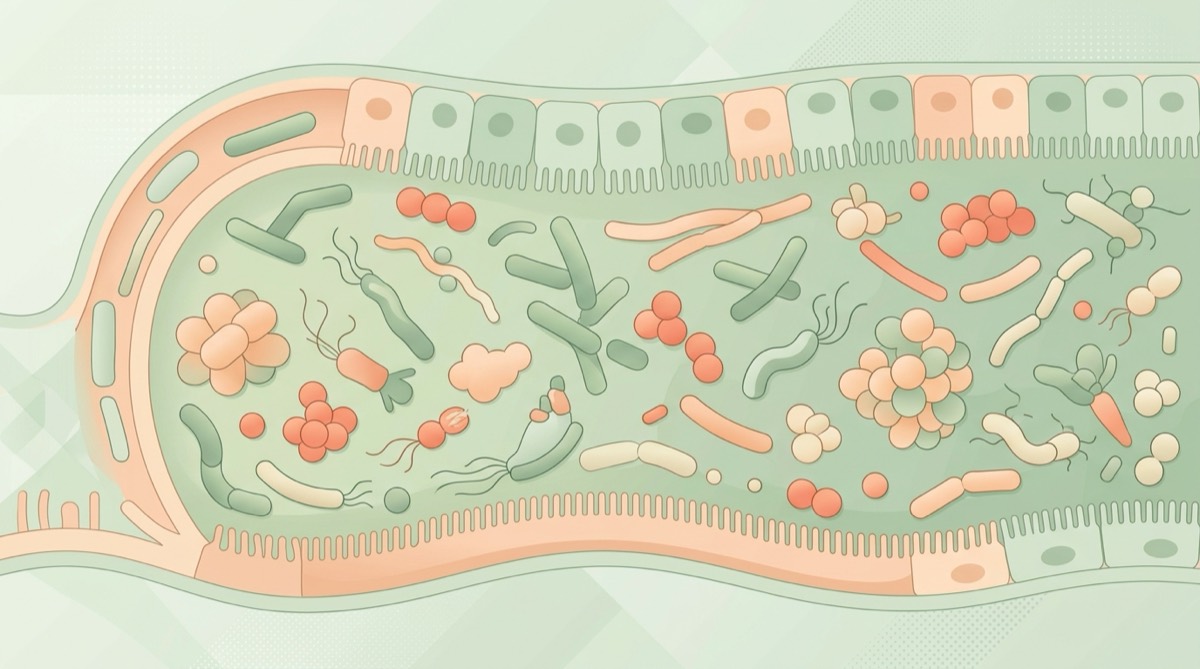
O nevoeiro mental nao e um diagnostico unico. Por vezes o intestino contribui; por vezes sono ou glucose mandam.
O que importa primeiro
Defina o seu padrao: pos-refeicao, matinal, fim do dia ou constante. Depois teste uma variavel digestiva de cada vez.
- Inflamacao e microbiota podem alterar sinais ao cerebro
- Refluxo noturno e sono fragmentado imitam nevoeiro intestinal
- Refeicoes pesadas ou ricas em histamina pioram em algumas pessoas
Detalhes que realmente ajudam
Como testar
Simplifique refeicoes 2 semanas, proteja o sono, reduza alcool e registe a clareza. Sem sinal: avaliacao mais ampla.
O quadro de duas semanas
-
Sim: registar nevoeiro + refeicoes
-
Sim: uma variavel por semana
-
Sim: proteger 7 horas de sono
-
Sim: rever medicamentos com clinico
-
Não: culpar sempre so o intestino
-
Não: empilhar nootropicos sem base
-
Não: ignorar apneia
-
Não: dietas de eliminacao eternas
Sinais de alerta — procure ajuda se:
- perda de peso inexplicada
- fezes pretas
- vómitos persistentes
- desmaio
- dor noturna intensa
- sangue nas fezes
Perguntas frequentes
Como sei se o nevoeiro e intestinal?
Se melhorar ao estabilizar refeicoes, timing e sono, o intestino e plausivel. Se constante com sinais neurologicos, priorize a clinica.
Fontes
-
Ford AC, et al. American College of Gastroenterology monograph on the management of irritable bowel syndrome. Am J Gastroenterol. 2024;119(S1):S2-S31.
-
Vasant DH, et al. British Society of Gastroenterology guidelines for the management of irritable bowel syndrome. Gut. 2024;73(7):1027-1058.
-
Mayer EA. Gut Feelings: The Connection Between the Brain and the Digestive System. Penguin Random House. 2024.
-
Camilleri M. Functional gastrointestinal disorders: advances in understanding and management. Lancet. 2024;403(10425):368-382.
-
Giloteaux L, et al. Reduced diversity and altered composition of the gut microbiome in individuals with myalgic encephalomyelitis/chronic fatigue syndrome. Microbiome. 2016;4(1):30.
-
Institute of Medicine. Beyond Myalgic Encephalomyelitis/Chronic Fatigue Syndrome: Redefining an Illness. National Academies Press. 2024.
-
Lomer MCE, et al. Review article: the aetiology, investigation and management of fatigue in inflammatory bowel disease. Aliment Pharmacol Ther. 2023;58(3):269-283.
-
Black CJ, Ford AC. Global burden of irritable bowel syndrome: trends, predictions, and risk factors. Nat Rev Gastroenterol Hepatol. 2024;21(5):323-336.
-
Harvard Health. The gut-brain connection. 2023. https://www.health.harvard.edu/diseases-and-conditions/the-gut-brain-connection
-
NIDDK. Digestive Diseases and Symptoms. 2024. https://www.niddk.nih.gov/
-
CDC. ME/CFS Information for Healthcare Providers. 2024. https://www.cdc.gov/me-cfs/
-
NIH PMC. Gut microbiome and human health review. 2024. https://pmc.ncbi.nlm.nih.gov/articles/PMC10384867/
-
Cleveland Clinic. Brain-Gut Connection. 2024. https://my.clevelandclinic.org/
-
ISAPP. International Scientific Association for Probiotics and Prebiotics Consensus Statement. 2024. https://isappscience.org/
-
Chey WD, et al. ACG Clinical Guideline: Management of Celiac Disease. Am J Gastroenterol. 2024;119(2):203-222.
-
Rezaie A, et al. Hydrogen and Methane-Based Breath Testing in Gastrointestinal Disorders: The North American Consensus. Am J Gastroenterol. 2024;119(5):775-792.