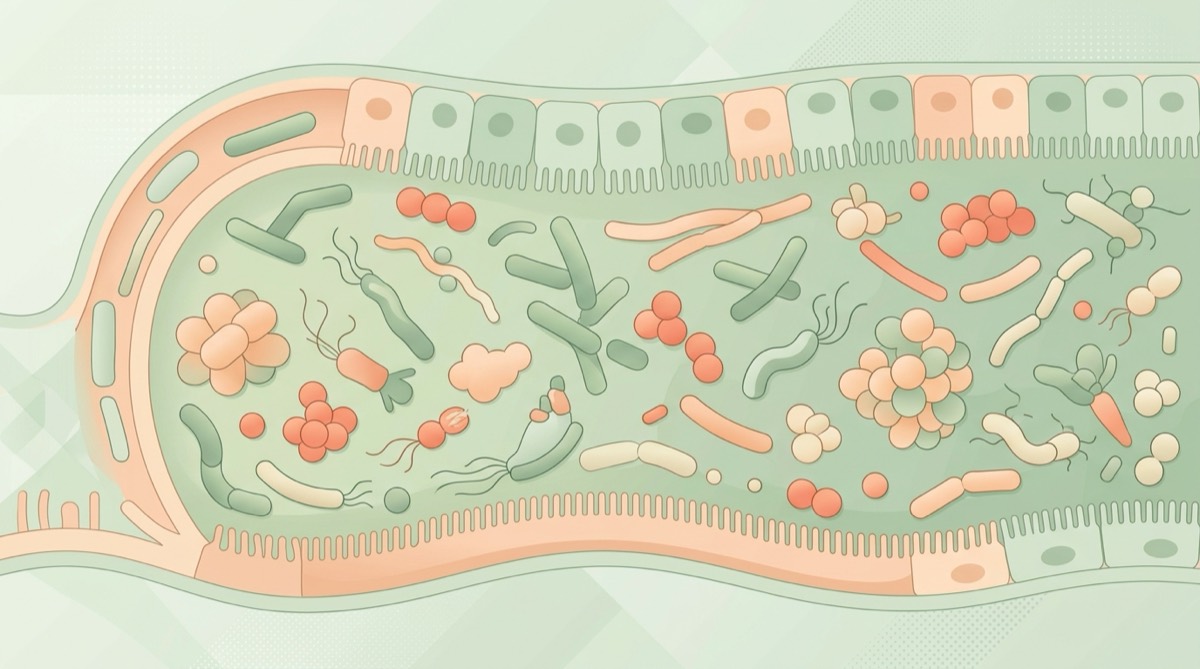
Le brouillard mental n est pas un diagnostic unique. Parfois l intestin contribue; parfois sommeil ou glucose dominent.
Ce qui compte d’abord
Definissez votre pattern: post-repas, matinal, fin de journee ou constant. Puis testez une variable digestive a la fois.
- Inflammation et microbiote peuvent alterer les signaux au cerveau
- Reflux nocturne et sommeil fragmente imitent un brouillard intestinal
- Repas lourds ou riches en histamine empirent chez certains
Détails qui aident vraiment
Comment tester
Simplifiez les repas 2 semaines, protegez le sommeil, reduisez l alcool et notez la clarte. Sans signal: bilan plus large.
Le cadre de deux semaines
-
Oui: noter brouillard + repas
-
Oui: une variable par semaine
-
Oui: proteger 7 heures de sommeil
-
Oui: revoir medicaments avec clinicien
-
Non: toujours accuser seulement l intestin
-
Non: empiler nootropiques sans base
-
Non: ignorer lapnee
-
Non: regimes delimination eternels
Signaux d’alarme — consultez si :
- perte de poids inexpliquée
- selles noires
- vomissements persistants
- évanouissement
- douleur nocturne intense
- sang dans les selles
Questions fréquentes
Comment savoir si c est intestinal?
Si stabiliser repas, timing et sommeil aide, l intestin est plausible. Si constant avec red flags neuro, priorisez la clinique.
Sources
-
Ford AC, et al. American College of Gastroenterology monograph on the management of irritable bowel syndrome. Am J Gastroenterol. 2024;119(S1):S2-S31.
-
Vasant DH, et al. British Society of Gastroenterology guidelines for the management of irritable bowel syndrome. Gut. 2024;73(7):1027-1058.
-
Mayer EA. Gut Feelings: The Connection Between the Brain and the Digestive System. Penguin Random House. 2024.
-
Camilleri M. Functional gastrointestinal disorders: advances in understanding and management. Lancet. 2024;403(10425):368-382.
-
Giloteaux L, et al. Reduced diversity and altered composition of the gut microbiome in individuals with myalgic encephalomyelitis/chronic fatigue syndrome. Microbiome. 2016;4(1):30.
-
Institute of Medicine. Beyond Myalgic Encephalomyelitis/Chronic Fatigue Syndrome: Redefining an Illness. National Academies Press. 2024.
-
Lomer MCE, et al. Review article: the aetiology, investigation and management of fatigue in inflammatory bowel disease. Aliment Pharmacol Ther. 2023;58(3):269-283.
-
Black CJ, Ford AC. Global burden of irritable bowel syndrome: trends, predictions, and risk factors. Nat Rev Gastroenterol Hepatol. 2024;21(5):323-336.
-
Harvard Health. The gut-brain connection. 2023. https://www.health.harvard.edu/diseases-and-conditions/the-gut-brain-connection
-
NIDDK. Digestive Diseases and Symptoms. 2024. https://www.niddk.nih.gov/
-
CDC. ME/CFS Information for Healthcare Providers. 2024. https://www.cdc.gov/me-cfs/
-
NIH PMC. Gut microbiome and human health review. 2024. https://pmc.ncbi.nlm.nih.gov/articles/PMC10384867/
-
Cleveland Clinic. Brain-Gut Connection. 2024. https://my.clevelandclinic.org/
-
ISAPP. International Scientific Association for Probiotics and Prebiotics Consensus Statement. 2024. https://isappscience.org/
-
Chey WD, et al. ACG Clinical Guideline: Management of Celiac Disease. Am J Gastroenterol. 2024;119(2):203-222.
-
Rezaie A, et al. Hydrogen and Methane-Based Breath Testing in Gastrointestinal Disorders: The North American Consensus. Am J Gastroenterol. 2024;119(5):775-792.