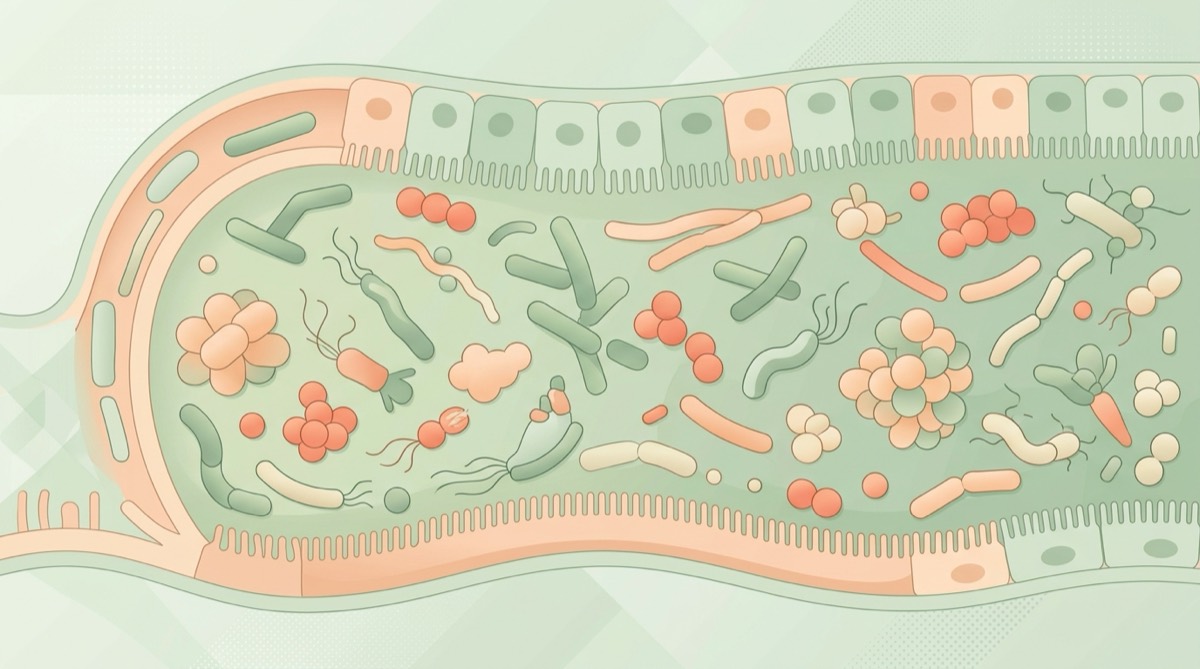
A comida molda a pele pelo intestino: microbioma, insulina/IGF-1, inflamação, nutrientes e histamina. Não é só tópico.
O que importa primeiro
Priorize padrão anti-inflamatório: fibras diversas, ômega-3, polifenóis; modere laticínios e IG alto se a acne for o foco.
- ~12 semanas: melhora cutânea vs dieta ocidental
- O eixo intestino-pele é real, não marketing vazio
- Uma variável por vez: IG, laticínios ou fibra
Detalhes que realmente ajudam
Protocolo prático
Acne: IG mais baixo, laticínios conscientes. Barreira: zinco, ácidos graxos, sono. Diário comida-pele 2 semanas antes de suplementos.
O quadro de duas semanas
-
Sim: padrão alimentar estável
-
Sim: registrar comida e pele
-
Sim: testar uma variável
-
Sim: clínica se houver alarmes
-
Não: mudar seis coisas de uma vez
-
Não: suplementar sem hipótese
-
Não: ignorar sono e estresse
-
Não: restringir ao extremo sem guia
Sinais de alerta — busque ajuda se:
- perda de peso inexplicada
- fezes pretas
- vômitos persistentes
- desmaio
- dor noturna intensa
- sangue nas fezes
Perguntas frequentes
Só probióticos resolvem a pele?
Raramente. Primeiro padrão alimentar, sono e inflamação; probióticos são adjunto com cepa e alvo claros.
Fontes
-
American Academy of Dermatology. “Guidelines of care for the management of acne vulgaris.” J Am Acad Dermatol. 2016;74(5):945-973.
-
Burris J, Rietkerk W, Woolf K. “Acne: The role of medical nutrition therapy.” J Acad Nutr Diet. 2014;114(3):416-430.
-
Dall’Oglio F, et al. “Effects of diet on acne: A narrative review.” J Cosmet Dermatol. 2022;21(7):2868-2877.
-
Fabbrocini G, et al. “Diet and acne: Review of the evidence from 2009 to 2020.” Int J Dermatol. 2021;60(6):672-685.
-
Ford ES, et al. “Prevalence of atopic dermatitis and associations with dietary factors in US adults.” J Allergy Clin Immunol. 2019;143(2):AB102.
-
Jensen P, et al. “Effect of weight loss on the severity of psoriasis: A randomized clinical trial.” JAMA Dermatol. 2013;149(7):795-801.
-
Khayef G, et al. “Effects of a low-glycemic-load diet on acne vulgaris: A randomized controlled trial.” Nutr Res. 2012;32(12):918-923.
-
Kwon HH, et al. “Clinical and dietetic effect of n-3 polyunsaturated fatty acid supplementation in patients with acne vulgaris.” Acta Derm Venereol. 2012;92(3):241-244.
-
Naldi L, et al. “Dietary counseling for the management of psoriasis in overweight and obese patients: A randomized controlled trial.” Br J Dermatol. 2017;176(5):1115-1122.
-
Salem I, Ramser A, Isham N, Ghannoum MA. “The gut microbiome as a major regulator of the gut-skin axis.” Front Microbiol. 2018;9:1459.
-
Smith RN, et al. “The effect of a high-protein, low glycemic-load diet versus a conventional, high glycemic-load diet on biochemical parameters associated with acne vulgaris.” J Am Acad Dermatol. 2007;57(2):247-256.
-
Song H, et al. “The effect of probiotics on the treatment of atopic dermatitis: A systematic review and meta-analysis.” Allergy Asthma Proc. 2016;37(4):275-282.
-
Wawrzyniak A, et al. “The role of diet in the pathogenesis and management of atopic dermatitis: A review.” Nutrients. 2021;13(1):135.
-
WHO. “Healthy diet.” World Health Organization. 2020.
-
Zhang Y, et al. “Dairy consumption and acne risk: A systematic review and meta-analysis.” Nutrients. 2022;14(3):588.
-
Zobayeh R, et al. “The role of gut microbiota in acne vulgaris: A systematic review.” Dermatol Ther. 2023;2023:6629156.