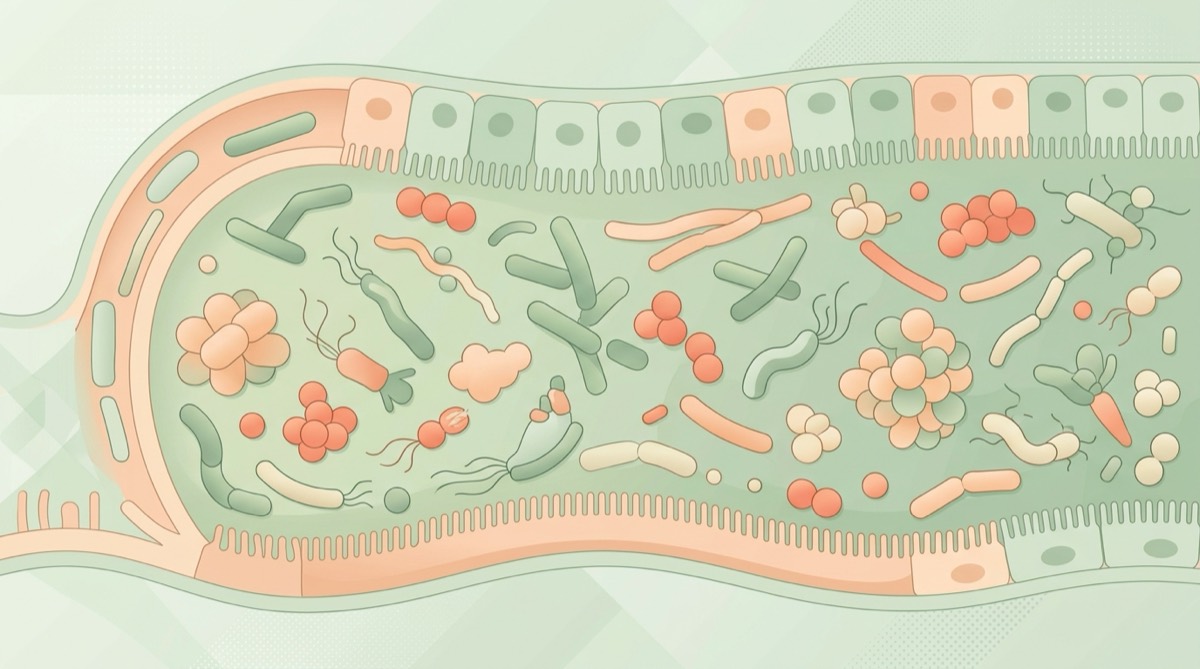
La question cle: quand le brouillard est-il pire — matin, apres repas ou fin de journee? Le timing en dit souvent plus que les analyses.
Ce qui compte d’abord
Partez des patterns: post-repas (30-90 min), matinal ou en fin de journee. Chacun suggere un mecanisme distinct.
- Post-repas souvent glucose, histamine ou SIBO
- Matinal souvent sommeil ou apnea, pas seulement intestin
- Notez repas, energie et clarte 14 jours ensemble
Détails qui aident vraiment
Que relier
Axe intestin-cerveau, inflammation, sommeil et repas. Si brouillard constant ou red flags neuro: bilan clinique, pas seulement regime.
Le cadre de deux semaines
-
Oui: noter le timing du brouillard
-
Oui: simplifier les repas 2 semaines
-
Oui: proteger le sommeil
-
Oui: revoir les declencheurs clairs
-
Non: accuser seulement le gluten sans pattern
-
Non: nootropiques + 5 regimes
-
Non: ignorer lapnee du sommeil
-
Non: restreindre a cinq aliments
Signaux d’alarme — consultez si :
- perte de poids inexpliquée
- selles noires
- vomissements persistants
- évanouissement
- douleur nocturne intense
- sang dans les selles
Questions fréquentes
Tout brouillard vient de l intestin?
Non. L intestin peut contribuer, mais sommeil, stress, medicaments comptent. Utilisez le timing comme indice, pas comme diagnostic.
Sources
-
Ford AC, et al. American College of Gastroenterology monograph on the management of irritable bowel syndrome. Am J Gastroenterol. 2024;119(S1):S2-S31.
-
Vasant DH, et al. British Society of Gastroenterology guidelines for the management of irritable bowel syndrome. Gut. 2024;73(7):1027-1058.
-
Mayer EA. Gut Feelings: The Connection Between the Brain and the Digestive System. Penguin Random House. 2024.
-
Camilleri M. Functional gastrointestinal disorders: advances in understanding and management. Lancet. 2024;403(10425):368-382.
-
Giloteaux L, et al. Reduced diversity and altered composition of the gut microbiome in individuals with myalgic encephalomyelitis/chronic fatigue syndrome. Microbiome. 2016;4(1):30.
-
Institute of Medicine. Beyond Myalgic Encephalomyelitis/Chronic Fatigue Syndrome: Redefining an Illness. National Academies Press. 2024.
-
Lomer MCE, et al. Review article: the aetiology, investigation and management of fatigue in inflammatory bowel disease. Aliment Pharmacol Ther. 2023;58(3):269-283.
-
Black CJ, Ford AC. Global burden of irritable bowel syndrome: trends, predictions, and risk factors. Nat Rev Gastroenterol Hepatol. 2024;21(5):323-336.
-
Harvard Health. The gut-brain connection. 2023. https://www.health.harvard.edu/diseases-and-conditions/the-gut-brain-connection
-
NIDDK. Digestive Diseases and Symptoms. 2024. https://www.niddk.nih.gov/
-
CDC. ME/CFS Information for Healthcare Providers. 2024. https://www.cdc.gov/me-cfs/
-
NIH PMC. Gut microbiome and human health review. 2024. https://pmc.ncbi.nlm.nih.gov/articles/PMC10384867/
-
Cleveland Clinic. Brain-Gut Connection. 2024. https://my.clevelandclinic.org/
-
ISAPP. International Scientific Association for Probiotics and Prebiotics Consensus Statement. 2024. https://isappscience.org/
-
Chey WD, et al. ACG Clinical Guideline: Management of Celiac Disease. Am J Gastroenterol. 2024;119(2):203-222.
-
Rezaie A, et al. Hydrogen and Methane-Based Breath Testing in Gastrointestinal Disorders: The North American Consensus. Am J Gastroenterol. 2024;119(5):775-792.