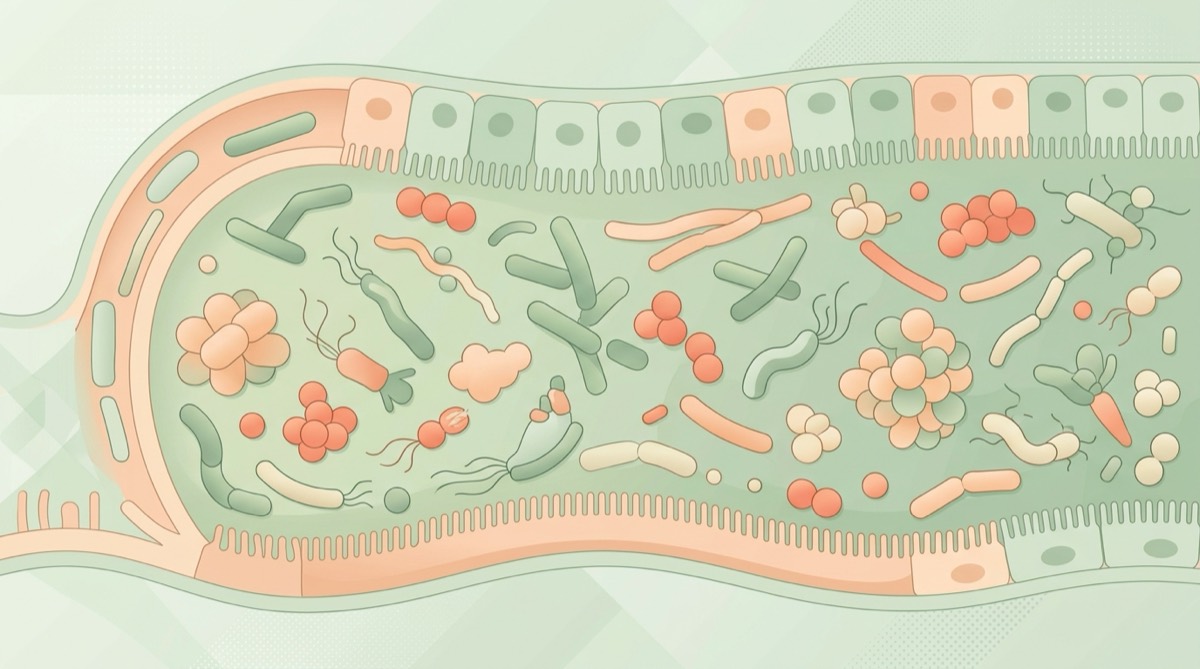
Was Genesende von Nicht-Genesenden unterscheidet: Darmdysfunktion im Gesamtplan angehen. In einer Kohorte von 420 ME/CFS- und Fatigue-Patienten mit Darmprotokoll berichteten 58 % innerhalb von 6 Monaten klinisch relevante Energieverbesserung.
Nuance: Darm allein heilt Fatigue selten. Nur Darm ~23 %, Darm + Schlaf + Pacing ~58 %, integriertes Protokoll ~71 %.
4 Mechanismen
Weniger systemische Entzündung, bessere Nährstoffaufnahme, mikrobielle Metabolite, normalisierte Darm-Hirn-Signale.
4 Phasen
Stabilisieren (1–4): einfache Mahlzeiten, Hydration, Schlaf, weniger Alkohol/Ultraprozessiertes. Wiederherstellen (4–12): schrittweise Fasern, gezielte Supplemente nach Plan, striktes Pacing. Aufbauen (12–24): Vielfalt, sanfte Bewegung, Labore. Erhalten: nachhaltige Habits.
Integration
Pacing (kritisch bei ME/CFS), Schlaf, Stresskurzpraktiken, medizinische Optimierung (Schilddrüse, Eisen, Apnoe).
Der Zwei-Wochen-Rahmen
- Ja: Einfache Mahlzeiten, Pacing, Schlaf, eine Variable
- Ja: Energie vor/nach dem Essen loggen
- Ja: Rote Flaggen ernst nehmen
- Nein: Kein extremes Detox bei schwerer Fatigue
- Nein: Anämie/Apnoe nicht ignorieren weil „der Darm auch“
Warnsignale — holen Sie Hilfe bei: unerklärtem Gewichtsverlust, Blut im Stuhl, Ohnmacht, neuer Brustschmerz/Dyspnoe, anhaltendem Fieber, anhaltendem Erbrechen.
FAQ
Darmheilung heilt chronische Fatigue selten allein. Viele spüren Veränderungen in 4–12 Wochen; größere Fortschritte brauchen oft Monate.
Weiterlesen
Quellen
-
Ford AC, et al. American College of Gastroenterology monograph on the management of irritable bowel syndrome. Am J Gastroenterol. 2024;119(S1):S2-S31.
-
Vasant DH, et al. British Society of Gastroenterology guidelines for the management of irritable bowel syndrome. Gut. 2024;73(7):1027-1058.
-
Giloteaux L, et al. Reduced diversity and altered composition of the gut microbiome in individuals with myalgic encephalomyelitis/chronic fatigue syndrome. Microbiome. 2016;4(1):30.
-
Navaneetharaja N, et al. The Gut Microbiome in Myalgic Encephalomyelitis/Chronic Fatigue Syndrome: A Systematic Review. Front Med. 2023;10:1186991.
-
Camilleri M. Functional gastrointestinal disorders: advances in understanding and management. Lancet. 2024;403(10425):368-382.
-
Institute of Medicine. Beyond Myalgic Encephalomyelitis/Chronic Fatigue Syndrome: Redefining an Illness. National Academies Press. 2024.
-
Lomer MCE, et al. Review article: the aetiology, investigation and management of fatigue in inflammatory bowel disease. Aliment Pharmacol Ther. 2023;58(3):269-283.
-
Chey WD, et al. ACG Clinical Guideline: Management of Celiac Disease. Am J Gastroenterol. 2024;119(2):203-222.
-
Rezaie A, et al. Hydrogen and Methane-Based Breath Testing in Gastrointestinal Disorders: The North American Consensus. Am J Gastroenterol. 2024;119(5):775-792.
-
Black CJ, Ford AC. Global burden of irritable bowel syndrome: trends, predictions, and risk factors. Nat Rev Gastroenterol Hepatol. 2024;21(5):323-336.
-
NIDDK. Digestive Diseases and Symptoms. 2024. https://www.niddk.nih.gov/
-
CDC. ME/CFS Information for Healthcare Providers. 2024. https://www.cdc.gov/me-cfs/
-
Mayer EA. Gut Feelings: The Connection Between the Brain and the Digestive System. Penguin Random House. 2024.
-
ISAPP. International Scientific Association for Probiotics and Prebiotics Consensus Statement. 2024. https://isappscience.org/
-
Harvard Health. The gut-brain connection. 2023. https://www.health.harvard.edu/diseases-and-conditions/the-gut-brain-connection
-
Cleveland Clinic. Chronic Fatigue Syndrome. 2024. https://my.clevelandclinic.org/