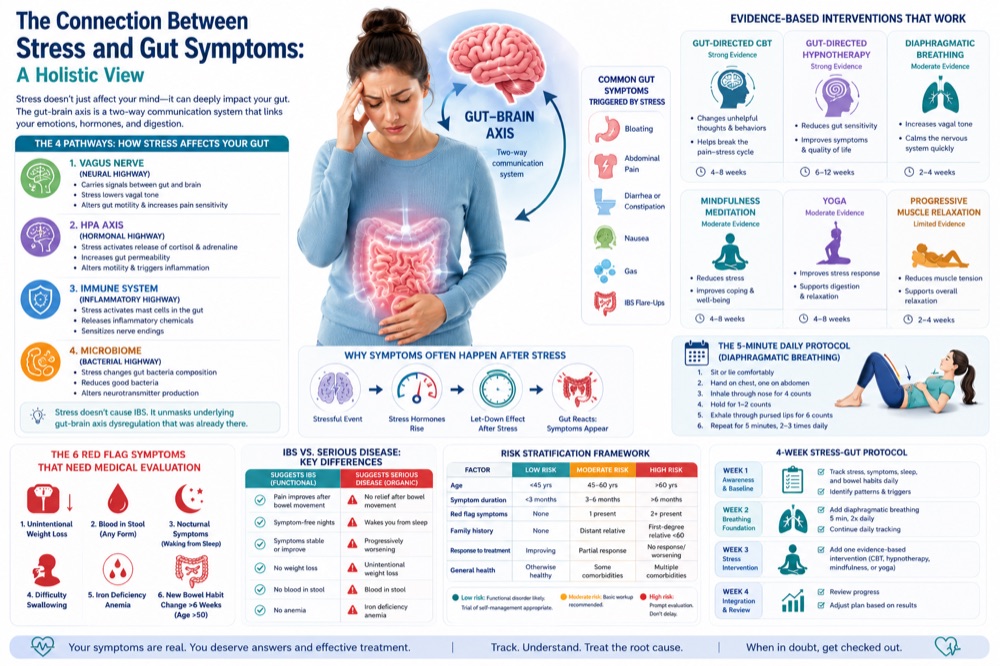
Peptic ulcers affect over 4.5 million Americans annually, yet many people ignore the warning signs until complications develop. Understanding ulcer symptoms—and knowing when they require immediate medical attention—can mean the difference between simple treatment and life-saving emergency care.
This comprehensive guide covers everything you need to know about peptic ulcer symptoms: what they feel like, how they differ from other digestive conditions, red flag symptoms requiring emergency care, and when to see a doctor.
Key Takeaways:
- Burning stomach pain is hallmark: Gnawing or burning pain between breastbone and navel, often worse when stomach is empty
- Timing matters: Gastric ulcers hurt during/after meals; duodenal ulcers hurt 2-3 hours after eating or at night
- Silent ulcers are dangerous: 25% of ulcers cause no symptoms until complications (bleeding, perforation) occur
- Bleeding signs are emergencies: Black/tarry stools, vomiting blood (or coffee-ground material) require immediate care
- NSAIDs are major cause: Regular use of ibuprofen, aspirin, naproxen significantly increases ulcer risk
- H. pylori testing is essential: This bacteria causes 60-70% of ulcers; requires specific testing and antibiotics
What Are Peptic Ulcers?
Peptic ulcers are open sores that develop on the lining of the stomach, upper small intestine (duodenum), or lower esophagus. They occur when the protective mucus layer that shields these organs from digestive acid becomes damaged or depleted.
Three Types of Peptic Ulcers:
| Type | Location | Prevalence |
|---|---|---|
| Gastric ulcer | Stomach lining | 40% of peptic ulcers |
| Duodenal ulcer | First part of small intestine (duodenum) | 60% of peptic ulcers |
| Esophageal ulcer | Lower esophagus | Less common; usually from severe GERD |
The Acid Balance:
Your stomach produces hydrochloric acid (pH 1.5-3.5) to break down food and kill pathogens. This acid is powerful enough to dissolve metal—but your digestive tract is lined with a thick mucus barrier that protects it.
Ulcers form when this balance is disrupted:
- Too much acid overwhelms the protective barrier
- Too little mucus leaves the lining vulnerable
- H. pylori bacteria damage the protective layer
- NSAIDs block production of protective prostaglandins
Common Peptic Ulcer Symptoms
Ulcer symptoms vary depending on ulcer location, size, and individual pain tolerance. Some people experience multiple symptoms; others have only one.
Primary Symptoms
1. Burning or Gnawing Abdominal Pain
The Hallmark Symptom
- Location: Upper abdomen, between breastbone (sternum) and navel
- Quality: Burning, gnawing, aching, or hunger-like sensation
- Intensity: Mild discomfort to severe, debilitating pain
- Duration: Minutes to hours; may come and go
Timing Patterns by Ulcer Type:
| Ulcer Type | Pain Timing | Why |
|---|---|---|
| Gastric ulcer | Pain WORSENS with eating (15-30 min after meals) | Food stimulates acid production; acid contacts ulcer |
| Duodenal ulcer | Pain IMPROVES with eating; returns 2-3 hours later | Food buffers acid; pain returns when stomach empties |
| Either type | Night pain (10 PM - 2 AM) | Acid production peaks at night; no food buffer |
Pain Radiation:
- May radiate to the back (especially if ulcer penetrates pancreas)
- Can radiate to chest (may mimic heart attack)
- Usually localized to one spot (can point to it with one finger)
2. Bloating and Fullness
- Feeling of abdominal pressure or tightness
- Early satiety (feeling full after small amounts of food)
- Visible abdominal distension
- Often worse after meals
3. Nausea and/or Vomiting
- May occur with or without pain
- Vomiting may temporarily relieve pain
- Vomiting blood or coffee-ground material is EMERGENCY
- More common in gastric ulcers than duodenal
4. Loss of Appetite
- Avoiding food because eating causes pain (gastric ulcers)
- Unintentional weight loss may occur
- Fear of eating due to predictable post-meal pain
5. Indigestion (Dyspepsia)
- Upper abdominal discomfort
- Belching
- Acid reflux or heartburn
- Sour taste in mouth
6. Pain Relief with Antacids
- Temporary relief (30 minutes to 2 hours) from over-the-counter antacids
- Pain returns as antacid wears off
- This pattern often delays medical care (people self-treat for months)
Less Common Symptoms
7. Changes in Stool
- Normal stool in uncomplicated ulcers
- BLACK, TARRY STOOL (melena) indicates bleeding—EMERGENCY
- BRIGHT RED BLOOD per rectum—rare but possible with rapid bleeding—EMERGENCY
8. Fatigue and Weakness
- Usually indicates anemia from slow, chronic bleeding
- Pale skin
- Shortness of breath with exertion
- Dizziness
9. Unintentional Weight Loss
- More common with gastric ulcers
- Due to food avoidance (eating causes pain)
- May indicate complication or malignancy
10. No Symptoms at All (“Silent Ulcers”)
- 25% of ulcers cause NO symptoms
- Often discovered only after complication (bleeding, perforation)
- More common in elderly and NSAID users
- This is why screening is important if you’re at high risk
Symptom Comparison: Gastric vs. Duodenal Ulcers
While both types are “peptic ulcers,” they present differently:
| Feature | Gastric Ulcer | Duodenal Ulcer |
|---|---|---|
| Pain with eating | WORSENS (15-30 min after) | IMPROVES (then returns 2-3 hr later) |
| Night pain | Less common | Very common (wakes from sleep) |
| Weight change | Weight loss (avoid food due to pain) | Weight gain (eating relieves pain) |
| Nausea/vomiting | More common | Less common |
| Age | Older adults (50+) more common | Younger adults (30-50) more common |
| H. pylori association | 60-70% | 80-90% |
| Cancer risk | Gastric ulcers can be malignant | Duodenal ulcers almost always benign |
Red Flag Symptoms: When to Seek Emergency Care
Peptic ulcers can cause life-threatening complications. Seek immediate medical attention if you experience any of the following:
Emergency Symptoms
1. Signs of Bleeding
Black, Tarry Stools (Melena)
- Stool is black, sticky, and foul-smelling
- Indicates digested blood from upper GI tract
- Go to ER immediately
- Do NOT drive yourself if feeling weak or dizzy
Vomiting Blood
- Bright red blood
- OR “coffee ground” material (dark, grainy—blood digested by stomach acid)
- Go to ER immediately
Symptoms of Anemia from Bleeding
- Dizziness, especially when standing
- Rapid heartbeat
- Pale skin
- Shortness of breath
- Extreme fatigue
- Fainting
2. Signs of Perforation (Hole in Stomach/Intestine)
Sudden, Severe, Persistent Abdominal Pain
- Feels like being “stabbed” or “shot”
- Pain is constant, severe, doesn’t improve with position change
- Abdomen becomes rigid and tender (can’t tolerate touch)
- May radiate to shoulder (from diaphragm irritation)
- Call 911—this is a surgical emergency
Signs of Peritonitis (infection from perforation):
- Fever and chills
- Rapid heart rate
- Nausea and vomiting
- Inability to pass gas or have bowel movement
- Abdominal swelling
- Confusion (in elderly)
3. Signs of Obstruction
Persistent Vomiting
- Vomiting undigested food from previous meals
- Feeling of fullness after small amounts
- Bloating
- Visible stomach distension
- Seek urgent medical care
4. Signs of Penetration (ulcer extends into adjacent organ)
Pain Radiating to Back
- Constant, severe pain
- Not relieved by antacids or food
- May indicate ulcer has penetrated into pancreas
- Seek medical attention within 24 hours
Urgent (Non-Emergency) Symptoms
See a doctor within a few days if you have:
- Persistent burning stomach pain lasting more than 1 week
- Pain that wakes you from sleep regularly
- Need for daily antacids for more than 2 weeks
- Unintentional weight loss
- Loss of appetite lasting more than 1 week
- New indigestion after age 55
- Family history of stomach cancer with new symptoms
- Anemia symptoms (fatigue, pale skin, shortness of breath)
Symptoms by Population
Certain groups may experience atypical ulcer presentations.
Elderly Adults (65+)
Atypical Presentations:
- May have NO pain (silent ulcers more common)
- Confusion or altered mental status may be only symptom
- Fatigue and weakness from anemia
- Loss of appetite
- First sign may be catastrophic bleeding or perforation
Why Different:
- Reduced pain sensitivity
- Multiple medications mask symptoms
- Comorbidities distract from GI symptoms
High-Risk Groups:
- Nursing home residents
- Those on multiple medications (especially blood thinners + NSAIDs)
- History of prior ulcers
- Multiple chronic conditions
Children
Rare in children but can occur:
Symptoms in Kids:
- Vague abdominal pain (hard to localize)
- Nausea and vomiting
- Poor appetite
- Failure to thrive (not gaining weight appropriately)
- Blood in stool or vomit (late sign)
Causes in Children:
- H. pylori infection (most common)
- Severe physiological stress (burns, critical illness)
- Certain medications
- Underlying medical conditions (Crohn’s disease, Zollinger-Ellison syndrome)
Pregnant Women
Uncommon during pregnancy (H. pylori often suppressed by hormonal changes):
If ulcers occur:
- Similar symptoms to non-pregnant adults
- May be confused with normal pregnancy nausea/heartburn
- Diagnosis and treatment require special considerations
Important: Some ulcer medications are not safe in pregnancy. Always consult OB/GYN.
People Taking Blood Thinners
Higher Risk of Bleeding:
- Warfarin (Coumadin)
- Direct oral anticoagulants (Eliquis, Xarelto, Pradaxa)
- Antiplatelets (Plavix, aspirin)
Symptoms to Watch:
- Any sign of bleeding (black stool, vomiting blood)
- Unusual bruising
- Fatigue (from slow blood loss)
- Dizziness
Prevention: If you must take blood thinners AND NSAIDs, ask about protective medication (PPI).
Conditions That Mimic Peptic Ulcers
Many digestive conditions share similar symptoms. Accurate diagnosis is essential.
Heartburn/GERD (Gastroesophageal Reflux Disease)
Similarities:
- Upper abdominal/chest burning
- Relief with antacids
- Worse after eating
Differences:
- GERD: Burning rises up toward throat
- GERD: Sour/acid taste in mouth
- GERD: Worse when lying down
- Ulcer: Pain is lower (between breastbone and navel)
- Ulcer: More likely to have nighttime pain that wakes you
Gallbladder Disease (Gallstones, Cholecystitis)
Similarities:
- Upper abdominal pain
- Nausea and vomiting
- Pain after eating
Differences:
- Gallbladder: Pain in RIGHT upper quadrant (not center)
- Gallbladder: Pain radiates to RIGHT shoulder or back
- Gallbladder: Pain 30-60 minutes after fatty meals
- Gallbladder: May have fever
- Ulcer: Pain is midline
- Ulcer: Different timing relationship to food
Pancreatitis
Similarities:
- Upper abdominal pain
- Nausea and vomiting
- Pain radiates to back
Differences:
- Pancreatitis: SUDDEN, SEVERE pain
- Pancreatitis: Pain radiates straight through to back
- Pancreatitis: Patient leans forward for relief
- Pancreatitis: Often fever, rapid heart rate
- Pancreatitis: Medical emergency
Gastritis (Stomach Lining Inflammation)
Similarities:
- Upper abdominal pain/burning
- Nausea
- Bloating
Differences:
- Gastritis: Often from alcohol, stress, viral infection
- Gastritis: Symptoms more diffuse
- Gastritis: May have recent illness or heavy drinking episode
- Ulcer: More localized pain
- Ulcer: More predictable timing pattern
- Note: Gastritis and ulcers often coexist; same causes (H. pylori, NSAIDs)
Functional Dyspepsia (Indigestion Without Ulcer)
Similarities:
- Upper abdominal pain/burning
- Bloating after eating
- Early satiety
- Nausea
Differences:
- Functional dyspepsia: NO ulcer found on endoscopy
- Functional dyspepsia: Symptoms less predictable
- Functional dyspepsia: Often related to stress, anxiety
- Ulcer: Visible sore on endoscopy
- Ulcer: More likely to have nighttime pain
Heart Attack (Myocardial Infarction)
Similarities:
- Upper abdominal/chest pain
- Nausea
- Sweating
Differences:
- Heart attack: Pressure, squeezing, tightness (not burning)
- Heart attack: Pain radiates to LEFT arm, jaw, neck
- Heart attack: Shortness of breath
- Heart attack: Feeling of impending doom
- Heart attack: Not related to meals
- CRITICAL: Women especially may have atypical heart attack symptoms mimicking indigestion
When in doubt, especially with chest pain, call 911.
Stomach Cancer (Gastric Cancer)
Similarities:
- Upper abdominal pain
- Weight loss
- Loss of appetite
- Nausea
Differences:
- Stomach cancer: Progressive, constant worsening
- Stomach cancer: Significant weight loss
- Stomach cancer: Early satiety (can’t finish meals)
- Stomach cancer: Anemia without obvious bleeding
- Stomach cancer: Family history
- Stomach cancer: Age >55 with new symptoms
- Ulcer: Symptoms fluctuate
- Ulcer: More predictable pattern
- Important: Gastric ulcers can be caused by cancer; all gastric ulcers need biopsy
When to See a Doctor
Make an Appointment If:
Symptom Duration:
- Burning stomach pain lasting more than 1 week
- Symptoms persist despite 2 weeks of over-the-counter treatment
- Need for daily antacids for more than 2 weeks
Symptom Pattern:
- Pain that regularly wakes you from sleep
- Predictable pain pattern (always after eating or 2-3 hours after meals)
- Recurrent episodes (symptoms come and go over months)
Associated Symptoms:
- Unexplained weight loss
- Loss of appetite lasting more than 1 week
- Persistent nausea or vomiting
- Difficulty swallowing
- Feeling full after small amounts of food
Risk Factors:
- Regular NSAID use (more than 3 times per week)
- Age over 55 with new digestive symptoms
- Previous history of ulcers
- Family history of stomach cancer
- Known H. pylori infection
See a Doctor Urgently (Within 24-48 Hours) If:
- Mild vomiting blood (streaks of blood)
- Black or tarry stools (but feeling otherwise OK)
- Mild dizziness when standing
- Symptoms rapidly worsening
- Can’t keep food or liquids down
Go to Emergency Room (Call 911) If:
- Vomiting significant amounts of blood or coffee-ground material
- Black, tarry stools with dizziness or weakness
- Sudden, severe, persistent abdominal pain
- Abdomen is rigid and tender to touch
- Fainting or near-fainting
- Chest pain with shortness of breath
- Confusion or altered mental status
Diagnostic Process
If your doctor suspects a peptic ulcer, here’s what to expect:
Medical History
Your doctor will ask about:
- Symptom details: Location, quality, timing, severity, what makes it better/worse
- Medication use: NSAIDs (ibuprofen, naproxen, aspirin), steroids, blood thinners
- Alcohol and tobacco use
- Past medical history: Previous ulcers, H. pylori, other GI conditions
- Family history: Ulcers, H. pylori, stomach cancer
- Stress levels: Life events, work stress
Physical Examination
- Abdominal exam: Pressing on different areas to identify pain location
- Vital signs: Blood pressure (low BP may indicate bleeding), heart rate
- Signs of anemia: Pale skin, conjunctiva
- Signs of liver disease: Jaundice, abdominal fluid (may suggest varices, not ulcer)
Testing for H. pylori
If ulcer is suspected, testing for H. pylori is essential:
Non-Invasive Tests:
| Test | How It Works | Accuracy | Notes |
|---|---|---|---|
| Urea breath test | Drink special liquid; blow into bag | 95-98% | Most accurate non-invasive test |
| Stool antigen test | Test stool for H. pylori protein | 90-95% | Good for confirming eradication after treatment |
| Blood antibody test | Test blood for H. pylori antibodies | 70-80% | Can’t distinguish active vs. past infection; not recommended |
Important: Stop PPIs (omeprazole, etc.) for 2 weeks and antibiotics/bismuth for 4 weeks before testing to avoid false negatives.
Invasive Tests (during endoscopy):
| Test | How It Works | Accuracy |
|---|---|---|
| Rapid urease test | Biopsy tissue tested for urease enzyme | 90-95% |
| Histology | Biopsy examined under microscope | 95-98% |
| Culture | Biopsy grown in lab (tests antibiotic sensitivity) | 100% but slow |
Endoscopy (EGD)
Upper Endoscopy (Esophagogastroduodenoscopy):
Procedure:
- Thin, flexible tube with camera passed through mouth into stomach
- Performed under sedation
- Takes 10-20 minutes
- Go home same day
What It Shows:
- Direct visualization of ulcer
- Size, location, depth
- Signs of bleeding
- Take biopsies (rule out cancer, test for H. pylori)
Who Needs Endoscopy:
Immediate endoscopy:
- Any red flag symptoms (bleeding, weight loss, anemia, difficulty swallowing)
- Age >55 with new-onset dyspepsia
- Suspected complication (perforation, obstruction)
Urgent endoscopy (within 24 hours):
- Signs of active bleeding
- Black stools with unstable vital signs
Routine endoscopy:
- Persistent symptoms despite treatment
- Recurrent ulcers
- All gastric ulcers (to biopsy and ensure healing)
Note: Duodenal ulcers almost never cancerous; gastric ulcers require biopsy to rule out cancer.
Other Tests
Blood Tests:
- Complete blood count (CBC): Check for anemia (indicates bleeding)
- Comprehensive metabolic panel: Check liver/kidney function
- Lipase: Rule out pancreatitis
Stool Test:
- Fecal occult blood test (FOBT): Detect hidden blood in stool
Imaging:
- Upper GI series (barium swallow): X-ray with contrast (less accurate than endoscopy; rarely used now)
- CT scan: If perforation suspected (free air in abdomen)
What to Expect at Your Doctor Visit
Preparing for Your Appointment
Before You Go:
- List all symptoms (when they started, pattern, severity)
- List all medications (prescription, OTC, supplements, herbs)
- Note any recent life changes or stressors
- Know your family medical history
- Don’t take antacids the morning of appointment (can mask findings)
Questions to Ask:
- Do I have an ulcer or something else?
- What caused my ulcer?
- Do I need testing for H. pylori?
- Do I need an endoscopy?
- What medications do I need?
- How long will treatment take?
- What should I avoid while healing?
- When should I follow up?
- What symptoms mean I need emergency care?
- How do I prevent this from coming back?
Typical Timeline
First Visit:
- History and physical exam
- Order H. pylori testing
- May start empiric treatment (PPI)
- May schedule endoscopy
1-2 Weeks Later:
- Review H. pylori test results
- Adjust treatment based on results
- If H. pylori positive: start antibiotics
4-8 Weeks Later:
- Follow-up endoscopy (for gastric ulcers to confirm healing)
- Test for H. pylori eradication (4 weeks after finishing antibiotics)
- Adjust long-term management
Frequently Asked Questions
Can you have an ulcer without knowing it?
Yes. About 25% of peptic ulcers cause no symptoms (“silent ulcers”). These are often discovered only after a complication like bleeding or perforation occurs. Silent ulcers are more common in:
- Elderly adults
- People taking NSAIDs regularly
- People with diabetes
- Those with multiple medical conditions
This is why it’s important to discuss ulcer prevention with your doctor if you’re at high risk, even without symptoms.
Do all ulcers cause pain?
No. While pain is the most common symptom, some people experience only:
- Bloating
- Nausea
- Loss of appetite
- Fatigue (from anemia)
- Or no symptoms at all
The absence of pain doesn’t mean the ulcer isn’t serious. Complications can still occur.
How can I tell if my ulcer is bleeding?
Signs of a bleeding ulcer include:
- Black, tarry stools (sticky, foul-smelling)
- Vomiting blood (bright red) or coffee-ground material (dark, grainy)
- Dizziness, especially when standing
- Pale skin
- Rapid heartbeat
- Fatigue
- Shortness of breath
Any sign of bleeding requires immediate medical attention.
Can stress cause ulcer symptoms?
Stress doesn’t directly cause most peptic ulcers (H. pylori and NSAIDs do), but it can:
- Worsen ulcer symptoms
- Increase acid production
- Delay healing
- Make pain feel more intense
- Trigger unhealthy coping behaviors (smoking, drinking, NSAID use)
Exception: Severe physiological stress (major burns, critical illness, head trauma) CAN directly cause “stress ulcers.”
Can ulcers go away on their own?
Sometimes, but it’s not advisable to wait:
- Small ulcers may heal temporarily without treatment
- BUT if H. pylori is present, ulcer will almost certainly recur
- If NSAIDs continue, healing is unlikely
- Untreated ulcers risk serious complications (bleeding, perforation)
Bottom line: Ulcers need proper diagnosis and treatment. Don’t try to wait it out.
Are ulcer symptoms different in women?
Generally no—ulcer symptoms are similar in men and women. However:
- Women may delay seeking care (attribute symptoms to other causes)
- Women are more likely to develop NSAID-induced ulcers
- Women may have atypical presentations of complications
- Pregnancy affects treatment choices
Can children get peptic ulcers?
Yes, though less common than in adults. When children have ulcers:
- Symptoms may be harder to identify (vague pain, poor appetite)
- H. pylori is most common cause
- May present as failure to thrive
- Blood in stool or vomit is late sign
- Requires pediatric gastroenterologist evaluation
What happens if an ulcer is left untreated?
Untreated ulcers can lead to serious complications:
- Bleeding (most common): Can be slow/chronic (causing anemia) or rapid/life-threatening
- Perforation: Hole burns through stomach/intestine wall; causes peritonitis (life-threatening infection)
- Obstruction: Swelling/scarring blocks food passage
- Penetration: Ulcer extends into adjacent organ (pancreas, liver)
These complications are medical emergencies. Early treatment prevents them.
Can I diagnose myself with an ulcer?
No. Ulcer symptoms overlap with many other conditions (GERD, gallbladder disease, heart attack, pancreatitis, stomach cancer). Self-diagnosis and self-treatment can:
- Delay diagnosis of serious conditions
- Allow complications to develop
- Lead to inappropriate medication use
- Mask symptoms while ulcer worsens
See a doctor for proper diagnosis. Over-the-counter medications can temporarily relieve symptoms but won’t cure H. pylori or prevent complications.
Conclusion
Peptic ulcer symptoms—especially the hallmark burning stomach pain—are your body’s warning signal that something is wrong. While not all ulcers cause dramatic symptoms, recognizing the patterns (pain timing, relationship to food, nighttime symptoms) can lead to earlier diagnosis and simpler treatment.
Key Points:
- Burning upper abdominal pain is the most common symptom
- Timing matters: Gastric ulcers hurt with eating; duodenal ulcers hurt when stomach is empty
- 25% of ulcers are “silent” until complications occur
- Black stools or vomiting blood = EMERGENCY
- H. pylori testing is essential (causes 60-90% of ulcers)
- NSAIDs are a major cause (review all medications with your doctor)
- Endoscopy may be needed (especially for gastric ulcers to rule out cancer)
Don’t ignore persistent digestive symptoms. Early diagnosis and treatment of peptic ulcers prevents serious complications and provides faster relief. If you’re experiencing ulcer symptoms, especially with any red flag warnings, seek medical attention promptly.
Related Articles:
- Peptic Ulcer Causes: H. pylori, NSAIDs, and More
- Peptic Ulcer Treatment: Medications, Diet, and Lifestyle
- Peptic Ulcer Diet: Foods to Eat and Avoid for Healing
- H. pylori Infection: Complete Guide to Symptoms and Treatment
- Bleeding Ulcer: Warning Signs and Emergency Treatment
Sources
- NIDDK - Peptic Ulcers (Stomach Ulcers) - National Institute of Diabetes and Digestive and Kidney Diseases - 2020 - https://www.niddk.nih.gov/health-information/digestive-diseases/peptic-ulcers-stomach-ulcers
- Mayo Clinic - Peptic Ulcer - 2025 - https://www.mayoclinic.org/diseases-conditions/peptic-ulcer/symptoms-causes/syc-20354223
- NHS - Stomach Ulcer - 2023 - https://www.nhs.uk/conditions/stomach-ulcer/
- American College of Gastroenterology - ACG Clinical Guideline: Treatment of Helicobacter pylori Infection - 2024 - https://gi.org/topics/irritable-bowel-syndrome/journals-publications/ebgi/schoenfeld_sep2024/
- Lanza FL, et al. - Guidelines for prevention of NSAID-related ulcer complications - American Journal of Gastroenterology - 2023 - https://journals.lww.com/ajg/Fulltext/2023/03000/Guidelines_for_Prevention_of_NSAID_Related_Ulcer.15.aspx
- Chey WD, et al. - ACG Clinical Guideline: Diagnosis and Treatment of Helicobacter pylori Infection - American Journal of Gastroenterology - 2024 - https://journals.lww.com/ajg/Fulltext/2024/02000/ACG_Clinical_Guideline__Diagnosis_and_Treatment.12.aspx
- UpToDate - Clinical manifestations and diagnosis of peptic ulcer disease - 2025 - https://www.uptodate.com/contents/clinical-manifestations-and-diagnosis-of-peptic-ulcer-disease
- World Gastroenterology Organisation - WGO Global Guideline: Helicobacter pylori - 2024 - https://www.worldgastroenterology.org/guidelines/helicobacter-pylori