Constipation is not always about needing more fiber. Sometimes the real issue is too little fluid, too little movement, or too much hesitation. That is especially true with water and constipation. Readers often expect one villain food, one magic test, or one supplement to explain everything. Real progress is usually quieter than that.
Your bowel routine works more like a commute than a switch. Timing, traffic, and habits all matter. When you look at water and constipation through that lens, the topic stops feeling random. You can sort what is normal adaptation, what deserves caution, and what is simply bad advice dressed up as confidence.
The contrarian point is worth saying early: If you are not going daily, you are constipated. Frequency matters less than effort, stool form, and comfort. The goal here is not a perfect gut routine. It is a workable plan you can repeat for two weeks, learn from, and discuss intelligently with your clinician if symptoms keep pushing back.
What matters first
Most articles on water and constipation make the same mistake. They jump straight to fixes before they explain the mechanism. That leaves readers trying interventions without knowing what success should actually look like.
A better starting point is this: Use the Bristol Stool Chart, a 7-day bowel diary, and a timed toilet routine after breakfast.
- People usually undercount how long they postpone the urge because they are busy.
- Another pattern is adding fiber powder while drinking almost nothing all day.
- Pelvic floor dysfunction gets missed because everyone jumps straight to food.
Specifics that actually help
What good hydration actually looks like
Hydration is not a loyalty test to plain water. It is the combination of fluid intake, electrolyte balance, meal timing, and how much fluid your body is losing through stool, sweat, fever, or vomiting.
- Pale yellow urine is a rough sign of adequate hydration, not a perfect metric
- Constipation risk rises when fiber goes up but fluids do not
- Diarrhea, heat, exercise, and fever increase losses quickly
- Hydrating foods such as melon, cucumber, citrus, broth, and yogurt if tolerated also count
Consider this: your colon is like a sponge with a schedule. If there is too little fluid moving through the day, stool gets harder and slower long before you feel dramatically thirsty.
Practical hydration targets
Most adults do better when fluid intake is spread across the day rather than backloaded at night. A workable pattern is one glass on waking, one with each meal, one between meals, and extra fluid around exercise or diarrhea.
- Start the morning with 250 to 500 mL of fluid
- Add another 250 mL with meals
- Use oral rehydration solutions when diarrhea or vomiting is significant
- If you sweat heavily, think beyond water alone and replace electrolytes too
The mistake is waiting until you feel awful. By then the day is already harder to rescue.
The two-week framework
-
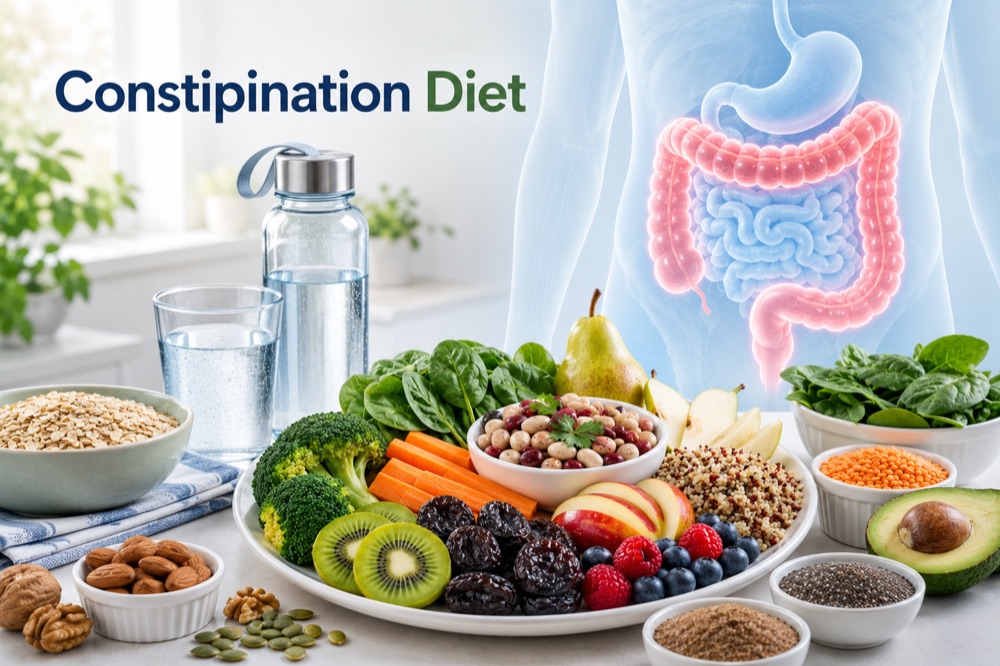
Do build meals around reliable staples such as kiwi, prunes if tolerated, oats, chia
-
Do protect sleep and hydration because both show up in symptom logs more than readers expect
-
Do use small experiments with clear start and stop points
-
Do ask for proper testing when symptoms are escalating instead of improvising harder
-
Do not let dehydration become your default
-
Do not build your routine around ignoring the urge and expect a calm Monday gut
-
Do not interpret one rough day as proof that the whole plan failed
-
Do not self-restrict until your diet collapses to five foods
-
new constipation after age 50
-
blood in stool
-
weight loss
-
vomiting
-
severe pain
-
black stool
-
fainting
-
persistent vomiting
Related reading
- Constipation Relief: Natural Remedies for Regular Bowel Movements
- Chronic Constipation Causes: Why Are You Always Backed Up?
- Constipation Diet: High-Fiber Foods and Hydration for Relief
- When to Worry About Constipation: Red Flags and Medical Advice
- Constipation in Children: Causes, Symptoms, and Gentle Solutions
- Medications for Constipation: Over-the-Counter and Prescription Options
FAQs
Sources
- NIDDK - Definition & Facts for Constipation - NIDDK - 2020 - https://www.niddk.nih.gov/health-information/digestive-diseases/constipation/definition-facts
- NIDDK - Treatment for Constipation - NIDDK - 2020 - https://www.niddk.nih.gov/health-information/digestive-diseases/constipation/treatment
- NHS - Constipation - NHS - 2023 - https://www.nhs.uk/conditions/constipation/
- Mayo Clinic - Constipation - Mayo Clinic - 2025 - https://www.mayoclinic.org/diseases-conditions/constipation/symptoms-causes/syc-20354253
- AGA - Clinical Practice Update on Chronic Constipation - Gastroenterology - 2023 - https://www.gastrojournal.org/article/S0016-5085(23)00192-0/fulltext
- NIDDK - Eating, diet, and nutrition for constipation - NIDDK - 2020 - https://www.niddk.nih.gov/health-information/digestive-diseases/constipation/eating-diet-nutrition