You know something is triggering your symptoms. But you can’t quite put your finger on what it is.
Is it the garlic in your lunch? The poor sleep last night? The stressful meeting before dinner? Or maybe it’s the combination of all three?
Here’s the problem: Your memory is unreliable. When you’re in pain and bloated, you remember the obvious dinner trigger. You forget the rushed breakfast, the second coffee, the afternoon stress spike.
This is why symptom tracking works. It’s not about perfection — it’s about having data that’s better than your recollection on a bad day.
This guide shows you exactly what to track, how to track it, and how to turn that data into actionable insights that lead to relief.
Why Symptom Tracking Works
The Science Behind Tracking
| Benefit | Why It Matters |
|---|---|
| Identifies delayed reactions | Some foods trigger symptoms 12-24 hours later |
| Reveals cumulative effects | One slice of pizza is fine; three days triggers a flare |
| Exposes timing patterns | Symptoms may track with meal timing, not just food choices |
| Captures non-food triggers | Sleep, stress, and hormones often matter more than food |
| Provides doctor-ready data | Objective information speeds up diagnosis and treatment |
What Research Shows
| Study | Finding |
|---|---|
| Monash University | Patients who track symptoms during low-FODMAP diet have better reintroduction success |
| American Journal of Gastroenterology | Symptom tracking improves IBS management outcomes by 40-60% |
| Gut Journal | Food-symptom relationships are highly individual; tracking reveals personal patterns |
| Multiple studies | Digital tracking apps improve adherence compared to paper diaries |
What to Track: The Essential Fields
1. Food and Drink
| What to Log | Why It Matters |
|---|---|
| All meals and snacks | Even small bites can trigger symptoms |
| Beverages | Coffee, alcohol, and sugary drinks are common triggers |
| Portion sizes | Large portions may trigger even “safe” foods |
| Timing | Late-night eating often worsens symptoms |
| Ingredients | Hidden triggers like onion powder, garlic, artificial sweeteners |
Pro tip: Take photos of meals when you can’t write it down. Add details later.
2. Symptom Severity
| Symptom | How to Score (1-10) |
|---|---|
| Bloating | 1 = flat, 10 = visibly distended, painful |
| Abdominal pain | 1 = mild discomfort, 10 = unbearable |
| Nausea | 1 = slight queasiness, 10 = vomiting |
| Gas | 1 = normal, 10 = constant, painful, embarrassing |
| Urgency | 1 = normal, 10 = can’t leave bathroom |
| Fatigue | 1 = energetic, 10 = exhausted |
| Brain fog | 1 = clear, 10 = can’t think straight |
When to score: Morning (before eating), after each meal, and before bed.
3. Bowel Movements
| What to Track | Details |
|---|---|
| Frequency | Number of BMs per day |
| Consistency | Bristol Stool Chart type (1-7) |
| Color | Note any unusual colors (black, red, pale) |
| Difficulty | Straining required? Urgency? Incomplete evacuation? |
| Mucus | Present or absent |
| Blood | Any visible blood (report to doctor) |
The Bristol Stool Chart
| Type | Appearance | What It Means |
|---|---|---|
| Type 1 | Separate hard lumps (like nuts) | Severe constipation |
| Type 2 | Lumpy and sausage-like | Mild constipation |
| Type 3 | Sausage with cracks on surface | Normal |
| Type 4 | Smooth, soft sausage | Normal (ideal) |
| Type 5 | Soft blobs with clear edges | Mild diarrhea |
| Type 6 | Mushy, ragged edges | Moderate diarrhea |
| Type 7 | Liquid, no solid pieces | Severe diarrhea |
Target: Types 3-4 most days indicates healthy bowel function.
4. Sleep Quality
| What to Track | Why It Matters |
|---|---|
| Hours slept | Less than 7 hours often correlates with worse symptoms |
| Quality | Restful vs. restless; waking during night |
| Bedtime | Late bedtimes often correlate with worse next-day symptoms |
| Waking symptoms | Pain, urgency, or reflux waking you up |
Key insight: Poor sleep often predicts worse gut symptoms the next day — sometimes more reliably than food choices.
5. Stress and Mood
| What to Track | How to Measure |
|---|---|
| Stress level | 1-10 scale (1 = calm, 10 = overwhelmed) |
| Mood | Anxious, depressed, irritable, calm, happy |
| Major events | Arguments, deadlines, travel, life changes |
| Relaxation practices | Meditation, breathing, yoga, walking |
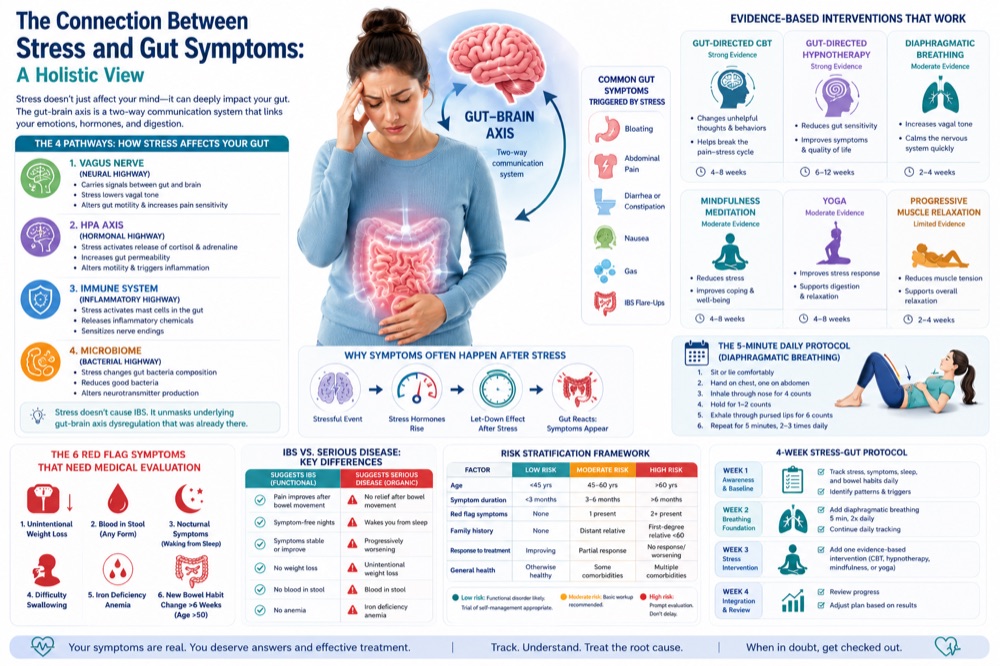
Why it matters: The gut-brain axis is real. Stress directly affects gut motility, acid production, and pain perception.
6. Medications and Supplements
| What to Log | Details |
|---|---|
| Prescription meds | Name, dose, time taken |
| Over-the-counter | Pain relievers, antacids, anti-diarrheals |
| Supplements | Probiotics, digestive enzymes, herbs |
| Side effects | Any symptoms after taking |
Important: NSAIDs (ibuprofen, naproxen) can damage the gut lining and worsen symptoms.
7. Menstrual Cycle (For Women)
| What to Track | Why It Matters |
|---|---|
| Cycle day | Day 1 = first day of period |
| Phase | Follicular, ovulation, luteal, menstruation |
| Symptom changes | Many women have worse IBS during menstruation |
| Hormonal symptoms | Bloating, mood changes, breast tenderness |
Key insight: Hormonal fluctuations significantly affect gut symptoms. Tracking helps distinguish cycle-related flares from food triggers.
When to Track: Timing Matters
Optimal Tracking Schedule
| Time | What to Log |
|---|---|
| Morning (before eating) | Baseline symptoms, bowel movements, sleep quality |
| After each meal | Food consumed, immediate symptoms (30-60 min after) |
| Mid-day | Stress level, energy, any symptoms |
| Evening | Dinner, evening symptoms, stress level |
| Before bed | Final symptom scores, bowel movements, notes |
The 15-Minute Rule
Log within 15 minutes of:
- Finishing a meal
- Experiencing a symptom
- Having a bowel movement
Why: Details fade quickly. “What did I eat for breakfast?” is hard to answer at 8 PM if you logged at 8 AM.
Minimum Viable Tracking
If you can’t track everything, prioritize:
| Priority | What to Track |
|---|---|
| Essential | Meals, symptom severity (1-10), bowel movements |
| Important | Sleep quality, stress level |
| Helpful | Mood, medications, menstrual cycle |
| Nice to have | Exercise, water intake, detailed ingredients |
Remember: 80% consistency is better than 100% for two days then quitting.
How to Track: Methods Compared
Paper Diary
| Pros | Cons |
|---|---|
| No battery needed | Hard to spot patterns |
| Completely private | Easy to lose |
| Free | Requires manual analysis |
| No learning curve | Bulky to carry |
Best for: People who prefer writing, short-term tracking (1-2 weeks)
Spreadsheet
| Pros | Cons |
|---|---|
| Customizable | High friction to log |
| Free | Requires manual analysis |
| Can create charts | Easy to make errors |
| Exportable | Not mobile-friendly |
Best for: Data-savvy users, short-term experiments
Generic Food Apps (MyFitnessPal, etc.)
| Pros | Cons |
|---|---|
| Free versions available | Not designed for gut symptoms |
| Large food database | Misses key correlations |
| Easy logging | No symptom tracking |
| Calorie counting | Can trigger restrictive mindset |
Best for: Calorie tracking, NOT for gut symptom tracking
Gut-Specific Tracking Apps (GutFeel AI, Cara Care, etc.)
| Pros | Cons |
|---|---|
| Designed for gut symptoms | May require subscription |
| AI-powered pattern detection | Requires smartphone |
| Bristol Stool Chart built-in | Learning curve (small) |
| Exportable reports for doctors | Privacy considerations |
| Reminders and streaks |
Best for: Most people seeking gut symptom relief
Finding Patterns: From Data to Insights
The 7-Day Review
Every 7 days, ask yourself:
| Question | What to Look For |
|---|---|
| Which days were best? | What was different about those days? |
| Which days were worst? | Common foods, stress levels, sleep quality? |
| Any food patterns? | Foods that appear on bad days but not good days? |
| Sleep correlation? | Do poor sleep days predict bad symptom days? |
| Stress correlation? | Do high-stress days have worse symptoms? |
| Timing patterns? | Are symptoms worse after rushed meals? Late dinners? |
The 14-Day Pattern Test
After 14 days of tracking:
- Identify your top 3 suspected triggers from your data
- Remove or reduce them for 7 days
- Track symptoms during the elimination period
- Compare to your baseline 14 days
- Decide whether to keep them eliminated or reintroduce
Example:
- Days 1-14: Garlic, onion, and dairy appear frequently on high-bloating days
- Days 15-21: Eliminate all three
- Result: Bloating scores drop from average 7 to average 3
- Conclusion: At least one of these is a genuine trigger
Common Patterns to Look For
| Pattern | What It Suggests |
|---|---|
| Bloating 30-60 min after eating | Possible SIBO, rapid fermentation |
| Bloating 2-4 hours after eating | Possible food intolerance, slower digestion |
| Urgency after coffee | Caffeine stimulates colon |
| Worse symptoms on low-sleep days | Sleep is a major driver |
| Flare after high-stress meetings | Gut-brain axis activation |
| Symptoms worse during period | Hormonal influence |
| Evening bloating, morning relief | Gas accumulation during day |
| Consistent trigger with one food | Likely genuine intolerance |
The Delayed Reaction Trap
Many people miss these:
| Food | Typical Delay |
|---|---|
| High-FODMAP foods | 30 min - 4 hours |
| Dairy (lactose) | 30 min - 2 hours |
| Gluten (sensitivity) | 6 - 48 hours |
| High-fat meals | 2 - 6 hours |
| Alcohol | Next morning or later same day |
| Artificial sweeteners | 4 - 24 hours |
Key insight: If you only track same-day symptoms, you’ll miss delayed reactions. Track for at least 24 hours after each meal.
Red Flags: When Tracking Reveals Something Serious
Symptoms That Need Medical Evaluation
| Symptom | Why It’s Concerning | Action |
|---|---|---|
| Blood in stool | Possible IBD, cancer, bleeding | See doctor promptly |
| Unintentional weight loss | Malabsorption, serious illness | Medical evaluation needed |
| Fever with GI symptoms | Infection, inflammation | Seek care |
| Persistent vomiting | Obstruction, severe illness | Urgent evaluation |
| Symptoms waking you at night | Organic disease (not just IBS) | Gastroenterologist referral |
| Progressive difficulty swallowing | Stricture, motility disorder | Medical evaluation |
| New symptoms after age 50 | Higher cancer risk | Colonoscopy consideration |
| Family history of IBD/celiac | Genetic risk | Screening may be needed |
Sharing Your Data with Healthcare Providers
What Doctors Want to See
| Information | Why It’s Useful |
|---|---|
| Symptom timeline | When did symptoms start? |
| Pattern summary | What makes it better/worse? |
| Bowel habit details | Frequency, consistency, changes |
| Food diary | Potential triggers identified |
| Medication list | Possible side effects |
| Red flag screening | Rules out serious conditions |
How to Prepare for Your Appointment
Before your visit:
- Export 2-4 weeks of data from your tracking app
- Highlight your top 3 concerns to discuss
- List questions you want answered
- Bring medication list including supplements
- Note family history of GI conditions
During your visit:
- Show patterns, not just raw data
- Ask about specific tests if red flags present
- Discuss treatment options based on patterns
The GutFeel Approach to Symptom Tracking
What Makes GutFeel AI Different
| Feature | Why It Matters |
|---|---|
| Photo-based meal logging | Log in seconds, not minutes |
| Bristol Stool Chart built-in | Visual reference removes guesswork |
| AI pattern detection | Finds correlations you might miss |
| Weekly summary reports | See trends, not just daily logs |
| Doctor-ready exports | PDF reports your clinician can use |
| Sleep and stress tracking | Captures gut-brain axis connections |
| Delayed reaction alerts | Identifies 12-24 hour patterns |
Getting Started with GutFeel AI
Week 1: Baseline
- Log everything without changing anything
- Aim for 80% consistency (not perfection)
- Review your first weekly summary
Week 2: Pattern Spotting
- Identify one potential trigger from your data
- Note your best and worst days
- What was different?
Week 3-4: Experiment
- Test one change based on your data
- Track whether symptoms improve
- Keep what works, adjust what doesn’t
Month 2+: Iteration
- Build your personal playbook
- Expand diet based on tolerance
- Maintain tracking during flares
Common Tracking Mistakes (And How to Avoid Them)
Mistake #1: Tracking Only Food
Problem: You miss sleep, stress, and timing — which may be bigger drivers than food.
Fix: Log sleep quality, stress level, and meal timing alongside food.
Mistake #2: Logging at the End of the Day
Problem: You forget details. “What did I have for breakfast?” becomes impossible to answer.
Fix: Log within 15 minutes of eating. Use photo logging for speed.
Mistake #3: Giving Up After Missing a Day
Problem: All-or-nothing thinking leads to quitting.
Fix: Aim for 80% consistency. Four honest days out of seven gives usable data.
Mistake #4: Reacting to Single Meals
Problem: One bad meal doesn’t mean a food is a trigger. Look for consistent patterns.
Fix: Review weekly trends, not daily logs. A food needs to trigger symptoms 3+ times to be considered a likely trigger.
Mistake #5: Over-Restricting Based on Fear
Problem: You eliminate foods that never bothered you “just in case.”
Fix: Only eliminate foods that show a clear pattern in your data. Reintroduce systematically.
Mistake #6: Not Tracking Long Enough
Problem: You stop tracking after a few days when patterns haven’t emerged yet.
Fix: Commit to at least 14 days. Some patterns take 3-4 weeks to become clear.
Special Considerations
Tracking with IBS
| Focus Area | What to Emphasize |
|---|---|
| Bowel habits | Frequency, consistency (Bristol Chart), urgency |
| Pain location | Upper vs. lower abdomen, cramping vs. constant |
| Food triggers | FODMAPs, fiber types, fat content |
| Stress correlation | IBS is highly stress-responsive |
Tracking with SIBO
| Focus Area | What to Emphasize |
|---|---|
| Timing of bloating | 30-90 min after eating suggests SIBO |
| Gas severity | Excessive gas is common in SIBO |
| Treatment response | Track during and after antibiotic/herbal treatment |
| Die-off symptoms | Note worsening during initial treatment |
Tracking with IBD (Crohn’s, Ulcerative Colitis)
| Focus Area | What to Emphasize |
|---|---|
| Blood in stool | Critical to track for IBD flares |
| Weight changes | Unintentional loss needs attention |
| Fatigue level | Often correlates with inflammation |
| Medication effects | Track response to biologics, immunomodulators |
Tracking During Pregnancy
| Focus Area | What to Emphasize |
|---|---|
| Constipation | Very common in pregnancy |
| Heartburn/reflux | Hormonal changes affect digestion |
| Food aversions | May affect nutrition |
| Symptom changes by trimester | Hormones shift throughout pregnancy |
The Gut-Brain Axis: Why Mood Tracking Matters
The Science
| Connection | How It Works |
|---|---|
| Vagus nerve | Direct communication line between gut and brain |
| Serotonin | 90% of serotonin is produced in the gut |
| Stress hormones | Cortisol and adrenaline affect gut motility |
| Inflammation | Gut inflammation can affect mood and cognition |
What to Track for Gut-Brain Insights
| Metric | How It Helps |
|---|---|
| Anxiety level | Correlates with symptom flares |
| Depression symptoms | Can worsen pain perception |
| Stress events | Arguments, deadlines, traffic |
| Relaxation practices | Meditation, breathing, yoga |
| Social connection | Loneliness can worsen symptoms |
The Stress-Symptom Cycle
Breaking the cycle:
- Track stress alongside symptoms
- Identify your stress-symptom patterns
- Implement daily stress management
- Watch symptoms improve even without diet changes
FAQs
How long should I track before I see patterns?
Most people identify at least one clear pattern within 10-14 days. Complex cases with multiple triggers may need 4-6 weeks.
Do I need to track every single meal?
Aim for 80% consistency. Four honest days out of seven gives usable data. Perfection isn’t required.
Should I track water intake?
Helpful but not essential. Dehydration can worsen constipation, so if that’s your issue, track it.
Is it normal to feel anxious about tracking?
Some people do. If tracking feels obsessive or triggers food anxiety, scale back to just meals and symptoms. Discuss with your therapist if you have an eating disorder history.
Can I use tracking for low-FODMAP reintroduction?
Yes. Many users track their elimination and reintroduction phases. The weekly reports help identify which FODMAP groups trigger symptoms.
What if my symptoms don’t have a clear pattern?
Some people have multiple triggers or non-food drivers (stress, sleep, hormones). Extend tracking to 4-6 weeks and look for broader patterns.
Should I share my tracking data with my doctor?
Absolutely. Well-organized data speeds up diagnosis and helps your doctor understand your patterns. GutFeel AI exports PDF reports for this purpose.
Can tracking replace medical evaluation?
No. Tracking helps you understand patterns, but it doesn’t diagnose conditions. See a doctor for persistent symptoms, red flags, or if self-management isn’t working.
Key Takeaways
- Tracking beats memory — Your recollection is unreliable, especially when you’re symptomatic
- Track food AND non-food factors — Sleep, stress, and timing often matter as much as food
- Use the Bristol Stool Chart — Removes guesswork from bowel descriptions
- Score symptoms 1-10 — Quantifies how you feel for pattern detection
- Log within 15 minutes — Details fade quickly; real-time logging is most accurate
- Review weekly, not daily — Patterns emerge over weeks, not single meals
- Aim for 80% consistency — Perfection leads to quitting; consistency leads to answers
- Delayed reactions are real — Some foods trigger symptoms 12-24 hours later
- Share data with your doctor — Organized tracking speeds up diagnosis
- Use the data to experiment — Once you see patterns, test changes systematically
Sources
- Monash University. “FODMAP Diet: Symptom Tracking During Reintroduction.” 2024.
- American Journal of Gastroenterology. “ACG Clinical Guideline: Irritable Bowel Syndrome.” 2021.
- Gut Journal. “Food-Symptom Relationships in IBS: A Digital Health Approach.” 2022.
- WHO. “Digital Interventions for Health System Strengthening.” 2019.
- NIH National Library of Medicine. “Mobile Health (mHealth) for GI Conditions.” 2024.
- JMIR. “Digital Self-Management Interventions for GI Symptoms.” 2022.
- NIDDK. “Symptoms & Causes of IBS.” 2023.
- Nature Digital Medicine. “AI-Powered Symptom Tracking in Gastroenterology.” 2023.
- CDC. “Sleep and Chronic Disease.” 2024.
- NHS. “Self-Help for IBS.” 2024.