The healthiest gut isn’t the one with the most supplements. It’s usually the one with the least chaos.
If you’ve spent any time scrolling through wellness content, you’ve probably encountered claims that your gut is the root of everything—your energy, your mood, your skin, even your cravings. Some of that is hype. But the core truth is solid: your digestive system is a command center, not just a processing tube.
This guide cuts through the noise. You’ll learn what actually matters for gut health, which tests are worth your money, and how to build a routine that works without turning your life into a science experiment.
What Is Gut Health, Really?
Gut health has become a buzzword, but clinicians think about it in concrete terms. A healthy gut means:
- Efficient digestion and absorption of nutrients
- Balanced microbiome diversity (think hundreds of bacterial species, not just one “good” strain)
- Intact gut barrier function (what people call “leaky gut” when it’s compromised)
- Stable immune responses (not overreacting to harmless foods, not underreacting to threats)
- Reliable motility (bowel movements that happen without drama)
When any of these systems falters, you notice. Bloating after meals. Afternoon crashes. Skin flares that seem to come from nowhere. The frustrating feeling that your body is reacting to something, but you can’t pin down what.
The Microbiome: Your Inner Ecosystem
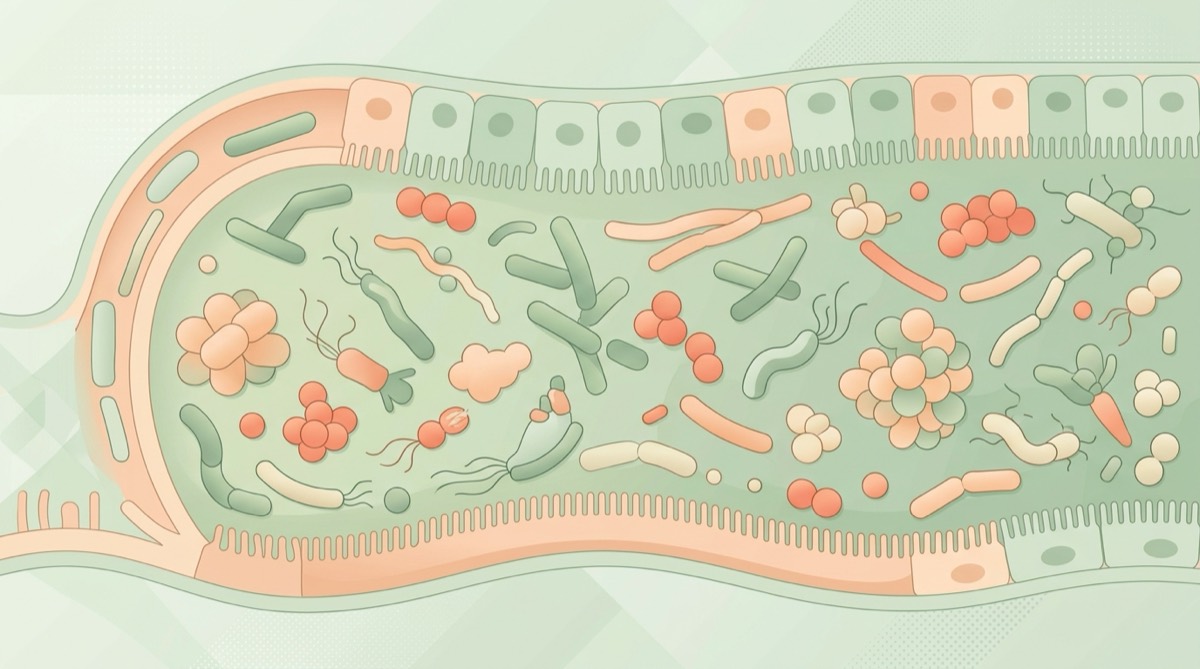
Your gut houses roughly 100 trillion microorganisms—bacteria, viruses, fungi, and archaea. Collectively, they weigh about as much as your brain. They’re not passengers; they’re active participants in your health.
Here’s what your microbiome does for you:
| Function | Why It Matters |
|---|---|
| Breaks down fiber | Produces short-chain fatty acids that fuel colon cells and reduce inflammation |
| Synthesizes vitamins | Makes vitamin K, biotin, and folate you can’t get from food alone |
| Trains your immune system | Teaches immune cells what to attack and what to ignore |
| Communicates with your brain | Sends signals via the vagus nerve affecting mood, appetite, and stress |
| Protects against pathogens | Crowds out harmful bacteria that could make you sick |
The Gut-Brain Axis: Why Your Mood Lives in Your Gut
You’ve felt it before: butterflies before a presentation, a “gut feeling” about a decision, nausea during stress. That’s not poetic license. Your gut and brain are in constant conversation through:
- The vagus nerve – A direct information highway between gut and brain
- Neurotransmitters – Your gut produces 90% of your serotonin
- Immune signaling – Inflammation in the gut can trigger brain fog and fatigue
- Microbial metabolites – Bacterial byproducts that cross into your bloodstream and affect brain function
This is why stress can wreck your digestion—and why fixing your gut can calm your mind. They’re not separate systems.
Signs Your Gut Needs Attention
Your body sends signals long before problems become “conditions.” Watch for:
Systemic Signals
- Unexplained fatigue, especially after meals
- Brain fog that clears when you change your diet
- Skin issues (eczema, acne, rosacea) that flare with digestive symptoms
- Mood swings tied to hunger or certain foods
- Frequent infections or slow recovery from illness
Important: Blood in stool, unintentional weight loss, persistent vomiting, or pain that wakes you at night need medical evaluation. Don’t self-treat these.
What Actually Works for Gut Health
The gut wellness space is crowded with products that promise transformation. Most aren’t necessary. Here’s what has real evidence behind it.
1. Eat for Diversity, Not Perfection
Research shows that people who eat 30+ different plant foods per week have significantly more diverse microbiomes than those who eat 10 or fewer. Diversity matters more than hitting exact macro targets.
Practical approach:
- Rotate your vegetables (don’t eat the same salad daily)
- Include herbs and spices—they’re plants too
- Try one new grain, legume, or vegetable each week
- Frozen and canned count (just watch added sodium and sugar)
2. Prioritize Fiber—But Build Up Slowly
Fiber feeds your good bacteria. But if you’re currently eating 10 grams a day and jump to 40, you’ll feel miserable.
The ramp-up method:
- Week 1-2: Add one high-fiber food daily (kiwi, oats, or chia)
- Week 3-4: Add a second fiber source at a different meal
- Week 5+: Gradually increase portions and variety
Target: 25-35 grams daily for most adults
3. Include Fermented Foods
Fermented foods deliver live bacteria and compounds that support your existing microbiome. Unlike probiotic supplements (which add specific strains temporarily), fermented foods may help diversify your gut long-term.
Evidence-backed options:
- Yogurt with live cultures (if you tolerate dairy)
- Kefir (often easier to digest than milk)
- Sauerkraut and kimchi (refrigerated, not shelf-stable)
- Miso and tempeh
- Kombucha (watch sugar content)
Aim for 1-2 servings daily. Consistency beats quantity here.
4. Move Your Body
Exercise increases microbiome diversity and improves motility. You don’t need marathon training—moderate activity works.
What helps:
- 30 minutes of walking most days
- Yoga (especially poses that compress and release the abdomen)
- Light strength training
- Even standing and stretching after meals
5. Protect Your Sleep
Your gut bacteria have circadian rhythms. Disrupt your sleep, and you disrupt them. Poor sleep is linked to:
- Reduced microbial diversity
- Increased gut permeability
- Higher inflammation markers
- Worse IBS symptoms
Sleep hygiene for gut health:
- Stop eating 2-3 hours before bed
- Keep caffeine before 2 p.m.
- Create a consistent sleep schedule (even on weekends)
- Dim lights an hour before sleep
6. Manage Stress—Because It’s Not Optional
Chronic stress alters gut motility, increases permeability, and shifts your microbiome composition. It’s not “all in your head.”
Stress tools that actually help digestion:
- Diaphragmatic breathing (5 minutes before meals)
- Progressive muscle relaxation
- Mindful eating (no screens, sit down, chew thoroughly)
- Therapy or counseling for anxiety/depression
- Time in nature
Probiotics and Prebiotics: What’s Worth Buying?
Probiotics
Probiotics can help specific conditions, but they’re not a daily requirement for everyone.
Strains with solid evidence:
- Lactobacillus rhamnosus GG – Diarrhea prevention, IBS
- Bifidobacterium infantis 35624 – IBS with bloating
- Saccharomyces boulardii – Antibiotic-associated diarrhea, C. diff prevention
- Lactobacillus plantarum 299v – IBS with abdominal pain
When to consider a probiotic:
- During and after antibiotics
- For diagnosed IBS (trial for 4-8 weeks)
- Traveler’s diarrhea prevention
- Under guidance for SIBO or IBD
When to skip:
- If you’re healthy and symptom-free
- If you expect miracles without diet changes
- If the product doesn’t list specific strains and CFU counts
Prebiotics
Prebiotics are fibers that feed your good bacteria. They’re often more impactful than probiotics.
Best prebiotic foods:
- Garlic and onions (cooked if raw bothers you)
- Asparagus
- Jerusalem artichokes
- Dandelion greens
- Green bananas
- Oats and barley
- Legumes (lentils, chickpeas, beans)
If food sources trigger symptoms, start with small amounts or consider a supplement like partially hydrolyzed guar gum (PHGG), which is gentler than inulin.
Gut Tests: Which Ones Are Worth It?
The direct-to-consumer gut test market is booming. Some are useful; others are expensive fortune-telling.
Tests with Clinical Value
| Test | What It Detects | When It’s Useful |
|---|---|---|
| Fecal calprotectin | Intestinal inflammation | Distinguishing IBS from IBD |
| H. pylori stool antigen | H. pylori infection | Ulcers, chronic gastritis |
| Celiac panel (tTG-IgA) | Celiac disease | Chronic diarrhea, iron deficiency, family history |
| Colonoscopy | Polyps, cancer, IBD | Screening at 45+, red flag symptoms |
| SIBO breath test | Small intestinal bacterial overgrowth | Bloating unresponsive to other treatments |
Tests to Approach Carefully
| Test | Limitations |
|---|---|
| Stool microbiome sequencing | Shows what’s there, not what it’s doing; no agreed “normal” range |
| IgG food sensitivity panels | High false-positive rate; often leads to unnecessary restrictions |
| Comprehensive stool tests (GI-MAP, etc.) | Can detect harmless organisms; treatment doesn’t always improve symptoms |
| Zonulin tests (leaky gut) | Not validated for routine use; results don’t change management |
Bottom line: Test when results will change your next step. Don’t test just to have answers without a plan.
Common Gut Conditions: A Quick Reference
Your Two-Week Gut Reset Plan
Ready to take action? Here’s a practical framework that doesn’t require overhauling your life.
Week 2: Targeted Experiments
Pick ONE lever to adjust based on Week 1:
- If bloating dominates: Try smaller, more frequent meals. Reduce carbonation and gum.
- If constipation is the issue: Add kiwi (2 daily) or prune juice. Increase water. Walk after meals.
- If diarrhea is prominent: Reduce caffeine, alcohol, and very fatty meals. Add soluble fiber (oats, bananas).
- If reflux bothers you: Stop eating 3 hours before bed. Elevate the head of your bed. Identify trigger foods.
When to See a Doctor
Self-management has limits. Seek medical care if you have:
- Blood in stool (bright red or black/tarry)
- Unintentional weight loss
- Fever with digestive symptoms
- Anemia or iron deficiency
- Symptoms that wake you at night
- Persistent vomiting
- Family history of IBD, celiac, or colon cancer
- New symptoms after age 50
The GutFeel Approach
Tracking is where most gut plans fall apart. People rely on memory, assume they know their triggers, and miss patterns that only emerge over weeks.
GutFeel AI helps you:
- Log meals quickly with photos and simple tags
- Track symptoms in real time (not at the end of the day when you forget)
- See weekly trends instead of reacting to one bad meal
- Connect the dots between sleep, stress, and digestive symptoms
The goal isn’t perfection. It’s clarity.
FAQs
Key Takeaways
- Gut health is systemic – It affects and is affected by sleep, stress, diet, and movement
- Diversity beats perfection – 30+ plant foods weekly matters more than any single superfood
- Fiber is foundational – But increase gradually to avoid discomfort
- Fermented foods > most supplements – Food sources work synergistically
- Test strategically – Only when results change your next step
- Track to learn – Patterns emerge over weeks, not single meals
- Red flags need evaluation – Don’t self-treat bleeding, weight loss, or severe pain
Sources
- Harvard T.H. Chan School of Public Health. “The Microbiome.” 2024. https://nutritionsource.hsph.harvard.edu/microbiome/
- American Gastroenterological Association. “Gut-Brain Axis.” 2023.
- NIDDK. “Your Digestive System & How It Works.” 2023. https://www.niddk.nih.gov/health-information/digestive-diseases/digestive-system-how-it-works
- World Health Organization. “Healthy Diet.” 2024. https://www.who.int/news-room/fact-sheets/detail/healthy-diet
- Mayo Clinic. “Probiotics and Prebiotics.” 2025. https://www.mayoclinic.org/healthy-lifestyle/consumer-health/expert-answers/probiotics/faq-20058065
- Monash University. “FODMAP Resources.” 2024. https://www.monashfodmap.com/
- Cleveland Clinic. “Gut Health.” 2024. https://my.clevelandclinic.org/health/body/25174-gut-health