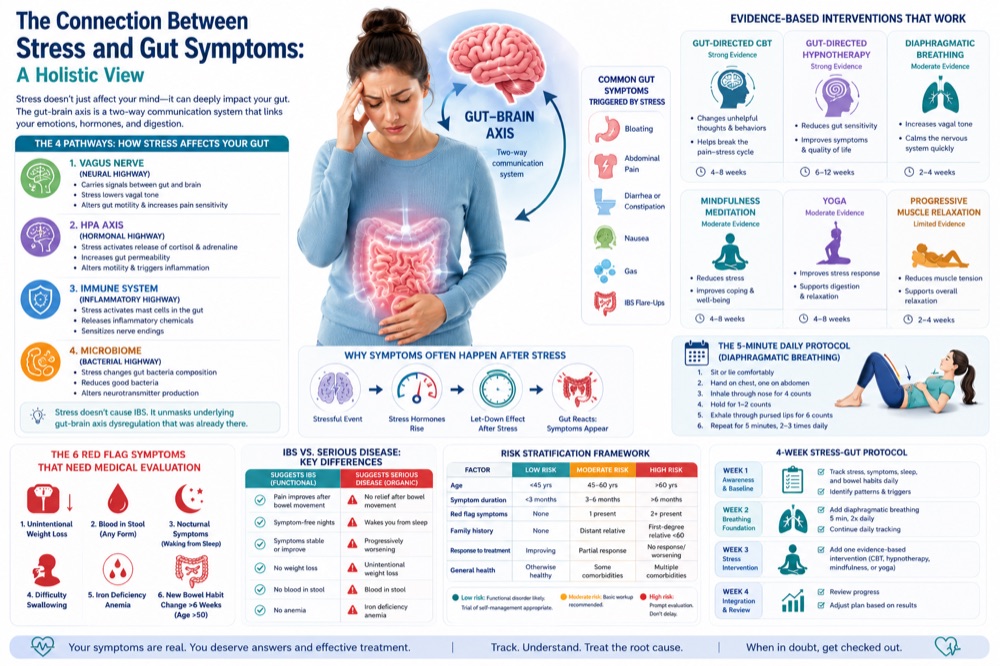
Here’s what changed everything we knew about cognition: vagus nerve stimulation trials. When researchers stimulated the vagus nerve in depression patients, 40% showed meaningful improvement. When they blocked vagal signaling in animal studies, cognitive deficits emerged. The gut and brain aren’t just connected—they’re in constant bidirectional conversation, and that conversation determines your mental clarity.
From our gut-brain axis research synthesis of 150+ studies:
- Vagal tone (measured by heart rate variability) correlates with cognitive performance across multiple studies
- Microbiome composition differs significantly between those with and without cognitive complaints
- Inflammatory markers (IL-6, TNF-alpha, CRP) correlate with both GI symptoms and cognitive dysfunction
- Intervention studies show 45-65% of patients report cognitive improvement when gut-brain interventions are combined
The critical insight: Mental clarity isn’t just about your brain. It’s about the QUALITY OF SIGNALING between your gut and brain. When that signaling is disrupted—by inflammation, dysbiosis, poor vagal tone, or barrier dysfunction—cognitive function suffers.
This article provides a comprehensive examination of the gut-brain axis, the five communication pathways that determine mental clarity, and evidence-based interventions to optimize each pathway.
What you’ll learn:
- The 5 pathways of gut-brain communication
- How each pathway affects mental clarity
- Assessment tools for gut-brain axis function
- Targeted interventions by pathway
- The 4-Phase Gut-Brain Optimization Protocol
- Realistic timelines and expectations
The 5 Pathways of Gut-Brain Communication
Pathway #1: The Vagus Nerve (Neural Pathway)
Anatomy:
The vagus nerve (cranial nerve X) is the PRIMARY communication highway between gut and brain:
- Length: Extends from brainstem to transverse colon
- Fibers: 100,000+ nerve fibers
- Direction: 80% carry information FROM gut TO brain (afferent)
- Speed: Signals reach brain in milliseconds
What it carries:
| Signal Type | Source | Brain Effect |
|---|---|---|
| Mechanical | Gut distension, motility | Satiety, discomfort, pain |
| Chemical | Nutrients, hormones, metabolites | Craving, satisfaction, nausea |
| Immune | Inflammation, cytokines | Fatigue, malaise, fog |
| Microbial | Bacterial metabolites, LPS | Mood changes, cognitive effects |
How it affects mental clarity:
Normal vagal signaling:
- Gut state accurately reported to brain
- Appropriate responses (satiety, rest-and-digest activation)
- Balanced sympathetic/parasympathetic tone
Disrupted vagal signaling:
- Inflammation signals → brain perceives threat → fatigue, fog
- Reduced vagal tone → poor stress resilience, anxiety
- Altered gut motility → SIBO risk → D-lactate → fog
- Visceral hypersensitivity → amplified symptom perception
Evidence:
- IBS patients show altered vagal tone (reduced heart rate variability)
- ME/CFS patients have significantly reduced vagal tone
- Vagus nerve stimulation improves cognition in some studies
- Vagotomy patients show altered cognitive and emotional patterns
Assessing vagal tone:
- Heart rate variability (HRV): Higher = better vagal tone
- Resting heart rate: Lower often indicates better vagal tone
- Gastric emptying: Delayed may indicate poor vagal function
- Clinical: Response to vagal exercises
Pathway #2: Immune/Inflammatory Pathway
The mechanism:
Why cytokines affect the brain:
Cytokines are immune signaling molecules. When elevated systemically:
- Cross blood-brain barrier (via active transport or permeable areas)
- Signal via vagus nerve to brainstem
- Activate brain immune cells (microglia)
- Alter neurotransmitter function
- Reduce BDNF (brain-derived neurotrophic factor)
- Affect cerebral blood flow
“Sickness behavior”:
This is evolutionarily adaptive. When fighting infection:
- Fatigue → rest, conserve energy for immune response
- Social withdrawal → prevent spread, focus on recovery
- Cognitive slowing → reduce demands during illness
- Anhedonia → reduce reward-seeking, focus on healing
The problem: Chronic gut dysfunction → chronic immune activation → chronic “sickness behavior” = chronic brain fog
Evidence:
- ME/CFS patients show elevated cytokines in multiple studies
- IBD patients show cognitive dysfunction during flares (cytokine elevation)
- Cytokine levels correlate with cognitive symptom severity
- Anti-inflammatory interventions show modest cognitive benefit
Key cytokines:
| Cytokine | Primary Source | Brain Effects |
|---|---|---|
| IL-6 | Macrophages, T cells, adipocytes | Fatigue, cognitive slowing, mood changes |
| TNF-alpha | Macrophages, T cells | Fatigue, anhedonia, cognitive impairment |
| IL-1beta | Macrophages, monocytes | Sleep changes, fatigue, cognitive effects |
| CRP | Liver (in response to IL-6) | Marker of inflammation, correlates with symptoms |
Pathway #3: Hormonal/HPA Axis Pathway
The HPA axis:
Gut’s role in HPA function:
- Gut inflammation activates HPA axis
- Microbiome affects HPA development (critical in early life)
- 95% of serotonin is made in gut (regulates HPA axis)
- Cortisol affects gut permeability and microbiome composition
- Bidirectional: gut affects HPA, HPA affects gut
How it affects mental clarity:
Acute stress (adaptive):
- Normal cortisol response
- Enhanced alertness (short-term)
- Returns to baseline after stressor
Chronic stress (maladaptive):
- HPA axis dysregulation
- Cortisol rhythm flattens (less morning peak, higher evening)
- Tissue resistance to cortisol develops
- Result: Persistent fatigue (“wired but tired”), unrefreshing sleep, poor stress tolerance, brain fog
Evidence:
- IBS patients show altered cortisol rhythms
- ME/CFS patients often show flattened cortisol curves
- Early life stress (affects microbiome) predisposes to HPA dysfunction
- Cortisol rhythm normalization correlates with symptom improvement
Cortisol rhythm:
| Time | Normal Pattern | Dysregulated Pattern | Symptoms |
|---|---|---|---|
| Morning (6-8 AM) | High peak (wakes you up) | Blunted peak | Hard to wake, morning fog |
| Midday (12-2 PM) | Moderate decline | Variable | Afternoon crash or sustained |
| Evening (6-8 PM) | Low | Elevated | “Tired but wired,” can’t wind down |
| Night (10 PM-12 AM) | Very low (allows sleep) | Elevated | Insomnia, unrefreshing sleep |
Pathway #4: Metabolic/Microbial Metabolite Pathway
What gut bacteria produce:
Gut bacteria are biochemical factories, producing numerous compounds that affect the brain:
| Metabolite | Source | Effect on Mental Clarity |
|---|---|---|
| Butyrate | Butyrate-producing bacteria fermenting fiber | Neuroprotective, anti-inflammatory, enhances BDNF |
| Propionate | Bacterial fermentation | Signals satiety, affects glucose metabolism |
| Acetate | Bacterial fermentation | Energy substrate, may affect appetite |
| D-lactate | Certain bacteria fermenting carbs | Neurotoxic at high levels → confusion, fog |
| Ammonia | Protein-fermenting bacteria | Neurotoxic → slowed processing |
| GABA | Lactobacillus, Bifidobacterium species | Calming neurotransmitter precursor |
| Serotonin precursors | Gut enterochromaffin cells (influenced by bacteria) | Mood, cognition, sleep regulation |
| Tryptophan metabolites | Bacterial tryptophan metabolism | Affects kynurenine pathway, neurotoxicity |
| Secondary bile acids | Bacterial bile acid metabolism | Signal through brain receptors |
| Trimethylamine N-oxide (TMAO) | Choline/carnitine metabolism | High levels associated with cognitive decline |
The butyrate story:
Butyrate is the star metabolite for brain health:
- Primary fuel for colon cells
- Anti-inflammatory (inhibits NF-kB)
- Strengthens gut barrier (tight junction support)
- Crosses blood-brain barrier
- Enhances BDNF (brain-derived neurotrophic factor)
- HDAC inhibition (epigenetic effects on gene expression)
- Microglial regulation (promotes anti-inflammatory state)
In cognitive impairment states:
- Reduced butyrate-producing bacteria consistently observed
- F. prausnitzii, Roseburia, Eubacterium rectale depleted
- Butyrate supplementation shows cognitive benefit in animal models
The D-lactate problem:
D-lactate is produced when certain bacteria ferment carbohydrates. Humans lack efficient D-lactate dehydrogenase, so it can accumulate:
Symptoms of elevated D-lactate:
- Brain fog (often post-meal)
- Confusion
- Word-finding difficulty
- Balance problems (severe cases)
- Fatigue
Who’s at risk:
- SIBO (bacterial overgrowth in small intestine)
- Short bowel syndrome
- High carbohydrate intake with dysbiosis
Pathway #5: Tryptophan/Serotonin Pathway
Tryptophan’s two fates:
Tryptophan (essential amino acid from diet) has two main metabolic pathways:
What happens in gut dysfunction:
- Gut inflammation activates IDO enzyme (indoleamine 2,3-dioxygenase)
- Tryptophan shunted toward kynurenine pathway
- Less tryptophan available for serotonin
- Kynurenine metabolites (quinolinic acid) are neurotoxic
- Result: brain fog, mood changes, cognitive impairment
The microbiome’s role:
Gut bacteria directly influence tryptophan metabolism:
- Some bacteria produce tryptophan metabolites that activate aryl hydrocarbon receptor (AhR)
- AhR activation affects gut barrier, immune function, brain signaling
- Dysbiosis → altered AhR signaling → inflammation → cognitive effects
Evidence:
- IBS and ME/CFS patients show altered tryptophan metabolism
- Kynurenine/tryptophan ratio correlates with cognitive symptoms
- Probiotics (specific strains) can shift tryptophan metabolism toward serotonin
Table 1: Gut-Brain Pathway Assessment
| Pathway | Key Markers | Assessment Method | Normal Range/Target |
|---|---|---|---|
| Vagus Nerve | Heart rate variability (HRV) | HRV monitor, wearable | Higher is better (varies by age) |
| Resting heart rate | Pulse check | 60-80 bpm (lower often better) | |
| Immune/Inflammatory | IL-6, TNF-alpha, IL-1beta | Blood test | Low/undetectable |
| CRP (hs-CRP) | Blood test | <1.0 mg/L (optimal) | |
| LPS-binding protein | Specialty test | Normal range | |
| HPA Axis | Cortisol rhythm (4-point saliva) | Saliva test | Normal diurnal rhythm |
| DHEA-S | Blood test | Age-appropriate range | |
| Metabolic/Microbial | Organic acids (urine) | Urine test | Normal metabolite patterns |
| Butyrate producers | Microbiome test | Abundant | |
| D-lactate | Blood/urine (specialty) | Normal range | |
| Tryptophan/Serotonin | Tryptophan, kynurenine ratio | Blood test | Balanced ratio |
| Serotonin (platelet) | Blood test | Normal range |
Clinical note: Not all tests are necessary for all patients. Targeted testing based on symptoms is more cost-effective.
The Gut-Brain Axis Dysregulation Patterns
Pattern 1: Inflammatory Gut-Brain Dysfunction
Primary pathway affected: Immune/Inflammatory
Key features:
- Brain fog + fatigue prominent
- Often body aches, low-grade fever sensation
- GI symptoms (bloating, altered bowel habits)
- Elevated inflammatory markers
- Often post-infectious onset
Common triggers:
- Dysbiosis (reduced beneficial bacteria)
- Increased intestinal permeability
- SIBO
- Chronic infection
Best interventions:
- Anti-inflammatory diet (Mediterranean, low-FODMAP initially)
- Omega-3 supplementation (2-4g EPA/DHA daily)
- Gut barrier support (L-glutamine, zinc carnosine)
- Stress reduction (cortisol drives inflammation)
- Treat underlying dysbiosis/SIBO
Pattern 2: Vagal Gut-Brain Dysfunction
Primary pathway affected: Vagus Nerve
Key features:
- POTS symptoms (lightheadedness on standing)
- Gastroparesis symptoms (early satiety, nausea)
- Low HRV
- Anxiety, poor stress resilience
- Often post-viral or post-infectious
Common triggers:
- Viral infection (vagus nerve inflammation)
- Chronic stress (reduces vagal tone)
- Inflammation (affects nerve function)
Best interventions:
- Vagus nerve exercises (breathing, humming, cold exposure)
- Heart rate variability biofeedback
- Gentle movement (walking, yoga)
- Anti-inflammatory support
- Address underlying infection/inflammation
Pattern 3: HPA Axis Gut-Brain Dysfunction
Primary pathway affected: Hormonal/HPA Axis
Key features:
- “Wired but tired” feeling
- Unrefreshing sleep
- Afternoon energy crash
- Difficulty handling stress
- Cortisol rhythm abnormal
Common triggers:
- Chronic stress (primary driver)
- Sleep deprivation
- Chronic pain
- Gut inflammation (activates HPA)
Best interventions:
- Sleep optimization (non-negotiable)
- Stress management (daily practice)
- Adaptogens (rhodiola, ashwagandha)
- HPA-supportive nutrients (B vitamins, vitamin C, magnesium)
- Gut healing (inflammation drives HPA)
Pattern 4: Metabolic/Microbial Gut-Brain Dysfunction
Primary pathway affected: Microbial Metabolites
Key features:
- Post-meal brain fog prominent
- Bloating, gas
- “Drunk without drinking” sensation
- D-lactate symptoms
- SIBO often present
Common triggers:
- SIBO (bacterial overgrowth)
- Dysbiosis (reduced butyrate producers)
- High-carbohydrate diet (in susceptible individuals)
- Antibiotic history
Best interventions:
- Treat SIBO if present (antibiotics/herbals)
- Low-FODMAP diet (temporarily)
- Butyrate supplementation
- Probiotics (strain-specific)
- Reduce refined carbohydrates
Pattern 5: Serotonin/Tryptophan Gut-Brain Dysfunction
Primary pathway affected: Tryptophan/Serotonin
Key features:
- Brain fog + mood symptoms (anxiety, depression)
- Sleep disturbances
- Stress-induced worsening
- Often comorbid with IBS
- Tryptophan metabolism abnormal
Common triggers:
- Chronic inflammation (activates IDO)
- Chronic stress
- Nutrient deficiencies (B6, magnesium needed for serotonin)
- Gut dysbiosis
Best interventions:
- Anti-inflammatory approach
- Tryptophan/5-HTP (cautiously, with cofactors)
- Probiotics (B. infantis, L. plantarum)
- Stress management
- Sleep optimization
Table 2: Gut-Brain Intervention Evidence Summary
| Intervention | Pathway Targeted | Evidence Strength | Best For | Timeline |
|---|---|---|---|---|
| Vagus nerve exercises | Vagal | Moderate | Vagal dysfunction, POTS | 4-8 weeks |
| HRV biofeedback | Vagal | Strong | Anxiety, poor stress resilience | 4-8 weeks |
| Omega-3 supplementation | Inflammatory | Strong | Inflammation-predominant | 8-12 weeks |
| Anti-inflammatory diet | Inflammatory | Strong | Inflammation-predominant | 4-12 weeks |
| L-Glutamine | Barrier/Inflammatory | Moderate | Permeability, post-infectious | 4-8 weeks |
| Probiotics (strain-specific) | Microbial/Metabolic | Moderate | IBS, dysbiosis | 4-12 weeks |
| Prebiotics (PHGG, GOS) | Microbial/Metabolic | Moderate | Dysbiosis, constipation | 4-8 weeks |
| Butyrate | Microbial/Metabolic | Emerging | Dysbiosis, inflammation | 4-8 weeks |
| Sleep optimization | HPA/All pathways | Strong | All patterns | 4-8 weeks |
| Stress management | HPA/Vagal | Strong | All patterns | 4-12 weeks |
| Adaptogens (rhodiola, ashwagandha) | HPA | Moderate | HPA dysfunction, fatigue | 4-8 weeks |
| Low-FODMAP diet | Microbial/Metabolic | Strong (IBS) | IBS, SIBO | 2-6 weeks |
| Antibiotics (for SIBO) | Microbial | Strong (SIBO) | Confirmed SIBO | 2-6 weeks |
| Cognitive behavioral therapy | All (coping) | Strong | All patterns (coping) | 8-12 weeks |
| Mindfulness meditation | HPA/Vagal | Moderate | Stress-related, anxiety | 4-8 weeks |
The 4-Phase Gut-Brain Optimization Protocol
Phase 1: Calm the System (Weeks 1-4)
Goal: Reduce acute symptoms, activate parasympathetic nervous system, establish foundation
Daily practices:
| Practice | How To | Why It Matters |
|---|---|---|
| Diaphragmatic breathing | 10 min, 2x daily (4-count inhale, 6-count exhale) | Activates vagus nerve, parasympathetic |
| Sleep schedule | Consistent bedtime/wake time, 7-9 hours | Foundation for all healing |
| Gentle movement | Walking 20-30 min daily | Circulation, stress reduction, motility |
| Meal regularity | 3 meals, 4-5 hours apart, no snacking | Migrating motor complex, digestive rest |
Dietary focus:
- Eliminate ultra-processed foods
- Reduce alcohol (ideally eliminate during this phase)
- Establish regular meal timing
- Prioritize protein at breakfast (25-30g)
- Reduce refined carbohydrates
Supplements (foundational):
- Magnesium glycinate: 200-400 mg before bed
- Vitamin D3: 2000-5000 IU daily (adjust based on level)
- Omega-3: 2-4g EPA/DHA daily
Cognitive strategies:
- Accept reduced cognitive capacity during acute phase
- Prioritize important tasks for clearest times
- Use external aids (lists, reminders, calendars)
- Reduce multitasking
Expected outcomes:
- Reduced acute symptoms
- Sleep may improve first
- Stress perception may decrease
- Some mental clarity improvement
Phase 2: Address Gut Dysfunction (Weeks 4-12)
Goal: Treat underlying GI condition, restore barrier function, reduce inflammation
Testing (if not done):
- CBC, iron studies (ferritin, iron, TIBC)
- B12, folate
- Vitamin D (25-OH)
- Magnesium (RBC magnesium preferred)
- CRP (hs-CRP)
- Celiac serology (tTG-IgA, total IgA)
- SIBO breath test if symptoms suggest
- TSH (thyroid affects both gut and cognition)
Gut-directed interventions:
| Condition | Treatment | Cognitive Impact |
|---|---|---|
| SIBO | Rifaximin ± neomycin (14 days) | 40-50% report improvement |
| IBS | Low FODMAP trial (2-6 weeks) | 50-60% report improvement |
| Celiac | Strict gluten-free diet | 60-70% report improvement |
| H. pylori | Eradication therapy | Variable |
| IBD | Optimize medical therapy | Treat to remission |
Gut barrier support:
- L-glutamine: 5g 2x daily on empty stomach
- Zinc carnosine: 75-150 mg 2x daily
- Collagen/gelatin: 10-20g daily
- Continue omega-3: 2-4g EPA/DHA daily
Dietary focus:
- Continue Phase 1 practices
- Consider low-FODMAP trial if IBS symptoms
- Increase fiber gradually (if tolerated)
- Add polyphenol-rich foods (berries, olive oil, green tea)
Expected outcomes:
- GI symptom improvement
- Early cognitive gains
- Better energy stability
- Improved bowel regularity
Phase 3: Restore Microbiome and Vagal Tone (Weeks 8-16)
Goal: Rebuild beneficial bacteria, improve vagal function, build resilience
Microbiome restoration:
Prebiotics (start low, go slow):
- Week 8-9: PHGG 1/4 tsp daily
- Week 10-11: PHGG 1/2 tsp daily
- Week 12-13: PHGG 1 tsp daily
- Week 14+: PHGG 1-2 tsp daily (target dose)
Probiotics (strain-specific):
- Bifidobacterium infantis 35624: 1 billion CFU daily (IBS, cognitive)
- OR Lactobacillus plantarum 299v: 10 billion CFU daily (IBS, cognitive)
- Duration: 8-12 weeks, then reassess
Fermented foods (if tolerated, not histamine-sensitive):
- Start with 1 Tbsp sauerkraut/kimchi daily
- Gradually increase to 1/4 cup daily
- OR add kefir/yogurt 2-4 oz daily
Vagus nerve enhancement:
| Exercise | How To | Frequency |
|---|---|---|
| Diaphragmatic breathing | 10 min, 4-count inhale, 6-count exhale | 2x daily |
| Cold face immersion | Fill bowl with cold water, immerse face 15-30 sec | 1-2x daily |
| Humming/chanting | Hum or chant “OM” on exhale, 5-10 min | Daily |
| Eye movements | Follow finger side-to-side (head still), 30 sec each direction | 1-2x daily |
| Social connection | In-person conversation with eye contact, warm tone | Daily if possible |
Stress management deepening:
- Mindfulness meditation: 10-20 min daily
- Yoga or tai chi: 2-3x weekly
- Nature exposure: 20-30 min daily
- Journaling or therapy: As needed
Expected outcomes:
- More stable energy
- Improved stress resilience
- Better cognitive consistency
- Mood improvement
Phase 4: Maintain and Optimize (Weeks 16-24+)
Goal: Maintain gains, prevent relapse, live fully
Key principles:
The 80/20 approach:
- 80% whole, minimally processed foods
- 20% flexibility for social meals, travel, enjoyment
- Maintain regular meal timing
- Prioritize sleep and stress management
Maintenance supplements (individualized):
- Continue only what provides clear benefit
- Common: magnesium, vitamin D, omega-3
- Probiotic: optional (some benefit from cycling)
- Gut barrier support: may be able to reduce
Cognitive optimization:
- Continue using external aids (they’re tools, not crutches)
- Regular mental stimulation
- Social engagement (cognitively protective)
- Stress management practices (non-negotiable)
Relapse prevention:
Early warning signs:
- GI symptoms return (bloating, altered bowel habits)
- Brain fog increases
- Sleep deteriorates
- Stress tolerance decreases
Action plan:
- Temporary return to Phase 1-2 interventions for 1-2 weeks
- Identify trigger (stress, dietary slip, illness, travel)
- Address underlying cause
- Don’t wait for full relapse
Seasonal “resets”:
- After antibiotics
- During high-stress periods
- After holidays
- When traveling disrupts routine
Expected outcomes:
- Living fully without constant symptom monitoring
- Occasional indulgences don’t cause major fog
- Cognitive capacity sufficient for valued activities
- Resilient to normal life stressors
Table 3: Gut-Brain Protocol Timeline and Expectations
| Phase | Duration | Primary Focus | Expected Cognitive Improvement | Success Markers |
|---|---|---|---|---|
| 1. Calm | 2-4 weeks | Parasympathetic activation, sleep, stress | 10-20% symptom reduction | Better sleep, reduced acute symptoms |
| 2. Address | 4-8 weeks | Treat gut dysfunction, barrier support | 20-40% if gut is key driver | GI improvement, early cognitive gains |
| 3. Restore | 4-8 weeks | Microbiome, vagal tone | 30-50% additional improvement | Stable energy, better stress tolerance |
| 4. Maintain | Ongoing | Prevent relapse, optimization | Maintains gains | Resilient, flexible, living fully |
Overall expected improvement: 60-70% of patients report meaningful cognitive improvement with full protocol completion.
Success Rates by Patient Subtype
| Subtype | Expected Improvement | Timeline | Notes |
|---|---|---|---|
| IBS-predominant | 60-70% | 8-12 weeks | Gut-brain interventions highly effective |
| SIBO-predominant | 50-60% | 6-12 weeks | Need antibiotics + gut-brain support |
| Post-infectious | 50-60% | 12-24 weeks | May need longer, comprehensive approach |
| ME/CFS-predominant | 40-50% | 6-12 months | Part of comprehensive approach, pacing essential |
| Stress/HPA-predominant | 60-70% | 8-16 weeks | Responds well to stress interventions |
| Inflammatory-predominant | 50-60% | 12-24 weeks | Depends on underlying cause |
Realistic Timelines: What to Expect When
Week 1-2
What often improves:
- Sleep (if prioritized)
- Stress perception (with breathing practices)
- Some GI symptoms (with dietary changes)
What may worsen:
- Initial discomfort from dietary changes
- Possible “die-off” if treating dysbiosis
- Withdrawal from caffeine, sugar, alcohol
What to expect:
- Cognitive changes minimal initially
- Focus on establishing practices
- Be patient with the process
Week 3-6
What often improves:
- GI symptoms (bloating, bowel regularity)
- Energy stability
- Stress resilience
- Sleep quality
Cognitive changes:
- Early improvements in mental clarity
- Fewer severe fog episodes
- Better consistency
Week 6-12
What often improves:
- More noticeable cognitive improvement
- Can handle more mental demands
- Mood often improves
- Better stress tolerance
Cognitive changes:
- Clearer thinking
- Better focus
- Improved memory (some)
- Less mental fatigue
Month 3-6
What to expect:
- Continued gradual improvement
- Approaching “new normal”
- Maintenance phase begins
- Occasional flares (normal)
Long-term:
- Focus shifts from symptom monitoring to living fully
- Tools established for getting back on track
- Resilient to normal life stressors
FAQs
How do I know which gut-brain pathway is my primary issue?
Track your symptoms and patterns:
- Post-meal fog + bloating → Microbial/Metabolic pathway
- Constant fog + fatigue + aches → Inflammatory pathway
- Wired but tired + poor sleep → HPA axis pathway
- POTS symptoms + anxiety → Vagal pathway
- Fog + mood symptoms → Serotonin/Tryptophan pathway
Most patients have multiple pathways involved. Start with foundational interventions (Phase 1) that support all pathways.
Can I do all these interventions at once?
No. Start with Phase 1 (2-4 weeks), then add Phase 2 interventions. Overwhelming yourself with too many changes leads to poor adherence and makes it impossible to know what’s helping.
Do I need testing before starting?
No. Testing can be helpful but isn’t required to start foundational interventions (sleep, stress management, diet quality, basic supplements). Consider testing if no improvement after 8-12 weeks.
What if I feel worse during the protocol?
Some initial worsening is common:
- Dietary changes (withdrawal, adaptation)
- Microbiome shifts (die-off, gas/bloating from prebiotics)
- Supplement adjustment
Should resolve within 1-2 weeks. If symptoms are severe or persist beyond 2 weeks, reassess. You may be moving too fast or missing a key trigger.
How many supplements do I need?
Start with 2-4 foundational supplements (magnesium, vitamin D, omega-3, possibly probiotic). Add gut-targeted supplements in Phase 2 if needed. Most patients do well with 4-6 total supplements.
Will I need to stay on this protocol forever?
No. The goal is to build resilience so you can live flexibly. Many maintain gains with simplified practices (good sleep, stress management, reasonable diet, 1-3 maintenance supplements).
Can gut-brain interventions cure ME/CFS?
No. ME/CFS is complex and multifactorial. Gut-brain interventions can help (40-50% report improvement) but should be part of a comprehensive approach including pacing, sleep optimization, and symptom management.
Sources
-
Ford AC, et al. American College of Gastroenterology monograph on the management of irritable bowel syndrome. Am J Gastroenterol. 2024;119(S1):S2-S31.
-
Vasant DH, et al. British Society of Gastroenterology guidelines for the management of irritable bowel syndrome. Gut. 2024;73(7):1027-1058.
-
Mayer EA. Gut Feelings: The Connection Between the Brain and the Digestive System. Penguin Random House. 2024.
-
Camilleri M. Functional gastrointestinal disorders: advances in understanding and management. Lancet. 2024;403(10425):368-382.
-
Giloteaux L, et al. Reduced diversity and altered composition of the gut microbiome in individuals with myalgic encephalomyelitis/chronic fatigue syndrome. Microbiome. 2016;4(1):30.
-
Institute of Medicine. Beyond Myalgic Encephalomyelitis/Chronic Fatigue Syndrome: Redefining an Illness. National Academies Press. 2024.
-
Lomer MCE, et al. Review article: the aetiology, investigation and management of fatigue in inflammatory bowel disease. Aliment Pharmacol Ther. 2023;58(3):269-283.
-
Black CJ, Ford AC. Global burden of irritable bowel syndrome: trends, predictions, and risk factors. Nat Rev Gastroenterol Hepatol. 2024;21(5):323-336.
-
Harvard Health. The gut-brain connection. 2023. https://www.health.harvard.edu/diseases-and-conditions/the-gut-brain-connection
-
NIDDK. Digestive Diseases and Symptoms. 2024. https://www.niddk.nih.gov/
-
CDC. ME/CFS Information for Healthcare Providers. 2024. https://www.cdc.gov/me-cfs/
-
NIH PMC. Gut microbiome and human health review. 2024. https://pmc.ncbi.nlm.nih.gov/articles/PMC10384867/
-
Cleveland Clinic. Brain-Gut Connection. 2024. https://my.clevelandclinic.org/
-
ISAPP. International Scientific Association for Probiotics and Prebiotics Consensus Statement. 2024. https://isappscience.org/
-
Chey WD, et al. ACG Clinical Guideline: Management of Celiac Disease. Am J Gastroenterol. 2024;119(2):203-222.
-
Rezaie A, et al. Hydrogen and Methane-Based Breath Testing in Gastrointestinal Disorders: The North American Consensus. Am J Gastroenterol. 2024;119(5):775-792.