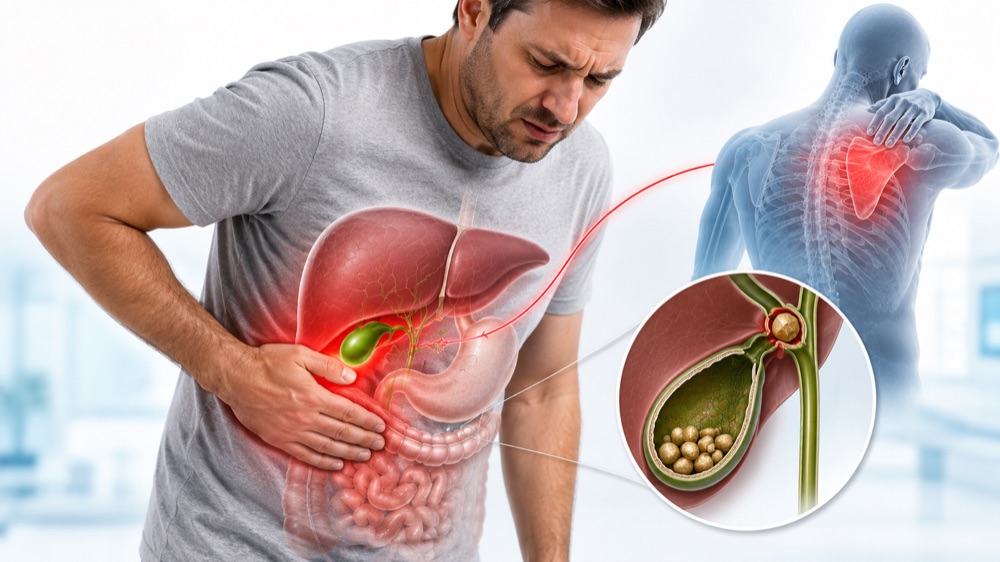
Not all gallbladder problems involve gallstones. Some people experience classic gallbladder symptoms—right upper abdominal pain after eating, nausea, bloating, fat intolerance—yet ultrasound shows no stones. The problem isn’t stones; it’s a gallbladder that doesn’t work properly.
This condition goes by several names: sluggish gallbladder, biliary dyskinesia, functional gallbladder disorder, or gallbladder dysmotility. Whatever you call it, the result is the same: your gallbladder isn’t emptying as it should, bile isn’t flowing properly, and you’re left with uncomfortable and sometimes debilitating symptoms.
Understanding sluggish gallbladder is important because it’s often missed or misdiagnosed. Patients may suffer for months or years before getting the correct diagnosis. But once identified, effective treatments—including surgery for selected patients—can provide significant relief.
This comprehensive guide explains what causes a sluggish gallbladder, how to recognize the symptoms, how it’s diagnosed, and what treatment options actually work.
What Is a “Sluggish Gallbladder”?
Definition and Terminology
“Sluggish gallbladder” is a lay term that encompasses several related conditions where the gallbladder doesn’t empty properly:
Biliary Dyskinesia:
- Medical term for functional gallbladder disorder
- “Dyskinesia” means abnormal movement
- Gallbladder contraction is impaired
- No gallstones present
- Diagnosed by low ejection fraction on HIDA scan
Functional Gallbladder Disorder:
- Rome IV criteria definition
- Biliary-type pain without structural abnormality
- Diagnosis of exclusion (other causes ruled out)
- May or may not have low ejection fraction
Gallbladder Sludge (Biliary Sludge):
- Thickened bile with microscopic crystals
- Precursor to gallstones in some cases
- Can cause symptoms similar to gallstones
- May resolve on its own or progress to stones
Acalculous Gallbladder Disease:
- Gallbladder inflammation without stones
- Can be acute (critically ill patients) or chronic
- Chronic form overlaps with biliary dyskinesia
Normal Gallbladder Function vs. Sluggish Function
Normal gallbladder:
- Fills with bile between meals (from liver)
- Concentrates bile 5-10 times
- Contracts strongly when you eat fat (70-80% emptying)
- Releases concentrated bile into small intestine
- Refills for next meal
Sluggish gallbladder:
- May fill normally but doesn’t empty completely
- Ejection fraction <35-40% (normal is >50%)
- Bile becomes overly concentrated (sludge formation)
- Inadequate bile release with meals
- Symptoms develop from poor emptying and concentrated bile
How Common Is It?
Biliary dyskinesia:
- Accounts for 10-15% of all gallbladder surgeries
- More common in women (3-4:1 female-to-male ratio)
- Typical age: 30-50 years (younger than typical gallstone patients)
- Incidence may be increasing as more HIDA scans are performed
Gallbladder sludge:
- Found in 1-4% of routine ultrasounds
- Common in pregnancy (up to 30% develop sludge, most resolve postpartum)
- Common with rapid weight loss (30-40% after bariatric surgery)
- Many people have sludge without symptoms
Why Does the Gallbladder Become Sluggish?
The Mechanism: What Goes Wrong?
The gallbladder is a muscular sac. Like any muscle, it needs proper nerve signals and healthy muscle tissue to contract effectively. Problems can occur at several levels:
1. Nerve Signaling Problems
The gallbladder contracts in response to cholecystokinin (CCK), a hormone released when fat enters the small intestine. This signal travels through the vagus nerve.
What can go wrong:
- Reduced CCK release from intestine
- Gallbladder becomes insensitive to CCK
- Vagus nerve dysfunction (autonomic neuropathy)
- Imbalance between excitatory and inhibitory nerve signals
Result: Weak or uncoordinated gallbladder contraction
2. Muscle Dysfunction
The gallbladder wall contains smooth muscle that must contract forcefully to empty bile.
What can go wrong:
- Muscle inflammation (chronic cholecystitis without stones)
- Fibrosis (scarring) of gallbladder wall
- Muscle hypertrophy (thickening) from chronic overwork
- Cellular changes in muscle tissue
Result: Physically unable to contract strongly
3. Sphincter of Oddi Dysfunction
The sphincter of Oddi is a muscular valve that controls bile flow into the intestine.
What can go wrong:
- Sphincter doesn’t relax properly (stenosis or spasm)
- Increased resistance to bile flow
- Gallbladder contracts against closed sphincter
- Pressure builds up, causing pain
Result: Pain and impaired bile flow despite normal gallbladder contraction
4. Bile Composition Abnormalities
Normal bile contains cholesterol, bile salts, and phospholipids in precise balance.
What can go wrong:
- Excess cholesterol secretion (supersaturation)
- Reduced bile salt production
- Reduced phospholipid (lecithin) secretion
- Excess mucin production from gallbladder lining
Result: Sludge formation, which impairs gallbladder function
Risk Factors for Sluggish Gallbladder
Established risk factors:
| Risk Factor | Why It Matters | Evidence Level |
|---|---|---|
| Female gender | Hormonal effects on gallbladder motility; estrogen increases cholesterol saturation | Strong |
| Obesity | Insulin resistance affects gallbladder function; increased cholesterol secretion | Moderate |
| Rapid weight loss | Mobilized cholesterol overwhelms bile; reduced CCK release with very low-fat diets | Strong |
| Pregnancy | Progesterone relaxes smooth muscle including gallbladder; reduced emptying | Strong |
| Diabetes | Autonomic neuropathy affects vagus nerve signaling to gallbladder | Moderate |
| Prolonged fasting/TPN | No CCK release without food in intestine; gallbladder becomes distended and sluggish | Strong |
| Certain medications | Octreotide, ceftriaxone, estrogen therapy affect gallbladder function | Moderate |
| Spinal cord injury | Disrupted nerve signals to gallbladder | Limited |
| Critical illness | Multiple factors: fasting, medications, reduced perfusion | Moderate |
Possible risk factors (less well-established):
- Sedentary lifestyle
- High refined carbohydrate diet
- Genetic predisposition (family history)
- Chronic stress (affects autonomic nervous system)
Symptoms: What Does a Sluggish Gallbladder Feel Like?
Classic Symptoms
Biliary-type pain (required for diagnosis):
| Feature | Typical Pattern |
|---|---|
| Location | Right upper quadrant or epigastrium (upper middle abdomen) |
| Radiation | To right shoulder blade or right shoulder |
| Quality | Steady, pressure-like, boring (NOT colicky) |
| Intensity | Moderate to severe; may limit activities |
| Duration | 30 minutes to several hours |
| Timing | Often after meals, especially fatty foods |
| Frequency | Episodic; weeks to months between attacks initially |
Associated symptoms:
- Nausea (60-70% of patients)
- Vomiting (30-40% during severe episodes)
- Bloating after meals
- Belching
- Fat intolerance (discomfort after fatty foods)
- Indigestion
Symptoms That Suggest Something ELSE
These symptoms are NOT typical of biliary dyskinesia and suggest alternative diagnoses:
Not biliary dyskinesia if:
- Pain is relieved by bowel movements or passing gas (suggests IBS)
- Pain is burning and moves upward toward chest (suggests GERD)
- Pain is colicky (wave-like cramping)
- Fever is present (suggests infection/acute cholecystitis)
- Jaundice is present (suggests bile duct obstruction)
- Diarrhea is the primary symptom (suggests other GI conditions)
- Pain is constant and daily (suggests functional abdominal pain syndrome)
Symptom Patterns Over Time
Early stage:
- Occasional episodes of pain
- Weeks to months between attacks
- Symptoms clearly related to fatty meals
- Normal between episodes
Progressive stage:
- More frequent attacks
- Less clear relationship to specific foods
- Persistent background discomfort
- Increasing fat intolerance
- Nausea becomes more common
Late stage:
- Near-daily symptoms
- Significant dietary restriction
- Weight loss (from avoiding food)
- Reduced quality of life
- Anxiety about eating
Gallbladder Sludge: A Related Condition
What Is Gallbladder Sludge?
Gallbladder sludge (biliary sludge) is thickened bile containing microscopic crystals of cholesterol monohydrate or calcium bilirubinate. Think of it as “pre-stone” material—thick and muddy rather than formed into discrete stones.
Appearance on ultrasound:
- Layer of low-level echoes in dependent portion of gallbladder
- Moves when patient changes position
- No acoustic shadowing (unlike stones)
- May appear and disappear on serial ultrasounds
Who Gets Sludge?
Common scenarios:
| Situation | Sludge Frequency | Typical Course |
|---|---|---|
| Pregnancy | Up to 30% | Resolves within 1 year postpartum in most |
| Rapid weight loss | 30-40% | Resolves when weight stabilizes; may form stones |
| Prolonged fasting/TPN | 50-100% | Resolves when normal eating resumes |
| Critical illness | Common | Often asymptomatic; may resolve |
| Medications (ceftriaxone, octreotide) | Variable | Resolves when medication stopped |
| Idiopathic (no clear cause) | Less common | May persist; 10-20% develop gallstones |
Does Sludge Cause Symptoms?
Most sludge is asymptomatic:
- Discovered incidentally on ultrasound
- No treatment needed
- Monitor for development of stones
Symptomatic sludge:
- Can cause biliary-type pain identical to gallstones
- Can cause acute pancreatitis (sludge plugs pancreatic duct)
- Can progress to acute cholecystitis
- Treatment similar to symptomatic gallstones
Sludge vs. Stones: Does It Matter?
For practical purposes, symptomatic sludge is treated the same as symptomatic gallstones:
- Same symptoms
- Same complications (pancreatitis, cholecystitis)
- Same treatment (cholecystectomy for recurrent symptoms)
The main difference: sludge may resolve on its own if the underlying cause is temporary (pregnancy, rapid weight loss, medication).
Diagnosis: How Do You Know If Your Gallbladder Is Sluggish?
Diagnosing biliary dyskinesia requires a systematic approach. There’s no single definitive test—it’s a combination of clinical evaluation, imaging, and functional testing.
Step 1: Clinical Evaluation
Medical history:
- Detailed symptom description (characteristic biliary pain?)
- Timing relative to meals
- Trigger foods
- Associated symptoms (nausea, vomiting)
- Medication review
- Risk factor assessment
Physical examination:
- Often NORMAL between episodes
- May have mild RUQ tenderness
- No fever (would suggest acute cholecystitis)
- No jaundice (would suggest bile duct obstruction)
Step 2: Rule Out Other Causes
Laboratory tests:
- CBC: Usually normal (elevated WBC would suggest infection)
- Liver function tests: Usually normal (elevated would suggest bile duct problem)
- Bilirubin: Normal (elevated would suggest obstruction)
- Amylase/lipase: Normal (elevated would suggest pancreatitis)
- Inflammatory markers (CRP, ESR): Normal
Purpose: Normal labs support functional disorder diagnosis; abnormal labs suggest structural problem requiring different workup.
Step 3: Imaging to Exclude Structural Problems
Right Upper Quadrard Ultrasound (First-line):
What it shows:
- Gallstones (would indicate different diagnosis)
- Gallbladder sludge
- Gallbladder wall thickening (>3-4mm suggests chronic inflammation)
- Pericholecystic fluid (suggests acute inflammation)
- Common bile duct dilation (suggests obstruction)
- Other abdominal pathology (liver disease, kidney stones)
In biliary dyskinesia:
- Typically NORMAL (no stones, no sludge, normal wall thickness)
- May show sludge in some cases
- Main purpose is to RULE OUT other causes
When ultrasound is abnormal:
- Stones present → symptomatic cholelithiasis (different diagnosis)
- Wall thickening + symptoms → chronic cholecystitis
- Sludge + symptoms → symptomatic sludge (treated similarly)
- CBD dilation → needs further workup (MRCP, EUS)
Step 4: Functional Testing (The Key Test)
HIDA Scan with CCK (Cholecystokinin Challenge)
This is the definitive test for biliary dyskinesia.
How it works:
- Radioactive tracer (Tc-99m mebrofenin or disofenin) injected IV
- Tracer taken up by liver and excreted in bile
- Gamma camera tracks tracer movement
- Gallbladder fills with radioactive bile (visualized)
- CCK (sincalide) infused slowly over 30-60 minutes
- CCK should cause gallbladder to contract and empty tracer
- Camera measures how much tracer is emptied
Gallbladder Ejection Fraction (GBEF):
- Percentage of bile emptied in response to CCK
- Normal: >50% (some centers use >35-40%)
- Abnormal (biliary dyskinesia): <35-40%
Reproduction of symptoms:
- During CCK infusion, patient is asked if typical pain is reproduced
- Reproduction of symptoms supports diagnosis
- However, symptom reproduction alone is NOT diagnostic
Test accuracy:
- Sensitivity: ~75-85%
- Specificity: ~75-85%
- False positives occur (normal people with low EF)
- False negatives occur (symptomatic patients with normal EF)
Important technical considerations:
- Patient must fast 4-6 hours before test
- No opioids for 6-12 hours before (affects sphincter of Oddi)
- CCK must be infused slowly (rapid infusion causes false low EF)
- Some centers use fatty meal instead of CCK (less standardized)
Step 5: Exclude Other GI Disorders
Because biliary dyskinesia symptoms overlap with many conditions, other causes must be ruled out:
Common conditions to exclude:
| Condition | How to Exclude |
|---|---|
| GERD | Trial of PPI; endoscopy if indicated |
| Peptic ulcer disease | Endoscopy; H. pylori testing |
| Functional dyspepsia | Rome IV criteria; endoscopy if alarm features |
| Irritable bowel syndrome | Rome IV criteria; symptom pattern |
| Chronic pancreatitis | Imaging (CT, MRI); fecal elastase |
| Sphincter of Oddi dysfunction | Manometry (specialized test) |
| Liver disease | Liver enzymes; viral hepatitis panel |
| Celiac disease | Tissue transglutaminase antibodies |
Diagnostic Criteria (Rome IV for Functional Gallbladder Disorder)
All of the following must be present:
- Episodes of pain located in right upper quadrant or epigastrium
- Pain characteristics:
- Builds up to steady level
- Lasts 30 minutes or longer
- Occurs at different intervals (not daily)
- Severe enough to interrupt daily activities or lead to healthcare visit
- Pain NOT relieved by:
- Bowel movements
- Postural change
- Antacids
- No structural abnormality to explain symptoms (no stones, no wall thickening)
- Normal liver enzymes, conjugated bilirubin, and amylase/lipase
Additional criterion for biliary dyskinesia:
- GBEF <35-40% on HIDA scan with CCK
Treatment Options
Treatment depends on symptom severity, test results, and patient preferences.
Conservative (Non-Surgical) Management
Appropriate for:
- Mild symptoms
- Patients who prefer to avoid surgery
- Patients who are poor surgical candidates
- Uncertain diagnosis
Dietary modification:
| Strategy | Rationale | Effectiveness |
|---|---|---|
| Low-fat diet (<30g/day) | Reduces CCK release, less gallbladder contraction | Moderate—reduces symptom frequency |
| Small, frequent meals | Prevents large CCK surges | Moderate |
| Avoid trigger foods | Individual triggers vary; keep food diary | Moderate |
| Regular meal timing | Promotes regular gallbladder emptying | Limited evidence but reasonable |
Medications:
| Medication | Mechanism | Evidence | Typical Dose |
|---|---|---|---|
| Ursodiol | Reduces cholesterol saturation; may improve bile flow | Moderate for sludge; limited for dyskinesia | 300mg twice daily |
| Antispasmodics (hyoscyamine, dicyclomine) | Reduces smooth muscle spasm | Limited; symptomatic relief | As needed |
| Pain medications | Symptomatic relief | Limited; use cautiously | As needed |
| Antiemetics | For nausea | Symptomatic | As needed |
| Calcium channel blockers (nifedipine) | May reduce sphincter pressure | Limited evidence | Variable |
| Nitrates | May reduce sphincter pressure | Limited evidence | Variable |
Limitations of conservative management:
- Doesn’t fix underlying problem
- Symptoms often recur or worsen over time
- Quality of life may remain impaired
- Doesn’t prevent potential complications
Surgical Management: Laparoscopic Cholecystectomy
Removal of the gallbladder is the definitive treatment.
When surgery is recommended:
- Typical biliary pain PLUS
- GBEF <35-40% on HIDA scan PLUS
- Other causes excluded PLUS
- Symptoms affect quality of life
Expected outcomes:
| Outcome | Frequency | Notes |
|---|---|---|
| Complete symptom resolution | 70-85% | Best outcomes with typical symptoms + low EF |
| Partial improvement | 10-15% | Some symptoms persist |
| No improvement | 5-10% | May have alternative diagnosis |
| Worse symptoms | <5% | Rare; may have post-cholecystectomy syndrome |
Predictors of good surgical outcome:
- Typical biliary pain (location, radiation, duration)
- GBEF <35% (the lower, the better the prediction)
- Reproduction of symptoms during CCK infusion
- No other GI diagnoses
- Normal quality of life between episodes (suggests true episodic disease)
Predictors of poor surgical outcome:
- Atypical pain (daily, constant, burning, relieved by bowel movements)
- GBEF >40% (borderline)
- Multiple other GI symptoms (suggests functional disorder)
- Chronic pain syndrome
- Opioid use (associated with worse outcomes)
- Psychological comorbidities (anxiety, depression, somatization)
Surgical approach:
- Laparoscopic cholecystectomy (same as for gallstones)
- 4 small incisions
- General anesthesia
- 1-2 hour procedure
- Same-day discharge or one night in hospital
- 1-2 week recovery for desk work
Risks: Same as cholecystectomy for gallstones
- Bile duct injury (0.3-0.5%)
- Bleeding, infection (1-3%)
- Conversion to open surgery (5-10%)
- Death (<0.1%)
Treatment of Gallbladder Sludge
Asymptomatic sludge:
- No treatment needed
- Monitor for development of symptoms or stones
- Address underlying cause if reversible (stop offending medication, normalize diet after weight loss)
Symptomatic sludge:
- Same approach as symptomatic gallstones
- Laparoscopic cholecystectomy for recurrent symptoms
- Ursodiol may help in select cases (small sludge, willing to take medication long-term)
Sludge in pregnancy:
- Conservative management preferred
- Most resolve postpartum
- Surgery only if severe complications (recurrent cholecystitis, pancreatitis)
- Second trimester is safest if surgery necessary
Living with a Sluggish Gallbladder
If You Choose Not to Have Surgery
Symptom management:
- Strict low-fat diet
- Small, frequent meals
- Keep food-symptom diary
- Identify and avoid triggers
- Have pain and nausea medications available
- Stress management (stress can worsen symptoms)
Monitoring:
- Regular follow-up with gastroenterologist
- Repeat ultrasound if symptoms change
- Watch for complications (fever, jaundice, severe pain)
When to reconsider surgery:
- Symptoms worsen or become more frequent
- Quality of life significantly impaired
- Complications develop (acute cholecystitis, pancreatitis)
- Weight loss from food avoidance
After Surgery: What to Expect
Short-term (first 2-4 weeks):
- Gradual symptom improvement
- Possible diarrhea (bile acid malabsorption)
- Fat intolerance initially
- Gradual return to normal diet
Long-term (3+ months):
- 70-85% complete symptom resolution
- Most eat normal diet without restrictions
- Quality of life typically improved
- No further gallbladder-related problems
If symptoms persist after surgery:
- Evaluate for other causes (GERD, IBS, functional dyspepsia)
- Consider sphincter of Oddi dysfunction (rare)
- Bile acid diarrhea (treat with bile acid binders)
- Post-cholecystectomy syndrome (multifactorial)
Frequently Asked Questions
Can a sluggish gallbladder turn into gallstones?
Yes, possibly. When the gallbladder doesn’t empty properly, bile becomes concentrated and cholesterol can crystallize. Studies show that gallbladder dysmotility is a risk factor for developing gallstones over time. However, not everyone with biliary dyskinesia develops stones.
Is biliary dyskinesia the same as IBS?
No, but they can coexist. Both are functional disorders (no structural abnormality), and symptoms can overlap. Some patients have both conditions. Key difference: biliary dyskinesia pain is in the RUQ/epigastrium with radiation to the shoulder; IBS pain is typically lower abdomen and relieved by bowel movements.
Can stress cause a sluggish gallbladder?
Stress doesn’t directly cause biliary dyskinesia, but it can affect the autonomic nervous system, which controls gallbladder function. Chronic stress may worsen symptoms or trigger episodes in susceptible individuals. Stress management can be part of symptom management.
Does a low ejection fraction always mean I need surgery?
No. The decision depends on:
- How typical your symptoms are
- How much symptoms affect your quality of life
- Whether other causes have been excluded
- Your overall health and surgical risk
- Your personal preferences
Some patients with low EF but mild symptoms do well with conservative management.
Can biliary dyskinesia go away on its own?
Spontaneous improvement is uncommon but can occur, especially if there’s a reversible cause (medication effect, temporary hormonal imbalance). Most cases persist or progress without treatment.
What happens if I don’t treat a sluggish gallbladder?
Possible outcomes:
- Symptoms remain stable (some patients)
- Symptoms worsen over time (common)
- Development of gallstones (10-20% over years)
- Acute cholecystitis (uncommon but possible)
- Reduced quality of life from chronic symptoms and dietary restriction
Is biliary dyskinesia more common in women?
Yes. Like gallstones, biliary dyskinesia is 3-4 times more common in women than men. Hormonal factors (estrogen, progesterone) affect gallbladder motility and bile composition.
Can children have biliary dyskinesia?
Yes, though it’s less common. Diagnosis and treatment approach are similar to adults, but other causes must be carefully excluded. Pediatric gastroenterology consultation is recommended.
Will removing my gallbladder cure my symptoms?
For properly selected patients (typical biliary pain + low ejection fraction + other causes excluded), 70-85% achieve complete symptom resolution. However, there’s no guarantee, and some patients continue to have symptoms after surgery. Careful patient selection is crucial.
How long is the wait from diagnosis to surgery?
Varies by location and healthcare system. Typically 2-8 weeks for consultation with surgeon, then surgery scheduled within 2-6 weeks after that. Urgent cases (complications) are prioritized.
The Bottom Line
A sluggish gallbladder (biliary dyskinesia) is a real and often debilitating condition that affects thousands of people. While it doesn’t involve gallstones, it causes similar symptoms and significantly impacts quality of life.
Key points to remember:
-
Typical symptoms matter: Right upper abdominal pain after eating, radiating to the right shoulder, lasting 30 minutes to several hours.
-
Diagnosis requires testing: HIDA scan with CCK showing ejection fraction <35-40%, plus exclusion of other causes.
-
Treatment is individualized: Some patients do well with dietary changes and medications; others need surgery for relief.
-
Surgery helps most (but not all): 70-85% of properly selected patients achieve complete symptom resolution after cholecystectomy.
-
Don’t ignore persistent symptoms: If you have biliary-type symptoms, seek evaluation. Early diagnosis and treatment can prevent complications and improve quality of life.
If you suspect you have a sluggish gallbladder, work with a gastroenterologist to get the right tests, confirm the diagnosis, and develop a treatment plan that fits your needs and preferences.
Last Updated: March 12, 2026
Sources
-
NIDDK. Gallstones. National Institute of Diabetes and Digestive and Kidney Diseases. 2020. https://www.niddk.nih.gov/health-information/digestive-diseases/gallstones
-
Rome Foundation. Rome IV Criteria for Functional Gallbladder and Sphincter of Oddi Disorders. 2016. https://theromefoundation.org/rome-iv/
-
Portincasa P, Di Ciaula A, Bonfrate L, et al. Management of common biliary stones: A narrative review. Journal of Clinical Medicine. 2021;10(5):1047. doi:10.3390/jcm10051047
-
Lammert C, Gurusamy K, Ko CW, et al. Gallstones. Nature Reviews Disease Primers. 2016;2:16024. doi:10.1038/nrdp.2016.24
-
Mashiah A, Mathew S, Grendell JH. Acalculous biliary pain: A critical appraisal. Gastrointestinal Endoscopy Clinics of North America. 2021;31(4):753-765. doi:10.1016/j.giec.2021.06.006
-
Sarli L, Iusco D, Sgobba G, et al. Biliary dyskinesia: A real disease? Digestive and Liver Disease. 2011;43(5):347-352. doi:10.1016/j.dld.2010.08.012
-
Goncalves AR, Rosell JE. Biliary Dyskinesia. StatPearls. 2024. https://www.ncbi.nlm.nih.gov/books/NBK560598/
-
European Association for the Study of the Liver (EASL). Clinical practice guidelines on the prevention, diagnosis and treatment of gallstones. Journal of Hepatology. 2016;65(1):146-181. doi:10.1016/j.jhep.2016.03.005
-
National Institute for Health and Care Excellence (NICE). Gallstone disease: Diagnosis and management. CG188. 2023. https://www.nice.org.uk/guidance/cg188
-
Shabanzadeh DM, Sørensen LT, Jørgensen T. Gallstone disease is associated with unhealthy diet: A population-based study. Scandinavian Journal of Gastroenterology. 2017;52(11):1231-1237. doi:10.1080/00365521.2017.1359078
-
UpToDate. Functional gallbladder disorder and biliary dyskinesia. 2024. https://www.uptodate.com/contents/functional-gallbladder-disorder-and-biliary-dyskinesia
-
Society of American Gastrointestinal and Endoscopic Surgeons (SAGES). Guidelines for the clinical application of laparoscopic biliary tract surgery. 2020. https://www.sages.org/publications/guidelines/