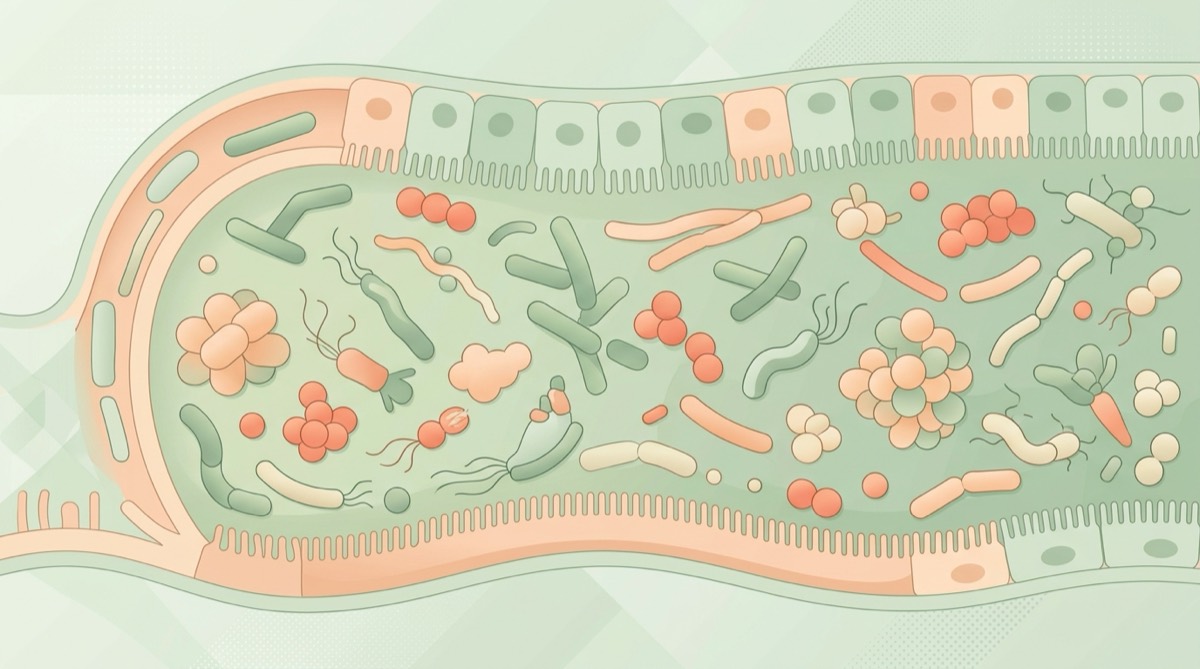
You’ve been diagnosed with SIBO. Now what?
There are multiple treatment approaches: prescription antibiotics, herbal antimicrobials, dietary changes, and supportive therapies. Each has pros, cons, success rates, and specific protocols.
This guide covers ALL your treatment options with specific protocols, dosing, success rates, and strategies to prevent recurrence.
Treatment Goals: What Are We Trying to Achieve?
Immediate Goals
| Goal | Why It Matters |
|---|---|
| Reduce bacterial overgrowth | Kill excess bacteria in small intestine |
| Resolve symptoms | Reduce bloating, pain, gas, bowel changes |
| Correct nutrient deficiencies | Restore B12, iron, fat-soluble vitamins |
Long-Term Goals
| Goal | Why It Matters |
|---|---|
| Prevent recurrence | Address underlying cause (MMC dysfunction, etc.) |
| Restore healthy microbiome | Rebuild beneficial bacteria in colon |
| Heal intestinal lining | Repair damage from bacterial overgrowth |
| Normalize motility | Restore migrating motor complex function |
Key point: Treating SIBO requires BOTH killing bacteria AND preventing regrowth. Doing only one leads to recurrence.
Prescription Antibiotics for SIBO
First-Line Treatment: Rifaximin (Xifaxan)
What it is: Non-absorbable antibiotic that stays in the gut.
Why it’s preferred:
- Minimal systemic absorption (stays in intestine)
- Low risk of C. diff infection
- Few side effects
- Doesn’t disrupt colonic bacteria as much as other antibiotics
Dosing by SIBO Type:
| SIBO Type | Dose | Duration | Success Rate |
|---|---|---|---|
| Hydrogen SIBO | 550 mg three times daily | 14 days | 70-80% |
| Methane SIBO/IMO | 550 mg three times daily + Neomycin | 14 days | 80-85% |
| Hydrogen Sulfide SIBO | 550 mg three times daily | 14 days (may need extension) | Limited data |
Alternative dosing (cost-driven):
- 400 mg three times daily for 14 days (slightly lower success rate)
- 200 mg three times daily for 14 days (lower success rate, but cheaper)
Side effects:
- Nausea (5-10%)
- Headache (3-5%)
- Abdominal discomfort (2-5%)
- Generally well-tolerated
Cost considerations:
- Brand name Xifaxan: $1,500-2,000 (often with insurance)
- Generic Rifaximin: $800-1,200
- Manufacturer coupon available (Salix): Can reduce to ~$1,000
- Some compounding pharmacies: $400-600
Combination Therapy: Rifaximin + Neomycin
When used: Methane SIBO/IMO (Intestinal Methanogen Overgrowth)
Why combination: Rifaximin alone less effective for methane; Neomycin targets archaea that produce methane.
Protocol:
| Medication | Dose | Frequency | Duration |
|---|---|---|---|
| Rifaximin | 550 mg | Three times daily | 14 days |
| Neomycin | 500 mg | Twice daily | 14 days |
Success rate: 80-85% (vs. ~50% with Rifaximin alone for methane)
Side effects of Neomycin:
- Generally well-tolerated
- Rare: kidney toxicity (with prolonged use)
- Rare: hearing changes (with prolonged use)
- May cause GI upset
Important: Neomycin is absorbable. Kidney function should be checked if using more than 14 days or in patients with kidney disease.
Alternative: Rifaximin + Metronidazole
When used: Methane SIBO/IMO when Neomycin not available or not tolerated.
Protocol:
| Medication | Dose | Frequency | Duration |
|---|---|---|---|
| Rifaximin | 550 mg | Three times daily | 14 days |
| Metronidazole (Flagyl) | 250-500 mg | Three times daily | 14 days |
Success rate: Similar to Rifaximin + Neomycin (~80%)
Important warnings about Metronidazole:
- NO ALCOHOL during treatment and 72 hours after (severe nausea/vomiting)
- Metallic taste in mouth (common)
- May cause neuropathy with prolonged use
- Can interact with warfarin
Other Antibiotic Options
Metronidazole (Flagyl) Alone
When used: When Rifaximin not available (cost, insurance denial)
Protocol:
- 250-500 mg three times daily for 14 days
Success rate: ~50-60% (lower than Rifaximin)
Side effects:
- Nausea (10-15%)
- Metallic taste (20-30%)
- Headache (5-10%)
- NO ALCOHOL (disulfiram-like reaction)
Ciprofloxacin
When used: Alternative for hydrogen SIBO when Rifaximin not available
Protocol:
- 500 mg twice daily for 14 days
Success rate: ~50-55%
Side effects:
- Tendon rupture risk (rare but serious)
- QT prolongation
- C. diff risk higher than Rifaximin
- Photosensitivity
Generally avoided unless necessary due to side effect profile.
Doxycycline
When used: Alternative for some cases; also covers potential H. pylori coinfection
Protocol:
- 100 mg twice daily for 14 days
Success rate: ~40-50%
Side effects:
- Photosensitivity
- Esophageal irritation (take with water, stay upright)
- Not for pregnant women or children
Trimethoprim-Sulfamethoxazole (Bactrim, Septra)
When used: Alternative when other options fail or not tolerated
Protocol:
- DS (double strength): 1 tablet twice daily for 14 days
Success rate: ~45-55%
Side effects:
- Sulfa allergy (can be severe)
- Photosensitivity
- Kidney stones (rare)
- Bone marrow suppression (rare, with prolonged use)
Amoxicillin-Clavulanate (Augmentin)
When used: Sometimes for severe cases or when other antibiotics fail
Protocol:
- 875/125 mg twice daily for 14 days
Success rate: ~40-50%
Side effects:
- Diarrhea (common)
- C. diff risk
- Yeast overgrowth
- Not for penicillin-allergic patients
Antibiotic Comparison Summary
| Antibiotic | Success Rate | Cost | Side Effects | Best For |
|---|---|---|---|---|
| Rifaximin (Hydrogen) | 70-80% | High | Low | First-line hydrogen SIBO |
| Rifaximin + Neomycin | 80-85% | High | Low-Moderate | First-line methane SIBO |
| Rifaximin + Metronidazole | 80-85% | Moderate | Moderate | Methane SIBO alternative |
| Metronidazole alone | 50-60% | Low | Moderate | Budget alternative |
| Ciprofloxacin | 50-55% | Low-Moderate | Moderate-High | When Rifaximin fails |
| Doxycycline | 40-50% | Low | Moderate | Alternative |
| Bactrim | 45-55% | Low | Moderate | Sulfa-tolerant patients |
Herbal Antimicrobial Treatment
Why Consider Herbs?
Advantages:
- Often less expensive than Rifaximin
- Available without prescription
- Some patients tolerate better than antibiotics
- Can be used for longer durations if needed
- May have additional benefits (anti-inflammatory, antifungal)
Disadvantages:
- Less research than antibiotics
- May take longer to work
- Multiple supplements required
- Quality varies by manufacturer
- Can still cause side effects
Success rates: Studies show ~45-60% success with herbal treatment (lower than Rifaximin but still significant)
Herbal Protocol #1: Biotics Research Dysbiocide + FC Cidal
What it is: Combination of antimicrobial herbs.
Ingredients:
- Dysbiocide: Artemisia annua (sweet wormwood), Chinese goldthread, Oregon grape, Goldenseal, Barberry, Skullcap, Chinese Goldthread
- FC Cidal: Olive leaf, oregano, barberry, goldenseal
Dosing:
| Week | Dysbiocide | FC Cidal |
|---|---|---|
| Week 1 | 2 capsules twice daily | 2 capsules twice daily |
| Week 2-4 | 3 capsules twice daily | 3 capsules twice daily |
Duration: 4 weeks
Success rate: ~50-55%
Side effects:
- GI upset
- Nausea
- “Die-off” symptoms (Herxheimer reaction)
Cost: $80-120 for full course
Herbal Protocol #2: Candibactin-AR + Candibactin-BR
What it is: Meta-gen brand herbal antimicrobials.
Ingredients:
- Candibactin-AR: Artemisia annua, white willow bark, grapefruit seed extract
- Candibactin-BR: Berberine, goldenseal, barberry, Oregon grape
Dosing:
| Week | Candibactin-AR | Candibactin-BR |
|---|---|---|
| Week 1-4 | 2 capsules twice daily | 2 capsules twice daily |
Duration: 4-6 weeks
Success rate: ~50-55%
Side effects:
- GI upset
- Nausea
- May lower blood sugar (berberine effect)
Cost: $100-150 for full course
Note: Often used together for synergistic effect.
Herbal Protocol #3: Berberine-Based
What it is: Berberine is the primary active compound (also found in goldenseal, Oregon grape, barberry).
Dosing:
| Supplement | Dose | Frequency | Duration |
|---|---|---|---|
| Berberine HCl | 500 mg | Three times daily | 4-6 weeks |
Can combine with:
- Oregano oil
- Neem
- Artemisia
Success rate: ~45-55%
Side effects:
- GI upset
- May lower blood sugar
- May interact with medications (CYP450)
- Not for pregnancy
Cost: $40-80 for full course
Important: Berberine can lower blood sugar—monitor if diabetic.
Herbal Protocol #4: Oregano Oil
What it is: Essential oil of oregano (Origanum vulgare).
Active compounds: Carvacrol, thymol.
Dosing:
| Form | Dose | Frequency | Duration |
|---|---|---|---|
| Capsules (standardized) | 200-400 mg | Two to three times daily | 4-6 weeks |
| Liquid oil | 1-2 drops in water | Two to three times daily | 4-6 weeks |
Look for: Standardized to 70%+ carvacrol content.
Success rate: ~40-50%
Side effects:
- GI burning/irritation
- May worsen reflux
- Can kill beneficial bacteria (use judiciously)
- Not for long-term use
Cost: $30-60 for full course
Important: Don’t use undiluted essential oil directly—can cause burns.
Herbal Protocol #5: Neem
What it is: Ayurvedic herb (Azadirachta indica).
Often combined with: Berberine, oregano oil.
Dosing:
| Form | Dose | Frequency | Duration |
|---|---|---|---|
| Capsules (450-500 mg) | 1-2 capsules | Two to three times daily | 4-6 weeks |
Success rate: ~40-50% (better in combination)
Side effects:
- Generally well-tolerated
- May lower blood sugar
- Not for pregnancy
- Rare: liver enzyme elevation
Cost: $30-50 for full course
Herbal Protocol #6: Artemisia (Sweet Wormwood)
What it is: Traditional Chinese herb (Artemisia annua).
Often combined with: Other herbs in formulas.
Dosing:
| Form | Dose | Frequency | Duration |
|---|---|---|---|
| Capsules (200-500 mg) | 1-2 capsules | Two to three times daily | 4-6 weeks |
Success rate: ~45-55%
Side effects:
- GI upset
- Rare: liver enzyme elevation
- Not for pregnancy
Cost: $40-70 for full course
Comparison: Antibiotics vs. Herbs
| Factor | Antibiotics | Herbs |
|---|---|---|
| Success rate | 70-85% (Rifaximin-based) | 45-60% |
| Duration | 14 days | 4-6 weeks |
| Cost | $400-2,000 | $40-150 |
| Side effects | Low-Moderate | Low-Moderate |
| Insurance coverage | Sometimes | No |
| Requires prescription | Yes | No |
| C. diff risk | Low (Rifaximin) | Very low |
| Research backing | Strong | Limited |
Elemental Diet for SIBO
What Is the Elemental Diet?
Definition: Liquid-only diet of pre-digested nutrients (amino acids, simple sugars, fats) that are absorbed in the first few feet of small intestine.
How it works:
- Nutrients absorbed before bacteria can access them
- Bacteria “starve” while you’re still nourished
- Creates conditions similar to fasting
Success rate: 80-85% (similar to Rifaximin)
Elemental Diet Protocol
Duration Options:
| Duration | Success Rate | Who It’s For |
|---|---|---|
| 2 weeks | ~80% | First-line, mild-moderate SIBO |
| 3 weeks | ~85% | More severe or recurrent SIBO |
What you consume:
- Elemental formula (Toleramine, Physician’s CHO Elemental, etc.)
- Water
- Black coffee or tea (no sugar, no cream)
- Salt for taste (electrolytes important)
What you DON’T consume:
- Solid food
- Protein powders (not pre-digested)
- Smoothies
- Bone broth (feeds bacteria)
- Anything with fiber
How to Use Elemental Formula
Calculation:
- Determine calorie needs: Body weight (lbs) × 10-12
- Divide into 3-5 servings throughout day
- Mix with water as directed
Example for 150 lb person:
- Calorie need: 1,500-1,800 calories/day
- Mix 6-8 scoops formula throughout day
- Sip slowly over 30-60 minutes per serving
Tips for success:
- Flavor with lemon/lime juice, ginger, salt
- Drink through straw (tastes better)
- Sip slowly (don’t chug)
- Stay busy (hunger is psychological after day 2-3)
- Expect initial hunger (days 1-3)
Pros and Cons of Elemental Diet
| Pros | Cons |
|---|---|
| 80-85% success rate | Very restrictive |
| No medication side effects | Socially isolating |
| Resets entire gut | Initial hunger difficult |
| Can be done at home | Taste is challenging |
| Less expensive than Rifaximin | Not sustainable long-term |
Cost: $150-250 for 2-week supply
Partial Elemental Diet
What it is: Replace 1-2 meals per day with elemental formula, eat low FODMAP for other meals.
Duration: 3-4 weeks
Success rate: Lower than full elemental (~50-60%) but more manageable.
Who it’s for:
- Can’t tolerate full elemental
- Need to work/socialize during meals
- Mild SIBO
Diet Therapies for SIBO
Important: Diet Alone Doesn’t Cure SIBO
Why: Diet can reduce symptoms and starve bacteria somewhat, but doesn’t eliminate the overgrowth. Diet is ADJUNCTIVE to antibiotics/herbs.
Goals of diet therapy:
- Reduce symptoms during treatment
- Starve bacteria (make treatment more effective)
- Prevent feeding bacterial overgrowth
- Support healing after treatment
Low FODMAP Diet
What it is: Reduces fermentable carbohydrates that feed bacteria.
FODMAPs:
- Fermentable
- Oligosaccharides
- Disaccharides
- Monosaccharides
- And
- Polyols
Food categories:
| High FODMAP (Avoid) | Low FODMAP (Allowed) |
|---|---|
| Fructans: Wheat, onion, garlic | Grains: Rice, oats, quinoa, corn |
| GOS: Beans, lentils, chickpeas | Proteins: Meat, fish, eggs, tofu |
| Lactose: Milk, soft cheese | Dairy: Lactose-free, hard cheese |
| Fructose: Honey, apples, pears | Fruits: Bananas, berries, citrus |
| Polyols: Sorbitol, mannitol, stone fruits | Vegetables: Most cooked vegetables |
Duration: 2-6 weeks during treatment, then reintroduction
Success as adjunct: Improves symptom control during treatment
Specific Carbohydrate Diet (SCD)
What it is: Eliminates all complex carbohydrates; allows only simple carbs (monosaccharides).
Allowed:
- Meat, fish, eggs
- Most vegetables (non-starchy)
- Fruits (except canned/high sugar)
- Nuts (certain types)
- Honey (in moderation)
Not allowed:
- All grains (wheat, rice, oats, corn)
- Legumes (beans, lentils)
- Potatoes, sweet potatoes
- Sugar, most sweeteners
- Processed foods
Duration: Often used for months, not weeks
Pros: More comprehensive than low FODMAP Cons: Very restrictive, difficult to maintain
Bi-Phasic Diet
What it is: Combination of SCD and low FODMAP, created by Dr. Nirala Jacobi.
Three phases:
| Phase | Duration | Foods |
|---|---|---|
| Phase 1 | 3-6 weeks | Most restrictive; SCD + low FODMAP |
| Phase 2 | 4-8 weeks | Gradual reintroduction of some foods |
| Phase 3 | Ongoing | Maintenance; individualized |
Who it’s for: Severe or recurrent SIBO
Pros: Structured approach; addresses both bacteria and gut healing Cons: Complex; requires planning
Cedars-Sinai Low Fermentation Diet
What it is: Developed by Dr. Mark Pimentel (SIBO researcher).
Key principles:
- Limit fermentable carbs
- Avoid between-meal snacking (supports MMC)
- Space meals 4-5 hours apart
- 12-hour overnight fast
Allowed:
- Lean proteins
- Low FODMAP vegetables
- Rice, quinoa, oats
- Low sugar fruits
Avoid:
- High FODMAP foods
- Between-meal snacks
- Large amounts of fiber
Duration: During treatment and for prevention
GAPS Diet (Gut and Psychology Syndrome)
What it is: Very restrictive diet developed by Dr. Natasha Campbell-McBride.
Focus:
- Bone broths
- Fermented foods
- Easily digested foods
- Eliminates grains, processed foods
Note: Controversial; limited research; very restrictive. Use caution.
Diet Comparison Summary
| Diet | Restrictiveness | Evidence | Best For |
|---|---|---|---|
| Low FODMAP | Moderate | Strong | Symptom control during treatment |
| SCD | High | Moderate | Severe SIBO |
| Bi-Phasic | High | Limited | Recurrent SIBO |
| Cedars-Sinai | Moderate | Moderate | Prevention focus |
| GAPS | Very High | Limited | Not first-line |
Prokinetics: Preventing Recurrence
Why Prokinetics Matter
The problem: Antibiotics kill bacteria but don’t fix the underlying motility issue.
The solution: Prokinetics enhance MMC (migrating motor complex) function to prevent bacterial regrowth.
When to start: Day after antibiotics/herbs are FINISHED (not during treatment)
Duration: Minimum 3 months; often 6-12 months
Prescription Prokinetics
Low-Dose Naltrexone (LDN)
What it is: Opioid antagonist at low doses (1-5 mg) modulates immune function and motility.
Dosing:
- Start: 1 mg at bedtime
- Increase: By 0.5-1 mg weekly
- Target: 3-4.5 mg at bedtime
Side effects:
- Vivid dreams (common initially)
- Headache (rare)
- Generally well-tolerated
Cost: $30-60/month (compounded)
Low-Dose Erythromycin
What it is: Antibiotic at very low doses acts as prokinetic.
Dosing:
- 50 mg at bedtime (sometimes twice daily)
Mechanism: Stimulates motilin receptors, enhances MMC
Side effects:
- Nausea (higher doses)
- Antibiotic resistance concern (less at this dose)
- QT prolongation (rare at low dose)
Cost: $20-40/month
Prucalopride (Motegrity)
What it is: 5-HT4 serotonin receptor agonist.
Dosing:
- 1-2 mg once daily
Mechanism: Stimulates colonic motility; helps constipation
Side effects:
- Headache (30%)
- Nausea (15%)
- Diarrhea (10%)
Cost: $200-300/month (insurance may cover)
Tegaserod (Zelnorm)
What it is: 5-HT4 agonist (similar to Prucalopride).
Status: Restricted availability (cardiovascular concerns)
Dosing:
- 6 mg twice daily before meals
For: IBS-C predominant
Metoclopramide (Reglan)
What it is: Dopamine antagonist.
Dosing:
- 5-10 mg before meals and at bedtime
Side effects:
- Tardive dyskinesia (serious; risk increases with duration)
- Drowsiness
- Restlessness
Note: Generally avoided for long-term use due to tardive dyskinesia risk.
Domperidone
What it is: Dopamine antagonist (similar to Reglan but doesn’t cross blood-brain barrier).
Availability: Not FDA-approved in US; available in Canada, Europe, some compounding pharmacies
Dosing:
- 10 mg three times daily before meals
Side effects:
- Less CNS side effects than Reglan
- QT prolongation (rare)
Cost: $50-100/month (compounding)
Herbal/Natural Prokinetics
Ginger Root
What it is: Traditional digestive support.
Dosing:
- Ginger root extract: 200-400 mg before meals and at bedtime
- OR ginger tea: 1-2 cups after meals
Mechanism: Stimulates gastric motility; prokinetic effects
Cost: $20-40/month
Iberogast (STW 5)
What it is: Combination herbal formula.
Ingredients: 9 herbs including bitter candy tuft, chamomile, caraway, licorice, peppermint.
Dosing:
- 20 drops (1 mL) three times daily before or after meals
Mechanism: Modulates gut motility; reduces spasms
Side effects:
- Generally well-tolerated
- Rare: liver enzyme elevation
Cost: $25-40/month
Artichoke Extract
What it is: Bitter herb that stimulates digestion.
Often combined with: Ginger (as Ginger + Artichoke formulas)
Dosing:
- 200-400 mg twice daily
Mechanism: Stimulates bile flow; prokinetic effect
Cost: $20-35/month
Triphala
What it is: Ayurvedic combination of three fruits.
Dosing:
- 500-1000 mg at bedtime
- OR as tea
Mechanism: Gentle bowel regulator
Cost: $15-30/month
Prokinetic Comparison Summary
| Prokinetic | Dose | Cost/Month | Side Effects | Best For |
|---|---|---|---|---|
| LDN | 3-4.5 mg nightly | $30-60 | Vivid dreams | Immune + motility |
| Erythromycin (LD) | 50 mg nightly | $20-40 | Nausea | Cost-effective |
| Prucalopride | 1-2 mg daily | $200-300 | Headache, nausea | Constipation |
| Ginger | 200-400 mg TID | $20-40 | Minimal | Natural first-line |
| Iberogast | 20 drops TID | $25-40 | Minimal | Mild cases |
Treatment Protocol by SIBO Type
Hydrogen SIBO Protocol
First-line:
- Rifaximin 550 mg three times daily for 14 days
- OR herbal antimicrobials for 4-6 weeks
Diet: Low FODMAP during treatment
Prokinetic: Start day after antibiotics finish; continue 3-6 months
Follow-up: Breath test at 4-6 weeks if symptoms persist
Methane SIBO/IMO Protocol
First-line:
- Rifaximin 550 mg three times daily + Neomycin 500 mg twice daily for 14 days
- OR Rifaximin + Metronidazole for 14 days
Diet: Low FODMAP + Cedars-Sinai during treatment
Prokinetic: Essential for methane (high recurrence); start day after antibiotics
Consider:
- Elemental diet if antibiotics fail
- Longer course (21 days) if partial response
Follow-up: Breath test at 4-6 weeks
Hydrogen Sulfide SIBO Protocol
First-line:
- Rifaximin 550 mg three times daily for 14 days (may extend to 21 days)
- OR Bismuth subsalicylate (Pepto-Bismol) + antibiotics
Bismuth Protocol (emergent):
- Bismuth subsalicylate 524 mg (2 tablets) four times daily
-
- Rifaximin or other antibiotic
- For 14 days
Diet: Low sulfur diet may help (limited evidence)
Low sulfur foods to emphasize: Most vegetables, fruits, grains High sulfur foods to limit: Eggs, red meat, cruciferous vegetables, garlic, onion
Treatment Failure: What If It Doesn’t Work?
Reasons for Treatment Failure
| Reason | Solution |
|---|---|
| Wrong antibiotic | Switch to different class |
| Dose too low | Increase dose or frequency |
| Duration too short | Extend to 21 days |
| Biofilm present | Add biofilm disruptors |
| Underlying cause unaddressed | Address MMC dysfunction, PPIs, etc. |
| Reinfection | Improve meal spacing, hygiene |
| Wrong diagnosis | Re-evaluate (SIFO, bile acid malabsorption, etc.) |
Biofilm Disruptors
What are biofilms? Protective coating bacteria create that shields them from antibiotics.
Disruptors:
| Supplement | Dose | Timing |
|---|---|---|
| NAC (N-Acetyl Cysteine) | 600-1200 mg daily | Between meals |
| Interfase Plus | 1-2 capsules daily | Between meals |
| Curcumin | 500 mg twice daily | With meals |
| Neem | 500 mg twice daily | Between meals |
Protocol: Add biofilm disruptors 3-5 days before starting antibiotics/herbs; continue through treatment.
Second-Line Treatment Options
If first-line fails:
-
Switch antibiotic class:
- Rifaximin → Metronidazole or Ciprofloxacin
- Or add second antibiotic
-
Extend duration:
- 14 days → 21 days
-
Add biofilm disruptors
-
Try elemental diet (if not done)
-
Combination approach:
- Antibiotics + herbs together
- Rotating antibiotics
-
Re-test: Confirm diagnosis with breath test
The GutFeel Approach
Tracking your treatment helps you and your doctor:
- Monitor symptom response daily during treatment
- Identify die-off patterns (temporary worsening)
- Track bowel habits (constipation affects treatment)
- Document medication adherence and timing
- Share data for treatment adjustments
GutFeel AI helps you capture this data systematically.
FAQs
Can I treat SIBO without antibiotics?
Yes. Herbal antimicrobials have ~50-60% success rate vs. 70-85% for Rifaximin. Elemental diet has ~80% success. Choice depends on severity, cost, access, and preference.
How long does SIBO treatment take?
Antibiotics: 14-21 days. Herbs: 4-6 weeks. Elemental diet: 2-3 weeks. Prokinetics: 3-12 months after. Full resolution often takes several months.
Why did I feel worse during treatment?
“Die-off” reaction (Herxheimer): Bacteria dying release toxins. Usually temporary (days 2-5). Manage with hydration, rest, binders (activated charcoal). If severe, contact doctor.
Can SIBO come back after treatment?
Yes. Recurrence rate is 40-80% within a year WITHOUT prokinetics and lifestyle changes. WITH prokinetics and meal spacing, recurrence is significantly reduced.
Do I need to follow a strict diet during treatment?
A low FODMAP or SIBO-specific diet during treatment can improve outcomes and reduce symptoms. Diet alone doesn’t cure SIBO but supports treatment.
When do I start prokinetics?
Start the day AFTER antibiotics/herbs are COMPLETE (not during). Continue for minimum 3 months; 6-12 months for chronic/recurrent cases.
Can I drink alcohol during treatment?
No alcohol with Metronidazole (severe reaction). Limited alcohol with Rifaximin. Avoid during elemental diet. Best to avoid entirely during treatment.
What if I can’t afford Rifaximin?
Options: Manufacturer coupon, compounding pharmacy, herbal alternatives, partial elemental diet, Metronidazole (cheaper but more side effects).
Key Takeaways
- Rifaximin is first-line for hydrogen SIBO (70-80% success); Rifaximin + Neomycin for methane SIBO (80-85% success)
- Herbal antimicrobials are viable alternatives (45-60% success) but require longer treatment (4-6 weeks)
- Elemental diet has high success (~80%) but is very restrictive
- Diet alone doesn’t cure SIBO but supports treatment and reduces symptoms
- Prokinetics are essential to prevent recurrence; start day after antibiotics finish
- Treatment duration matters—14 days standard; 21 days for resistant cases
- Biofilm disruptors may help in treatment-resistant cases
- Address underlying causes (PPIs, MMC dysfunction, anatomical issues) or SIBO will return
- Meal spacing supports MMC—4-5 hours between meals, 12+ hour overnight fast
- Follow-up testing (breath test at 4-6 weeks) confirms eradication if symptoms unclear
Sources
- ACG Clinical Guideline: Small Intestinal Bacterial Overgrowth. American Journal of Gastroenterology. 2020.
- Pimentel M, et al. “Rifaximin Therapy for Patients with Irritable Bowel Syndrome without Constipation.” NEJM. 2011.
- Chedid V, et al. “Herbal Therapy Is Equivalent to Rifaximin for the Treatment of SIBO.” Global Advances in Health and Medicine. 2014.
- NRD. “Elemental Diet for SIBO.” 2023.
- Siebecker A. “SIBO Treatment Protocols.” SIBO Info. 2023.
- Jacobi N. “The Bi-Phasic Diet.” 2022.
- Cleveland Clinic. “SIBO Treatment.” 2024.
- Mayo Clinic. “Small Intestinal Bacterial Overgrowth (SIBO): Diagnosis & Treatment.” 2024.
- Rezaie A, et al. “Hydrogen and Methane-Based Breath Testing in Gastrointestinal Disorders.” American Journal of Gastroenterology. 2017.
- Pimentel M. “The Low Fermentation Diet.” Cedars-Sinai. 2023.