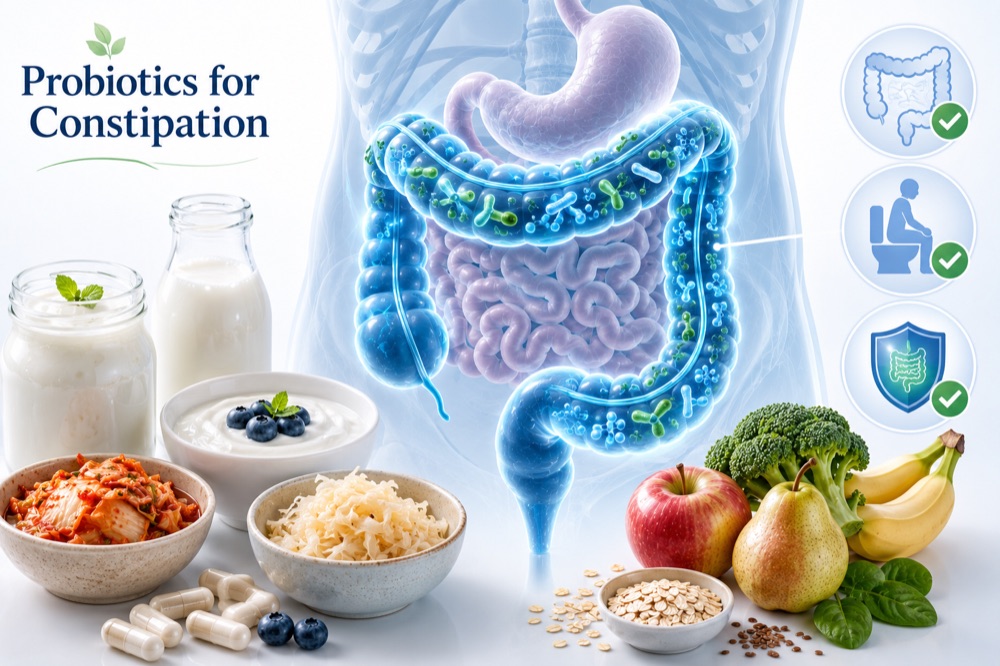
Probiotics are everywhere—advertised as miracle cures for everything from digestion to immunity to mood. But if you’re dealing with constipation, the real question is simple: Do they actually work?
The answer, based on current research, is maybe—but it depends entirely on the strain. Not all probiotics are created equal, and taking the wrong one could waste your money or even worsen symptoms. This evidence-based guide breaks down exactly which probiotic strains have scientific backing for constipation relief, what doses are effective, and how to trial them properly.
Key Takeaways:
- Strain matters most: Only specific strains show benefit for constipation (Bifidobacterium lactis HN019, B. lactis DN-173 010, L. reuteri)
- Modest effect size: Probiotics increase bowel movements by about 1.5 per week on average
- Bifidobacterium strains work best: Strongest evidence supports Bifidobacterium species for constipation
- 4-week trial minimum: Need at least 4 weeks to assess effectiveness
- Not first-line therapy: Fiber, fluids, and exercise have stronger evidence
- Some people worsen: Probiotics can increase bloating initially; discontinue if symptoms worsen
Understanding Probiotics: The Basics
Before diving into the evidence, it’s important to understand what probiotics are and why strain specificity matters.
What Are Probiotics?
Definition: Live microorganisms that, when administered in adequate amounts, confer a health benefit on the host (WHO/FAO definition).
Key Concepts:
-
Strain Specificity: Benefits are strain-specific, not species-specific. Bifidobacterium lactis HN019 may help constipation while Bifidobacterium lactis BB-12 may not—despite being the same species.
-
CFU (Colony Forming Units): The number of viable bacteria in a dose. More isn’t always better—effective doses range from 1-100 billion CFU depending on strain.
-
Transient Colonization: Most probiotics don’t permanently colonize your gut. They pass through, exert effects, and disappear within days to weeks of stopping.
-
Mechanism Varies: Different strains work through different mechanisms (motility, inflammation, barrier function, neurotransmitter production).
The Gut Microbiome and Constipation
Research shows clear differences between the gut bacteria of constipated and non-constipated people:
Constipation-Associated Changes:
- Reduced overall diversity
- Fewer Bifidobacterium and Lactobacillus species
- More methane-producing archaea (Methanobrevibacter smithii)
- Altered ratios of Firmicutes to Bacteroidetes
Why This Matters:
- Methane slows intestinal transit (directly affects motility)
- Reduced short-chain fatty acid production (less fuel for colon cells)
- Increased inflammation (affects gut-brain signaling)
- Impaired bile acid metabolism (affects secretion)
Probiotics may help by:
- Competing with methane producers
- Producing short-chain fatty acids
- Modulating immune function
- Influencing gut-brain axis signaling
- Producing neurotransmitters (serotonin)
What the Research Shows: Meta-Analyses and Clinical Trials
Multiple systematic reviews and meta-analyses have examined probiotics for constipation. Here’s what the highest-quality evidence shows.
Key Meta-Analyses
| Study | Year | Studies Included | Main Finding |
|---|---|---|---|
| Dimidi et al. (Cochrane) | 2017 | 15 RCTs, 1,781 participants | Probiotics increased weekly BMs by 1.5 vs. placebo |
| Müller et al. | 2022 | 28 RCTs | Bifidobacterium strains most effective; increased stool frequency by 1.8/week |
| Zhang et al. | 2023 | 42 RCTs, 4,800+ participants | Probiotics improved stool frequency, consistency, and straining |
| Tian et al. | 2023 | 20 RCTs | Multi-strain probiotics more effective than single strains |
What This Means in Plain Language
Probiotics do work for constipation—but the effect is modest:
- Average increase: 1.5-2 bowel movements per week
- Not as effective as osmotic laxatives (Miralax)
- May work better for functional constipation than severe slow-transit
- Best used as adjunct to fiber, fluids, and lifestyle changes
Who Responds Best:
- Functional constipation (no structural cause)
- IBS with constipation (IBS-C)
- Mild to moderate symptoms
- Those with documented dysbiosis
Who May Not Respond:
- Severe slow-transit constipation
- Pelvic floor dysfunction (needs biofeedback)
- Medication-induced constipation (needs medication adjustment)
- Structural causes (needs medical/surgical treatment)
Best-Studied Probiotic Strains for Constipation
Not all probiotics are equal. The following strains have the strongest evidence for constipation relief.
Top-Tier Evidence (Multiple RCTs Support)
Bifidobacterium lactis HN019
Brand Names: Howaru® Restore, various store brands
Evidence:
- Multiple randomized controlled trials
- Increases weekly bowel movements by 2-3 vs. placebo
- Reduces whole gut transit time by 18-24 hours
- Improves stool consistency
Dosing: 1-10 billion CFU daily
Study Example: In a 28-day RCT, adults with constipation taking B. lactis HN019 (17.2 billion CFU) had:
- 1.8 more bowel movements per week
- 21-hour faster gut transit time
- Improved stool consistency scores
Mechanism:
- Produces short-chain fatty acids (butyrate)
- Modulates immune function
- May reduce methane production
Safety: Well-tolerated; minimal side effects
Where to Find:
- Nature’s Way Keep It Clean
- Life-Space Broad Spectrum
- Some Danone products (yogurt)
Bifidobacterium lactis DN-173 010 (CNCM I-2494)
Brand Names: Activia yogurt, various supplements
Evidence:
- 10+ randomized controlled trials
- Consistently reduces whole gut transit time
- Increases bowel movement frequency
- Particularly effective in women
Dosing: 10-100 billion CFU daily (or 1-2 servings Activia yogurt daily)
Study Example: Women with constipation consuming B. lactis DN-173 010 yogurt twice daily for 2 weeks had:
- 24% faster colonic transit
- 1.5 more bowel movements per week
- Reduced bloating and discomfort
Mechanism:
- Survives gastric acid well
- Temporarily colonizes colon
- Modulates gut motility via neurotransmitter effects
Safety: Extensively studied; safe for general use
Where to Find:
- Activia yogurt (look for “live and active cultures”)
- Align Probiotic (some formulations)
- Various supplement brands
Bifidobacterium longum BB536
Brand Names: Morinaga Bifidus, various multi-strain products
Evidence:
- Multiple RCTs in adults and elderly
- Increases bowel movement frequency
- Improves stool consistency
- Well-tolerated in all age groups
Dosing: 5-50 billion CFU daily
Study Example: Elderly constipated patients taking B. longum BB536 (50 billion CFU) for 4 weeks had:
- 2.1 more bowel movements per week
- Improved stool form
- Reduced straining
Mechanism:
- Produces acetate and other SCFAs
- Inhibits pathogenic bacteria
- Modulates immune function
Safety: One of the most studied probiotic strains; excellent safety profile
Where to Find:
- Morinaga Bifidus supplements
- Thorne Bifidophilus
- Various multi-strain products
Lactobacillus reuteri DSM 17938
Brand Names: BioGaia, various
Evidence:
- Strong evidence in children
- Growing evidence in adults
- Increases bowel movement frequency
- Reduces abdominal pain
Dosing:
- Children: 100 million CFU daily
- Adults: 1-10 billion CFU daily
Study Example: Children with functional constipation taking L. reuteri DSM 17938 for 4 weeks had:
- 2.6 more bowel movements per week
- Reduced abdominal pain
- Less fecal incontinence
Mechanism:
- Produces lactic acid
- Has antimicrobial effects against pathogens
- Modulates immune function
- May affect gut motility via histamine pathways
Safety: Extensively studied in infants and children; very safe
Where to Find:
- BioGaia Protectis
- Various infant probiotic drops
Lactobacillus casei Shirota
Brand Names: Yakult, various supplements
Evidence:
- Multiple RCTs
- Increases bowel movement frequency
- Reduces bloating
- Particularly studied in elderly
Dosing: 6.5-20 billion CFU daily
Study Example: Elderly nursing home residents taking L. casei Shirota daily had:
- 1.9 more bowel movements per week
- Reduced fecal impaction
- Improved quality of life
Mechanism:
- Survives gastric acid
- Produces lactic acid
- Modulates immune function
Safety: Consumed daily by millions in Yakult; excellent safety record
Where to Find:
- Yakult probiotic drink
- Various supplement formulations
Second-Tier Evidence (Some Positive RCTs)
Lactobacillus plantarum 299V
Evidence: Good for IBS symptoms; some evidence for constipation
Dosing: 10-20 billion CFU daily
Best For: IBS with mixed or constipation-predominant symptoms
Brand: GoodBelly, Jarrow Ideal Bowel Support
Bifidobacterium breve Bb12
Evidence: Some positive studies; less consistent than HN019
Dosing: 1-10 billion CFU daily
Best For: General gut health; may help mild constipation
Multi-Strain Products (VSL#3, Visbiome)
Evidence: Strong for IBS and ulcerative colitis; mixed for pure constipation
Strains: Typically 8 different strains including Lactobacillus, Bifidobacterium, and Streptococcus species
Dosing: 112-450 billion CFU daily (very high dose)
Best For: IBS-C, inflammatory conditions
Consideration: Expensive; may be overkill for simple constipation
Strains to Avoid for Constipation
Some probiotic strains may actually worsen constipation or cause bloating:
Potentially Problematic:
- Saccharomyces boulardii: More evidence for diarrhea than constipation
- Lactobacillus acidophilus (most strains): Mixed evidence; may worsen bloating in some
- High-histamine strains: May worsen symptoms in histamine-intolerant individuals
Note: Individual response varies. A strain that doesn’t work for one person may help another.
How to Choose a Quality Probiotic
The supplement industry is poorly regulated. Here’s how to find products that actually contain what they claim.
Quality Markers
Look For:
-
Strain Designation on Label: Should list full strain name (e.g., “Bifidobacterium lactis HN019” not just “Bifidobacterium lactis”)
-
CFU Count at Expiration: Not just “at manufacture”—guarantees potency through shelf life
-
Third-Party Testing: USP, NSF, ConsumerLab certification
-
Storage Requirements Clear: Some need refrigeration; shelf-stable should be truly shelf-stable
-
Manufacturer Reputation: Established companies with quality control
-
Clinical Evidence: Strain should have published studies
Red Flags:
- “Proprietary blends” (hides actual strains/amounts)
- Unrealistic CFU claims (500 billion+ often inflated)
- No strain designation
- No expiration date
- No storage instructions
- Made in facilities without GMP certification
Storage and Handling
Refrigerated Probiotics:
- Must stay cold (36-45°F)
- Lose potency quickly at room temperature
- Check expiration date carefully
- Best option for viability if stored properly
Shelf-Stable Probiotics:
- Freeze-dried (lyophilized)
- Must be truly shelf-stable (some aren’t)
- Store in cool, dry place
- Still have expiration dates
Travel Considerations:
- Use insulated pouch with ice pack for refrigerated strains
- Shelf-stable more convenient for travel
- Avoid leaving in hot car or direct sunlight
How to Take Probiotics for Best Results
Timing, dose, and duration all matter for effectiveness.
Dosing Guidelines
General Principles:
| Factor | Recommendation |
|---|---|
| CFU Range | 1-50 billion CFU daily for most strains |
| Timing | With or just before meals (food buffers stomach acid) |
| Duration | Minimum 4 weeks to assess effectiveness |
| Frequency | Daily, same time each day |
| With Antibiotics | Separate by 2-3 hours |
Strain-Specific Dosing:
| Strain | Effective Dose | Duration Studied |
|---|---|---|
| B. lactis HN019 | 1-17 billion CFU daily | 2-8 weeks |
| B. lactis DN-173 010 | 10-100 billion CFU or 1-2 yogurt servings daily | 2-4 weeks |
| B. longum BB536 | 5-50 billion CFU daily | 4-8 weeks |
| L. reuteri DSM 17938 | 100 million-10 billion CFU daily | 4-8 weeks |
| L. casei Shirota | 6.5-20 billion CFU daily | 2-8 weeks |
With or Without Food?
Best Practice: Take with food or just before a meal.
Why:
- Food buffers stomach acid (probiotics are acid-sensitive)
- Fat in meal improves survival
- Consistency matters more than perfect timing
Exception: Some enteric-coated capsules can be taken on empty stomach
Can You Take Multiple Probiotics?
Yes, but consider:
- Start with one strain to assess response
- Multi-strain products may have synergistic effects
- More isn’t always better (can increase bloating)
- Space apart from antibiotics by 2-3 hours
What About Prebiotics?
Prebiotics are non-digestible fibers that feed beneficial bacteria:
Types:
- Inulin
- Fructooligosaccharides (FOS)
- Galactooligosaccharides (GOS)
- Partially hydrolyzed guar gum (PHGG)
Evidence for Constipation:
- PHGG shows good evidence (5-10g daily)
- Inulin/FOS can worsen bloating initially
- Best introduced gradually
Synbiotics (probiotic + prebiotic combinations):
- May enhance probiotic effects
- Can increase gas initially
- Start with lower doses
Probiotics for Specific Populations
Children
Safety: Generally safe; some strains specifically studied in children
Best Strains:
- L. reuteri DSM 17938 (strongest evidence)
- B. lactis HN019
- B. longum BB536
Dosing (general guidance):
- Infants: 100 million-1 billion CFU daily
- Children 1-12: 1-5 billion CFU daily
- Adolescents: Adult doses
Important: Consult pediatrician before starting, especially in infants
Formulations: Drops, powders, chewables available
Pregnancy and Breastfeeding
Safety: Generally considered safe; limited high-quality studies
Best Data: Bifidobacterium and Lactobacillus strains have good safety records
Considerations:
- Constipation very common in pregnancy
- Probiotics may be safer alternative to some laxatives
- May reduce risk of gestational diabetes (some evidence)
- May reduce eczema risk in infants (mixed evidence)
Recommended Strains:
- B. lactis HN019 (studied in pregnancy)
- L. rhamnosus GG (studied in pregnancy)
- General Lactobacillus/Bifidobacterium blends
Discuss with OB before starting any supplement
Elderly
Why It Matters: Constipation affects 30-50% of adults over 65
Best Strains:
- B. longum BB536 (studied in elderly)
- L. casei Shirota (studied in nursing homes)
- B. lactis HN019
Considerations:
- May be on multiple medications (check interactions)
- Reduced stomach acid may improve probiotic survival
- Immune function changes may affect response
- Start with lower doses
Evidence: Multiple studies show benefit in elderly populations
IBS with Constipation (IBS-C)
Special Considerations:
- Probiotics may help both constipation AND other IBS symptoms
- Low FODMAP diet may reduce probiotic effectiveness (less food for bacteria)
- Some strains specifically studied in IBS
Best Strains:
- B. infantis 35624 (Align) - specifically for IBS
- L. plantarum 299V
- Multi-strain products (VSL#3, Visbiome)
Dosing: Often higher doses needed (10-50 billion CFU)
Duration: 8-12 weeks minimum to assess
SIBO (Small Intestinal Bacterial Overgrowth)
Controversy: Probiotics in SIBO is debated
Concerns:
- Adding bacteria to already overgrown small intestine
- May worsen bloating initially
- Theoretical risk of worsening overgrowth
Potential Benefits:
- Some strains have antimicrobial effects
- May complement antibiotic treatment
- May help restore balance after antibiotics
Approach:
- Some practitioners recommend avoiding during active SIBO treatment
- Others use specific strains (L. reuteri, S. boulardii) as part of treatment
- Start with very low doses
- Monitor symptoms carefully
Best discussed with knowledgeable practitioner
Potential Side Effects and Risks
Probiotics are generally safe, but side effects can occur.
Common Side Effects
Initial Adjustment (First 1-2 Weeks):
- Increased gas
- Bloating
- Mild abdominal discomfort
- Changes in stool pattern
Management:
- Start with lower dose
- Increase gradually over 1-2 weeks
- Take with food
- Most symptoms resolve within 2 weeks
When to Stop:
- Symptoms worsen after 2 weeks
- Severe bloating or pain
- New diarrhea
- Any concerning symptoms
Rare But Serious Risks
Infections (extremely rare):
- Bacteremia (bacteria in bloodstream)
- Fungemia (with S. boulardii)
- Endocarditis
Who’s at Risk:
- Severely immunocompromised (chemotherapy, advanced HIV)
- Critical illness (ICU patients)
- Recent major surgery
- Central venous catheters
- Prosthetic heart valves
- Short bowel syndrome
Recommendation: These patients should only use probiotics under medical supervision
Drug Interactions
Known/Suspected Interactions:
| Medication | Interaction | Management |
|---|---|---|
| Antibiotics | Killed by antibiotics | Space by 2-3 hours |
| Immunosuppressants | Theoretical risk of infection | Use with caution; medical supervision |
| Antifungals | May kill S. boulardii | Don’t combine |
| Warfarin | Some strains produce vitamin K | Monitor INR if starting/stopping |
Generally Safe With:
- Blood pressure medications
- Diabetes medications
- Thyroid medications
- Birth control
- Most supplements
Who Should Avoid Probiotics
Contraindications:
- Severely immunocompromised state
- Critical illness
- Active pancreatitis
- Short bowel syndrome (risk of D-lactic acidosis)
- Central venous catheters (infection risk)
- Known probiotic strain allergy
Use with Medical Supervision:
- Pregnancy/breastfeeding (limited data)
- Infants under 6 months
- History of probiotic-related infection
- Multiple serious comorbidities
Probiotics vs. Other Constipation Treatments
How do probiotics compare to other options?
Comparison Table
| Treatment | Avg. Increase in Weekly BMs | Onset | Cost/Month | Evidence Strength |
|---|---|---|---|---|
| Probiotics (effective strains) | 1.5-2.5 | 2-4 weeks | $20-60 | Moderate |
| Psyllium fiber | 2-3 | 1-2 weeks | $10-20 | Strong |
| PEG 3350 (Miralax) | 3-4 | 1-3 days | $15-25 | Strong |
| Stimulant laxatives | 3-5 | 6-12 hours | $5-15 | Strong |
| Prescription (Linzess) | 4-6 | 1 week | $400-500 | Strong |
| Exercise | 1-2 | 2-4 weeks | Free-20 | Moderate |
| Kiwi fruit | 2-3 | 1-2 weeks | $20-30 | Moderate |
Best Used As
First-Line (start here):
- Fiber optimization (25-35g daily)
- Adequate hydration (6-8 glasses water)
- Regular exercise (20-30 min daily)
- Proper toilet positioning
Second-Line (if first-line insufficient):
- Osmotic laxatives (Miralax)
- Probiotics (effective strains)
- Stool softeners (limited evidence)
Third-Line (if above fail):
- Stimulant laxatives (short-term or intermittent)
- Prescription medications
Probiotics fit best as: Adjunct to first-line therapies; alternative for those who prefer natural approach; add-on when partial response to other treatments
Building Your Probiotic Protocol
Step-by-Step Approach
Step 1: Choose Your Strain
Based on your situation:
- Simple constipation: B. lactis HN019 or B. lactis DN-173 010
- IBS-C: B. infantis 35624 or multi-strain
- Child: L. reuteri DSM 17938
- Elderly: B. longum BB536 or L. casei Shirota
- Pregnancy: B. lactis HN019 (discuss with OB)
Step 2: Select a Quality Product
Check for:
- Strain clearly identified
- Appropriate CFU count
- Third-party testing
- Proper storage instructions
- Reasonable expiration date
Step 3: Start Low, Go Slow
Week 1: Half dose daily with breakfast Week 2: Full dose daily with breakfast Week 3-4: Continue, monitor response Week 4+: Assess effectiveness
Step 4: Track Your Response
Keep a simple log:
- Bowel movement frequency
- Stool consistency (Bristol chart)
- Straining (yes/no, severity)
- Bloating/gas
- Abdominal pain
Step 5: Decide at 4 Weeks
Continue if:
- Clear improvement in frequency AND/OR symptoms
- Tolerating well
- Worth the cost
Discontinue if:
- No improvement after 4 weeks
- Symptoms worsened
- Side effects intolerable
Step 6: Long-Term Use
If effective:
- Continue for 3-6 months
- Consider gradual taper to see if still needed
- Some people need ongoing use; others can maintain after stopping
- Reassess every few months
Product Recommendations by Category
Best Single-Strain Products
For General Constipation:
- Nature’s Way Super Fruits with B. lactis HN019
- Life-Space Broad Spectrum (contains HN019)
For IBS:
- Align (B. infantis 35624)
- Jarrow Ideal Bowel Support (L. plantarum 299V)
For Children:
- BioGaia Protectis (L. reuteri DSM 17938)
- Culturelle Kids (L. rhamnosus GG)
Best Multi-Strain Products
For Comprehensive Support:
- Thorne FloraSport 20B
- Pure Encapsulations Probiotic 50B
- VSL#3 (high potency; prescription in some countries)
Budget-Friendly:
- Culturelle Digestive Daily
- Garden of Life Dr. Formulated
Food Sources
Probiotic-Rich Foods:
- Yogurt with live cultures (Activia for B. lactis DN-173 010)
- Kefir (multiple strains)
- Sauerkraut (refrigerated, not canned)
- Kimchi
- Miso
- Tempeh
- Kombucha (variable strains)
Note: Food sources have lower, variable CFU counts but are safe and can complement supplements
Frequently Asked Questions
How long does it take for probiotics to work for constipation?
Most people who respond will see improvement within 2-4 weeks. Some notice changes within the first week, while others need the full 4 weeks. If there’s no improvement after 4 weeks at an effective dose, that strain probably won’t help you.
Can probiotics make constipation worse?
Yes, some people experience worsened constipation or bloating when starting probiotics. This can be:
- Initial adjustment (first 1-2 weeks): Usually resolves
- Wrong strain: Not all strains help constipation; some may worsen it
- SIBO: Probiotics may worsen bacterial overgrowth in susceptible people
- Individual response: Genetics, existing microbiome affect response
If symptoms worsen and don’t improve after 2 weeks, discontinue and try a different strain.
Should I take probiotics with antibiotics?
Yes, but space them apart. Antibiotics kill probiotic bacteria, so take them at least 2-3 hours apart. Continuing probiotics for 1-2 weeks after finishing antibiotics may help restore the microbiome and prevent antibiotic-associated constipation or diarrhea.
Do I need to refrigerate probiotics?
Depends on the product:
- Refrigerated: Must stay cold; more potent but less convenient
- Shelf-stable: Freeze-dried; can be stored at room temperature
Always follow the storage instructions on the label. Improper storage reduces potency.
Are expensive probiotics worth it?
Not necessarily. Price doesn’t correlate with effectiveness. What matters:
- Strain has clinical evidence
- Appropriate CFU count
- Quality manufacturing
- Proper storage
Some budget products ($20-30/month) work as well as premium brands ($50-80/month).
Can I take probiotics if I’m immunocompromised?
This requires medical supervision. People with severe immune compromise (chemotherapy, advanced HIV, post-transplant) have rare but documented cases of probiotic-related infections. Discuss with your doctor before starting.
Do probiotics kill good bacteria?
No, probiotics don’t kill other good bacteria. However, they do compete for resources and may temporarily alter the microbiome composition. Most probiotics are transient—they pass through without permanent colonization.
Should I rotate probiotic strains?
No evidence that rotating strains is necessary or beneficial. Some people do better on one strain long-term; others may benefit from trying different strains sequentially. If one strain works, stick with it.
Can children take the same probiotics as adults?
Many strains are safe for children, but doses should be adjusted:
- Infants: 100 million-1 billion CFU
- Children: 1-5 billion CFU
- Adolescents: Adult doses
Always consult a pediatrician before starting probiotics in children, especially infants.
Do probiotics help with bloating too?
Some strains help bloating (B. infantis 35624, L. plantarum 299V), but probiotics can also cause initial bloating. The effect depends on the strain and individual. For bloating-predominant symptoms, choose strains specifically studied for IBS.
Conclusion
Probiotics can help with constipation—but only if you choose the right strain, take it correctly, and give it enough time. The evidence is clearest for specific Bifidobacterium strains (HN019, DN-173 010, BB536) and some Lactobacillus strains (L. reuteri, L. casei Shirota).
Key Success Factors:
- Choose evidence-based strains (not random blends)
- Take adequate doses (1-50 billion CFU depending on strain)
- Be patient (4 weeks minimum to assess)
- Take with food (improves survival)
- Track your response (know if it’s working)
- Don’t give up on basics (fiber, fluids, exercise still matter most)
For most people with chronic constipation, probiotics work best as part of a comprehensive approach that includes dietary fiber, adequate hydration, regular exercise, and possibly osmotic laxatives. They’re not a miracle cure, but for the right person with the right strain, they can provide meaningful relief.
Related Articles:
- Constipation Relief: Natural Remedies for Regular Bowel Movements
- Chronic Constipation Causes: Why Are You Always Backed Up?
- SIBO Symptoms and Treatment: Complete Guide
- Best Probiotics for Gut Health: Strain-Specific Guide
- IBS-C Treatment: Comprehensive Management Guide
Medical Disclaimer: This article is for educational purposes only and does not constitute medical advice. Consult with a qualified healthcare provider before starting any new supplement, especially if you have underlying medical conditions or are taking medications.
Sources
-
Dimidi E, et al. - Probiotics for the management of chronic constipation in adults - Cochrane Database of Systematic Reviews - 2017 - https://www.cochranelibrary.com/cdsr/doi/10.1002/14651858.CD012619.pub2/full
-
Müller MJ, et al. - Efficacy of Probiotics in Chronic Constipation: A Systematic Review and Meta-Analysis - Frontiers in Nutrition - 2022 - https://www.frontiersin.org/articles/10.3389/fnut.2022.840244/full
-
Zhang Y, et al. - Probiotics for the Treatment of Chronic Constipation: A Systematic Review and Meta-Analysis of Randomized Controlled Trials - Nutrients - 2023 - https://www.mdpi.com/2072-6643/15/4/916
-
Tian H, et al. - The Efficacy and Safety of Probiotics in Patients with Chronic Constipation: A Systematic Review and Meta-Analysis - Journal of Clinical Gastroenterology - 2023 - https://journals.lww.com/jcge/Fulltext/2023/01000/The_Efficacy_and_Safety_of_Probiotics_in_Patients.10.aspx
-
Waller PA, et al. - Dose-response effect of Bifidobacterium lactis HN019 on whole gut transit time and functional gastrointestinal symptoms in adults - Scandinavian Journal of Gastroenterology - 2011 - https://pubmed.ncbi.nlm.nih.gov/21777150/
-
Agrawal A, et al. - Clinical trial: the effects of a fermented milk product containing Bifidobacterium lactis DN-173 010 on abdominal distension and gastrointestinal transit in irritable bowel syndrome with constipation - Alimentary Pharmacology & Therapeutics - 2009 - https://www.niddk.nih.gov/health-information/digestive-diseases/irritable-bowel-syndrome18782223/
-
Morowitz MJ, et al. - The use of probiotics in pediatric functional constipation - Journal of Pediatric Gastroenterology and Nutrition - 2020 - https://journals.lww.com/jpgn/Fulltext/2020/07000/The_Use_of_Probiotics_in_Pediatric_Functional.5.aspx
-
American Gastroenterological Association - Probiotics for Gastrointestinal Disorders: Proposed Recommendations - Gastroenterology - 2020 - https://www.gastrojournal.org/article/S0016-5085(20)34935-3/fulltext
-
Ford AC, et al. - American College of Gastroenterology Monograph on the Management of Irritable Bowel Syndrome - American Journal of Gastroenterology - 2023 - https://journals.lww.com/ajg/Fulltext/2023/01000/American_College_of_Gastroenterology_Monograph_on.16.aspx
-
International Scientific Association for Probiotics and Prebiotics - Consensus Statement on Probiotic Strains - 2023 - https://isappscience.org/