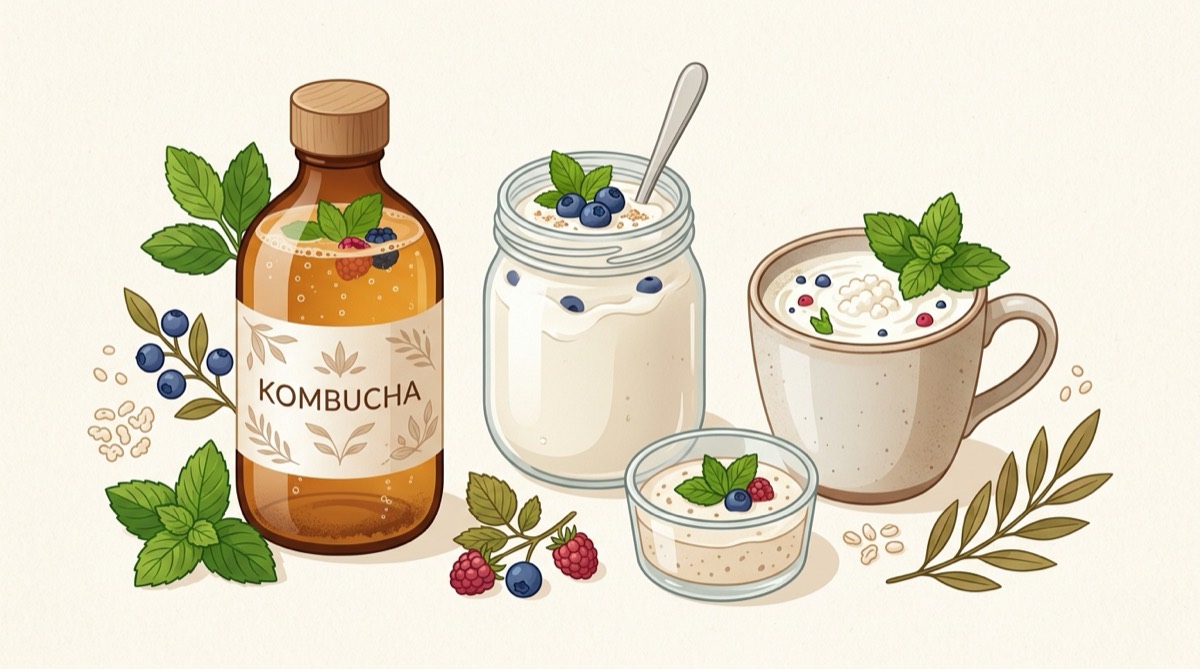
Probiotics are not tiny superheroes that all do the same job. The strain matters, the context matters, and sometimes the answer is food first. That is especially true with probiotic smoothies. Readers often expect one villain food, one magic test, or one supplement to explain everything. Real progress is usually quieter than that.
Probiotics and prebiotics are like seeds and compost. One adds organisms, the other feeds the neighborhood. When you look at probiotic smoothies through that lens, the topic stops feeling random. You can sort what is normal adaptation, what deserves caution, and what is simply bad advice dressed up as confidence.
The contrarian point is worth saying early: The supplement with the highest CFU number is automatically best. That is not how evidence works. The goal here is not a perfect gut routine. It is a workable plan you can repeat for two weeks, learn from, and discuss intelligently with your clinician if symptoms keep pushing back.
What matters first
Most articles on probiotic smoothies make the same mistake. They jump straight to fixes before they explain the mechanism. That leaves readers trying interventions without knowing what success should actually look like.
A better starting point is this: Use a four-question filter: what problem, what strain or substrate, what dose, and what will count as success?
- People buy broad blends when their goal is narrow. That mismatch creates confusion.
- Bloating after a probiotic does not automatically mean failure. It may mean the dose is too aggressive.
- Prebiotic foods often get skipped because they feel less exciting than a capsule.
Kiwi oat smoothie
Blend kiwi, oats, lactose-free yogurt or a tolerated alternative, and ice. It gives texture without turning into a sugar bomb.
Berry ginger blend
Use berries, a small amount of ginger, chia, and a gentle protein base. Good on mornings when solid food feels slow.
Green but calm smoothie
Choose spinach, cucumber, pineapple, and a neutral protein instead of a towering raw kale smoothie that tastes virtuous and lands badly.
Post-flare recovery smoothie
Build around banana if tolerated, oats, and a simple protein source. Keep the fiber moderate rather than maximal.
Prep-ahead smoothie packs
Freeze measured ingredients in bags so you can blend the same recipe three times in one week and judge the response properly.
Specifics that actually help
Foods worth knowing
Probiotic and fermented foods are not interchangeable with supplements, and they do not all contain the same organisms. The practical list is still useful: yogurt with live cultures, kefir, sauerkraut, kimchi, miso, tempeh, and some fermented cottage cheese products.
- Yogurt or kefir are usually the easiest first step because the dose is easier to control
- Sauerkraut and kimchi can be useful, but start with tablespoons rather than a heaped bowl
- Tempeh is often easier to build into meals than standalone fermented vegetables
- Miso works well in soup bases when you want a small serving and predictable meal volume
And yes, I learned this the hard way from watching people treat kimchi like salad on day one. Fermented foods can be excellent. They are still active foods, not decorations.
Technique matters more than hype
If a fermented food makes you feel worse, that does not prove fermented foods are bad. It may mean the portion was too large, the food was high in spice or garlic, or the timing was poor.
- Start with 1 to 2 tablespoons of fermented vegetables, not half the jar
- Pair fermented foods with a full meal instead of eating them alone on an empty stomach
- Hold everything else steady for a week so you can read the response accurately
- If you are in an IBS flare, begin with gentler foods first
The result? Better signal, less noise.
The two-week framework
-
Do build meals around reliable staples such as yogurt if tolerated, kefir if tolerated, oats, kiwi
-
Do protect sleep and hydration because both show up in symptom logs more than readers expect
-
Do use small experiments with clear start and stop points
-
Do ask for proper testing when symptoms are escalating instead of improvising harder
-
Do not let high-dose blends with no clear goal become your default
-
Do not build your routine around expecting every probiotic to help every condition and expect a calm Monday gut
-
Do not interpret one rough day as proof that the whole plan failed
-
Do not self-restrict until your diet collapses to five foods
-
immune compromise requiring clinician input
-
severe symptoms
-
blood in stool
-
fever
-
black stool
-
fainting
-
persistent vomiting
-
unexplained weight loss
Related reading
- Probiotics for Bloating: Can They Really Help?
- Probiotic Snacks: Boost Your Gut Health On-the-Go
- Probiotics vs. Prebiotics: What’s the Difference and Which Do You Need?
- Understanding Probiotics: Benefits, Strains, and How to Choose
- The Power of Prebiotics: Fueling Your Good Gut Bacteria
- Synbiotics Explained: The Combination of Probiotics and Prebiotics
Sources
- NCCIH - Probiotics: What You Need To Know - NCCIH - 2024 - https://www.nccih.nih.gov/health/probiotics-what-you-need-to-know
- NIH ODS - Probiotics fact sheet - NIH ODS - 2024 - https://ods.od.nih.gov/factsheets/Probiotics-Consumer/
- ISAPP - Probiotics and prebiotics resources - ISAPP - 2024 - https://isappscience.org/
- AGA - Clinical guidance - AGA - 2024 - https://gastro.org/clinical-guidance/
- Mayo Clinic - Probiotics - Mayo Clinic - 2025 - https://www.mayoclinic.org/drugs-supplements-probiotics/art-20390058
- NIDDK - Digestive diseases overview - NIDDK - 2024 - https://www.niddk.nih.gov/health-information/digestive-diseases