“Leaky gut” gets talked about like it’s a diagnosis you can write on a form. In medicine, it’s better understood as a mechanism—something that’s happening underneath conditions that do have names.
If you’ve been told your symptoms are “all in your head” or you’ve tested negative for celiac, IBD, and SIBO but still feel unwell, this concept might explain why.
This guide separates what’s proven from what’s speculative. You’ll learn what intestinal permeability actually means, which symptoms it might cause, and the evidence-based steps to restore your gut barrier.
What Is Leaky Gut?
Your intestinal lining is one cell thick. It’s designed to be selectively permeable—letting nutrients, water, and electrolytes through while keeping bacteria, undigested food particles, and toxins out.
Think of it like a coffee filter. A properly functioning filter lets water through but keeps grounds in the basket. Now imagine that filter develops microscopic tears. Particles that should stay contained start leaking through.
That’s intestinal permeability in plain language.
The Tight Junction Connection
The “seal” between intestinal cells is formed by structures called tight junctions. These protein complexes open and close to regulate what passes through. When they dysfunction, the barrier becomes too porous.
What can damage tight junctions:
- Chronic inflammation
- Certain medications (NSAIDs, PPIs, antibiotics)
- Alcohol overuse
- High-sugar, low-fiber diets
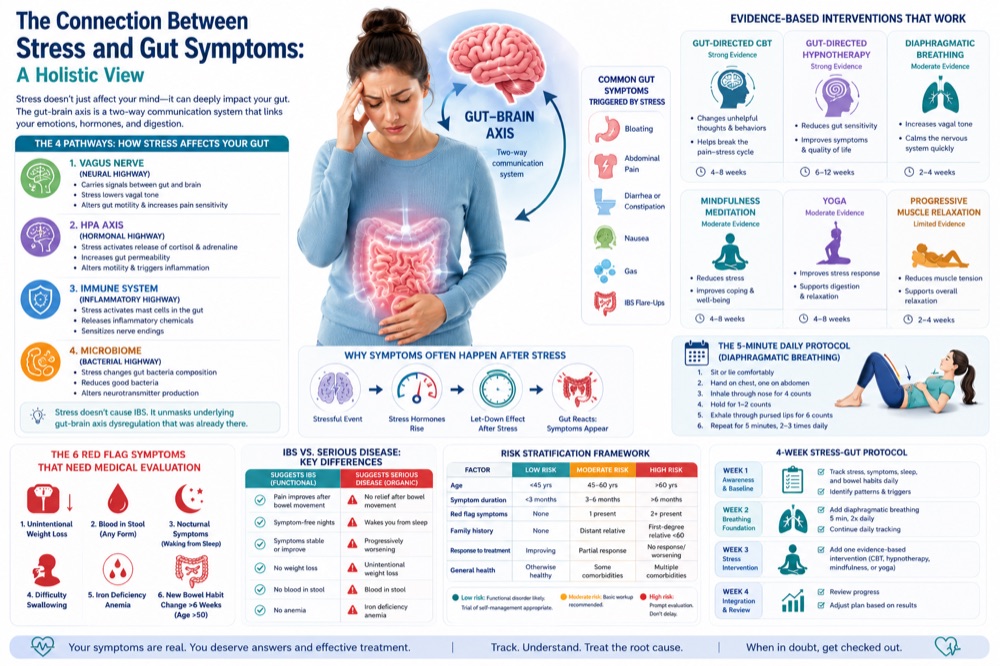
- Chronic stress
- Infections (bacterial, viral, parasitic)
- Nutrient deficiencies (zinc, vitamin D, vitamin A)
The Science: What We Know vs. What We’re Still Learning
Well-Established Facts
Intestinal permeability is:
- Measurable in research settings using lactulose-mannitol tests
- Increased in diagnosed conditions like Crohn’s disease, celiac disease, and severe burns
- Associated with higher rates of autoimmune conditions in animal studies
- Reversible in many cases when the underlying cause is addressed
Emerging Research (Promising but Not Conclusive)
- Whether leaky gut causes autoimmune diseases or is a contributing factor
- Whether it explains symptoms in people without diagnosed conditions
- Which supplements actually improve barrier function in humans (vs. cell studies)
- Whether “leaky gut syndrome” as a standalone diagnosis is valid
The bottom line: The mechanism is real. The clinical applications are still being worked out.
Symptoms That May Signal Intestinal Permeability
Leaky gut doesn’t have a signature symptom. Instead, it shows up as a pattern—often systemic, often stubborn.
The Autoimmune Connection
Research shows increased intestinal permeability in:
- Type 1 diabetes
- Multiple sclerosis
- Rheumatoid arthritis
- Lupus
- Hashimoto’s thyroiditis
The question researchers are still debating: Does leaky gut contribute to autoimmune development, or does the autoimmune process cause the permeability? It may be bidirectional.
What Causes Leaky Gut?
Understanding the drivers is more useful than debating whether the condition “exists.”
1. Medications
NSAIDs (ibuprofen, naproxen, aspirin): These reduce protective prostaglandins in the gut lining. Regular use is strongly linked to increased permeability and ulcer formation.
Proton Pump Inhibitors (omeprazole, etc.): Long-term use alters stomach acid, which affects digestion and microbial balance. Some studies show increased SIBO risk, which can drive permeability.
Antibiotics: Broad-spectrum antibiotics disrupt microbial diversity. Recovery can take months, and some species may not return without intervention.
If you need these medications: Work with your prescriber on the lowest effective dose and duration. Don’t stop prescribed medications without medical guidance.
2. Diet Quality
Your gut lining turns over every 3-5 days. It needs building blocks:
- Protein for cell regeneration
- Zinc for tight junction integrity
- Vitamin A for mucosal health
- Omega-3s for anti-inflammatory support
A diet high in ultra-processed foods, added sugars, and low in fiber starves both you and your microbiome.
3. Chronic Stress
Stress hormones (cortisol, adrenaline) directly affect gut function:
- Reduce blood flow to the digestive tract
- Alter motility (speed of digestion)
- Increase inflammatory cytokines
- Disrupt tight junction proteins
This isn’t “stress causes everything.” It’s that your gut is exquisitely sensitive to your nervous system state.
4. Alcohol
Alcohol is a gut irritant. Regular consumption:
- Damages the mucosal lining
- Increases inflammatory markers
- Disrupts microbial balance
- Depletes nutrients needed for repair
You don’t need to quit forever, but honest assessment matters. If you’re drinking most nights, your gut doesn’t get a recovery window.
5. Infections and Dysbiosis
Bacterial overgrowth (SIBO), parasitic infections, and post-infectious changes can all increase permeability. Sometimes the infection clears but the barrier dysfunction persists.
Testing for Leaky Gut: What’s Available?
Lactulose-Mannitol Test
What it measures: You drink a solution containing two sugars. Lactulose shouldn’t be absorbed; mannitol should. If both appear in urine, permeability is increased.
Pros: Direct measure of intestinal permeability Cons: Not widely available, results don’t tell you why permeability is increased, not standardized across labs
Zonulin Testing
What it measures: Zonulin is a protein that regulates tight junctions. Elevated levels suggest increased permeability.
Pros: Blood or stool test available Cons: Not validated for routine clinical use, high variability, unclear what “normal” means
Comprehensive Stool Tests
What they measure: Microbial composition, inflammation markers (calprotectin), digestive function.
Pros: Can identify dysbiosis, infections, inflammation Cons: Don’t directly measure permeability, expensive, results often lead to more questions than answers
The Practical Approach
For most people, testing isn’t the first step. A clinical trial of barrier-supportive interventions often provides more useful information than an expensive test that doesn’t change the plan.
Test when:
- Symptoms persist despite lifestyle changes
- You need documentation for workup of underlying conditions
- You’re considering prescription interventions
Skip testing when:
- Results won’t change your next step
- You’re seeking validation that symptoms are “real” (they are, regardless)
- You can’t afford it without financial strain
How to Heal Your Gut Barrier: An Evidence-Based Protocol
Healing takes time. Expect 3-6 months for meaningful change. Here’s what works.
Phase 1: Remove (Weeks 1-4)
Identify and reduce exposures that damage the barrier:
Food triggers: Common culprits include gluten, dairy, alcohol, caffeine, and ultra-processed foods. Don’t eliminate everything at once—track symptoms to identify your specific triggers.
Medications: Review all medications with your prescriber. Some may be essential despite gut effects; others might have alternatives.
Stress: Not optional. Chronic stress physiology blocks healing regardless of what supplements you take.
Phase 2: Replace (Weeks 1-12)
Support digestion with what your body needs:
Digestive support:
- Chew thoroughly (aim for 20-30 chews per bite)
- Consider betaine HCL if low stomach acid is suspected (work with a practitioner)
- Digestive enzymes with meals if you have pancreatic insufficiency or ongoing symptoms
Nutrient repletion:
- Zinc carnosine: 75-150 mg daily (shown to support gut lining)
- Vitamin D: Dose to blood levels (target 40-60 ng/mL)
- Omega-3s: 2-3 grams EPA/DHA daily
Phase 3: Reinoculate (Weeks 4-12)
Restore microbial diversity:
Fermented foods: 1-2 servings daily (yogurt, kefir, sauerkraut, kimchi, miso)
Prebiotic fibers: Start low, go slow
- Green bananas
- Cooked and cooled potatoes (resistant starch)
- Oats
- Onions and garlic (cooked if raw bothers you)
Probiotics: Strain-specific for your symptoms
- Lactobacillus rhamnosus GG for general support
- Saccharomyces boulardii for diarrhea-predominant issues
- Bifidobacterium blends for constipation
Phase 4: Repair (Ongoing)
Support tissue regeneration:
Bone broth: Contains collagen, gelatin, and amino acids that may support healing. Evidence is anecdotal but mechanism is plausible.
L-Glutamine: 5-15 grams daily. This amino acid is the primary fuel for intestinal cells. Studies show benefit in IBS and post-infection recovery.
Collagen peptides: 10-20 grams daily. Provides glycine and proline for tissue repair.
Demulcent herbs: Slippery elm, marshmallow root, and aloe vera can soothe irritated tissue. These coat the lining temporarily while underlying healing occurs.
The Gut-Brain Axis in Healing
You can do everything “right” and still struggle if stress physiology dominates.
Why stress matters:
- Cortisol directly increases intestinal permeability
- Stress alters gut motility (too fast = diarrhea, too slow = constipation)
- It changes microbial composition within days
- It amplifies pain perception (visceral hypersensitivity)
Stress interventions that actually help digestion:
- Diaphragmatic breathing: 5 minutes before meals activates the “rest and digest” nervous system
- Progressive muscle relaxation: Reduces overall tension that affects gut muscles
- Mindful eating: Sitting down, chewing, no screens. Sounds simple; it’s not for most people.
- Vagus nerve toning: Humming, gargling, cold exposure on the face
- Therapy: CBT and gut-directed hypnotherapy have strong evidence for IBS
A Real-World Healing Timeline
Here’s what progress often looks like:
Weeks 1-2: You might feel worse. Removing foods can cause withdrawal-like symptoms. Microbial shifts can temporarily increase gas and bloating. This doesn’t mean it’s not working.
Weeks 3-4: Early improvements. Bloating may decrease. Energy might stabilize. Sleep often improves first.
Weeks 5-8: More consistent symptom reduction. You start to notice which foods reliably trigger symptoms vs. which were one-off reactions.
Months 3-6: Barrier function improves. Food tolerance expands. Systemic symptoms (brain fog, fatigue, skin) show meaningful change.
Beyond 6 months: Maintenance. You’ve identified your personal triggers and built a sustainable routine.
When Leaky Gut Isn’t the Full Story
Some people do everything “right” and still struggle. Here’s what else to consider:
SIBO (Small Intestinal Bacterial Overgrowth)
Bacteria in the small intestine produce gas and toxins that damage the lining. SIBO and leaky gut often coexist. Treatment requires antibiotics or antimicrobials plus prokinetics.
Mast Cell Activation
Some people have overactive immune cells that release histamine and other mediators in response to triggers. This can mimic leaky gut symptoms and often coexists with it.
Dysautonomia/POTS
Autonomic nervous system dysfunction affects gut motility and blood flow. Healing requires nervous system regulation alongside gut support.
Trauma and Chronic Stress
Unresolved trauma keeps the body in threat physiology. No supplement stack overrides that. Somatic therapy, EMDR, or other trauma-informed approaches may be necessary.
Red Flags: When to See a Doctor
Don’t self-treat if you have:
- Blood in stool
- Unintentional weight loss
- Fever with digestive symptoms
- Severe or worsening pain
- Persistent vomiting
- Anemia or iron deficiency
- Family history of IBD or colon cancer
These require medical evaluation to rule out serious conditions.
The GutFeel Approach
Tracking symptoms during gut healing isn’t about perfection. It’s about pattern recognition.
With GutFeel AI, you can:
- Log meals and symptoms in real time (not at day’s end when you forget)
- Track stress and sleep alongside digestion (they’re connected)
- See weekly trends instead of reacting to one bad meal
- Identify your personal triggers vs. internet lists
Healing is iterative. Data makes it faster.
FAQs
Key Takeaways
- Leaky gut is a real mechanism even if the “syndrome” label is debated
- Multiple factors contribute – medications, diet, stress, alcohol, infections
- Healing takes months, not days – patience and consistency matter
- Remove triggers, replace nutrients, reinoculate, repair – in that order
- Stress management isn’t optional – it’s foundational to healing
- Track patterns, not perfection – GutFeel helps you see what memory misses
- Red flags need medical evaluation – don’t self-treat serious symptoms
Sources
- Cleveland Clinic. “Leaky Gut Syndrome.” 2024. https://my.clevelandclinic.org/health/diseases/22724-leaky-gut-syndrome
- Harvard Health Publishing. “Leaky Gut: What Is It, and What Does It Mean for You?” 2023. https://www.health.harvard.edu/blog/leaky-gut-what-is-it-and-what-does-it-mean-for-you-2017092212451
- Fasano A. “Leaky Gut and Autoimmune Diseases.” Clinical Reviews in Allergy & Immunology. 2012.
- NIDDK. “Digestive Diseases Overview.” 2024. https://www.niddk.nih.gov/health-information/digestive-diseases
- World Health Organization. “Healthy Diet.” 2024. https://www.who.int/news-room/fact-sheets/detail/healthy-diet
- Sturgeon C, Fasano A. “Zonulin, a Mechanism for Increased Intestinal Permeability.” International Journal of Molecular Sciences. 2016.