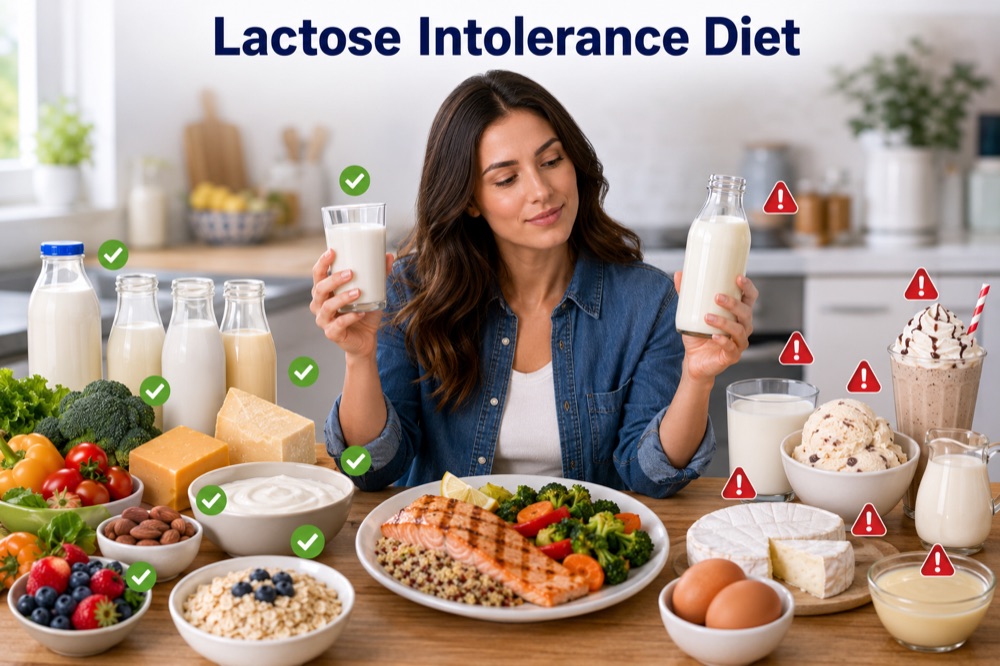
You’ve been diagnosed with lactose intolerance (or you’re pretty sure you have it). Now what do you actually eat?
Going low-lactose doesn’t mean giving up all dairy forever. In fact, most people with lactose intolerance can enjoy SOME dairy—they just need to know which products, how much, and when.
The reality: Lactose intolerance exists on a spectrum. Some people react to a splash of milk in their coffee. Others can drink a full glass with no issues. Most fall somewhere in between, able to enjoy certain dairy products in moderation.
This guide covers:
- Complete food lists (what to eat, what to limit, what to avoid)
- Dairy alternatives that actually taste good
- Hidden sources of lactose you might miss
- Meal plans and recipes
- How to ensure adequate nutrition without (or with minimal) dairy
- Strategies for dining out and social situations
Understanding Lactose Content in Foods
The Lactose Spectrum: From Safe to Problematic
Not all dairy is created equal. Lactose content varies dramatically between products.
GREEN LIGHT: Very Low or No Lactose (Usually Safe)
| Food | Lactose Content | Notes |
|---|---|---|
| Lactose-free milk | 0g | Real milk with lactase enzyme added |
| Lactose-free yogurt | 0g | Same taste as regular yogurt |
| Hard aged cheeses (cheddar, Swiss, parmesan, Gruyère) | 0-0.5g per oz | Aging process removes lactose |
| Butter | Trace (0.1g per tbsp) | Most people tolerate well |
| Clarified butter/ghee | 0g | Milk solids removed |
| Heavy cream | 0.5g per tbsp | Small amounts usually OK |
| Sour cream (small amounts) | 1g per 2 tbsp | Variable tolerance |
YELLOW LIGHT: Moderate Lactose (Test Your Tolerance)
| Food | Lactose Content | Notes |
|---|---|---|
| Yogurt with live cultures | 4-6g per cup | Bacteria help digest lactose |
| Kefir | 3-6g per cup | Fermented; often better tolerated |
| Cottage cheese | 5g per ½ cup | Variable; aged versions lower |
| Mozzarella cheese | 3g per oz | Fresh mozzarella higher |
| Ricotta cheese | 3-5g per ½ cup | Often problematic |
| Ice cream | 6g per ½ cup | High fat may slow symptoms |
| Whole milk | 12g per cup | Benchmark for lactose content |
| Skim milk | 13g per cup | Slightly higher than whole |
RED LIGHT: High Lactose (Usually Problematic)
| Food | Lactose Content | Notes |
|---|---|---|
| Sweetened condensed milk | 25g per ½ cup | Very high concentration |
| Evaporated milk | 13g per cup | Concentrated lactose |
| Dry milk powder | 35g per cup | Used in processed foods |
| Whey protein concentrate | Varies (can be high) | Check for isolate instead |
| Milkshakes/smoothies with milk | 25g+ per serving | Large lactose load |
| Pudding/custard made with milk | 10-15g per serving | Double whammy: lactose + sugar |
Lactose Tolerance Thresholds
Research shows most lactose-intolerant adults can tolerate:
- 12 grams of lactose (about 1 cup milk) when consumed WITH FOOD
- 18 grams when split throughout the day
- More if gradually introduced over time
Individual variation is significant. Some people react to 3 grams; others tolerate 20+ grams.
Dairy-Free Alternatives: What Actually Works
Milk Substitutes Compared
| Alternative | Taste | Best For | Protein | Calories (per cup) | Notes |
|---|---|---|---|---|---|
| Soy milk | Mild, slightly beany | All-purpose; baking | 8g | 80-100 | Most similar to cow’s milk nutritionally |
| Oat milk | Sweet, creamy | Coffee, cereal, baking | 3g | 120-130 | Naturally sweet; good foam for lattes |
| Almond milk | Nutty, light | Smoothies, cereal | 1g | 30-40 (unsweetened) | Low calorie; thin consistency |
| Coconut milk (carton) | Coconut flavor | Curries, smoothies | 0g | 40-50 | Distinct coconut taste |
| Cashew milk | Creamy, mild | Creamy sauces, coffee | 1g | 25-35 | Very creamy texture |
| Pea protein milk (Ripple) | Neutral | All-purpose | 8g | 70 | High protein; sustainable |
| Rice milk | Sweet, thin | Drinking, cereal | 1g | 120 | Hypoallergenic; higher carb |
| Hemp milk | Earthy, nutty | Smoothies | 3g | 60 | Omega-3s; distinct flavor |
Top Picks:
- For nutrition: Soy milk (closest to dairy milk protein)
- For coffee: Oat milk (best foam, doesn’t curdle)
- For baking: Soy or oat milk (neutral flavor, good texture)
- For weight loss: Unsweetened almond milk (lowest calorie)
Cheese Alternatives
Melting Cheeses (for sandwiches, pizza):
- Miyoko’s Creamery (cashew-based; excellent melt)
- Violife (coconut-based; good for grilling)
- Follow Your Heart (varieties for slicing and melting)
- Daiya (improved formula; good for pizza)
Soft Cheeses (for spreading, salads):
- Kite Hill ricotta (almond-based; very good)
- Tofutti cream cheese (classic option)
- Miyoko’s cream cheese (cultured; tangy)
- Violife feta (good texture; authentic taste)
Parmesan Alternatives:
- Violife Parmesan (best overall)
- Follow Your Heart Parmesan (good for pasta)
- Homemade: nutritional yeast + ground nuts + salt
Note: Vegan cheeses have improved dramatically. However, they’re often more processed than dairy cheese. Use in moderation.
Yogurt Alternatives
| Brand | Base | Protein | Probiotics | Taste Rating |
|---|---|---|---|---|
| Silk Dairy-Free | Coconut/Almond | 1g | Yes | Good |
| So Delicious | Coconut | 1g | Yes | Very Good |
| Kite Hill | Almond | 6g | Yes | Excellent |
| Chobani Non-Dairy | Oat/Coconut | 4g | Yes | Very Good |
| Siggi’s Non-Dairy | Coconut | 4g | Yes | Good |
| Forager Cashewmilk | Cashew | 2g | Yes | Excellent |
Top Pick: Kite Hill (highest protein, best texture, good probiotic content)
Ice Cream Alternatives
Best Overall:
- Halo Top Non-Dairy (low calorie, good protein)
- So Delicious Dairy Free (creamy, good flavors)
- Ben & Jerry’s Non-Dairy (authentic taste; higher calorie)
- NadaMoo! (organic, coconut-based)
- Cado (avocado-based; incredibly creamy)
Pro Tip: Let non-dairy ice cream sit at room temperature 5 minutes before scooping. It softens better than dairy ice cream.
Hidden Sources of Lactose
Lactose hides in surprising places. Always read labels for these ingredients:
Processed Foods That Often Contain Lactose
| Food Category | Why It Contains Lactose | Look For |
|---|---|---|
| Bread and baked goods | Dry milk powder, whey | “May contain milk,” whey, milk solids |
| Breakfast cereals | Milk derivatives | Whey, lactose, milk powder |
| Instant foods (potatoes, rice) | Cream powder, butter powder | Check ingredients carefully |
| Processed meats (sausages, deli meat) | Fillers, binders | Whey, casein, milk protein |
| Salad dressings | Cream-based, cheese flavoring | Buttermilk, cheese powder |
| Sauces and gravies | Cream, butter, cheese | Roux often contains milk |
| Protein bars | Whey protein, milk powder | Look for plant-based protein |
| Meal replacement shakes | Whey or casein protein | Choose pea/soy protein instead |
| Sugar-free products | Lactose as filler/bulking agent | Check ingredient list |
| Margarine | Some contain milk derivatives | Look for “dairy-free” label |
Medications and Supplements
Lactose is commonly used as:
- Filler/binder in pills
- Carrier for active ingredients
- Coating for tablets
Medications that MAY contain lactose:
- Birth control pills
- Antacids (some)
- Antihistamines (some)
- Anti-anxiety medications (some)
- Cholesterol medications (some)
What to do:
- Ask your pharmacist to check
- Request lactose-free alternatives when available
- Don’t stop prescribed medications without consulting doctor
- Most people tolerate the small amounts in medications
Label Reading: Terms That Indicate Lactose
| Term | Contains Lactose? |
|---|---|
| Milk | YES |
| Lactose | YES |
| Whey | YES |
| Casein | YES (protein, but indicates milk presence) |
| Caseinate | YES |
| Milk solids | YES |
| Dry milk powder | YES |
| Non-fat dry milk | YES |
| Sweet cream butter | Minimal (usually tolerated) |
| Butter | Minimal (usually tolerated) |
| Ghee/Clarified butter | NO (milk solids removed) |
| Lactic acid | NO (despite name, not lactose) |
| Lactylate | NO (chemical derivative) |
| Stearoyl lactylate | NO |
Important: “Non-dairy” products can legally contain milk derivatives (like casein). Look for “dairy-free” or “vegan” for true milk-free products.
7-Day Lactose-Free Meal Plan
Day 1
| Meal | Menu | Lactose-Free |
|---|---|---|
| Breakfast | Oatmeal with almond milk, berries, walnuts | ✓ |
| Snack | Apple with almond butter | ✓ |
| Lunch | Turkey sandwich on GF bread with avocado, lettuce, tomato | ✓ |
| Snack | Carrot sticks with hummus | ✓ |
| Dinner | Grilled salmon, roasted potatoes, steamed broccoli | ✓ |
Day 2
| Meal | Menu | Lactose-Free |
|---|---|---|
| Breakfast | Smoothie: banana, spinach, pea protein, oat milk | ✓ |
| Snack | Dairy-free yogurt with granola | ✓ |
| Lunch | Chicken Caesar salad (no cheese, GF dressing) | ✓ |
| Snack | Rice cakes with avocado | ✓ |
| Dinner | Stir-fry with tofu, vegetables, rice (tamari, not soy sauce) | ✓ |
Day 3
| Meal | Menu | Lactose-Free |
|---|---|---|
| Breakfast | Scrambled eggs with vegetables, toast | ✓ |
| Snack | Fresh fruit | ✓ |
| Lunch | Quinoa bowl with black beans, corn, salsa, guacamole | ✓ |
| Snack | Trail mix (nuts, seeds, dried fruit) | ✓ |
| Dinner | Spaghetti with marinara, meat sauce, GF pasta | ✓ |
Day 4
| Meal | Menu | Lactose-Free |
|---|---|---|
| Breakfast | Chia pudding with coconut milk, mango | ✓ |
| Snack | Hard-boiled egg | ✓ |
| Lunch | Tuna salad (no dairy) on GF crackers | ✓ |
| Snack | Dairy-free smoothie | ✓ |
| Dinner | Tacos with corn tortillas, ground beef, lettuce, salsa, guacamole | ✓ |
Day 5
| Meal | Menu | Lactose-Free |
|---|---|---|
| Breakfast | GF pancakes with maple syrup, fruit | ✓ |
| Snack | Rice pudding made with coconut milk | ✓ |
| Lunch | Vegetable soup (broth-based), GF bread | ✓ |
| Snack | Popcorn (olive oil, salt) | ✓ |
| Dinner | Roast chicken, mashed potatoes (made with olive oil), green beans | ✓ |
Day 6
| Meal | Menu | Lactose-Free |
|---|---|---|
| Breakfast | Avocado toast on GF bread, hemp seeds | ✓ |
| Snack | Banana with peanut butter | ✓ |
| Lunch | Mediterranean plate: hummus, olives, cucumber, tomatoes, GF pita | ✓ |
| Snack | Coconut yogurt with berries | ✓ |
| Dinner | Shrimp scampi (made with olive oil, no butter) over GF pasta | ✓ |
Day 7
| Meal | Menu | Lactose-Free |
|---|---|---|
| Breakfast | Breakfast burrito: scrambled eggs, black beans, salsa, avocado in corn tortilla | ✓ |
| Snack | Fresh vegetables with guacamole | ✓ |
| Lunch | Leftover shrimp scampi | ✓ |
| Snack | Dark chocolate (dairy-free) | ✓ |
| Dinner | Beef stir-fry with coconut aminos, vegetables, rice | ✓ |
Dining Out With Lactose Intolerance
Restaurant Types: Risk Assessment
| Restaurant Type | Risk Level | Safe Options |
|---|---|---|
| Steakhouse | Low | Steak, fish, potatoes, vegetables (ask no butter) |
| Mexican | Low-Moderate | Tacos with corn tortillas, rice, beans (skip cheese/sour cream) |
| Asian (Thai, Chinese, Japanese) | Low-Moderate | Stir-fries, sushi, rice dishes (watch for cream-based sauces) |
| Mediterranean | Low | Grilled meats, rice, vegetables, hummus |
| Burger joint | Moderate | Burger without cheese, fries (check fryer) |
| Italian | High | Limited options; marinara-based pasta, no cheese |
| French | High | Many butter and cream-based dishes |
| Breakfast diners | Moderate | Eggs, hash browns, fruit (skip pancakes if made with milk) |
Questions to Ask Your Server
- “Does this dish contain milk, cream, butter, or cheese?”
- “Can my dish be prepared without butter?”
- “Is the bread made with milk?”
- “Are the fries cooked in a dedicated fryer?” (shared fryers with breaded items may have milk residue)
- “What dressings are dairy-free?”
Scripts for Common Situations
When ordering pasta:
“I have a dairy allergy. Can my pasta be made with olive oil instead of butter? Is there cheese in the sauce?”
When ordering steak:
“Can you cook my steak without butter on top? Just oil is fine.”
When ordering breakfast:
“Can my eggs be made without butter or cream? Just oil is fine.”
When ordering coffee:
“Can I get this with oat milk instead of regular milk?”
Nutritional Considerations
Key Nutrients to Monitor
When reducing or eliminating dairy, pay attention to:
Calcium
Daily Recommendation: 1,000-1,200 mg (varies by age/sex)
Non-Dairy Sources:
| Food | Calcium Content |
|---|---|
| Fortified plant milk (1 cup) | 300-450 mg |
| Fortified orange juice (1 cup) | 350 mg |
| Canned sardines with bones (3 oz) | 325 mg |
| Canned salmon with bones (3 oz) | 180 mg |
| Tofu, calcium-set (½ cup) | 250-400 mg |
| Collard greens, cooked (1 cup) | 270 mg |
| Spinach, cooked (1 cup) | 245 mg |
| Almonds (1 oz) | 75 mg |
| White beans (1 cup) | 160 mg |
Vitamin D
Daily Recommendation: 600-800 IU
Sources:
- Fatty fish (salmon, mackerel, sardines)
- Fortified plant milks
- Egg yolks
- Mushrooms (especially UV-exposed)
- Sunlight exposure
- Supplements (often necessary)
Protein
Daily Recommendation: 0.8g per kg body weight
Non-Dairy Sources:
- Meat, poultry, fish
- Eggs
- Legumes (beans, lentils)
- Tofu, tempeh
- Nuts and seeds
- Soy milk, pea milk (highest protein plant milks)
Supplement Considerations
May be helpful if dairy intake is minimal:
| Supplement | Dose | Notes |
|---|---|---|
| Calcium | 500-600 mg twice daily | Don’t exceed 1,200 mg total daily |
| Vitamin D | 1,000-2,000 IU daily | Get levels tested; adjust accordingly |
| Probiotics | Varies | May help with lactose digestion over time |
Consult your doctor before starting supplements, especially if you take medications or have health conditions.
Lactase Enzyme Supplements: Do They Work?
How They Work
Lactase supplements (Lactaid, Dairy Ease, store brands) contain the lactase enzyme your body is missing. Taken before consuming dairy, they help break down lactose.
Effectiveness
Research shows:
- Effective for 70-90% of lactose-intolerant people
- Works best when taken IMMEDIATELY before dairy
- Dose may need adjustment based on lactose amount
- Doesn’t work for everyone (some people need different formulation)
How to Use
- Take immediately before consuming dairy (or with first bite)
- Start with standard dose (usually 3,000-9,000 FCC units)
- Adjust based on results:
- Still having symptoms? Try higher dose
- No symptoms? Try lower dose to save money
- For extended meals: May need second dose after 30-45 minutes
Product Comparison
| Product | Form | Dose | Cost |
|---|---|---|---|
| Lactaid Fast Act | Caplet | 9,000 FCC | $10-15/60 caplets |
| Lactaid Original | Caplet | 3,000 FCC | $10-15/60 caplets |
| Dairy Ease | Caplet | 6,000 FCC | $8-12/60 caplets |
| Store brand (CVS, Walgreens) | Caplet | 3,000-9,000 FCC | $5-10/60 caplets |
| Generic chewable | Chewable | 3,000 FCC | $8-12/60 tablets |
Best Value: Store brands (same active ingredient, lower cost)
Frequently Asked Questions
Key Takeaways
- Most people can tolerate SOME lactose—find your personal threshold
- Aged cheeses are usually safe—lactose removed during aging
- Yogurt with live cultures is often tolerated—bacteria help digest lactose
- Lactose-free dairy exists—real milk without the lactose
- Plant milks work well—oat and soy are best all-purpose options
- Read labels carefully—lactose hides in processed foods and medications
- Lactase supplements help most people—take immediately before dairy
- Calcium and vitamin D need attention—ensure adequate intake from other sources
- Dining out is manageable—know what to order and what questions to ask
- Complete avoidance usually unnecessary—moderation and strategy work better
Sources:
- NIDDK - Lactose Intolerance: Diet Management - 2025
- Academy of Nutrition and Dietetics - Lactose Intolerance Nutrition Guide - 2025
- Mayo Clinic - Lactose Intolerance: Treatment - 2025
- NIH Office of Dietary Supplements - Calcium Fact Sheet - 2025
- Journal of Clinical Gastroenterology - Lactose Intolerance Management - 2024
- Cleveland Clinic - Dairy-Free Nutrition - 2025
Last Updated: March 9, 2026