Constipation is not always about needing more fiber. Sometimes the real issue is too little fluid, too little movement, or too much hesitation. That is especially true with high-fiber snacks for constipation. Readers often expect one villain food, one magic test, or one supplement to explain everything. Real progress is usually quieter than that.
Your bowel routine works more like a commute than a switch. Timing, traffic, and habits all matter. When you look at high-fiber snacks for constipation through that lens, the topic stops feeling random. You can sort what is normal adaptation, what deserves caution, and what is simply bad advice dressed up as confidence.
The contrarian point is worth saying early: If you are not going daily, you are constipated. Frequency matters less than effort, stool form, and comfort. The goal here is not a perfect gut routine. It is a workable plan you can repeat for two weeks, learn from, and discuss intelligently with your clinician if symptoms keep pushing back.
What matters first
Most articles on high-fiber snacks for constipation make the same mistake. They jump straight to fixes before they explain the mechanism. That leaves readers trying interventions without knowing what success should actually look like.
A better starting point is this: Use the Bristol Stool Chart, a 7-day bowel diary, and a timed toilet routine after breakfast.
- People usually undercount how long they postpone the urge because they are busy.
- Another pattern is adding fiber powder while drinking almost nothing all day.
- Pelvic floor dysfunction gets missed because everyone jumps straight to food.
Rice cake plus protein
Top rice cakes with peanut butter, turkey, or lactose-free cottage cheese if tolerated. The pairing slows digestion and keeps the snack from feeling flimsy.
Portable fruit and seeds
Use kiwi, clementines, grapes, or a small banana with pumpkin seeds or a measured nut portion if tolerated.
Yogurt or dairy-free cup
A simple single-serve option is more reliable than a so-called healthy bar loaded with chicory root and mystery fibers.
Savory box
Build a small box with crackers, cheese or tofu depending on the title, and cucumber or carrots. That gives you texture without chaos.
Emergency desk snack
Keep one boring backup at work or in your bag. Boring wins when the alternative is buying a trigger food because you waited too long.
Specifics that actually help
Which fiber helps which problem
Fiber is not one thing. Soluble fiber tends to absorb water and form a gel, which can help stool consistency. Insoluble fiber adds bulk and speeds transit in some people, but it can feel too rough during active flares or in sensitive guts.
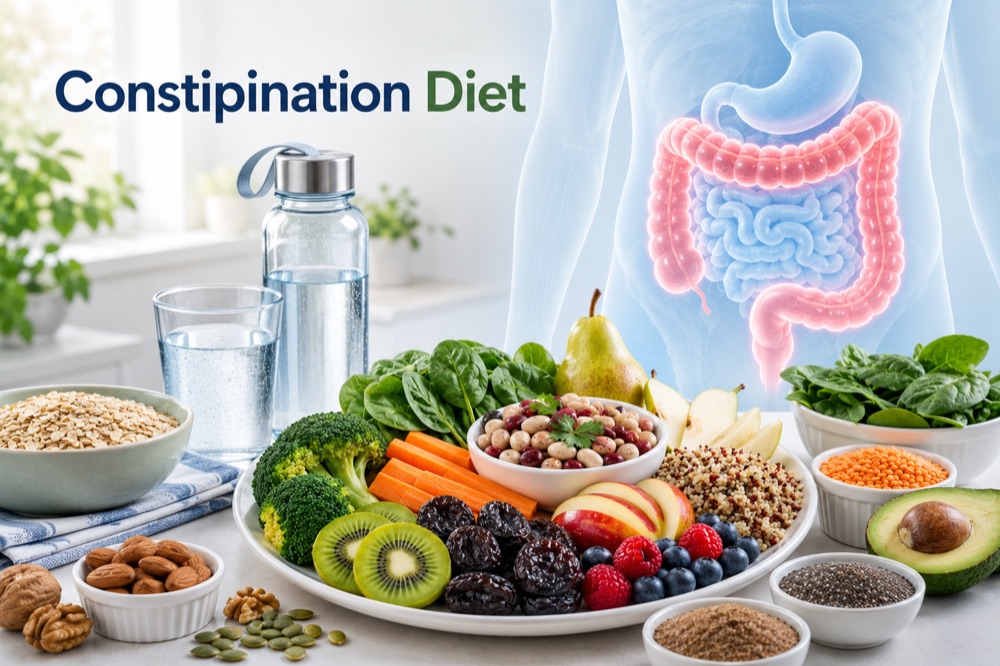
- Soluble fiber examples: oats, chia, psyllium, beans, kiwi
- Insoluble fiber examples: wheat bran, many raw vegetables, nuts, whole kernels
- A safe fiber ramp is usually slower than people want
- Going from 10 grams a day to 30 in one weekend is a classic setup for bloating
A lot of patients do not need more fiber immediately. They need the right type, more fluid, and a bowel routine that respects the urge instead of postponing it.
How to increase fiber without creating trouble
- Check your baseline intake for three days before changing anything.
- Increase by roughly 3 to 5 grams every few days rather than making a heroic jump.
- Raise fluids at the same time.
- Use cooked foods before raw roughage if your gut reacts quickly.
- Pause the increase if pain keeps worsening instead of settling.
That measured approach is less dramatic, but it is how you get from chronic straining to predictable bowel movements without spending the week distended.
The two-week framework
-
Do build meals around reliable staples such as kiwi, prunes if tolerated, oats, chia
-
Do protect sleep and hydration because both show up in symptom logs more than readers expect
-
Do use small experiments with clear start and stop points
-
Do ask for proper testing when symptoms are escalating instead of improvising harder
-
Do not let dehydration become your default
-
Do not build your routine around ignoring the urge and expect a calm Monday gut
-
Do not interpret one rough day as proof that the whole plan failed
-
Do not self-restrict until your diet collapses to five foods
-
new constipation after age 50
-
blood in stool
-
weight loss
-
vomiting
-
severe pain
-
black stool
-
fainting
-
persistent vomiting
Related reading
- Constipation Relief: Natural Remedies for Regular Bowel Movements
- Chronic Constipation Causes: Why Are You Always Backed Up?
- Constipation Diet: High-Fiber Foods and Hydration for Relief
- When to Worry About Constipation: Red Flags and Medical Advice
- Constipation in Children: Causes, Symptoms, and Gentle Solutions
- Medications for Constipation: Over-the-Counter and Prescription Options
Sources
- NIDDK - Definition & Facts for Constipation - NIDDK - 2020 - https://www.niddk.nih.gov/health-information/digestive-diseases/constipation/definition-facts
- NIDDK - Treatment for Constipation - NIDDK - 2020 - https://www.niddk.nih.gov/health-information/digestive-diseases/constipation/treatment
- NHS - Constipation - NHS - 2023 - https://www.nhs.uk/conditions/constipation/
- Mayo Clinic - Constipation - Mayo Clinic - 2025 - https://www.mayoclinic.org/diseases-conditions/constipation/symptoms-causes/syc-20354253
- AGA - Clinical Practice Update on Chronic Constipation - Gastroenterology - 2023 - https://www.gastrojournal.org/article/S0016-5085(23)00192-0/fulltext
- NIDDK - Eating, diet, and nutrition for constipation - NIDDK - 2020 - https://www.niddk.nih.gov/health-information/digestive-diseases/constipation/eating-diet-nutrition