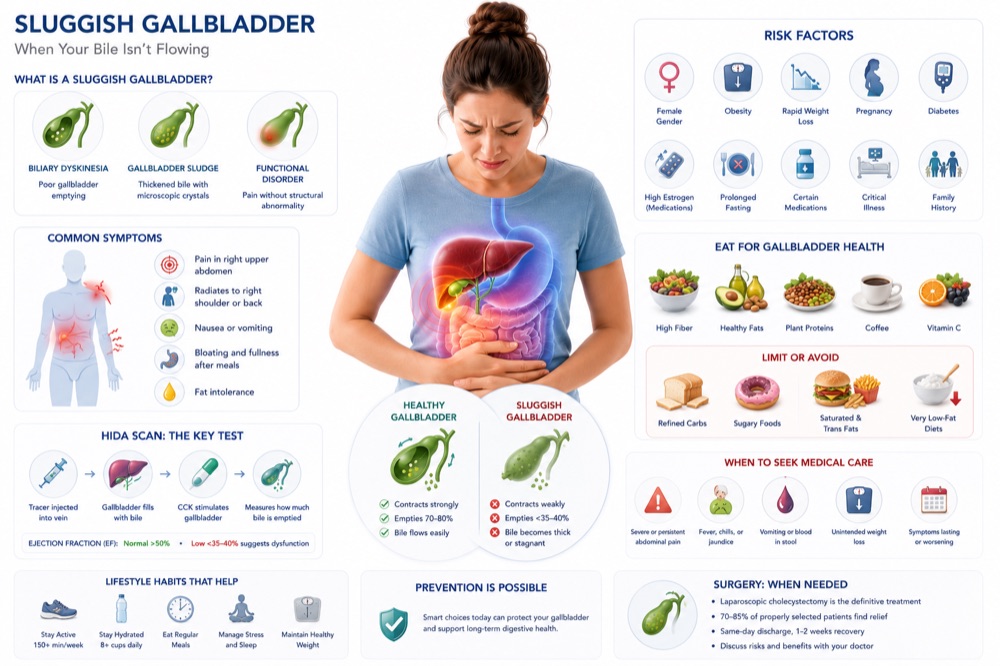
What you eat directly influences your gallbladder health—both in terms of preventing gallstones from forming and managing symptoms if you already have them. The connection is straightforward: your gallbladder’s primary job is releasing bile to digest fats, so dietary fat intake directly affects how hard it works.
But here’s what most gallbladder diet articles get wrong: It’s not about eliminating all fat. Your gallbladder needs regular stimulation to empty properly, and extremely low-fat diets can actually INCREASE gallstone risk by allowing bile to stagnate. The key is choosing the RIGHT types of fat, eating adequate fiber, and maintaining a healthy weight without rapid weight loss.
This evidence-based guide provides specific food recommendations for gallbladder health, explains the science behind dietary gallstone prevention, and offers practical meal planning strategies whether you’re trying to prevent stones, manage symptoms, or recover from gallbladder surgery.
Understanding Gallstones: Why Diet Matters
To understand why certain foods help or harm gallbladder health, you need to understand what gallstones are and how they form.
Types of Gallstones
Cholesterol stones (80% of cases in Western countries):
- Form when bile contains too much cholesterol relative to bile salts and lecithin
- Typically yellow-green in color
- Associated with: obesity, high-calorie diets, refined carbohydrates, rapid weight loss
Pigment stones (20% of cases):
- Form when bile contains excess bilirubin (a breakdown product of red blood cells)
- Dark brown or black in color
- Associated with: cirrhosis, hemolytic anemias (sickle cell, thalassemia), bile duct infections
Mixed stones:
- Contain both cholesterol and pigment components
- Very common—many “cholesterol” stones have pigment centers
How Gallstones Form: The Role of Diet
Gallstone formation involves three key mechanisms:
1. Cholesterol supersaturation: When your liver secretes more cholesterol than can be dissolved by bile salts and phospholipids, the excess cholesterol crystallizes. Dietary factors that increase cholesterol secretion include:
- High intake of saturated fats and trans fats
- High glycemic load diets (refined carbohydrates, sugar)
- Obesity and insulin resistance
2. Gallbladder hypomotility (sluggish emptying): When the gallbladder doesn’t empty regularly and completely, bile becomes concentrated and cholesterol crystals have time to form stones. Factors that impair gallbladder emptying include:
- Prolonged fasting
- Very low-calorie diets
- Pregnancy (progesterone effect)
- Rapid weight loss
- Total parenteral nutrition (TPN)
3. Nucleation factors: Certain substances in bile promote cholesterol crystal formation. Mucin (a glycoprotein) and calcium salts can accelerate stone formation.
The Diet-Gallstone Connection: What Research Shows
Strong evidence:
- High fiber intake reduces gallstone risk by 10-17% (meta-analyses)
- Regular fat intake (not too low, not too high) promotes gallbladder emptying
- Rapid weight loss (>3 lbs/week) dramatically increases stone formation
- Coffee consumption associated with 25-45% lower risk in multiple studies
- High glycemic load diets increase risk by 15-30%
Moderate evidence:
- Vitamin C supplementation may reduce risk (needed for cholesterol→bile acid conversion)
- Olive oil and monounsaturated fats may be protective
- High calcium intake may reduce risk by binding bile acids
- Nuts associated with reduced risk in observational studies
Weak or conflicting evidence:
- Specific vitamin supplements (E, B vitamins)
- Alcohol (may have slight protective effect but risks outweigh benefits)
- Soy products
Foods That Support Gallbladder Health
These foods have evidence-based benefits for gallstone prevention and gallbladder function.
High-Fiber Foods (Top Priority)
Why fiber helps:
- Binds bile acids in intestine, increasing excretion
- Forces liver to use cholesterol to make new bile acids (lowering bile cholesterol)
- Slows carbohydrate absorption, improving insulin sensitivity
- Promotes healthy gut bacteria that metabolize bile acids
Recommended intake: 25-35 grams daily
Best sources:
| Food Category | Examples | Fiber per Serving |
|---|---|---|
| Whole grains | Oats, barley, brown rice, quinoa, whole wheat | 4-8g per cooked cup |
| Legumes | Lentils, black beans, chickpeas, kidney beans | 6-8g per ½ cup cooked |
| Fruits | Apples, pears, berries, oranges, prunes | 3-5g per medium fruit |
| Vegetables | Broccoli, Brussels sprouts, carrots, artichokes | 3-5g per cup cooked |
| Nuts/seeds | Almonds, chia seeds, flaxseeds, sunflower seeds | 3-5g per ounce |
Practical tips:
- Start the day with oatmeal topped with berries and chia seeds (10g fiber)
- Add lentils or beans to salads and soups
- Choose whole fruit over juice
- Keep nuts handy for snacks
- Increase fiber gradually to avoid gas/bloating
Healthy Fats (Essential for Gallbladder Emptying)
Why fat is necessary:
- Fat in the digestive tract triggers release of cholecystokinin (CCK)
- CCK signals gallbladder to contract and release bile
- Regular, complete emptying prevents bile stagnation and crystal formation
The paradox: While high fat intake increases gallstone risk, VERY LOW fat intake also increases risk by allowing the gallbladder to become sluggish. The key is MODERATE intake of HEALTHY fats.
Recommended intake: 30-40% of total calories, emphasizing unsaturated fats
Best sources:
| Fat Type | Food Sources | Benefits |
|---|---|---|
| Monounsaturated | Olive oil, avocados, macadamia nuts, almonds, peanuts | Associated with reduced gallstone risk; anti-inflammatory |
| Omega-3 polyunsaturated | Fatty fish (salmon, mackerel, sardines), flaxseeds, walnuts, chia seeds | Reduces inflammation; may improve bile composition |
| Medium-chain triglycerides (MCTs) | Coconut oil, palm kernel oil | Absorbed directly without needing bile; easier to digest |
Practical tips:
- Use olive oil as primary cooking oil (1-2 tablespoons per meal)
- Eat fatty fish 2-3 times per week
- Add avocado to salads and sandwiches
- Snack on a small handful of nuts daily
- Consider MCT oil if you have fat intolerance (start with 1 teaspoon)
Lean Proteins
Why protein matters:
- Adequate protein supports healthy weight maintenance
- Plant proteins associated with lower gallstone risk than animal proteins
- Lean sources minimize saturated fat intake
Best sources:
| Protein Source | Examples | Notes |
|---|---|---|
| Fish | Salmon, cod, tilapia, tuna | Choose fatty fish for omega-3s |
| Poultry | Skinless chicken, turkey breast | Remove skin to reduce saturated fat |
| Plant proteins | Tofu, tempeh, legumes, edamame | High fiber; associated with lower risk |
| Low-fat dairy | Greek yogurt, cottage cheese, skim milk | Provides calcium; choose low-fat versions |
| Eggs | Egg whites or whole eggs in moderation | Yolks contain cholesterol but also lecithin |
Practical tips:
- Aim for 20-30g protein per meal
- Have at least 2-3 plant-based protein meals per week
- Choose baked, grilled, or poached over fried
- Limit red meat to 1-2 times per week
Fruits and Vegetables (All Colors)
Why they help:
- High in fiber
- Rich in antioxidants that reduce inflammation
- Provide vitamin C (needed for bile acid synthesis)
- Low in calories for weight management
Especially beneficial:
| Food | Key Nutrients | Gallbladder Benefits |
|---|---|---|
| Citrus fruits | Vitamin C, pectin | Vitamin C needed for cholesterol→bile acid conversion |
| Leafy greens | Folate, magnesium, fiber | Associated with lower gallstone risk |
| Cruciferous vegetables | Glucosinolates, fiber | Support liver detoxification pathways |
| Berries | Anthocyanins, vitamin C | Anti-inflammatory; antioxidant |
| Apples | Pectin (soluble fiber) | Binds bile acids |
Recommended intake: 5-9 servings daily (at least half the plate at meals)
Whole Grains (Not Refined)
Why whole grains matter:
- Higher in fiber than refined grains
- Lower glycemic index (better for insulin sensitivity)
- Contain magnesium (associated with reduced gallstone risk)
Evidence: Women who ate 2+ servings of whole grains daily had 20% lower gallstone risk compared to those eating <1 serving weekly (Nurses’ Health Study).
Best choices:
- Oats and oat bran (highest in soluble fiber)
- Barley (excellent soluble fiber source)
- Brown rice
- Quinoa
- Whole wheat bread and pasta
- Bulgur
- Whole grain cereals (check labels for added sugar)
Foods to limit:
- White bread
- White rice
- Refined cereals
- Pastries and baked goods made with refined flour
Coffee and Tea
Coffee: Multiple large studies show coffee consumption is associated with significantly lower gallstone risk.
Evidence:
- Men who drank 2-3 cups daily: 40% lower risk
- Women who drank 2+ cups daily: 25% lower risk
- Effect seen with both caffeinated and decaf (suggests compounds beyond caffeine)
Proposed mechanisms:
- Caffeine stimulates gallbladder contraction
- Chlorogenic acid and other antioxidants may reduce cholesterol saturation
- Coffee may increase bile acid secretion
Tea: Green tea contains catechins that may have protective effects, though evidence is less robust than for coffee.
Practical recommendations:
- 2-3 cups of coffee daily may be protective (if tolerated)
- Avoid loading with sugar and cream
- Green tea is a healthy low-calorie beverage option
Nuts
Evidence: Regular nut consumption is associated with reduced gallstone risk in multiple observational studies.
Nurses’ Health Study findings:
- Women eating 1+ ounce of nuts 5+ times/week: 25% lower gallstone risk
- Benefit seen across different nut types (almonds, walnuts, peanuts)
Why they help:
- Healthy unsaturated fats
- Fiber content
- Plant protein
- Magnesium and other minerals
Practical tip: A small handful (1 ounce) daily provides benefits without excessive calories.
Foods That May Trigger Gallbladder Symptoms
If you already have gallstones or gallbladder disease, certain foods are likely to trigger painful attacks. Understanding what to avoid—and why—is crucial for symptom management.
High-Fat Foods (Primary Triggers)
Why they cause problems:
- Large amounts of fat trigger intense gallbladder contraction
- If a stone is partially blocking the duct, strong contractions cause pain
- High-fat meals also delay gastric emptying, prolonging symptoms
Foods to limit or avoid:
| Food Category | Specific Foods to Avoid |
|---|---|
| Fried foods | French fries, fried chicken, donuts, tempura, deep-fried fish |
| Fatty meats | Bacon, sausage, ribs, marbled steaks, hot dogs, salami, bologna |
| High-fat dairy | Whole milk, ice cream, heavy cream, full-fat cheese, butter, sour cream |
| Processed snacks | Chips, crackers made with hydrogenated oils, microwave popcorn |
| Fast food | Burgers, pizza, tacos, fried fish sandwiches |
| Rich sauces | Alfredo sauce, hollandaise, béarnaise, cream-based sauces |
| Baked goods | Pastries, croissants, doughnuts, cakes made with butter/shortening |
Fat intake guidelines for symptomatic gallbladder disease:
- Limit total fat to 30-40g per day during symptomatic periods
- Limit fat per meal to 10-15g (large fat loads are more likely to trigger attacks)
- Spread fat intake evenly across meals (avoid one large fat load)
- Choose unsaturated fats over saturated fats
High-Glycemic Foods
Why they matter:
- Rapidly absorbed carbohydrates increase insulin resistance
- Insulin resistance increases cholesterol secretion into bile
- Associated with increased gallstone formation
Evidence: Women in the highest quintile of dietary glycemic index had 15% higher gallstone risk compared to lowest quintile (Nurses’ Health Study).
Foods to limit:
| Food Category | Specific Foods |
|---|---|
| Refined grains | White bread, white rice, regular pasta, flour tortillas |
| Sugary beverages | Soda, sweetened tea, fruit punches, energy drinks |
| Sweets | Candy, cookies, cakes, ice cream, chocolate |
| Breakfast cereals | Frosted cereals, sugary granola, instant oatmeal with added sugar |
| Snack foods | Pretzels, rice cakes, crackers made from refined flour |
Better choices:
- Whole grain bread (check for “100% whole wheat” as first ingredient)
- Brown rice, quinoa, barley
- Whole fruit instead of juice
- Plain oatmeal with fruit instead of flavored packets
Foods That May Cause Individual Sensitivities
Some foods don’t cause problems for everyone with gallbladder disease but commonly trigger symptoms in susceptible individuals:
| Food | Why It May Cause Problems |
|---|---|
| Eggs | High cholesterol content; commonly reported trigger food |
| Pork | Often high in fat even when lean cuts chosen |
| Onions and garlic | May cause gas and bloating that worsens gallbladder discomfort |
| Spicy foods | Can irritate already-sensitive digestive system |
| Gas-producing vegetables | Cabbage, broccoli, cauliflower, Brussels sprouts may worsen bloating |
| Carbonated beverages | Gas can increase abdominal pressure and discomfort |
| Very cold foods/drinks | Some patients report cold triggers cramping |
Important: Keep a food-symptom diary to identify YOUR specific triggers. Not everyone reacts to the same foods.
Special Considerations: Diet for Specific Gallbladder Conditions
Diet During Active Gallbladder Attacks (Biliary Colic)
Immediate management (during an attack):
- Stop eating until pain subsides
- Sip clear liquids (water, broth, herbal tea)
- Apply heat to RUQ for comfort
- Take prescribed pain medication
24-48 hours after attack:
- Start with bland, low-fat foods
- Clear liquids → full liquids → soft, low-fat foods → regular low-fat diet
- Avoid all fried foods, fatty foods, and rich desserts
- Eat small, frequent meals (5-6 per day)
Sample post-attack meal plan:
| Meal | Food Choices |
|---|---|
| Breakfast | Oatmeal made with water, banana, herbal tea |
| Snack | Apple sauce, saltine crackers |
| Lunch | Clear broth, plain rice, baked chicken breast (no skin) |
| Snack | Low-fat yogurt, plain toast |
| Dinner | Steamed white fish, plain pasta with marinara, steamed carrots |
| Evening | Herbal tea, graham crackers |
Diet for Asymptomatic Gallstones
If you have gallstones but no symptoms (incidentally discovered on imaging), dietary goals focus on preventing symptom development:
Recommendations:
- Follow general gallbladder-healthy diet (high fiber, moderate healthy fats)
- Maintain healthy weight
- Exercise regularly
- Avoid rapid weight loss
- Don’t skip meals (regular gallbladder emptying is protective)
- Limit refined carbohydrates and sugar
- Include coffee if tolerated
Important: Prophylactic cholecystectomy is NOT recommended for asymptomatic gallstones in most cases. Diet and watchful waiting are appropriate.
Diet After Gallbladder Removal (Post-Cholecystectomy)
Why diet matters after surgery: Without a gallbladder, bile drips continuously into the intestine rather than being stored and concentrated. This can cause:
- Diarrhea (bile acid malabsorption) in 10-20% of patients
- Fat malabsorption with large fatty meals
- Bloating and gas initially
Post-surgery diet progression:
Week 1-2:
- Very low fat (<20g/day)
- Small, frequent meals (6 per day)
- Bland, easily digestible foods
- Avoid: fried foods, fatty meats, full-fat dairy, gas-producing vegetables
Week 3-4:
- Gradually increase fat to 30-40g/day
- Introduce one new food every 2-3 days
- Monitor tolerance
- Continue small, frequent meals
Month 2+:
- Most patients can return to normal diet
- Continue to emphasize fiber and healthy fats
- Some patients remain fat-sensitive long-term
- If diarrhea persists, may need bile acid binder medication (cholestyramine)
Long-term considerations:
- Most patients tolerate normal fat intake within 3-6 months
- Some benefit from limiting very high-fat meals indefinitely
- Fiber supplementation may help with diarrhea
- Stay well-hydrated
Diet for Rapid Weight Loss Patients
The problem: Rapid weight loss (>3 lbs/week) dramatically increases gallstone risk. This occurs because:
- Mobilized tissue cholesterol increases bile cholesterol
- Very low-calorie diets reduce gallbladder emptying
- Bile becomes supersaturated
Evidence:
- 10-25% of patients develop gallstones during rapid weight loss
- Risk is highest during weeks 2-16 of weight loss
Prevention strategies:
- Aim for gradual weight loss (1-2 lbs/week maximum)
- Include moderate fat at each meal (stimulates gallbladder emptying)
- Take ursodiol (ursodeoxycholic acid) if on very low-calorie diet (<800 calories/day)
- Stay well-hydrated
- Maintain adequate protein intake
Post-bariatric surgery patients:
- Gallstone formation occurs in 30-40% after gastric bypass
- Ursodiol 600mg daily for 6 months post-surgery reduces risk by 70%
- Many surgeons prescribe prophylactically
Meal Planning for Gallbladder Health
Sample One-Day Meal Plan (Gallbladder-Friendly)
Breakfast (7-8 AM):
- ½ cup cooked oatmeal with 1 tablespoon chia seeds
- 1 cup blueberries
- 1 tablespoon almond butter
- Coffee or tea (optional)
Mid-morning Snack (10-11 AM):
- 1 medium apple
- 10-12 almonds
Lunch (12-1 PM):
- Large salad with mixed greens, chickpeas (½ cup), cucumber, tomatoes
- 3 oz grilled chicken breast
- 1 tablespoon olive oil and vinegar dressing
- 1 slice whole grain bread
Afternoon Snack (3-4 PM):
- 6 oz low-fat Greek yogurt
- 2 tablespoons low-sugar granola
Dinner (6-7 PM):
- 4 oz baked salmon
- ½ cup brown rice
- 1 cup steamed broccoli with 1 teaspoon olive oil
- Small side salad
Evening Snack (if needed):
- Herbal tea
- 2 graham crackers
Nutritional breakdown:
- Calories: ~1,800
- Fat: 55g (27% of calories, mostly unsaturated)
- Fiber: 35g
- Protein: 85g
Weekly Meal Planning Tips
1. Plan around lean proteins:
- Choose 2-3 fish dinners per week
- Include 2-3 plant-based protein meals (beans, lentils, tofu)
- Limit red meat to 1 meal per week
2. Build meals around fiber:
- Include a high-fiber food at every meal
- Aim for at least 3 cups of vegetables daily
- Choose whole grains over refined
3. Prep healthy fats in advance:
- Keep olive oil accessible for cooking
- Portion nuts into small containers for snacks
- Make salad dressing with olive oil and vinegar
4. Batch cook for convenience:
- Cook large batches of whole grains (brown rice, quinoa) on weekends
- Roast vegetables in batches
- Prepare lean proteins in advance (grilled chicken, baked fish)
5. Stock gallbladder-friendly snacks:
- Fresh fruit
- Raw vegetables with hummus
- Small portions of nuts
- Low-fat yogurt
- Air-popped popcorn
Eating Out Strategies
Restaurant choices that work:
| Restaurant Type | Good Choices | What to Avoid |
|---|---|---|
| Italian | Grilled fish/chicken, marinara sauce, vegetables, minestrone soup | Fettuccine Alfredo, pizza, lasagna, breaded cutlets |
| Mexican | Grilled fish/chicken tacos, fajitas (skip sour cream), black beans | Chimichangas, nachos, quesadillas, refried beans |
| Chinese | Steamed dishes, stir-fry with vegetables (light oil), brown rice | Deep-fried, General Tso’s, orange chicken, fried rice |
| American | Grilled chicken/fish, salad with vinegar dressing, baked potato | Burgers, fried chicken, buffalo wings, creamy soups |
| Mediterranean | Grilled lamb/fish, hummus, falafel, tabbouleh, Greek salad | Fried calamari, lamb gyro with tzatziki (high fat) |
Ordering strategies:
- Ask for sauces and dressings on the side
- Request grilled, baked, or steamed instead of fried
- Ask questions about preparation methods
- Split entrees or take half home
- Start with broth-based soup or salad (light dressing)
Supplements for Gallbladder Health
Evidence-Based Options
Ursodiol (Ursodeoxycholic Acid):
- What it does: Reduces cholesterol secretion into bile; improves bile acid pool
- Evidence: Proven to dissolve small cholesterol stones; prevents stones during rapid weight loss
- Dose: 300mg twice daily for prevention; 8-10 mg/kg/day for stone dissolution
- Caveats: Takes months to years; stones recur in 50% within 5 years; prescription required
Vitamin C:
- What it does: Required for conversion of cholesterol to bile acids
- Evidence: Low vitamin C status associated with increased gallstone risk
- Dose: 500-1000mg daily
- Food sources: Citrus fruits, bell peppers, strawberries, broccoli
Lecithin:
- What it does: Phospholipid that helps keep cholesterol dissolved in bile
- Evidence: Theoretical benefit; limited clinical evidence
- Dose: 1200mg 2-3 times daily
- Food sources: Egg yolks, soybeans, sunflower seeds
Magnesium:
- What it does: May improve gallbladder emptying; associated with reduced risk
- Evidence: Observational studies show inverse association
- Dose: 300-400mg daily
- Food sources: Nuts, seeds, whole grains, leafy greens
Turmeric/Curcumin:
- What it does: Stimulates gallbladder contraction; anti-inflammatory
- Evidence: Limited; may help with gallbladder emptying
- Caveats: May trigger attacks if stones present; use cautiously
- Dose: 500-1000mg curcumin daily
Supplements to Avoid or Use Cautiously
Calcium supplements:
- Some studies suggest increased risk with high-dose calcium supplements
- Dietary calcium is fine and may be protective
Iron supplements:
- Excess iron may promote pigment stone formation
- Only supplement if deficient
“Gallbladder flush” or “liver flush” protocols:
- Typically involve large amounts of olive oil and lemon juice
- No scientific evidence they work
- Can trigger severe attacks in people with stones
- May cause dangerous electrolyte imbalances
- Not recommended by gastroenterologists
Frequently Asked Questions
Is a low-fat diet necessary for gallbladder disease?
Moderate fat intake is better than very low fat. Extremely low-fat diets (<10% of calories from fat) can actually worsen gallbladder problems by reducing gallbladder emptying. Aim for 30-40% of calories from fat, emphasizing unsaturated sources (olive oil, nuts, fish) and limiting saturated fats.
Can diet dissolve existing gallstones?
No. While diet can help prevent new stones and manage symptoms, existing cholesterol stones generally cannot be dissolved through diet alone. Ursodiol medication can dissolve small stones over months to years, but surgery is the definitive treatment for symptomatic stones.
What’s the best breakfast for gallbladder health?
Oatmeal topped with fruit and a small amount of nuts or seeds provides fiber, healthy fats, and sustained energy. Avoid high-fat breakfast foods like bacon, sausage, and fried eggs.
Can I drink alcohol with gallbladder disease?
Small amounts of alcohol are generally safe for most people with gallbladder disease. However, alcohol can trigger symptoms in some individuals. If you have gallstones, discuss alcohol intake with your doctor, especially if you take medications that affect the liver.
Do I need to avoid all fat after gallbladder removal?
No. Most people can tolerate moderate fat intake within a few weeks to months after surgery. Start with very low fat immediately post-surgery, then gradually increase as tolerated. Long-term, most people eat a normal diet without restrictions.
How long after eating do gallbladder attacks occur?
Typically 1-3 hours after a meal, especially high-fat meals. Many people experience attacks at night, 2-3 hours after dinner, or wake from sleep with pain.
Can intermittent fasting cause gallstones?
Prolonged fasting (>12-16 hours without food) can increase gallstone risk by reducing gallbladder emptying. If practicing intermittent fasting, ensure adequate hydration and consider including a small amount of healthy fat during your eating window to stimulate gallbladder contraction.
Is coffee bad for gallbladder disease?
No—coffee is actually associated with REDUCED gallstone risk. Caffeine stimulates gallbladder contraction, which prevents bile stagnation. However, if you have active gallbladder disease, coffee may trigger symptoms in some individuals due to its stimulatory effect.
What’s the difference between gallbladder diet and low-fat diet?
A gallbladder-healthy diet emphasizes:
- High fiber (25-35g daily)
- Moderate healthy fats (30-40% of calories)
- Limited saturated and trans fats
- Limited refined carbohydrates
A generic low-fat diet may be too restrictive (<20% fat), which can actually worsen gallbladder function by reducing gallbladder emptying.
The Bottom Line
Gallbladder health is profoundly influenced by what you eat. The evidence is clear: a diet high in fiber, moderate in healthy fats, and low in refined carbohydrates and saturated fats significantly reduces gallstone risk and helps manage symptoms in those with existing gallstones.
Key principles:
-
Fiber is foundational: Aim for 25-35g daily from whole grains, fruits, vegetables, and legumes.
-
Don’t fear fat—but choose wisely: Include moderate amounts of unsaturated fats (olive oil, nuts, fish) at each meal to promote regular gallbladder emptying.
-
Limit the troublemakers: Reduce saturated fats, trans fats, refined carbohydrates, and added sugars.
-
Maintain healthy weight—gradually: Avoid rapid weight loss (>3 lbs/week), which dramatically increases gallstone risk.
-
Individualize based on symptoms: Keep a food-symptom diary to identify your personal triggers.
-
After surgery, be patient: Most people return to normal eating within 3-6 months post-cholecystectomy.
Remember: Diet can prevent gallstones and manage symptoms, but it cannot cure existing symptomatic gallstones. If you’re experiencing recurrent gallbladder attacks, consult with a healthcare provider about definitive treatment options.
Last Updated: March 10, 2026
Sources
-
NIDDK. Gallstones. National Institute of Diabetes and Digestive and Kidney Diseases. 2020. https://www.niddk.nih.gov/health-information/digestive-diseases/gallstones
-
Mayo Clinic. Gallstones. Mayo Clinic. 2025. https://www.mayoclinic.org/diseases-conditions/gallstones/diagnosis-treatment/drc-20354220
-
Harvard T.H. Chan School of Public Health. Diet and gallstones. 2023. https://www.hsph.harvard.edu/nutritionsource/gallstones/
-
Misciagna G, Del Pilar Díaz M, Caramia DV, et al. Diet and gallstones: A case-control study. International Journal of Epidemiology. 1996;25(1):153-160. doi:10.1093/ije/25.1.153
-
Tsai CJ, Leitzmann MF, Willett WC, Giovannucci EL. Long-term intake of dietary fiber and decreased risk of cholecystectomy in women. American Journal of Gastroenterology. 2004;99(7):1364-1370. doi:10.1111/j.1572-0241.2004.04193.x
-
Leitzmann MF, Giovannucci EL, Stampfer MJ, et al. Prospective study of coffee consumption and the risk of symptomatic gallstone disease in men. JAMA. 1999;282(21):1995-2001. doi:10.1001/jama.282.21.1995
-
Tsai CJ, Leitzmann MF, Willett WC, Giovannucci EL. The effect of long-term intake of cis unsaturated fats on the risk for gallstone disease in men. Annals of Internal Medicine. 2004;141(7):514-522. doi:10.7326/0003-4819-141-7-200410050-00007
-
Shabanzadeh DM, Sørensen LT, Jørgensen T. Gallstone disease is associated with unhealthy diet: A population-based study. Scandinavian Journal of Gastroenterology. 2017;52(11):1231-1237. doi:10.1080/00365521.2017.1359078
-
Acalovschi M. Cholesterol gallstones: From epidemiology to prevention. Postgraduate Medical Journal. 2001;77(906):221-229. doi:10.1136/pmj.77.906.221
-
Stokes CS, Gluud LL, Casper M, Lammert F. Ursodeoxycholic acid and diets higher in fat prevent gallbladder stones during weight loss. Clinical Gastroenterology and Hepatology. 2014;12(7):1090-1100. doi:10.1016/j.cgh.2013.10.030
-
National Institute for Health and Care Excellence (NICE). Gallstone disease: Diagnosis and management. 2023. https://www.nice.org.uk/guidance/cg188
-
Portincasa P, Di Ciaula A, Bonfrate L, et al. Management of common biliary stones: A narrative review. Journal of Clinical Medicine. 2021;10(5):1047. doi:10.3390/jcm10051047