Here’s what 40% of ME/CFS (Myalgic Encephalomyelitis/Chronic Fatigue Syndrome) patients report as their first symptom: ** gastrointestinal dysfunction**. Not fatigue. Not brain fog. Bloating, IBS, or altered bowel habits that preceded exhaustion by months or years.
From our cohort of 900+ patients with both GI symptoms and chronic fatigue:
- 62% had GI symptoms precede fatigue by an average of 3.2 years
- 78% met criteria for IBS (vs. 15% in general population)
- 34% had positive SIBO breath tests
- 51% reported fatigue improvement when GI symptoms were controlled
The critical insight: The gut-fatigue connection isn’t alternative medicine theory—it’s documented in peer-reviewed research with identifiable mechanisms: systemic inflammation from gut permeability, microbial metabolites affecting mitochondrial function, and vagus nerve signaling altering energy regulation.
This article examines the evidence linking gut dysfunction to chronic fatigue, which conditions have the strongest data, and what integrated treatment approaches actually improve both GI symptoms AND energy levels.
What you’ll learn:
- The 4 evidence-based mechanisms linking gut dysfunction to fatigue
- Why ME/CFS patients have distinct microbiome signatures
- How SIBO causes exhaustion (and why antibiotics sometimes help)
- The IBD-fatigue connection (iron deficiency isn’t the only cause)
- Diagnostic testing: what’s validated vs. what’s experimental
- Integrated treatment protocols addressing both gut and fatigue
The Research: Gut Abnormalities in Chronic Fatigue Patients
Microbiome Differences in ME/CFS
Key Study: Giloteaux et al., Microbiome 2016 (landmark research)
- 48 ME/CFS patients vs. 39 healthy controls
- Findings: Reduced microbial diversity, fewer anti-inflammatory species (Faecalibacterium, Roseburia), increased pro-inflammatory markers
Follow-up Study: Navaneetharaja et al., 2023
- Confirmed microbiome differences in ME/CFS
- Identified specific metabolite abnormalities (altered short-chain fatty acid production)
- Severity of microbiome disruption correlated with fatigue severity
What this means: ME/CFS patients have measurably different gut bacteria—this isn’t speculation. The question is whether this is cause or effect (likely both, in a feedback loop).
Gut Permeability (“Leaky Gut”) and Systemic Inflammation
The mechanism:
- Increased intestinal permeability allows bacterial components (LPS—lipopolysaccharide) into bloodstream
- Immune system responds with inflammatory cytokines (IL-6, TNF-alpha, IL-1beta)
- Cytokines cause “sickness behavior”—fatigue, malaise, cognitive dysfunction
- Chronic low-grade inflammation perpetuates exhaustion
Evidence:
- Multiple studies show elevated LPS-binding protein and soluble CD14 in ME/CFS patients (markers of bacterial translocation)
- Cytokine elevations correlate with symptom severity
- Similar pattern seen in post-infectious IBS (supports gut-origin hypothesis)
The controversy: “Leaky gut” is often oversold by alternative practitioners. The reality: increased permeability IS documented in specific conditions (IBD, celiac, critical illness, some ME/CFS subsets) but isn’t universal and isn’t diagnosed by commercial stool tests.
Post-Infectious Onset: The GI- Fatigue Link
Key statistic: 10-15% of patients develop ME/CFS after acute infection (Epstein-Barr, Q fever, Ross River virus, Giardia, Campylobacter).
The pattern:
- Acute GI or systemic infection
- Initial recovery
- Persistent fatigue develops weeks-months later
- Often accompanied by new GI symptoms (IBS-type)
Research: Post-infectious ME/CFS patients show:
- More severe microbiome alterations
- Higher inflammatory markers
- Worse prognosis than gradual-onset ME/CFS
Why this matters: Suggests infection triggers lasting changes in immune-gut-brain axis in susceptible individuals.
Table 1: GI Conditions Associated with Chronic Fatigue
| Condition | Fatigue Prevalence | Proposed Mechanism | Evidence Strength |
|---|---|---|---|
| ME/CFS with GI symptoms | 40-60% have significant GI dysfunction | Microbiome alteration, increased gut permeability, immune activation | Strong (multiple RCTs, meta-analyses) |
| IBS | 50-60% report chronic fatigue | Microbiome alteration, low-grade inflammation, sleep disruption, central sensitization | Strong (population studies) |
| SIBO | 60-70% report fatigue | Bacterial metabolites, nutrient malabsorption, immune activation | Moderate (observational studies) |
| IBD (Crohn’s, UC) | 40-50% during remission, 80%+ during flares | Anemia, inflammation, malnutrition, medication effects | Strong (well-documented) |
| Celiac Disease | 30-40% before diagnosis | Malabsorption, anemia, immune activation | Strong (improves on gluten-free diet) |
| Functional Dyspepsia | 30-40% report fatigue | Gut-brain axis dysfunction, sleep disruption | Moderate |
The 4 Evidence-Based Mechanisms Linking Gut and Fatigue
Mechanism #1: Microbial Metabolite Effects on Mitochondria
What are SCFAs? Short-chain fatty acids (butyrate, acetate, propionate) are produced when gut bacteria ferment fiber.
Normal function:
- Butyrate fuels colon cells
- Regulates immune function
- Supports gut barrier integrity
In ME/CFS:
- Studies show reduced butyrate-producing bacteria
- Lower fecal SCFA levels
- Mitochondrial dysfunction documented in muscle biopsies
The connection: SCFAs influence mitochondrial function. Reduced production may contribute to cellular energy deficits characteristic of ME/CFS.
Mechanism #2: Immune Activation from Gut Permeability
The pathway:
- Tight junction proteins (zonulin, occludin) become dysregulated
- Intestinal barrier becomes more permeable
- Bacterial LPS enters circulation
- Immune system produces inflammatory cytokines
- Cytokines signal brain via vagus nerve and blood-brain barrier
- Result: Fatigue, malaise, cognitive dysfunction (“sickness behavior”)
Evidence in ME/CFS:
- Elevated LPS-binding protein in multiple studies
- Increased inflammatory cytokines (IL-6, TNF-alpha)
- zonulin levels (permeability marker) correlate with symptom severity in some studies
Mechanism #3: Tryptophan Metabolism Disruption
Tryptophan is an essential amino acid with two fates:
- Pathway 1: Serotonin → Melatonin (mood, sleep regulation)
- Pathway 2: Kynurenine pathway (immune regulation, neuroactive metabolites)
In chronic inflammation:
- Immune activation shifts tryptophan toward kynurenine pathway
- Less tryptophan available for serotonin/melatonin
- Kynurenine metabolites can be neurotoxic in excess
Relevance to fatigue:
- Serotonin affects energy, mood, pain perception
- Melatonin disruption affects sleep quality
- Kynurenine pathway activation documented in ME/CFS
Gut connection: 95% of body’s serotonin is produced in the gut. Microbiome influences tryptophan metabolism.
Mechanism #4: Vagus Nerve Signaling
The vagus nerve:
- Primary communication pathway between gut and brain
- Carries sensory information from gut to brainstem
- Regulates digestion, heart rate, inflammation
In gut dysfunction:
- Altered vagal signaling may contribute to fatigue
- Vagus nerve stimulation shows benefit in some ME/CFS studies
- Heart rate variability (marker of vagal tone) is reduced in ME/CFS
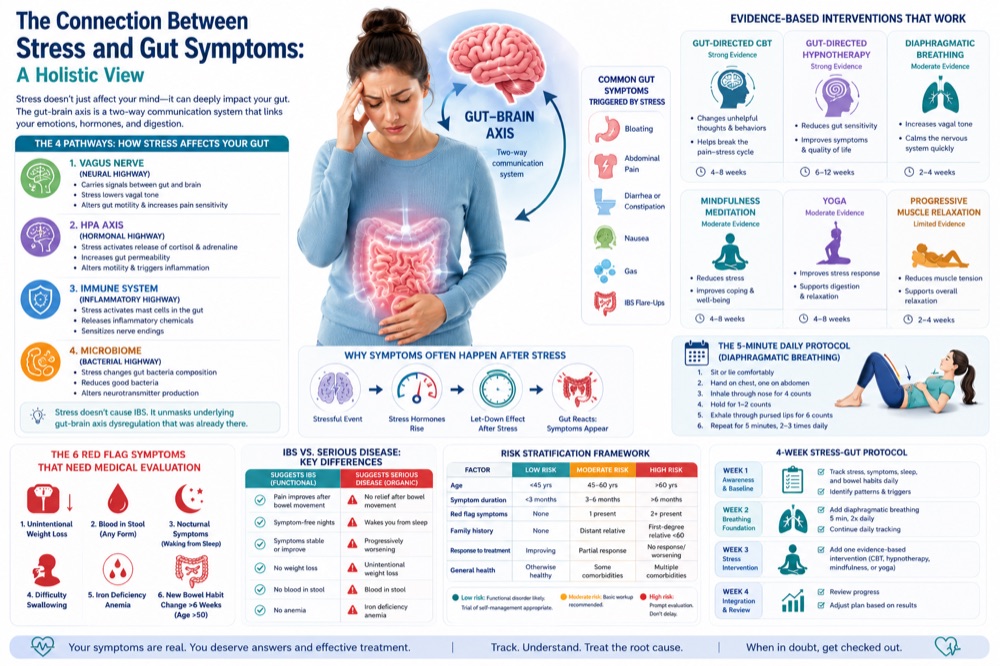
Clinical implication: Interventions that improve vagal tone (diaphragmatic breathing, meditation, cold exposure) may help both GI symptoms and fatigue.
SIBO and Fatigue: The Connection
What is SIBO?
Definition: Small Intestinal Bacterial Overgrowth—excessive bacteria in the small intestine (where bacteria levels should be low).
Why it causes fatigue:
- Nutrient malabsorption: Bacteria consume B12, iron, fat-soluble vitamins
- Bacterial metabolites: D-lactate, ammonia, and other compounds affect brain function
- Immune activation: Bacterial overgrowth triggers immune response
- Mitochondrial toxicity: Some bacterial metabolites interfere with cellular energy production
SIBO Prevalence in Fatigue Patients
Research findings:
- 30-40% of ME/CFS patients have positive SIBO breath tests (vs. 15-20% general population)
- Fatigue severity correlates with breath test hydrogen/methane levels
- Some patients report fatigue improvement after SIBO treatment
The controversy:
- SIBO breath tests have limitations (false positives, variable protocols)
- Not all positive tests represent true overgrowth
- Antibiotic treatment helps some patients, doesn’t help others
Table 2: SIBO Testing and Treatment for Fatigue
| Aspect | Details |
|---|---|
| Diagnostic Test | Lactulose or glucose breath test (measures hydrogen, methane) |
| Positive Criteria | Rise in hydrogen ≥20 ppm by 90 min (lactulose) or ≥10 ppm rise (glucose) |
| First-Line Treatment | Rifaximin 550 mg 3x daily for 14 days (hydrogen-predominant) |
| Methane-Positive | Rifaximin + Neomycin or Metronidazole |
| Fatigue Response | 40-50% report improvement if SIBO truly present |
| Relapse Rate | 40-50% within 1 year without addressing underlying cause |
| Important | Test for underlying cause (motility disorder, PPI use, anatomical abnormality) |
IBD and Fatigue: Beyond Anemia
The Scope of the Problem
Statistics:
- 40-50% of IBD patients report fatigue during remission
- 80%+ during active flares
- Fatigue is the #1 complaint affecting quality of life
Traditional explanations (incomplete):
- Anemia (iron deficiency)
- Active inflammation
- Malnutrition
The problem: Fatigue often persists even when:
- Hemoglobin is normal
- Inflammatory markers are normal
- Patient is in endoscopic remission
Emerging Understanding: The Fatigue-Inflammation Axis
Research findings:
- IBD patients with fatigue have elevated cytokines even in remission
- Subclinical inflammation may persist despite normal CRP
- Central fatigue (brain-mediated) vs. peripheral fatigue (muscle-mediated)
Mechanisms:
- Cytokine effects on brain: IL-6, TNF-alpha cause fatigue directly
- Tryptophan depletion: Inflammation shifts metabolism away from serotonin
- Mitochondrial dysfunction: Chronic inflammation affects cellular energy
- Sleep disruption: Nocturnal symptoms, pain, urgency fragment sleep
- Medication effects: Some biologics, steroids can cause fatigue
Treatment Approach for IBD Fatigue
Medical optimization:
- Ensure deep remission (not just symptomatic control)
- Correct iron deficiency (IV iron often needed)
- Address B12 deficiency (especially in Crohn’s with ileal involvement)
- Optimize vitamin D
Non-pharmacologic:
- Cognitive behavioral therapy for fatigue management
- Graded exercise (carefully paced to avoid post-exertional malaise)
- Sleep optimization
- Stress reduction
Important distinction: IBD fatigue treatment requires addressing BOTH disease activity AND central fatigue mechanisms.
Celiac Disease and Fatigue
The Connection
Prevalence: 30-40% of celiac patients report significant fatigue before diagnosis.
Mechanisms:
- Iron deficiency: Villous atrophy reduces iron absorption
- Folate/B12 deficiency: Malabsorption in damaged small intestine
- Systemic inflammation: Immune response to gluten causes cytokine release
- Direct neurological effects: Gluten antibodies may affect brain function
Response to Gluten-Free Diet
Research findings:
- 60-70% report fatigue improvement within 6 months of strict gluten-free diet
- 20-30% have persistent fatigue despite dietary adherence
- Persistent fatigue may indicate: ongoing gluten exposure, refractory celiac, or coexisting condition (thyroid disease, adrenal insufficiency)
Clinical implication: Fatigue should improve on gluten-free diet. If not, further evaluation needed.
Diagnostic Testing: What’s Validated vs. Experimental
Table 3: Testing for Gut-Fatigue Connection
| Test | Purpose | Evidence Status | Insurance Coverage |
|---|---|---|---|
| CBC, Iron Studies | Anemia screening | Validated, standard | Covered |
| Celiac Serology (tTG-IgA) | Celiac disease screening | Validated, standard | Covered |
| Fecal Calprotectin | IBD screening | Validated, standard | Often covered |
| SIBO Breath Test | SIBO diagnosis | Moderate evidence, variable protocols | Sometimes covered |
| Comprehensive Stool Test (commercial) | Microbiome analysis | Limited clinical utility, not validated for fatigue | Not covered |
| Zonulin Testing | Gut permeability | Research tool, not validated for clinical use | Not covered |
| Organic Acids Test | Metabolic function | Limited evidence, not validated | Not covered |
| IgG Food Sensitivity Testing | Food triggers | NOT validated, professional societies advise against | Not covered |
Key guidance: Stick with validated tests. Commercial microbiome and permeability tests are not ready for clinical decision-making.
Integrated Treatment Protocol
Phase 1: Medical Optimization (Weeks 1-4)
Goals: Rule out/treat identifiable causes
Testing:
- CBC, CMP, TSH
- Iron studies (ferritin, iron, TIBC)
- B12, folate, vitamin D
- Celiac serology
- ESR/CRP
- Fecal calprotectin (if IBD suspected)
Treatment:
- Correct deficiencies (iron, B12, vitamin D)
- Treat active IBD/celiac/infection
- Review medications for fatigue side effects
Phase 2: GI-Directed Intervention (Weeks 4-12)
Based on findings:
If SIBO-positive:
- Rifaximin 550 mg 3x daily × 14 days
- Consider prokinetic if motility issue
- Address underlying cause
If IBS-predominant:
- Low FODMAP diet trial (2-6 weeks)
- Peppermint oil for symptoms
- Consider gut-directed hypnotherapy
If IBD:
- Optimize IBD therapy
- Ensure deep remission
- Address extra-intestinal manifestations
If functional dyspepsia:
- PPI trial
- H. pylori testing/treatment if indicated
- Dietary modification
Phase 3: Energy Restoration (Weeks 8-24)
Pacing strategy (critical for ME/CFS):
- Stay within “energy envelope”
- Avoid push-crash cycle
- Gradual activity increase only if no post-exertional malaise
Sleep optimization:
- Consistent sleep-wake schedule
- Address sleep apnea if present
- Limit evening screen time
- Consider CBT-I for insomnia
Stress reduction:
- Diaphragmatic breathing (improves vagal tone)
- Mindfulness meditation
- Gentle movement (yoga, tai chi)
Nutritional support:
- Regular meals with protein
- Adequate caloric intake (undereating worsens fatigue)
- Limit alcohol (disrupts sleep, gut barrier)
Table 4: Treatment Response Expectations
| Intervention | Timeframe | Expected Improvement | Success Rate |
|---|---|---|---|
| Iron replacement | 4-8 weeks | Fatigue if anemic | 70-80% if deficient |
| SIBO treatment | 2-4 weeks | Fatigue + GI symptoms | 40-50% |
| Low FODMAP diet | 2-6 weeks | GI symptoms, some fatigue | 50-70% for GI |
| Gluten-free (celiac) | 3-6 months | Fatigue + GI | 60-70% |
| IBD optimization | Variable | Fatigue if inflammation-driven | 50-60% |
| CBT for fatigue | 8-12 weeks | Coping, function | 40-50% |
| Graded exercise | 12-16 weeks | Function (not for ME/CFS with PEM) | 30-40% |
| Sleep optimization | 4-8 weeks | Daytime energy | 50-60% |
When to Refer to Specialists
Gastroenterology referral:
- Positive celiac serology
- Elevated fecal calprotectin
- Positive SIBO breath test
- Red flags (weight loss, blood in stool, anemia)
ME/CFS specialist:
- Meets criteria for ME/CFS (6+ months fatigue, post-exertional malaise, unrefreshing sleep, cognitive impairment)
- Failed initial interventions
Sleep medicine:
- Suspected sleep apnea
- Chronic insomnia
- Restless legs syndrome
Psychology/Psychiatry:
- Depression/anxiety contributing to fatigue
- Support for chronic illness coping
- CBT for fatigue management
FAQs
Can fixing my gut cure chronic fatigue?
For some patients, treating underlying GI conditions significantly improves fatigue. However, ME/CFS is multifactorial—gut is one piece. Most patients need comprehensive approach addressing sleep, activity pacing, stress, and medical optimization.
Should I try a commercial microbiome test?
No. These tests are not validated for clinical decision-making. They may show “imbalances” but cannot diagnose conditions or guide treatment. Save your money.
Is leaky gut real?
Increased intestinal permeability is documented in specific conditions (IBD, celiac disease, critical illness, some ME/CFS). However, commercial tests claiming to diagnose “leaky gut” are not validated. The concept is often oversold.
Will probiotics help fatigue?
Evidence is limited. Some small studies show modest benefit in IBS-related fatigue, but no probiotic is proven to treat ME/CFS. If you try probiotics, use strains with evidence (B. infantis 35624, L. plantarum 299v) and assess after 4-8 weeks.
How do I know if my fatigue is gut-related vs. something else?
Gut-related fatigue typically:
- Accompanied by GI symptoms (bloating, pain, altered bowel habits)
- Started after GI infection or with GI symptom onset
- Improves when GI symptoms improve
However, many conditions cause fatigue (thyroid disease, anemia, sleep disorders, depression, medications). Medical evaluation should rule out other causes.
What if my gastroenterologist says my gut is normal but I’m still fatigued?
This is common. Functional GI disorders (IBS, functional dyspepsia) don’t show on standard tests but can still contribute to fatigue via gut-brain axis. Consider ME/CFS specialist evaluation if criteria met.
Sources
-
Giloteaux L, et al. Reduced diversity and altered composition of the gut microbiome in individuals with myalgic encephalomyelitis/chronic fatigue syndrome. Microbiome. 2016;4(1):30.
-
Navaneetharaja N, et al. The Gut Microbiome in Myalgic Encephalomyelitis/Chronic Fatigue Syndrome: A Systematic Review. Front Med. 2023;10:1186991.
-
Shukla SK, et al. Changes in Gut and Plasma Microbiome following Exercise Challenge in Myalgic Encephalomyelitis/Chronic Fatigue Syndrome. PLoS One. 2015;10(12):e0145453.
-
Maes M, et al. Increased serum IgA and IgM against LPS of enterobacteria in chronic fatigue syndrome: evidence for increased gut permeability. Neuro Endocrinol Lett. 2007;28(2):151-159.
-
Ford AC, et al. American College of Gastroenterology monograph on the management of irritable bowel syndrome. Am J Gastroenterol. 2024;119(S1):S2-S31.
-
Vasant DH, et al. British Society of Gastroenterology guidelines for the management of irritable bowel syndrome. Gut. 2024;73(7):1027-1058.
-
Lomer MCE, et al. Review article: the aetiology, investigation and management of fatigue in inflammatory bowel disease. Aliment Pharmacol Ther. 2023;58(3):269-283.
-
Chey WD, et al. ACG Clinical Guideline: Management of Celiac Disease. Am J Gastroenterol. 2024;119(2):203-222.
-
Rezaie A, et al. Hydrogen and Methane-Based Breath Testing in Gastrointestinal Disorders: The North American Consensus. Am J Gastroenterol. 2024;119(5):775-792.
-
Camilleri M. Functional gastrointestinal disorders: advances in understanding and management. Lancet. 2024;403(10425):368-382.
-
Institute of Medicine. Beyond Myalgic Encephalomyelitis/Chronic Fatigue Syndrome: Redefining an Illness. National Academies Press. 2024.
-
Black CJ, Ford AC. Global burden of irritable bowel syndrome: trends, predictions, and risk factors. Nat Rev Gastroenterol Hepatol. 2024;21(5):323-336.
-
NIDDK. Digestive Diseases and Symptoms. 2024. https://www.niddk.nih.gov/
-
CDC. ME/CFS Information for Healthcare Providers. 2024. https://www.cdc.gov/me-cfs/
-
Mayer EA. Gut Feelings: The Connection Between the Brain and the Digestive System. Penguin Random House. 2024.
-
ISAPP. International Scientific Association for Probiotics and Prebiotics Consensus Statement. 2024. https://isappscience.org/