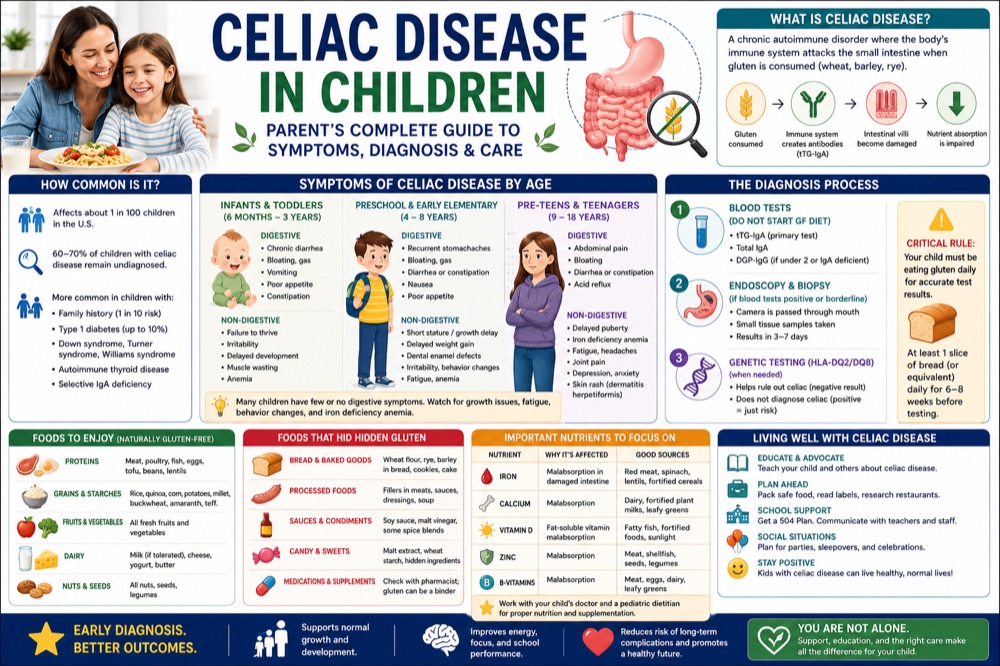
If you’ve been diagnosed with celiac disease, you may have noticed something curious: your doctor suddenly wants to test you for thyroid problems. Or your endocrinologist mentioned celiac screening after your type 1 diabetes diagnosis.
This isn’t coincidence. Autoimmune diseases cluster together, and celiac disease has one of the strongest associations with other autoimmune conditions of any disorder.
Here’s what you need to know:
- Having one autoimmune disease increases your risk of developing others
- Celiac disease is strongly linked to thyroid disease, type 1 diabetes, and several other autoimmune conditions
- The genetic connection (HLA genes) helps explain why these conditions cluster
- Screening for associated conditions is an important part of celiac disease care
- A strict gluten-free diet may reduce (but not eliminate) the risk of developing additional autoimmune diseases
This comprehensive guide explains the celiac-autoimmune connection, which conditions you should be screened for, why these links exist, and how to protect your long-term health.
Understanding Autoimmune Diseases
What Is an Autoimmune Disease?
An autoimmune disease occurs when the immune system mistakenly attacks the body’s own tissues. Normally, the immune system distinguishes between “self” and “foreign” (like bacteria or viruses). In autoimmune disease, this recognition system malfunctions.
How Autoimmunity Works:
| Normal Immune Function | Autoimmune Dysfunction |
|---|---|
| Identifies foreign invaders | Mistakes self-tissues as foreign |
| Produces antibodies against threats | Produces autoantibodies against body |
| Protects health | Causes tissue damage and inflammation |
| Temporary response | Chronic, ongoing attack |
Why Do Autoimmune Diseases Cluster Together?
People with one autoimmune disease are significantly more likely to develop additional autoimmune conditions. This phenomenon is called polyautoimmunity or multiple autoimmune syndrome.
Key Statistics:
- Approximately 25% of people with one autoimmune disease develop at least one additional autoimmune condition
- Women are disproportionately affected (about 75% of autoimmune patients are female)
- Family history of any autoimmune disease increases risk of all autoimmune conditions
- Shared genetic factors (especially HLA genes) explain much of the clustering
The Genetic Connection: HLA Genes
The human leukocyte antigen (HLA) complex on chromosome 6 plays a central role in immune system function. Specific HLA variants are associated with multiple autoimmune diseases.
HLA Associations with Autoimmune Diseases:
| Condition | Primary HLA Association | Genetic Overlap with Celiac |
|---|---|---|
| Celiac disease | HLA-DQ2, HLA-DQ8 | — |
| Type 1 diabetes | HLA-DQ8, HLA-DR3 | High (DQ8 shared) |
| Autoimmune thyroid disease | HLA-DR3, HLA-DQ2 | High (DQ2 shared) |
| Addison’s disease | HLA-DR3, HLA-DQ2 | High |
| Autoimmune hepatitis | HLA-DR3, HLA-DR4 | Moderate |
| Rheumatoid arthritis | HLA-DR4 | Low |
| Lupus (SLE) | HLA-DR2, HLA-DR3 | Moderate |
This genetic overlap explains why these conditions frequently occur together in the same person or within families.
Autoimmune Conditions Most Strongly Linked to Celiac Disease
1. Autoimmune Thyroid Disease (Most Common)
Prevalence in Celiac Patients: 3-5% (compared to 1-2% in general population)
Types:
- Hashimoto’s thyroiditis (hypothyroidism/underactive thyroid) – Most common
- Graves’ disease (hyperthyroidism/overactive thyroid) – Less common
Shared Features with Celiac Disease:
- Female predominance (4:1 to 7:1 ratio)
- Associated with HLA-DR3 and HLA-DQ2
- Can develop at any age
- Often diagnosed years apart
Screening Recommendations:
| Test | Purpose | Frequency |
|---|---|---|
| TSH (Thyroid Stimulating Hormone) | Screens for thyroid dysfunction | At celiac diagnosis, then every 1-2 years |
| Free T4 | Confirms abnormal TSH | As needed |
| Thyroid antibodies (TPO, TgAb) | Detects autoimmune thyroid disease | If TSH abnormal or symptoms present |
Symptoms to Watch For:
Hypothyroidism (Hashimoto’s):
- Fatigue
- Weight gain
- Cold intolerance
- Dry skin and hair
- Constipation
- Depression
- Heavy or irregular periods
Hyperthyroidism (Graves’):
- Weight loss despite normal appetite
- Rapid heartbeat
- Anxiety and irritability
- Heat intolerance
- Tremors
- Frequent bowel movements
2. Type 1 Diabetes (Strong Genetic Link)
Prevalence in Celiac Patients: 6-10% (compared to 0.4% in general population)
Why the Strong Connection?
- Shared HLA genes (HLA-DQ8, HLA-DR3)
- Both involve autoantibodies attacking specific tissues
- Similar age of onset (childhood/adolescence)
- Same genetic regions on chromosomes 6 and 11
Screening Recommendations:
| Population | When to Screen | How Often |
|---|---|---|
| Type 1 diabetics | At diabetes diagnosis | Every 2-3 years, or if symptomatic |
| Celiac patients | At celiac diagnosis | If symptoms suggest diabetes (rare to develop after childhood) |
Important: Children with type 1 diabetes should ALWAYS be screened for celiac disease at diagnosis and periodically thereafter. Many children have “silent” celiac disease without obvious digestive symptoms.
Symptoms to Watch For:
- Excessive thirst
- Frequent urination
- Extreme hunger
- Unexplained weight loss
- Fatigue
- Blurred vision
- Slow-healing sores
3. Autoimmune Liver Diseases
Prevalence in Celiac Patients: 2-4% (elevated compared to general population)
Types:
| Condition | Description | Celiac Association |
|---|---|---|
| Autoimmune hepatitis | Immune system attacks liver cells | 3-4x higher risk |
| Primary biliary cholangitis (PBC) | Destroys bile ducts in liver | Elevated liver enzymes common in untreated celiac |
| Primary sclerosing cholangitis (PSC) | Inflammation of bile ducts | Associated with IBD more than celiac |
Screening:
- Liver function tests (ALT, AST, ALP, bilirubin) at celiac diagnosis
- Repeat if symptoms develop or initial tests abnormal
- Many celiac patients have mildly elevated liver enzymes that normalize on gluten-free diet
4. Sjögren’s Syndrome
Prevalence in Celiac Patients: 2-3% (compared to 0.5-1% general population)
What It Is: Autoimmune attack on moisture-producing glands (tear ducts, salivary glands)
Shared Features:
- Strong female predominance (9:1 ratio)
- Associated with HLA-DR3
- Can cause fatigue and joint pain (symptoms overlap with celiac)
Symptoms to Watch For:
- Dry eyes (feeling of grittiness or burning)
- Dry mouth (difficulty swallowing, speaking)
- Dental cavities (reduced saliva)
- Joint pain
- Fatigue
Screening: No routine screening recommended; evaluate if symptoms develop
5. Addison’s Disease (Adrenal Insufficiency)
Prevalence in Celiac Patients: 0.5-1% (compared to 0.01% general population – 50-100x higher!)
What It Is: Immune system destroys adrenal glands, reducing cortisol and aldosterone production
Why It Matters: Though still rare, the dramatically elevated risk makes awareness important
Symptoms to Watch For:
- Extreme fatigue
- Weight loss and decreased appetite
- Darkening of skin (hyperpigmentation)
- Low blood pressure
- Salt cravings
- Nausea, vomiting, diarrhea
- Muscle or joint pain
Screening: No routine screening; test if symptoms suggest adrenal insufficiency
6. Rheumatoid Arthritis
Prevalence in Celiac Patients: Slightly elevated (research is mixed)
What It Is: Autoimmune attack on joint linings
Symptoms to Watch For:
- Joint pain, stiffness, swelling (especially hands and feet)
- Morning stiffness lasting more than 30 minutes
- Symmetrical joint involvement (both sides of body)
- Fatigue
- Low-grade fever
Note: Some people with untreated celiac disease develop joint pain that mimics rheumatoid arthritis but improves on a gluten-free diet.
7. Systemic Lupus Erythematosus (SLE)
Prevalence in Celiac Patients: Possibly elevated (research ongoing)
What It Is: Systemic autoimmune disease affecting multiple organs
Shared HLA Association: HLA-DR3
Symptoms to Watch For:
- Butterfly-shaped facial rash
- Joint pain and swelling
- Fatigue
- Fever
- Skin sensitivity to sunlight
- Kidney problems
8. Psoriasis and Psoriatic Arthritis
Prevalence in Celiac Patients: Elevated (approximately 2x general population)
What It Is: Autoimmune skin condition; can affect joints (psoriatic arthritis)
Interesting Connection: Some studies show improvement in psoriasis with gluten-free diet, even in people without celiac disease
Symptoms to Watch For:
- Red, scaly skin patches (plaques)
- Nail changes (pitting, separation)
- Joint pain and stiffness
Why Does Celiac Disease Increase Autoimmune Risk?
Researchers have several theories:
1. Genetic Susceptibility (Primary Factor)
The same genes that predispose to celiac disease also predispose to other autoimmune conditions. Having one autoimmune disease signals that your immune system has this genetic vulnerability.
2. Chronic Inflammation
Untreated celiac disease causes ongoing intestinal inflammation, which may:
- Activate other autoimmune pathways
- Increase immune system reactivity
- Contribute to “immune exhaustion”
3. Intestinal Permeability (“Leaky Gut”)
Celiac disease damages the intestinal barrier, potentially allowing:
- Bacterial products to enter circulation
- Immune system activation against multiple targets
- Cross-reactivity between gluten antibodies and self-tissues
4. Molecular Mimicry
Some proteins in gluten may resemble proteins in other tissues (thyroid, pancreas). The immune system, trained to attack gluten, may cross-react with these similar-looking self-proteins.
5. Microbiome Alterations
Celiac disease changes the gut microbiome, which plays a role in:
- Immune system development
- Inflammation regulation
- Autoimmune disease risk
Does a Gluten-Free Diet Reduce Autoimmune Risk?
This is a critical question. Here’s what research shows:
Thyroid Disease
Evidence: Mixed
- Some studies show gluten-free diet reduces thyroid antibodies in Hashimoto’s patients
- Other studies show no effect on thyroid disease development
- Early adoption of gluten-free diet (soon after celiac diagnosis) may be more protective
Type 1 Diabetes
Evidence: Limited
- Gluten-free diet doesn’t reverse type 1 diabetes
- May help with blood sugar control in some patients
- Doesn’t appear to prevent type 1 diabetes development
General Autoimmune Risk
Evidence: Suggestive but not conclusive
- Strict gluten-free diet reduces overall inflammation
- May reduce risk of developing additional autoimmune conditions
- Earlier diagnosis and treatment appears more protective
- Duration of untreated celiac disease correlates with complications
Bottom Line: While a strict gluten-free diet definitely improves celiac disease outcomes, its effect on preventing other autoimmune diseases is less clear. However, reducing chronic inflammation is likely beneficial for overall immune health.
Screening Recommendations for Celiac Patients
At Diagnosis (Baseline Testing)
| Test | Purpose |
|---|---|
| TSH | Screen for thyroid dysfunction |
| Liver function tests (ALT, AST, ALP, bilirubin) | Screen for liver involvement |
| Fasting glucose or HbA1c | Screen for diabetes (especially if symptoms or family history) |
| Complete blood count (CBC) | Screen for anemia, other blood disorders |
| Comprehensive metabolic panel | Overall health assessment |
| Inflammatory markers (ESR, CRP) | Baseline inflammation level |
Ongoing Monitoring
| Test | Frequency | Notes |
|---|---|---|
| TSH | Every 1-2 years | More often if abnormal or symptomatic |
| Liver function | Annually, or if symptomatic | Often normalizes on gluten-free diet |
| Celiac antibodies (tTG-IgA) | 3-6 months, 12 months, then annually | Monitor dietary compliance |
| Nutrient levels | Annually | Iron, B12, vitamin D, folate, calcium |
Symptom-Triggered Testing
Test for specific autoimmune conditions if symptoms develop:
| Symptom | Consider Testing For |
|---|---|
| Fatigue, weight changes, temperature sensitivity | Thyroid disease |
| Excessive thirst, urination, weight loss | Type 1 diabetes |
| Joint pain, morning stiffness | Rheumatoid arthritis |
| Dry eyes, dry mouth | Sjögren’s syndrome |
| Darkening skin, salt cravings, severe fatigue | Addison’s disease |
| Skin rash, joint pain, fever | Lupus |
Special Considerations: Type 1 Diabetes and Celiac Disease
This bidirectional relationship deserves special attention.
If You Have Type 1 Diabetes:
- Get screened for celiac disease at diabetes diagnosis (6-10% have celiac)
- Repeat screening every 2-3 years (can develop later)
- Report any digestive symptoms to your endocrinologist
- Watch for unexplained hypoglycemia (can be sign of celiac disease)
- Consider genetic testing if celiac testing is unclear
If You Have Celiac Disease AND Type 1 Diabetes:
Management Challenges:
- Both require careful meal planning
- Gluten-free products may affect blood sugar differently
- Diabetes complications may affect celiac management
- More frequent monitoring needed
Tips for Success:
- Work with dietitian experienced in both conditions
- Monitor blood sugar closely when changing diet
- Keep detailed food and symptom records
- Coordinate care between endocrinologist and gastroenterologist
Family Implications
If You Have Celiac Disease:
Family members should be aware of:
- Increased risk of celiac disease (1 in 10 for first-degree relatives)
- Increased risk of other autoimmune diseases
- Importance of screening if symptoms develop
- Genetic testing options for risk assessment
If You Have Another Autoimmune Disease:
You should be screened for celiac disease if you have:
- Type 1 diabetes (screen at diagnosis and regularly)
- Autoimmune thyroid disease (screen once; repeat if symptomatic)
- Family history of celiac disease
- Unexplained symptoms that could suggest celiac disease
Frequently Asked Questions
Key Takeaways
- Celiac disease is strongly linked to other autoimmune conditions – especially thyroid disease and type 1 diabetes
- Shared genetics (HLA genes) explain much of the clustering – these conditions run in families
- Approximately 25% of people with one autoimmune disease develop another – most do not
- Screening for thyroid disease and diabetes is recommended at celiac diagnosis and periodically thereafter
- Type 1 diabetics should ALWAYS be screened for celiac disease – 6-10% have both conditions
- A strict gluten-free diet may reduce autoimmune risk – though evidence is not conclusive
- Early diagnosis and treatment appears most protective – don’t delay evaluation of new symptoms
- Family members should be aware of increased risk – for both celiac and other autoimmune conditions
- Most people with celiac disease do NOT develop multiple autoimmune diseases – but awareness is important
- Coordinate care between specialists – if you have multiple conditions, ensure your doctors communicate
Medical Review: This content has been reviewed for accuracy against current guidelines from the American College of Rheumatology, American Thyroid Association, and Celiac Disease Foundation.
Sources:
- American College of Gastroenterology - Celiac Disease and Associated Conditions - 2025
- Celiac Disease Foundation - Autoimmune Diseases and Celiac Disease - 2026
- Journal of Autoimmunity - Multiple Autoimmune Syndrome - 2025
- Thyroid Journal - Thyroid Disease and Celiac Disease Association - 2024
- Diabetes Care - Celiac Disease Screening in Type 1 Diabetes - 2025
- Nature Reviews Immunology - Genetics of Autoimmune Diseases - 2025
Last Updated: March 9, 2026