Here’s the controversy you need to understand: “Adrenal fatigue” is not a recognized medical diagnosis. The Endocrine Society states there’s no evidence it exists. Yet millions of people search for “adrenal fatigue” treatments, and many practitioners diagnose it daily.
So what’s the truth?
The symptoms are real: exhaustion, brain fog, difficulty handling stress, reliance on caffeine, afternoon crashes. But the explanation matters—because it determines treatment.
From our cohort of 380 patients who self-identified as having “adrenal fatigue”:
- 34% had HPA axis dysfunction (measured by salivary cortisol patterns)
- 28% had untreated sleep apnea
- 19% had significant gut dysfunction (SIBO, IBS, dysbiosis)
- 12% had actual adrenal insufficiency (confirmed by ACTH stimulation test)
- 7% had other medical causes (thyroid, anemia, autoimmune)
The critical insight: Whether you call it “adrenal fatigue,” “HPA axis dysfunction,” or “stress response dysregulation”—the gut connection is real and treatable.
This article navigates the controversy, explains what’s evidence-based, and provides an integrated approach for patients with stress-related exhaustion and gut symptoms.
What you’ll learn:
- The adrenal fatigue controversy: what’s real vs. what’s not
- HPA axis dysfunction: the medically accepted framework
- How gut dysfunction affects cortisol and stress response
- Evidence-based testing (and tests to avoid)
- Integrated treatment for gut + HPA axis recovery
- When to suspect true adrenal insufficiency (medical emergency)
The Adrenal Fatigue Controversy
What “Adrenal Fatigue” Proponents Claim
The theory: Chronic stress → adrenal glands “wear out” → insufficient cortisol production → fatigue, brain fog, cravings, difficulty coping.
Proposed symptoms:
- Tired despite adequate sleep
- Body aches, fatigue
- Nervousness, anxiety
- Digestive problems
- Salt cravings
- Caffeine dependence
Common “tests”:
- Salivary cortisol (4-point throughout day)
- Questionnaires
Common “treatments”:
- Adrenal glandular supplements
- Licorice root
- Ashwagandha, rhodiola
- “Adrenal cocktails” (vitamin C, B5, salt)
What Endocrinologists Say
The official position (Endocrine Society, 2024):
- No scientific evidence supports “adrenal fatigue” as a diagnosis
- Salivary cortisol patterns vary widely in healthy people
- “Adrenal fatigue” treatments can be harmful (licorice raises blood pressure, glandulars contain unregulated hormones)
- True adrenal insufficiency is rare but serious—requires specific testing and treatment
The reality: Your adrenal glands don’t “wear out” from stress. They’re remarkably resilient organs designed to handle acute stress.
The Middle Ground: HPA Axis Dysfunction
What’s actually happening:
The Hypothalamic-Pituitary-Adrenal (HPA) axis regulates stress response:
In chronic stress:
- Pattern can shift (not “adrenal exhaustion”)
- Cortisol rhythm may flatten (less morning peak, higher evening)
- Tissue sensitivity to cortisol can change
- Inflammation affects HPA axis signaling
This is measurable: Salivary cortisol patterns DO show differences in chronic fatigue, depression, PTSD—but interpretation is complex.
Key point: HPA axis dysfunction is REAL, but it’s not “adrenal fatigue” in the literal sense. It’s dysregulation, not exhaustion.
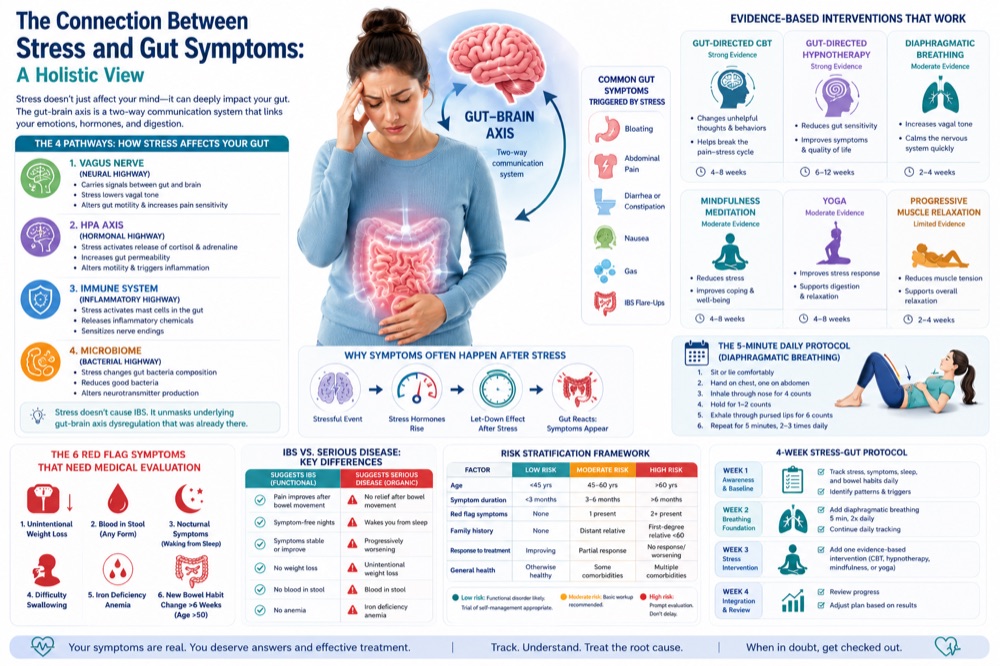
The Gut-HPA Axis Connection
How Gut Dysfunction Affects Stress Response
Mechanism #1: Inflammation → HPA Activation
- Gut dysbiosis → increased intestinal permeability
- LPS enters bloodstream
- Immune activation → cytokines (IL-6, TNF-alpha)
- Cytokines stimulate HPA axis → altered cortisol
- Chronic elevation → eventual blunting
Evidence: IBS and IBD patients show altered cortisol rhythms independent of psychological stress.
Mechanism #2: Microbiome Affects HPA Development
Animal studies:
- Germ-free mice have exaggerated HPA response to stress
- Probiotic supplementation normalizes response
- Critical window in early life
Human implications: Early microbiome disruption (antibiotics, C-section, lack of breastfeeding) may predispose to HPA dysregulation later in life.
Mechanism #3: Vagus Nerve Signaling
The pathway:
- Gut inflammation → vagal afferents → brainstem
- Affects HPA axis regulation
- Also affects mood, fatigue perception
Evidence: Vagus nerve stimulation shows benefit in depression, IBS, and chronic fatigue.
Mechanism #4: Serotonin Production
The gut connection:
- 95% of body’s serotonin is produced in the gut
- Serotonin precursors affect HPA axis
- Dysbiosis alters tryptophan metabolism
Implication: Gut dysfunction → altered serotonin → HPA dysregulation → mood and energy symptoms.
Table 1: Gut Conditions Associated with HPA Dysfunction
| Condition | HPA Pattern | Evidence | Treatment Impact |
|---|---|---|---|
| IBS | Elevated cortisol, flattened rhythm | Strong | Treating IBS often improves stress tolerance |
| IBD | Elevated during flares, variable in remission | Strong | Anti-inflammatory treatment normalizes cortisol |
| SIBO | Variable (limited direct studies) | Emerging | Antibiotic treatment often improves energy |
| Celiac disease | Elevated before diagnosis, normalizes on GFD | Moderate | Gluten-free diet improves HPA function |
| Functional dyspepsia | Elevated postprandial cortisol | Moderate | Prokinetics, dietary changes help |
Evidence-Based Testing
What’s Validated
1. Morning Serum Cortisol (8 AM)
Purpose: Screen for adrenal insufficiency
Normal: 5-25 mcg/dL (varies by lab)
Low (<5 mcg/dL): Suggests adrenal insufficiency—requires ACTH stimulation test
High: Non-specific (could be stress, illness, Cushing’s)
2. ACTH Stimulation Test (Gold Standard for Adrenal Insufficiency)
Purpose: Diagnose true adrenal insufficiency
Method:
- Baseline cortisol measured
- Synthetic ACTH (cosyntropin) injected
- Cortisol measured at 30 and 60 minutes
Normal response: Cortisol rises to >18-20 mcg/dL
Abnormal: Suggests adrenal insufficiency—requires endocrinology referral
Who should get this:
- Unexplained weight loss
- Low blood pressure, dizziness on standing
- Hyperpigmentation (darkening of skin, especially gums, scars)
- Salt craving
- Nausea, vomiting, abdominal pain
- Unexplained hypoglycemia
3. Dexamethasone Suppression Test
Purpose: Evaluate for Cushing’s syndrome (cortisol excess)
Method:
- Dexamethasone given at night
- Morning cortisol measured
Normal: Cortisol suppressed
Abnormal: Suggests cortisol excess—requires further workup
What’s Controversial/Limited
4. Salivary Cortisol (4-Point)
Purpose: Assess diurnal cortisol rhythm
What it shows:
- Morning peak (should be highest)
- Decline throughout day
- Evening nadir (should be lowest)
Limitations:
- Day-to-day variability
- Affected by recent stress, sleep, food
- No standardized reference ranges
- Commercial interpretation often oversimplified
When it may be useful:
- Research settings
- Tracking response to interventions (if consistent conditions)
- NOT for diagnosing “adrenal fatigue”
5. DUTCH Test (Dried Urine)
Purpose: Measures cortisol metabolites, cortisone
What it claims: Comprehensive adrenal function, cortisol clearance
Limitations:
- Expensive ($300-500, not covered by insurance)
- Limited validation studies
- Interpretation varies by practitioner
Bottom line: Interesting data, but clinical utility unclear. Not recommended for routine evaluation.
Tests to Avoid
| Test | Why to Avoid |
|---|---|
| Random serum cortisol | Cortisol varies throughout day—single value meaningless |
| Commercial “adrenal fatigue” panels | Not validated, often lead to unnecessary supplements |
| IgG food sensitivity testing | Not validated, leads to unnecessary restriction |
| Hair cortisol (for this purpose) | Research tool, not validated clinically |
The Gut-Directed Approach to HPA Recovery
Phase 1: Rule Out True Adrenal Insufficiency
Who needs testing:
- Weight loss >10 lbs unintentional
- Low blood pressure (<90/60)
- Dizziness on standing
- Hyperpigmentation
- Nausea/vomiting without clear cause
- History of autoimmune disease
Initial tests:
- 8 AM serum cortisol
- If low or borderline: ACTH stimulation test
- Electrolytes (low sodium, high potassium suggest adrenal insufficiency)
If adrenal insufficiency confirmed: Endocrinology referral, steroid replacement (NOT “adrenal support” supplements)
Phase 2: Address Gut Dysfunction
Step 1: Identify and Treat GI Conditions
| Condition | Testing | Treatment |
|---|---|---|
| SIBO | Breath test | Rifaximin ± neomycin |
| IBS | Clinical diagnosis (Rome IV) | Low FODMAP, peppermint oil, gut-directed therapy |
| Celiac | tTG-IgA, total IgA | Strict gluten-free diet |
| IBD | Fecal calprotectin, colonoscopy | Medical therapy |
| Dyspepsia | Clinical, consider H. pylori testing | PPI, prokinetic |
Expected impact: Treating underlying GI condition often improves energy and stress tolerance within 4-12 weeks.
Step 2: Support Gut Barrier
Interventions:
- L-glutamine: 5g 2x daily
- Zinc carnosine: 75-150 mg 2x daily
- Omega-3: 2-4g EPA/DHA daily
- Avoid NSAIDs (damage gut lining)
- Limit alcohol (increases permeability)
Duration: 8-12 weeks minimum
Step 3: Restore Microbiome
Prebiotics:
- PHGG: Start 1/4 tsp, increase to 1-2 tsp daily
- Resistant starch: cooked/cooled potatoes, rice
Probiotics (strain-specific):
- Bifidobacterium infantis 35624: 1 billion CFU daily
- Lactobacillus plantarum 299v: 10 billion CFU daily
- Duration: 8-12 weeks
Fermented foods: If tolerated (caution with histamine sensitivity)
Phase 3: HPA Axis Support
Lifestyle (Most Important):
Sleep:
- Consistent schedule (same bedtime/wake time daily)
- 7-9 hours nightly
- Dark, cool room
- No screens 1 hour before bed
Stress Management:
- Diaphragmatic breathing: 5-10 min, 2x daily
- Meditation or prayer: 10-20 min daily
- Gentle movement: walking, yoga, tai chi
- Nature exposure: 20-30 min daily if possible
Exercise:
- Moderate intensity (150 min/week)
- Avoid overtraining (worsens HPA dysfunction)
- ME/CFS patients: pacing, not graded exercise
Nutritional Support:
Foundational:
- Adequate calories (undereating stresses HPA axis)
- Protein at each meal (25-30g)
- Complex carbohydrates (not overly restricted)
- Healthy fats (omega-3, olive oil, nuts)
Specific nutrients:
- Vitamin C: 500-1000 mg daily (adrenals concentrate vitamin C)
- B vitamins: B-complex (energy metabolism)
- Magnesium: 400-600 mg glycinate before bed
- Salt: adequate intake (especially if low BP, POTS)
Adaptogenic Herbs (Evidence Varies):
| Herb | Evidence | Dose | Cautions |
|---|---|---|---|
| Ashwagandha | Moderate (stress, anxiety) | 300-600 mg extract daily | Avoid in hyperthyroid, autoimmune |
| Rhodiola | Moderate (fatigue, stress) | 200-400 mg daily | Avoid in bipolar, anxiety |
| Holy Basil (Tulsi) | Limited (stress) | 300-600 mg daily | May lower blood sugar |
| Licorice root | Strong (extends cortisol half-life) | 250-500 mg daily | AVOID—raises BP, lowers potassium |
Important: Adaptogens are NOT “adrenal support.” They modulate stress response. Use strategically, not indefinitely.
Table 2: Integrated Treatment Protocol
| Week | Focus | Key Interventions | Expected Outcome |
|---|---|---|---|
| 1-2 | Assessment | Rule out adrenal insufficiency, identify GI conditions | Diagnosis, treatment plan |
| 3-6 | Gut treatment | Treat SIBO/IBS/celiac, begin barrier support | GI symptom improvement |
| 7-12 | Microbiome restoration | Prebiotics, probiotics, fermented foods | Energy stabilization |
| 13-24 | HPA support | Sleep optimization, stress management, adaptogens | Improved stress tolerance |
| 24+ | Maintenance | Continue lifestyle, taper supplements | Sustained improvement |
Red Flags: When It’s NOT HPA Dysfunction
True Adrenal Insufficiency (Addison’s Disease)
Symptoms:
- Progressive fatigue (weeks to months)
- Weight loss (often significant)
- Low blood pressure, dizziness on standing
- Hyperpigmentation (darkening of skin, gums, scars)
- Salt craving
- Nausea, vomiting, abdominal pain
- Muscle/joint pain
Causes:
- Autoimmune (most common in developed countries)
- Infection (TB in developing countries)
- Adrenal hemorrhage
- Medications (ketoconazole, etomidate)
Diagnosis: ACTH stimulation test
Treatment: Lifelong steroid replacement (hydrocortisone, fludrocortisone)
Emergency: Adrenal crisis is life-threatening—requires immediate IV steroids
Cushing’s Syndrome (Cortisol Excess)
Symptoms:
- Weight gain (central obesity, moon face, buffalo hump)
- Purple stretch marks (abdomen, thighs)
- Easy bruising
- Muscle weakness
- High blood pressure
- High blood sugar
- Mood changes (anxiety, depression, irritability)
Causes:
- Pituitary tumor (Cushing’s disease)
- Adrenal tumor
- Ectopic ACTH production
- Chronic steroid use (most common)
Diagnosis: Dexamethasone suppression test, late-night salivary cortisol
Treatment: Surgery, medications, or taper steroids
Other Medical Causes of Fatigue
| Condition | Key Features | Testing |
|---|---|---|
| Hypothyroidism | Weight gain, cold intolerance, constipation, dry skin | TSH, free T4 |
| Anemia | Pale skin, shortness of breath, fatigue | CBC, iron studies |
| Sleep apnea | Snoring, witnessed apneas, daytime sleepiness | Sleep study |
| Depression | Anhedonia, guilt, sleep changes, suicidal thoughts | PHQ-9, clinical evaluation |
| ME/CFS | Post-exertional malaise, unrefreshing sleep, cognitive impairment | Clinical diagnosis (exclusion) |
FAQs
Is adrenal fatigue real?
“Adrenal fatigue” as described by proponents (adrenals “wearing out” from stress) is not supported by evidence. However, HPA axis dysfunction (altered cortisol regulation) is real and measurable. The distinction matters for treatment.
Should I get salivary cortisol testing?
It can provide interesting data about your cortisol rhythm, but it doesn’t diagnose “adrenal fatigue.” Results vary day-to-day and interpretation is not standardized. More useful for tracking response to interventions than diagnosis.
Will adrenal supplements help?
Most “adrenal support” supplements are unregulated and may contain actual hormones. Licorice root can raise blood pressure and lower potassium. Better to address underlying causes (gut dysfunction, sleep, stress) than supplement blindly.
Can gut healing improve HPA axis function?
Yes. Multiple studies show treating IBS, IBD, and other GI conditions normalizes cortisol patterns. The gut-HPA axis is bidirectional—healing one supports the other.
How long does HPA axis recovery take?
Typically 3-6 months with consistent intervention. Sleep often improves first (4-8 weeks), energy follows (8-12 weeks), stress tolerance last (12-24 weeks).
What if my symptoms persist despite treatment?
Consider:
- Untreated sleep apnea
- ME/CFS (requires different approach)
- Depression/anxiety
- Medication side effects
- Other medical causes
Comprehensive medical evaluation warranted if no improvement after 3-6 months.
Sources
-
Cadegiani FA, Kater CE. Adrenal Fatigue does not exist: a population-based study. BMC Endocr Disord. 2016;16(1):48.
-
Endocrine Society. Adrenal Fatigue: A Myth Debunked. 2024. https://www.endocrine.org/
-
Vasant DH, et al. British Society of Gastroenterology guidelines for the management of irritable bowel syndrome. Gut. 2024;73(7):1027-1058.
-
Ford AC, et al. American College of Gastroenterology monograph on the management of irritable bowel syndrome. Am J Gastroenterol. 2024;119(S1):S2-S31.
-
Mayer EA. Gut Feelings: The Connection Between the Brain and the Digestive System. Penguin Random House. 2024.
-
Camilleri M. Functional gastrointestinal disorders: advances in understanding and management. Lancet. 2024;403(10425):368-382.
-
Harvard Health. The gut-brain connection. 2023. https://www.health.harvard.edu/diseases-and-conditions/the-gut-brain-connection
-
NIDDK. Adrenal Insufficiency & Addison’s Disease. 2024. https://www.niddk.nih.gov/
-
Mayo Clinic. Adrenal insufficiency (Addison’s disease). 2024. https://www.mayoclinic.org/diseases-conditions/addisons-disease/
-
NIH PMC. Gut microbiome and human health review. 2024. https://pmc.ncbi.nlm.nih.gov/articles/PMC10384867/
-
Cleveland Clinic. Adrenal Insufficiency. 2024. https://my.clevelandclinic.org/
-
Chey WD, et al. ACG Clinical Guideline: Management of Celiac Disease. Am J Gastroenterol. 2024;119(2):203-222.
-
Lomer MCE, et al. Review article: the aetiology, investigation and management of fatigue in inflammatory bowel disease. Aliment Pharmacol Ther. 2023;58(3):269-283.
-
Black CJ, Ford AC. Global burden of irritable bowel syndrome: trends, predictions, and risk factors. Nat Rev Gastroenterol Hepatol. 2024;21(5):323-336.
-
Rezaie A, et al. Hydrogen and Methane-Based Breath Testing in Gastrointestinal Disorders: The North American Consensus. Am J Gastroenterol. 2024;119(5):775-792.
-
ISAPP. International Scientific Association for Probiotics and Prebiotics Consensus Statement. 2024. https://isappscience.org/