When to Worry About Constipation: 15 Red Flags That Need Medical Attention
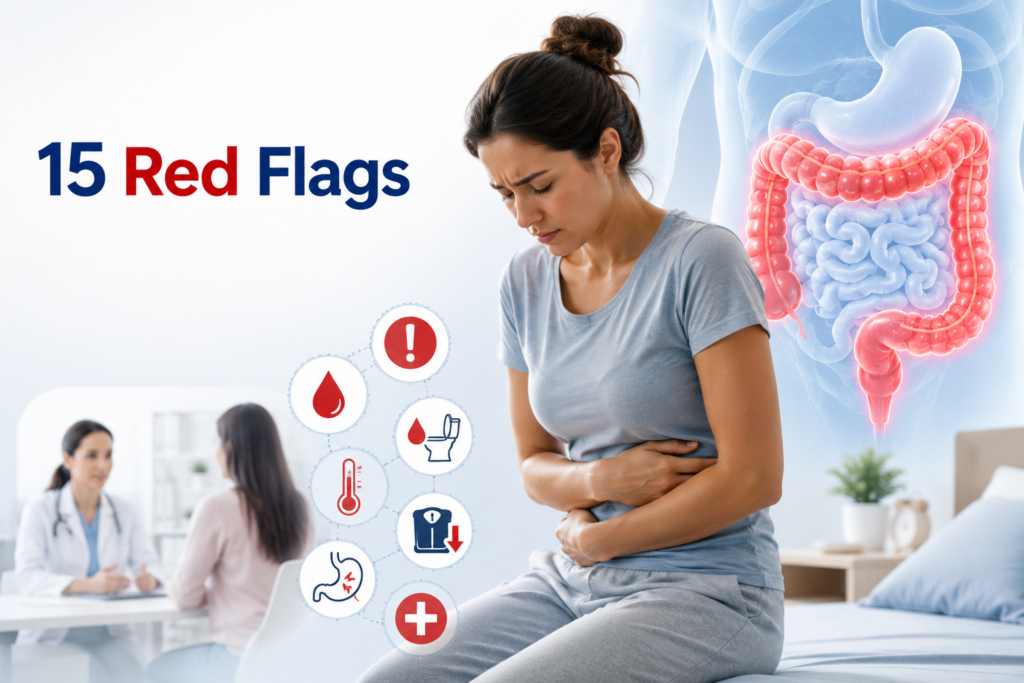
Understanding Constipation: Normal vs. Concerning
What’s Normal?
Normal bowel frequency ranges from 3 times per day to 3 times per week.
Normal stool characteristics:
- Bristol Stool Types 3-4 (formed, soft, easy to pass)
- Minimal straining
- Sensation of complete evacuation
- No pain or bleeding
Occasional variation is normal:
- Travel-related changes
- Stress-induced changes
- Dietary changes
- Minor illness
What’s Chronic Constipation?
According to Rome IV criteria, chronic constipation requires at least 2 of these symptoms for 3+ months:
- Straining during more than 25% of bowel movements
- Lumpy or hard stools more than 25% of the time
- Sensation of incomplete evacuation more than 25% of the time
- Sensation of anorectal obstruction more than 25% of the time
- Manual maneuvers needed to facilitate bowel movements
- Fewer than 3 spontaneous bowel movements per week
AND:
- Loose stools are rarely present without laxatives
- Symptoms don’t meet criteria for IBS
15 Red Flag Symptoms: When to See a Doctor
Red Flag #1: New Constipation After Age 50
Why it matters: New-onset constipation after age 50 can be an early sign of colorectal cancer or other structural problems.
Statistics:
- Average age of colorectal cancer diagnosis: 66 for men, 69 for women
- Incidence rising in younger adults (but still most common after 50)
- Constipation is presenting symptom in 10-15% of colorectal cancer cases
What to do:
- See your doctor within 2-4 weeks
- Expect colonoscopy recommendation (if not up to date on screening)
- Standard screening begins at age 45 for average-risk adults
Other considerations:
- Review new medications
- Check for other causes (hypothyroidism, diabetes)
- Don’t assume it’s “just aging”
Red Flag #2: Blood in Stool
Why it matters: Blood can indicate hemorrhoids (common, usually benign) OR more serious conditions like colorectal cancer, IBD, or significant bleeding.
Types of blood in stool:
| Appearance | Likely Source | Urgency |
|---|---|---|
| Bright red blood on toilet paper | Hemorrhoids, anal fissure | Routine (mention to doctor) |
| Bright red blood coating stool | Lower colon/rectum (hemorrhoids, polyps, cancer) | Prompt evaluation |
| Blood mixed into stool | Higher in colon | Prompt evaluation |
| Dark, tarry, black stool (melena) | Upper GI bleeding (stomach, small intestine) | Urgent (same day) |
| Maroon-colored stool | Right colon or small intestine | Prompt evaluation |
When blood is likely from hemorrhoids/fissures:
- Bright red blood only
- Blood on paper or dripping into bowl
- Associated with straining
- Pain with bowel movements (fissures)
- Itching, swelling (hemorrhoids)
When to worry:
- Blood mixed INTO the stool
- Dark or black stool
- Large amounts of blood
- Blood with other symptoms (weight loss, pain, change in bowel habits)
- Age over 45 with new rectal bleeding
- Family history of colorectal cancer
What to do:
- Any rectal bleeding warrants medical evaluation
- Don’t assume it’s hemorrhoids without examination
- See doctor within 1-2 weeks for persistent bleeding
- Go to ER for heavy bleeding, dizziness, black tarry stools
Red Flag #3: Unintentional Weight Loss
Why it matters: Unexplained weight loss with constipation can indicate cancer, hyperthyroidism, malabsorption, or other serious conditions.
Definition: Loss of more than 5% of body weight over 6-12 months without trying
Examples:
- 150 lb person losing 7.5+ lbs without trying
- 200 lb person losing 10+ lbs without trying
Possible causes:
- Colorectal cancer (tumor affects appetite, metabolism)
- Hyperthyroidism
- Inflammatory bowel disease
- Celiac disease
- Chronic infection
- Depression
- Medication side effects
What to do:
- See doctor within 1-2 weeks
- Expect blood work, possibly imaging
- Document actual weight changes with dates
Red Flag #4: Severe Abdominal Pain
Why it matters: Severe pain can indicate bowel obstruction, ischemic colitis, diverticulitis, or other emergencies.
Concerning pain characteristics:
- Severe, constant pain (not just cramping)
- Pain that wakes you from sleep
- Pain with fever
- Pain with vomiting
- Pain that prevents normal activities
- Pain that keeps getting worse
- Localized pain (specific area, not generalized)
Possible causes:
- Bowel obstruction: Severe pain, distension, vomiting, inability to pass gas
- Diverticulitis: Left lower quadrant pain, fever, change in bowel habits
- Ischemic colitis: Sudden pain, bloody stool, urgent need to defecate
- Appendicitis: Right lower quadrant pain, fever, nausea
- Ovarian pathology (in women): Pelvic pain, bloating
What to do:
- Go to ER for severe, worsening pain
- Go to ER if pain with vomiting, fever, or inability to pass gas
- See doctor within 24-48 hours for moderate persistent pain
Red Flag #5: Vomiting with Constipation
Why it matters: Vomiting combined with constipation can indicate bowel obstruction, which is a medical emergency.
Concerning patterns:
- Vomiting that prevents keeping fluids down
- Fecal-smelling vomit (indicates severe obstruction)
- Vomiting with abdominal distension
- Vomiting with inability to pass gas
- Persistent vomiting (more than 24 hours)
Possible causes:
- Bowel obstruction: Tumor, adhesions, volvulus, intussusception
- Severe fecal impaction: Stool stuck in rectum
- Ileus: Bowel stops moving (post-surgery, medications)
- Gastroparesis: Delayed stomach emptying
What to do:
- Go to ER immediately if vomiting with:
- Severe abdominal pain
- Abdominal distension
- Inability to pass gas
- Fecal-smelling vomit
- Signs of dehydration
Red Flag #6: Pencil-Thin Stools
Why it matters: Persistently narrow stools can indicate a physical obstruction (tumor, stricture) narrowing the colon.
What to look for:
- Stools consistently less than 1 inch in diameter
- Ribbon-like or pencil-thin appearance
- Progressive narrowing over time
Possible causes:
- Colorectal cancer (tumor narrows the lumen)
- Stricture (scar tissue narrowing)
- Rectal prolapse
- Severe hemorrhoids
- Pelvic floor dysfunction (functional narrowing)
Important: Occasional thin stools are normal. Concern is for PERSISTENTLY thin stools that represent a change from your normal pattern.
What to do:
- See doctor within 1-2 weeks
- Expect colonoscopy recommendation
- Mention how long this has been happening
Red Flag #7: Family History of Colorectal Cancer
Why it matters: Family history significantly increases your risk, warranting earlier and more aggressive evaluation.
Risk levels:
| Family History | Your Risk | Screening Recommendation |
|---|---|---|
| First-degree relative diagnosed before 50 | 4x average risk | Colonoscopy starting at 40 OR 10 years before youngest diagnosis |
| First-degree relative diagnosed after 50 | 2x average risk | Colonoscopy starting at 40 |
| Two or more first-degree relatives | 4x average risk | Colonoscopy starting at 40 |
| Second-degree relative only | Slightly increased | Standard screening (age 45) |
First-degree relatives: Parents, siblings, children
What to do:
- Tell your doctor about family history
- Start screening earlier than general population
- Don’t wait for symptoms if you’re due for screening
- Consider genetic counseling if multiple family members affected
Red Flag #8: Anemia (Iron Deficiency)
Why it matters: Iron deficiency anemia can indicate chronic blood loss from the GI tract, possibly from cancer or other bleeding lesions.
Symptoms of anemia:
- Fatigue, weakness
- Pale skin
- Shortness of breath
- Dizziness
- Cold hands and feet
- Brittle nails
- Craving ice or non-food items (pica)
Lab findings:
- Low hemoglobin
- Low ferritin
- Low iron
- High TIBC (total iron binding capacity)
- Microcytic (small) red blood cells
Why it matters with constipation:
- Right-sided colon cancers often present with anemia rather than visible blood
- Chronic slow bleeding may not be visible but causes iron deficiency
- Constipation + anemia warrants complete GI evaluation
What to do:
- See doctor if you have symptoms of anemia
- Request complete blood count (CBC) and iron studies
- If iron deficiency confirmed, expect GI evaluation (upper and lower)
Red Flag #9: Constipation Alternating with Diarrhea
Why it matters: This pattern can indicate IBS, but also can signal partial obstruction, IBD, or other conditions.
Possible causes:
| Pattern | More Likely Cause | Less Likely But Serious |
|---|---|---|
| Alternating with abdominal pain | IBS-C or IBS-M | – |
| Alternating with weight loss | – | Cancer, IBD |
| Overflow diarrhea (liquid stool around impacted stool) | Fecal impaction | Requires treatment |
| New pattern after age 50 | – | Cancer, structural problem |
| With blood in stool | – | IBD, cancer |
Overflow diarrhea: When liquid stool leaks around a large, impacted mass of stool. This can be mistaken for diarrhea when the underlying problem is severe constipation/impaction.
What to do:
- See doctor if this is a new pattern
- Mention all associated symptoms
- Don’t assume it’s “just IBS” without evaluation if you have red flags
Red Flag #10: Fever with Constipation
Why it matters: Fever suggests infection or inflammation, which could indicate diverticulitis, abscess, or other conditions requiring treatment.
Concerning patterns:
- Fever over 100.4°F (38°C)
- Fever with abdominal pain
- Fever with change in bowel habits
- Fever that persists more than 2-3 days
Possible causes:
- Diverticulitis: Fever, left lower quadrant pain, constipation or diarrhea
- Appendicitis: Fever, right lower quadrant pain, nausea
- Intra-abdominal abscess: Fever, pain, constipation
- Inflammatory bowel disease flare: Fever, abdominal pain, bloody diarrhea (usually)
- C. difficile infection: Fever, abdominal pain, diarrhea (usually)
What to do:
- See doctor within 24-48 hours for fever with abdominal symptoms
- Go to ER for high fever (over 102°F), severe pain, or signs of sepsis
Red Flag #11: Nighttime Symptoms
Why it matters: Symptoms that wake you from sleep are more likely to indicate organic disease rather than functional disorders like IBS.
Concerning patterns:
- Abdominal pain that wakes you from sleep
- Urgent need to have bowel movement at night
- Nighttime nausea or vomiting
- Night sweats with bowel changes
Why it matters:
- IBS and functional disorders typically improve during sleep
- Organic diseases (cancer, IBD, infection) don’t respect sleep schedules
- Nighttime symptoms suggest more serious underlying pathology
What to do:
- Mention nighttime symptoms to your doctor
- Expect more thorough evaluation
- Keep symptom diary noting timing
Red Flag #12: Inability to Pass Gas
Why it matters: Combined with constipation and abdominal distension, this can indicate complete bowel obstruction—a surgical emergency.
Classic obstruction symptoms:
- Constipation (no bowel movements)
- Inability to pass gas
- Abdominal distension (bloating)
- Abdominal pain (often cramping, comes in waves)
- Nausea and vomiting (may be fecal-smelling)
Possible causes:
- Adhesions (scar tissue from prior surgeries)
- Volvulus (twisted bowel)
- Intussusception (telescoping of bowel)
- Tumor causing complete obstruction
- Incarcerated hernia
What to do:
- Go to ER immediately if you have:
- No bowel movements AND no gas
- Abdominal distension
- Abdominal pain
- Vomiting
Red Flag #13: Personal History of IBD or Colon Polyps
Why it matters: History of inflammatory bowel disease or colon polyps increases risk of complications and cancer.
Inflammatory Bowel Disease:
- Ulcerative colitis and Crohn’s disease increase colorectal cancer risk
- Constipation can indicate stricture (narrowing from inflammation/scarring)
- Change in bowel habits warrants evaluation
- May need earlier/more frequent colonoscopies
History of Colon Polyps:
- Polyps can recur
- History of adenomatous polyps increases cancer risk
- Constipation could indicate recurrent polyp or cancer
- Surveillance colonoscopy intervals depend on polyp type and number
What to do:
- Stay on schedule with surveillance colonoscopies
- Report any change in bowel habits to GI doctor
- Don’t ignore new constipation if you have IBD history
Red Flag #14: Neurological Symptoms with Constipation
Why it matters: Constipation with neurological symptoms can indicate neurological conditions affecting gut function.
Concerning symptom combinations:
| Constipation Plus… | Possible Cause | Urgency |
|---|---|---|
| Tremor, shuffling gait | Parkinson’s disease | Routine neurology referral |
| Numbness, tingling | Diabetic neuropathy, MS | Prompt evaluation |
| Weakness in legs | Spinal cord problem | Urgent evaluation |
| Loss of bladder control | Cauda equina syndrome | EMERGENCY |
| New severe headache | Increased intracranial pressure | Urgent evaluation |
Why it happens:
- Nervous system controls gut motility
- Neurological conditions can disrupt gut-brain communication
- Constipation often precedes motor symptoms in Parkinson’s by years
What to do:
- Mention any neurological symptoms to your doctor
- Expect neurological examination
- May need neurology referral
Red Flag #15: Severe Bloating with Visible Distension
Why it matters: Severe, progressive bloating can indicate obstruction, ascites (fluid), or mass.
Concerning patterns:
- Abdomen visibly enlarged and tight
- Bloating that keeps getting worse
- Bloating with pain
- Bloating with vomiting
- Bloating that doesn’t improve after bowel movement
Possible causes:
- Bowel obstruction: Tumor, volvulus, adhesions
- Ascites: Fluid accumulation (liver disease, cancer)
- Large ovarian mass: Can compress bowel
- Severe fecal impaction: Stool backup
What to do:
- Go to ER if severe distension with pain, vomiting, inability to pass gas
- See doctor within 24-48 hours for progressive distension
Emergency Symptoms: When to Call 911 or Go to ER
Go to Emergency Room Immediately If:
Signs of Bowel Obstruction:
- No bowel movements AND no gas for 24+ hours
- Severe abdominal pain
- Abdominal distension
- Vomiting (especially if fecal-smelling)
Signs of Severe Bleeding:
- Large amounts of blood in stool
- Black, tarry stools
- Dizziness, lightheadedness
- Rapid heartbeat
- Pale, clammy skin
Signs of Sepsis:
- High fever (over 102°F)
- Confusion
- Rapid breathing
- Rapid heartbeat
- Extreme pain
Signs of Cauda Equina Syndrome:
- Loss of bladder or bowel control
- Numbness in “saddle area” (groin, buttocks)
- Leg weakness
- Severe back pain
Signs of Severe Dehydration:
- Confusion
- Very dark urine or no urine for 8+ hours
- Dizziness when standing
- Rapid heartbeat
- Sunken eyes
Non-Emergency but Urgent: When to See a Doctor Within 1-2 Weeks
Make an Appointment Soon If:
- New constipation after age 45-50
- Blood in stool (even if you think it’s hemorrhoids)
- Unintentional weight loss
- Persistent change in bowel habits (more than 2-3 weeks)
- Family history of colorectal cancer with new symptoms
- Pencil-thin stools persisting more than 1 week
- Constipation not responding to over-the-counter treatments
- Needing laxatives regularly to have bowel movements
- Anemia symptoms (fatigue, pale skin, shortness of breath)
- Fever with abdominal symptoms
Routine: When to Mention at Next Regular Visit
Discuss at Regular Checkup If:
- Occasional constipation without red flags
- Mild symptoms that respond to lifestyle changes
- Questions about prevention
- Due for routine colorectal cancer screening (age 45+)
- Family history discussion (to determine screening schedule)
What to Expect at the Doctor
History Questions Your Doctor Will Ask
Be prepared to discuss:
| Category | Questions |
|---|---|
| Bowel habits | Frequency, consistency (Bristol chart), straining, completeness |
| Symptom onset | When did it start? Sudden or gradual? |
| Associated symptoms | Pain, bloating, nausea, vomiting, blood |
| Weight changes | Any unintentional weight loss or gain? |
| Dietary habits | Fiber intake, fluid intake, recent changes |
| Medications | Prescription, OTC, supplements (bring list) |
| Medical history | Thyroid disease, diabetes, neurological conditions |
| Surgical history | Prior abdominal/pelvic surgeries |
| Family history | Colon cancer, polyps, IBD in family members |
| Social history | Exercise, stress, travel, occupation |
Physical Examination
What to expect:
- Abdominal examination (looking for masses, distension, tenderness)
- Digital rectal exam (checking for masses, blood, stool consistency)
- Possibly pelvic exam (in women)
- Vital signs (fever, heart rate, blood pressure)
Initial Tests
Blood tests:
- Complete blood count (CBC) – checks for anemia, infection
- Comprehensive metabolic panel (CMP) – electrolytes, kidney function, liver function, calcium
- TSH – thyroid function
- HbA1c or fasting glucose – diabetes screening
Stool tests:
- Fecal occult blood test (FOBT) or fecal immunochemical test (FIT)
- Possibly calprotectin (inflammation marker)
Additional Tests (if Indicated)
Colonoscopy:
- Visualizes entire colon
- Can remove polyps, take biopsies
- Recommended for age 45+ screening
- Recommended for any red flag symptoms
Flexible sigmoidoscopy:
- Visualizes lower portion of colon
- Less invasive than colonoscopy
- May be followed by full colonoscopy if abnormalities found
CT colonography (virtual colonoscopy):
- CT scan of colon
- Less invasive
- Can’t remove polyps during procedure
Colonic transit study:
- Measures how quickly stool moves through colon
- Swallow capsule with markers, X-rays over several days
- Helps diagnose slow transit constipation
Anorectal manometry:
- Measures pelvic floor muscle function
- Small catheter inserted into rectum
- Helps diagnose pelvic floor dysfunction
Balloon expulsion test:
- Tests ability to evacuate
- Balloon inserted into rectum, patient tries to expel it
- Simple test for defecatory disorders
Defecography:
- X-ray or MRI video during defecation
- Shows structural problems (rectocele, prolapse)
Age-Specific Guidance
Children
Seek prompt medical attention if:
- Constipation since birth (could indicate Hirschsprung disease)
- Poor growth or weight loss
- Blood in stool (without visible anal fissure)
- Severe abdominal distension
- Vomiting (especially if green/bilious)
- Fever with constipation
- Constipation not responding to treatment
Normal variations:
- Breastfed infants may go several days without bowel movement
- Toddler stool withholding is common
- School-age children may avoid school bathrooms
Adults Under 45
Lower threshold for evaluation if:
- Family history of early-onset colorectal cancer
- Personal history of IBD
- Persistent symptoms despite lifestyle changes
- Any red flag symptoms
Note: Colorectal cancer incidence is rising in adults under 50. Don’t dismiss symptoms as “too young for cancer.”
Adults 45 and Older
Recommendations:
- Colorectal cancer screening starting at age 45 (average risk)
- Lower threshold for colonoscopy with any symptoms
- Report any change in bowel habits to doctor
Screening options:
- Colonoscopy every 10 years
- FIT stool test annually
- CT colonography every 5 years
- Discuss best option with your doctor
Adults Over 65
Considerations:
- Higher prevalence of constipation (30-40%)
- More likely to be medication-related
- May have multiple contributing factors
- Continue screening through age 75 if healthy
- Individualize screening decisions after 75
Frequently Asked Questions
How long is too long to go without a bowel movement?
Generally:
- Going more than 3 days without a bowel movement warrants attention
- Going more than 7 days is concerning and needs medical evaluation
- Going more than 10-14 days risks fecal impaction
More important than frequency:
- Stool consistency (should be soft, formed)
- Ease of passage (minimal straining)
- Comfort (no significant pain)
Can constipation cause fever?
Constipation alone typically doesn’t cause fever. Fever with constipation suggests:
- Infection (diverticulitis, appendicitis)
- Inflammation (IBD flare)
- Complication (abscess, obstruction)
See a doctor for any fever with bowel changes.
Is blood in stool always serious?
Not always, but it always warrants evaluation.
Common benign causes:
- Hemorrhoids (very common)
- Anal fissures (tears from hard stool)
Serious causes:
- Colorectal cancer or polyps
- Inflammatory bowel disease
- Diverticular bleeding
- Upper GI bleeding
Bottom line: Don’t assume it’s hemorrhoids without medical evaluation, especially if you’re over 45 or have other symptoms.
Can anxiety cause constipation?
Yes. The gut-brain axis means anxiety can affect gut function:
- Stress hormones slow colonic motility
- Anxiety can cause pelvic floor tension
- May lead to ignoring urges (bathroom avoidance)
However, don’t attribute constipation to anxiety without ruling out physical causes, especially if you have red flag symptoms.
Should I go to the ER for constipation?
Go to ER if:
- Severe abdominal pain
- Vomiting with inability to keep fluids down
- Inability to pass gas with abdominal distension
- Large amounts of blood in stool
- Black, tarry stools
- Signs of severe dehydration
- High fever with abdominal symptoms
Otherwise: See your primary care doctor or gastroenterologist.
How do I know if I need a colonoscopy?
You need a colonoscopy if:
- You’re age 45+ (routine screening)
- You have any red flag symptoms
- You have family history of colorectal cancer
- You have personal history of polyps or IBD
- Your doctor recommends it based on symptoms
Discuss with your doctor if you’re unsure about timing.
Key Takeaways
- Most constipation is benign but certain red flags warrant medical evaluation
- New constipation after age 50 needs evaluation to rule out cancer
- Blood in stool always warrants medical attention (don’t assume hemorrhoids)
- Unexplained weight loss with constipation is concerning and needs prompt evaluation
- Severe pain, vomiting, or inability to pass gas may indicate emergency
- Family history matters—start screening earlier if you have affected relatives
- Nighttime symptoms suggest organic disease rather than functional disorders
- Pencil-thin stools persistently can indicate obstruction
- Anemia with constipation warrants complete GI evaluation
- When in doubt, get checked—better to be safe than sorry with bowel changes
Medical Disclaimer: This article provides educational information only and does not replace professional medical advice, diagnosis, or treatment. If you have concerns about your bowel habits or any red flag symptoms, consult a qualified healthcare provider promptly.
Sources:
- American Cancer Society – Colorectal Cancer Signs and Symptoms – 2025
- American College of Gastroenterology – Colorectal Cancer Screening Guidelines – 2025
- Rome Foundation – Rome IV Criteria for Functional Constipation – 2025
- NIDDK – Constipation: When to See a Doctor – 2025
- Mayo Clinic – Constipation: Symptoms and Causes – 2025
- American Gastroenterological Association – Clinical Practice Update on Chronic Constipation – 2023
- Cleveland Clinic – When to Worry About Constipation – 2025
- Gastroenterology – Red Flag Symptoms in IBS and Functional Constipation – 2024
Last Updated: March 9, 2026