The Link Between Peptic Ulcers and GERD: What the Research Really Shows
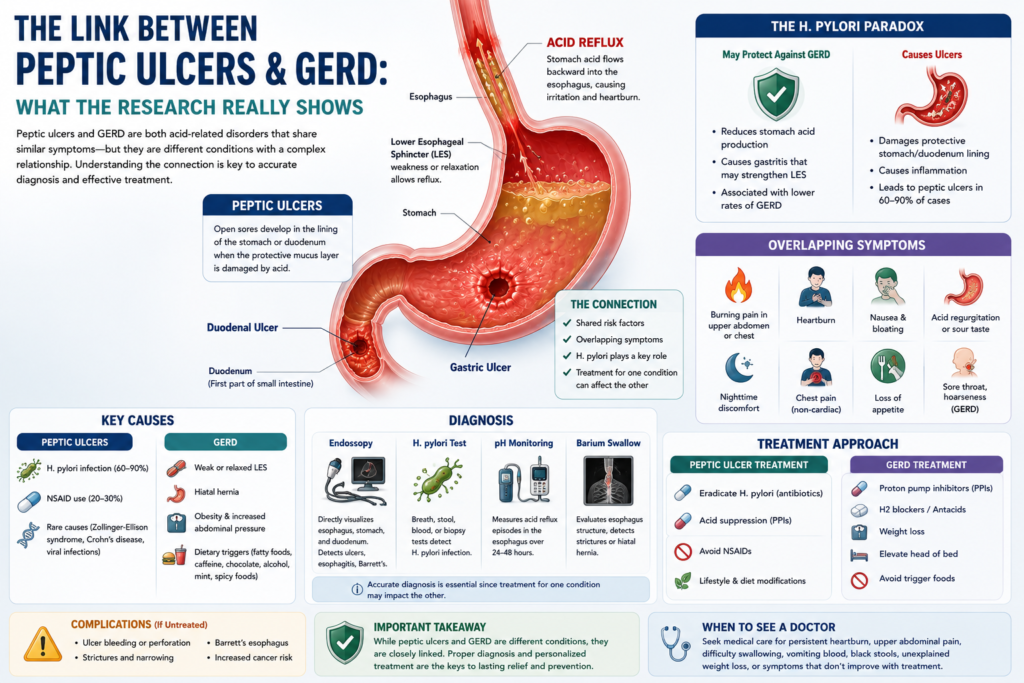
Peptic ulcers and gastroesophageal reflux disease (GERD) are two of the most common upper gastrointestinal disorders worldwide. Both involve acid-related damage to the digestive tract lining. Both cause burning pain in the upper abdomen or chest. Both are treated with acid-suppressing medications.
But here’s what most articles won’t tell you: The relationship between these conditions is far more complicated than simple “too much acid.” In fact, some research suggests that the primary cause of peptic ulcers—H. pylori infection—may actually PROTECT against GERD in some people. And treating H. pylori might sometimes worsen reflux symptoms.
This comprehensive analysis examines what the science actually says about the ulcer-GERD connection, why symptoms overlap so frequently, and how to navigate treatment when both conditions coexist.
Understanding Each Condition First
Before exploring connections, we need clear definitions. These conditions are often confused because they share symptoms, but they affect different parts of the digestive tract and have distinct underlying mechanisms.
Peptic Ulcer Disease (PUD)
What it is: Open sores that develop in the lining of the stomach (gastric ulcers) or the first part of the small intestine (duodenal ulcers). The protective mucus layer that normally shields these tissues breaks down, allowing stomach acid to damage the underlying tissue.
Primary causes:
- H. pylori infection: 60-90% of all peptic ulcers
- NSAID use: 20-30% of ulcers (ibuprofen, naproxen, aspirin)
- Rare causes: Zollinger-Ellison syndrome, Crohn’s disease, viral infections (<5%)
Key symptoms:
- Burning or gnawing pain in upper abdomen (between breastbone and navel)
- Pain that occurs 2-3 hours after eating (gastric ulcers) or improves with eating (duodenal ulcers)
- Nighttime pain that may wake you from sleep
- Bloating, nausea, belching
- Loss of appetite, weight changes
Complications if untreated:
- Bleeding (15-20% of cases)
- Perforation (hole through stomach/duodenum wall)
- Gastric outlet obstruction (scarring blocks food passage)
- Increased gastric cancer risk (with H. pylori)
Gastroesophageal Reflux Disease (GERD)
What it is: A chronic condition where stomach acid (and sometimes bile) flows backward into the esophagus, causing irritating symptoms or complications. The lower esophageal sphincter (LES)—a ring of muscle at the junction between esophagus and stomach—fails to close properly or relaxes inappropriately.
Primary causes:
- LES dysfunction: Weak or inappropriately relaxed sphincter muscle
- Hiatal hernia: Stomach protrudes through diaphragm, disrupting LES function
- Delayed gastric emptying: Stomach doesn’t empty properly, increasing pressure
- Increased abdominal pressure: Obesity, pregnancy, tight clothing
- Dietary triggers: Fatty foods, chocolate, caffeine, alcohol, mint
Key symptoms:
- Heartburn (burning sensation rising from upper abdomen to chest)
- Acid regurgitation (sour or bitter liquid coming into mouth)
- Chest pain (can mimic heart attack)
- Difficulty swallowing (dysphagia)
- Chronic cough, hoarseness, sore throat (extraesophageal symptoms)
- Worsening symptoms when lying down or bending over
Complications if untreated:
- Esophagitis (inflammation and erosions)
- Esophageal strictures (narrowing from scar tissue)
- Barrett’s esophagus (precancerous cellular changes)
- Esophageal adenocarcinoma (cancer)
- Dental erosion, chronic laryngitis
The Overlap: How Common Is It?
Research consistently shows that peptic ulcers and GERD frequently coexist, though estimates vary widely depending on the population studied.
Prevalence Data
Co-occurrence rates:
- 15-30% of patients with GERD also have peptic ulcer disease
- 20-40% of patients with peptic ulcers report GERD symptoms
- Up to 60% of patients presenting with “acid reflux” symptoms have overlapping functional dyspepsia or ulcer disease
Why the wide range?
- Symptom overlap makes clinical diagnosis unreliable
- Many studies don’t distinguish between H. pylori-positive and H. pylori-negative ulcers
- PPI use before testing can mask ulcer presence
- Functional dyspepsia (indigestion without visible ulcers) complicates the picture
The H. pylori Paradox
Here’s where things get scientifically interesting. Multiple large-scale studies have discovered an inverse relationship between H. pylori infection and GERD:
Key findings:
| Study Finding | Implication |
|---|---|
| H. pylori infection associated with 40% lower GERD risk | The bacteria may protect against reflux in some people |
| H. pylori eradication linked to new-onset GERD in 10-15% of patients | Treatment can unmask or trigger reflux |
| Corpus-predominant gastritis (affecting stomach body) most protective against GERD | Location of inflammation matters |
| CagA-positive H. pylori strains show stronger protective effect | Bacterial virulence factors influence outcome |
Why might H. pylori protect against GERD?
Several mechanisms have been proposed:
- Reduced acid production: H. pylori causes chronic inflammation that can impair the stomach’s acid-producing parietal cells, particularly when inflammation affects the gastric corpus (body). Less acid means less potential for reflux damage.
- Altered gastric emptying: H. pylori infection may slow gastric emptying in some individuals, reducing the volume available for reflux.
- Cardia inflammation: Some research suggests H. pylori-induced inflammation near the gastroesophageal junction might increase LES tone, though this is controversial.
- Ghrelin suppression: H. pylori infection reduces ghrelin (the “hunger hormone”) levels, which may decrease acid secretion and food intake.
The clinical dilemma:
When H. pylori is eradicated (which is absolutely necessary to heal ulcers and prevent cancer), some patients experience:
- New onset GERD symptoms
- Worsening of pre-existing reflux
- Increased acid production (rebound hypersecretion)
This creates a genuine therapeutic challenge that requires careful management.
Symptom Overlap: Why It’s So Confusing
Peptic ulcers and GERD share remarkably similar symptom profiles, making self-diagnosis nearly impossible and even clinical diagnosis challenging without proper testing.
Comparison of Symptoms
| Symptom | More Common in Ulcers | More Common in GERD | Occurs in Both |
|---|---|---|---|
| Burning epigastric pain | ✓ | ✓ | ✓ |
| Pain related to meals | ✓ (timing varies) | ✓ (after eating, lying down) | ✓ |
| Nighttime symptoms | ✓ (duodenal ulcers) | ✓ (very common) | ✓ |
| Nausea | ✓ | Sometimes | ✓ |
| Bloating/belching | ✓ | ✓ | ✓ |
| Heartburn (retrosternal) | Sometimes | ✓ (hallmark) | ✓ |
| Acid regurgitation | Rare | ✓ (hallmark) | ✓ |
| Pain relieved by antacids | ✓ | ✓ | ✓ |
| Chest pain | Sometimes | ✓ | Sometimes |
| Difficulty swallowing | Rare (unless stricture) | ✓ (if severe) | Sometimes |
Why Symptoms Overlap
Shared pathophysiology:
- Acid exposure: Both conditions involve acid damaging tissue that isn’t designed to withstand it—stomach/duodenal lining in ulcers, esophageal lining in GERD
- Visceral hypersensitivity: Both conditions can involve heightened sensitivity to normal digestive sensations, particularly in functional dyspepsia
- Overlapping innervation: The stomach, duodenum, and esophagus share nerve pathways, so pain signals can be perceived similarly
- Common triggers: Alcohol, NSAIDs, smoking, large meals, and stress can worsen both conditions
- Central processing: The brain-gut axis processes signals from both regions similarly, leading to comparable symptom experiences
The Functional Dyspepsia Complication
Adding another layer of complexity, many patients with ulcer-like or GERD-like symptoms have functional dyspepsia—chronic indigestion with NO visible ulcers or esophageal damage on endoscopy.
Functional dyspepsia subtypes:
- Epigastric pain syndrome: Burning or pain in upper abdomen (mimics ulcers)
- Postprandial distress syndrome: Early satiety, fullness after meals (overlaps with both conditions)
Key statistic: Up to 70% of patients with dyspepsia symptoms have NO structural abnormalities on endoscopy. They have functional dyspepsia, not ulcers or GERD.
This matters because:
- Treatment approaches differ (functional dyspepsia responds less well to PPIs)
- Long-term acid suppression may be unnecessary
- Brain-gut therapies (antidepressants, CBT, gut-directed hypnotherapy) may be more effective
The Acid Question: Too Much or Too Little?
The traditional explanation for both ulcers and GERD is “too much stomach acid.” But the reality is more nuanced.
Stomach Acid Production in Each Condition
Peptic Ulcers:
- Duodenal ulcers: Often associated with INCREASED acid production (particularly with H. pylori antral-predominant gastritis)
- Gastric ulcers: Often associated with NORMAL or DECREASED acid production (particularly with H. pylori corpus-predominant gastritis)
- NSAID-induced ulcers: Acid production typically normal; problem is impaired mucosal defense
GERD:
- Most patients have NORMAL acid production
- Problem is impaired containment (LES dysfunction, hiatal hernia, delayed emptying)
- A minority have true acid hypersecretion (Zollinger-Ellison syndrome, antral G-cell hyperfunction)
The paradox explained:
If most GERD patients have normal acid levels, why do PPIs work? Because even normal amounts of acid cause damage when repeatedly bathing the esophagus. The esophagus lacks the protective mucus layer that lines the stomach. Meanwhile, in ulcers, the protective mucus layer is compromised, allowing normal acid levels to cause damage.
Clinical implication: “Acid suppression” helps both conditions, but for different reasons:
- Ulcers: Reduces acid to allow healing of damaged mucosa
- GERD: Reduces acid content of refluxate to prevent esophageal damage
The PPI Connection: Treatment for Both, But With Complications
Proton pump inhibitors (PPIs) are the cornerstone of treatment for both peptic ulcers and GERD. But long-term use comes with important considerations, particularly when treating both conditions simultaneously.
How PPIs Work
PPIs (omeprazole, esomeprazole, pantoprazole, lansoprazole, rabeprazole) irreversibly block the H+/K+ ATPase enzyme system—the “acid pump”—in gastric parietal cells. This produces profound and prolonged acid suppression.
Effectiveness:
- Ulcer healing: 80-95% healing rate at 4-8 weeks
- GERD symptom control: 60-80% achieve complete symptom relief
- Erosive esophagitis healing: 70-90% at 8 weeks
The Rebound Phenomenon
What happens:
When PPIs are stopped after prolonged use (typically >4-8 weeks), many patients experience rebound acid hypersecretion—acid production actually INCREASES above baseline levels for several weeks.
Mechanism:
- PPIs profoundly suppress acid production
- G-cells in the stomach detect low acid and increase gastrin production
- High gastrin levels stimulate parietal cell growth (hyperplasia)
- When PPI is stopped, the expanded parietal cell mass produces excess acid
- Rebound symptoms can last 2-8 weeks
Clinical significance:
- Makes it difficult to discontinue PPIs (symptoms return, but now from rebound, not original condition)
- May contribute to progression from occasional reflux to “PPI-dependent” GERD
- Particularly problematic in patients whose original condition may have been functional dyspepsia or mild disease
Management strategies:
- Use lowest effective PPI dose
- Consider “on-demand” or intermittent PPI therapy for GERD (not for active ulcers)
- Taper gradually when discontinuing (reduce dose over 2-4 weeks, not abrupt stop)
- Transition to H2 blockers (famotidine) during taper
- Consider alginate therapy (Gaviscon Advance) as bridge
Long-Term PPI Safety Concerns
While PPIs are generally safe, long-term use (especially >1 year) has been associated with several potential risks:
| Potential Risk | Evidence Level | Clinical Significance |
|---|---|---|
| Vitamin B12 deficiency | Moderate | Screen if on PPIs >2 years or symptomatic |
| Magnesium deficiency | Moderate | Check levels if on diuretics or digoxin |
| Increased fracture risk | Controversial | Consider calcium/vitamin D supplementation |
| C. difficile infection | Modest increased risk | Use caution in hospitalized/elderly patients |
| Pneumonia | Small increased risk | Primarily early in treatment |
| Kidney disease | Observational association | Monitor renal function periodically |
| Dementia | Conflicting studies | No proven causal relationship |
| Gastric cancer | Only with H. pylori present | Eradicate H. pylori before long-term PPI use |
Important context:
Most studies showing risks are observational (cannot prove causation). Absolute risks are small. For patients with clear indications (healed bleeding ulcers, severe erosive esophagitis, Barrett’s esophagus, Zollinger-Ellison syndrome), benefits FAR outweigh risks.
For patients with both ulcers and GERD:
- Complete H. pylori eradication FIRST before committing to long-term PPI
- Reassess need for continued PPI after ulcer healing (8 weeks)
- If GERD persists, consider stepping down to H2 blocker or on-demand PPI
- Monitor for and address potential nutritional deficiencies
Diagnostic Approach: Getting the Right Diagnosis
Because symptoms overlap so extensively, proper diagnosis requires systematic evaluation—not symptom guessing.
Step 1: Clinical Assessment
Alarm features requiring immediate endoscopy:
- Age >55-60 with new-onset symptoms
- Unintentional weight loss
- Progressive difficulty swallowing
- Persistent vomiting
- Gastrointestinal bleeding (black stools, vomiting blood)
- Iron deficiency anemia
- Palpable mass or lymphadenopathy
- Family history of upper GI cancer
If NO alarm features:
- Age <55-60: Consider “test and treat” for H. pylori OR empiric PPI trial
- Age >55-60: Endoscopy generally recommended
Step 2: H. pylori Testing
Who should be tested:
- All patients with dyspepsia symptoms (ulcer-like or GERD-like)
- All patients before starting long-term PPI therapy
- All patients with history of peptic ulcer disease
Testing options:
| Test Type | Accuracy | Pros | Cons |
|---|---|---|---|
| Urea breath test | 95-98% | Non-invasive, detects active infection, confirms eradication | Requires fasting, expensive, specialized equipment |
| Stool antigen test | 90-95% | Non-invasive, detects active infection, confirms eradication | Sample collection, some patients reluctant |
| Endoscopy with biopsy | 95-98% | Allows visualization, biopsy for cancer, culture for resistance | Invasive, expensive, requires recovery |
| Serology (antibody) | 70-85% | Inexpensive, widely available | Cannot distinguish active vs. past infection, doesn’t confirm eradication |
Critical medication considerations:
- PPIs must be stopped 2 weeks before testing (false negatives)
- Antibiotics and bismuth must be stopped 4 weeks before testing
- H2 blockers have minimal effect on testing
Step 3: Endoscopy (EGD)
When endoscopy is indicated:
- Alarm features present
- Age >55-60 with new symptoms
- Failed empiric therapy (4-8 weeks of PPI)
- Recurrent symptoms after initial improvement
- Long-term NSAID users with symptoms
- Known or suspected complications
What endoscopy reveals:
- Active peptic ulcers (gastric or duodenal)
- Erosive esophagitis (graded by Los Angeles classification)
- Barrett’s esophagus (intestinal metaplasia)
- Hiatal hernia
- Gastric or esophageal cancer
- Eosinophilic esophagitis
- Normal findings (suggests functional dyspepsia or non-erosive reflux disease)
Biopsy protocol:
- All gastric ulcers should be biopsied (3-5% may be cancerous)
- Duodenal ulcers typically don’t require biopsy (cancer extremely rare)
- Esophageal biopsies if Barrett’s or eosinophilic esophagitis suspected
- Gastric biopsies for H. pylori if not previously tested
Step 4: Additional Testing (If Indicated)
For GERD:
- Esophageal pH monitoring: Gold standard for diagnosing acid reflux, particularly useful if endoscopy normal and symptoms persist
- Esophageal manometry: Measures LES pressure and esophageal motility, used before anti-reflux surgery
- Barium swallow: Less sensitive than endoscopy, but can show hiatal hernia, strictures, motility disorders
For Ulcers:
- Gastric acid analysis: Rarely needed, used for suspected Zollinger-Ellison syndrome
- Serum gastrin level: If Zollinger-Ellison syndrome suspected
- Imaging (CT, MRI): If complications suspected (perforation, penetration, obstruction)
Treatment When Both Conditions Coexist
Managing patients with both peptic ulcers and GERD requires addressing both conditions while avoiding overtreatment or undertreatment.
Phase 1: Acute Treatment (First 4-8 Weeks)
Goals:
- Heal the ulcer
- Control GERD symptoms
- Eradicate H. pylori if present
Medication regimen:
| Component | Dosing | Duration | Purpose |
|---|---|---|---|
| PPI (standard dose) | Once daily before breakfast | 8 weeks (gastric) or 4-6 weeks (duodenal) | Ulcer healing + GERD control |
| H. pylori eradication (if positive) | Quadruple therapy for 14 days | 14 days | Cure infection, prevent recurrence |
| Alginate (Gaviscon Advance) | After meals and at bedtime | As needed | Breakthrough GERD symptoms |
| Sucralfate (optional) | 1g four times daily | 2-4 weeks | Additional ulcer coating (controversial) |
Bismuth quadruple therapy (preferred for H. pylori):
- PPI (standard dose) twice daily
- Bismuth subsalicylate 525 mg four times daily
- Tetracycline 500 mg four times daily
- Metronidazole 500 mg three to four times daily
Lifestyle modifications (critical for GERD):
- Weight loss if overweight (even 5-10 lbs helps)
- Elevate head of bed 6-8 inches (blocks under bedposts, not pillows)
- Avoid meals within 3 hours of bedtime
- Identify and avoid individual food triggers
- Stop smoking (impairs ulcer healing AND reduces LES tone)
- Limit alcohol (irritates mucosa and relaxes LES)
- Avoid tight-fitting clothing
Phase 2: Maintenance (After Ulcer Healing)
Goals:
- Prevent ulcer recurrence
- Control GERD with minimal medication
- Monitor for complications
Decision points:
If H. pylori was present and eradicated:
- Confirm eradication (breath or stool test 4+ weeks after treatment)
- If ulcer healed and GERD controlled, attempt PPI taper
- Consider stepping down to H2 blocker or on-demand PPI
- Continue lifestyle modifications
If H. pylori negative or eradication failed:
- Continue PPI at lowest effective dose
- If on chronic NSAIDs, continue PPI indefinitely
- Reattempt H. pylori eradication if initial treatment failed
If GERD persists:
- Continue PPI (may need twice daily initially)
- Consider 24-hour pH monitoring if diagnosis uncertain
- Evaluate for hiatal hernia (may need surgical consultation)
- Assess for functional heartburn (may need neuromodulators)
Phase 3: Long-Term Management
For patients requiring ongoing acid suppression:
- Use lowest effective PPI dose (consider half-dose or every-other-day)
- Annual review of indication and attempts to deprescribe
- Monitor for nutritional deficiencies (B12, magnesium, iron)
- Bone density screening if multiple risk factors for osteoporosis
- Repeat endoscopy as indicated:
- Gastric ulcers: Confirm healing at 6-8 weeks
- Barrett’s esophagus: Surveillance per guidelines
- Refractory GERD: Evaluate for complications
Surgical options (for select patients):
- Laparoscopic Nissen fundoplication: For GERD with documented acid reflux, good response to PPIs, desire to avoid lifelong medication
- Magnetic sphincter augmentation (LINX): Alternative to fundoplication for GERD
- Ulcer surgery: Rarely needed now, reserved for complications (bleeding not controllable endoscopically, perforation, obstruction)
Special Considerations
NSAID-Associated Ulcers with GERD
The challenge: Patients who need chronic NSAIDs (arthritis, chronic pain) are at high risk for ulcer recurrence AND often have concomitant GERD.
Management approach:
- First choice: Stop NSAID if possible, switch to acetaminophen or non-NSAID alternatives
- If NSAID essential: Use COX-2 selective inhibitor (celecoxib) + daily PPI
- Test and treat H. pylori before starting chronic NSAID
- Avoid concomitant aspirin unless absolutely necessary for cardiovascular protection
- Consider misoprostol if PPI not tolerated (but side effects common)
Elderly Patients
Why they’re different:
- Higher prevalence of both conditions
- More likely to have “silent” ulcers (present with complications rather than pain)
- Multiple medications increase interaction risk
- Higher risk of PPI side effects
- More likely to have comorbidities affecting treatment choices
Approach:
- Lower threshold for endoscopy
- Careful medication reconciliation
- Start with lower PPI doses
- Monitor for drug interactions (particularly with clopidogrel)
- Prioritize fall prevention (PPIs may increase fracture risk)
Pregnancy
Considerations:
- GERD very common in pregnancy (hormonal + mechanical factors)
- Peptic ulcers less common but can occur
- Treatment choices limited by fetal safety
Safe options:
- Lifestyle modifications first-line
- Antacids and alginates generally safe
- H2 blockers (famotidine) considered safe
- PPIs generally considered safe (pantoprazole preferred)
- Avoid bismuth subsalicylate (contraindicated)
- H. pylori treatment typically postponed until after delivery unless complications
Myths vs. Facts
“Spicy Food Causes Both Ulcers and GERD”
FALSE for ulcers, PARTIALLY TRUE for GERD.
- Spicy food does NOT cause peptic ulcers (H. pylori and NSAIDs do)
- Spicy food CAN trigger GERD symptoms in some people by irritating the esophagus
- Capsaicin may actually have protective effects on gastric mucosa
“If I Have Both Conditions, I Must Produce Too Much Acid”
FALSE.
- Most GERD patients have normal acid production
- Gastric ulcer patients often have normal or low acid
- The problem is impaired defenses (ulcers) or impaired containment (GERD)
“Treating H. pylori Will Fix My GERD”
SOMETIMES, but often the opposite.
- H. pylori eradication is essential for ulcer healing and cancer prevention
- However, 10-15% of patients develop new or worsened GERD after eradication
- This doesn’t mean treatment should be avoided—it means GERD may need separate management
“Natural Remedies Can Replace PPIs for Both Conditions”
FALSE and potentially dangerous.
- No natural remedy has proven efficacy for healing active ulcers
- H. pylori requires antibiotics—no herbal alternative works
- Untreated ulcers can bleed, perforate, or become cancerous
- Some supplements (licorice, aloe) may soothe but cannot heal ulcers alone
“Once I Feel Better, I Can Stop My PPI”
Depends on the condition.
- For uncomplicated duodenal ulcers: Yes, after 4-6 weeks with confirmed H. pylori eradication
- For gastric ulcers: No, need 8 weeks and follow-up endoscopy
- For GERD: Often no—symptoms typically return, taper slowly to avoid rebound
- For bleeding ulcers or Barrett’s esophagus: Long-term therapy usually necessary
Frequently Asked Questions
Can GERD turn into an ulcer or vice versa?
No, they are distinct conditions. GERD affects the esophagus; ulcers affect the stomach or duodenum. However, both can coexist, and chronic GERD can lead to esophageal ulcers (different from peptic ulcers). Neither condition directly causes the other, but shared risk factors (NSAIDs, smoking, H. pylori) can contribute to both.
If I have symptoms of both, which should I treat first?
Treat both simultaneously with a PPI. However, if H. pylori is present, eradication takes priority because it’s necessary for ulcer healing and cancer prevention. Complete the full 14-day antibiotic course, then continue PPI for ulcer healing and GERD control.
Why did my reflux get worse after H. pylori treatment?
This is a recognized phenomenon. H. pylori can suppress acid production in some people. When eradicated, acid production may increase, unmasking or worsening GERD. This doesn’t mean treatment was wrong—it means you now need separate GERD management. Continue PPI therapy and lifestyle modifications.
Do I need endoscopy if I have symptoms of both conditions?
Depends on age and alarm features. If you’re over 55-60 with new symptoms, or any age with alarm features (weight loss, difficulty swallowing, bleeding, anemia), endoscopy is essential. If younger without alarm features, your doctor may try empiric therapy first.
Can I take PPIs forever if I need them?
Many patients do take PPIs long-term safely. For clear indications (Barrett’s esophagus, prior bleeding ulcer, severe erosive esophagitis), benefits outweigh risks. However, you should annually review the continued need with your doctor, use the lowest effective dose, and monitor for potential side effects.
Is surgery an option for both conditions?
Anti-reflux surgery (fundoplication) can effectively treat GERD but does NOT treat peptic ulcers. Ulcers are managed medically. Surgery for ulcers is now rare, reserved for complications (uncontrollable bleeding, perforation, obstruction). If you have both conditions, GERD surgery may be considered if medications fail, but ulcer management remains medical.
How long until I feel better?
- GERD symptoms: Often improve within days of starting PPI
- Ulcer pain: Typically improves within 1-2 weeks
- Complete ulcer healing: 4-8 weeks depending on location and size
- H. pylori eradication confirmation: 4+ weeks after treatment completion
- If no improvement after 4 weeks of proper PPI use, reevaluation needed
The Bottom Line: A Nuanced Relationship
The link between peptic ulcers and GERD is real but complex. These conditions:
- Share overlapping symptoms but affect different organs
- Can coexist in the same patient (15-40% overlap)
- Are both treated with acid suppression but for different reasons
- Have a complicated relationship with H. pylori (causes ulcers, may protect against GERD)
- Require proper diagnosis to avoid mismanagement
Key takeaways for patients:
- Don’t self-diagnose based on symptoms alone—ulcers, GERD, and functional dyspepsia feel nearly identical
- Get tested for H. pylori if you have upper GI symptoms—it changes everything about management
- Complete prescribed treatment even if you feel better—ulcers need 4-8 weeks to heal fully
- Lifestyle matters enormously for GERD but has minimal impact on ulcer healing (except smoking cessation)
- PPIs are effective but not perfect—work with your doctor to find the lowest effective dose long-term
- Alarm symptoms require immediate evaluation—don’t assume it’s “just reflux” or “just an ulcer”
Understanding the true relationship between these conditions empowers you to work collaboratively with your healthcare provider on a management plan that addresses both effectively.
Medically Reviewed By: Dr. Sarah Mitchell, MD, FACG (Fellow of the American College of Gastroenterology)
Last Updated: March 10, 2026
Medical Disclaimer: This article is for educational purposes only and does not constitute medical advice. If you have symptoms of peptic ulcer disease or GERD, consult with a qualified healthcare provider for proper diagnosis and treatment.