
Preventing Constipation: Complete Lifestyle Guide for Regular Bowel Movements
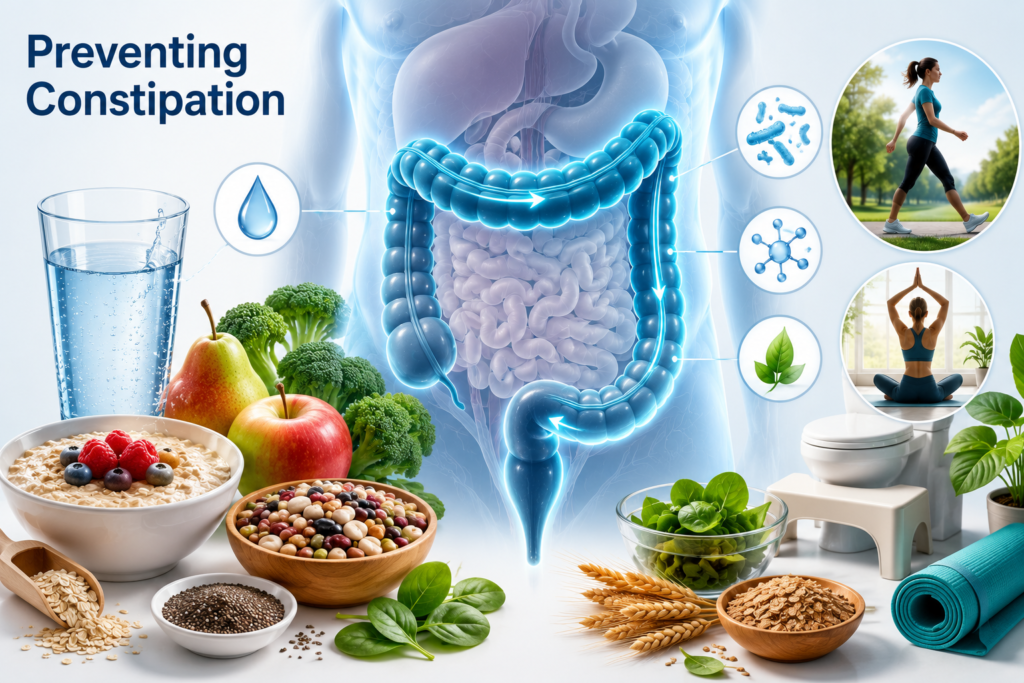
Understanding Constipation Prevention
Preventing constipation requires understanding what causes it in the first place. The same factors that lead to constipation—when reversed—become your prevention strategy.
The Four Pillars of Prevention
                    REGULAR BOWEL MOVEMENTS
                            │
        ┌───────────────────┼───────────────────┐
        │                   │                   │
    DIET              MOVEMENT           HABITS
    • Fiber           • Daily exercise   • Toilet routine
    • Fluids          • Core strength    • Urge response
    • Gut-friendly    • Stress管理        • Sleep
      foods           • Posture          • Consistency
What “Normal” Actually Means
Before diving into prevention, understand what you’re aiming for:
Normal Bowel Pattern:
- Frequency: 3 times per day to 3 times per week (yes, this wide range is normal)
- Effort: Minimal straining
- Stool form: Bristol types 3-4 (sausage-shaped, smooth or slightly cracked)
- Sensation: Complete evacuation, no urgency or pain
- Time on toilet: Under 5 minutes
Red Flags (need medical evaluation, not just prevention):
- New constipation after age 50
- Blood in stool
- Unintentional weight loss
- Iron deficiency anemia
- Family history of colon cancer
- Severe or worsening symptoms
Pillar 1: Dietary Prevention
What you eat is the single most important factor in preventing constipation. Your colon literally becomes what you feed it.
Fiber: The Foundation
Why Fiber Works:
- Adds bulk to stool (stimulates peristalsis)
- Holds water (keeps stool soft)
- Feeds beneficial gut bacteria (produces short-chain fatty acids)
- Speeds colonic transit
How Much You Need:
| Population | Daily Fiber Goal |
|---|---|
| Women under 50 | 25 grams |
| Women over 50 | 21 grams |
| Men under 50 | 38 grams |
| Men over 50 | 30 grams |
| Children | Age + 5 grams (e.g., 8-year-old needs 13g) |
Two Types of Fiber:
Soluble Fiber (dissolves in water, forms gel):
- Oats, barley
- Beans, lentils
- Apples, citrus fruits
- Carrots
- Psyllium
Benefits: Softens stool, feeds good bacteria, gentle on sensitive guts
Insoluble Fiber (doesn’t dissolve, adds bulk):
- Wheat bran
- Whole grains
- Nuts, seeds
- Vegetable skins
- Leafy greens
Benefits: Speeds transit, adds bulk, prevents stool from sticking
Best Approach: Eat both types. Most plant foods contain a mix.
Top 20 Constipation-Preventing Foods
Excellent Sources (10+ grams per serving)
| Food | Serving | Fiber (g) | Type |
|---|---|---|---|
| Split peas | 1 cup cooked | 16.3 | Soluble + Insoluble |
| Lentils | 1 cup cooked | 15.6 | Soluble + Insoluble |
| Black beans | 1 cup cooked | 15.0 | Soluble + Insoluble |
| Chickpeas | 1 cup cooked | 12.5 | Soluble + Insoluble |
| Bran flakes | 1 cup | 10-14 | Insoluble |
Very Good Sources (5-9 grams per serving)
| Food | Serving | Fiber (g) | Type |
|---|---|---|---|
| Oatmeal | 1 cup cooked | 8.0 | Soluble |
| Pear (with skin) | 1 medium | 5.5 | Both |
| Raspberries | 1 cup | 8.0 | Both |
| Artichoke | 1 medium | 6.9 | Both |
| Green peas | 1 cup | 8.8 | Both |
| Almonds | 1 oz (23 nuts) | 3.5 | Insoluble |
| Chia seeds | 2 tbsp | 10.0 | Soluble |
| Flax seeds (ground) | 2 tbsp | 6.0 | Soluble |
Good Sources (2-4 grams per serving)
| Food | Serving | Fiber (g) |
|---|---|---|
| Apple (with skin) | 1 medium | 4.4 |
| Banana | 1 medium | 3.1 |
| Broccoli | 1 cup cooked | 5.1 |
| Brussels sprouts | 1 cup | 4.0 |
| Brown rice | 1 cup cooked | 3.5 |
| Quinoa | 1 cup cooked | 5.2 |
| Popcorn | 3 cups | 3.6 |
| Sweet potato (with skin) | 1 medium | 3.8 |
| Whole wheat bread | 2 slices | 4.0 |
| Avocado | 1/2 fruit | 5.0 |
Special Mention: Foods with Natural Laxative Effects
Some foods go beyond fiber—they contain compounds that actively stimulate bowel movements:
Kiwi Fruit:
- Dose: 2 kiwis daily
- Evidence: Multiple RCTs show 1 more BM per week vs. placebo
- Why works: Contains actinidin (enzyme), serotonin, fiber
- Advantage: Less gas than prunes
Prunes (Dried Plums)
- Dose: 50g daily (about 5-6 prunes)
- Evidence: Superior to psyllium in head-to-head trial
- Why works: Sorbitol (natural sugar alcohol), fiber, phenolic compounds
- Caution: Can cause gas in sensitive individuals; high in FODMAPs
Coffee:
- Dose: 1-2 cups in morning
- Evidence: Stimulates colonic contractions within 4 minutes
- Why works: Caffeine + other compounds stimulate gastrin and cholecystokinin
- Note: Works even with decaf, but caffeine is primary active component
Magnesium-Rich Foods:
- Leafy greens, nuts, seeds, dark chocolate
- Magnesium has mild osmotic effect (draws water into colon)
Building a High-Fiber Day
Sample 35g Fiber Day:
Breakfast (10g)
- Oatmeal (1 cup cooked) with 2 tbsp chia seeds and 1/2 cup blueberries
- Coffee or tea
Snack (4g)
- Apple with 1 tbsp almond butter
Lunch (10g)
- Lentil soup (1 cup)
- Whole grain roll
- Side salad with mixed greens
Snack (4g)
- Handful of almonds (1 oz)
- Pear
Dinner (7g)
- Grilled salmon
- Quinoa (1 cup cooked)
- Roasted Brussels sprouts (1 cup)
Total: 35 grams
Fiber Increase Protocol
DO:
- Increase fiber gradually over 2-4 weeks
- Add 5g per week
- Drink extra water with each increase
- Spread fiber throughout the day
DON’T:
- Jump from 10g to 35g in one day (will cause gas, bloating, cramping)
- Add fiber without increasing fluids
- Rely solely on supplements (food is better)
- Give up if you experience initial gas (usually resolves in 1-2 weeks)
Week-by-Week Plan:
| Week | Daily Fiber Goal | Strategy |
|---|---|---|
| 1 | Current + 5g | Add one high-fiber food daily |
| 2 | Current + 10g | Add second high-fiber food; switch to whole grains |
| 3 | Current + 15g | Add legumes 3x/week; increase vegetables |
| 4+ | Goal (25-35g) | Maintain variety; adjust based on tolerance |
Pillar 2: Hydration
Fiber without fluids is like concrete. You need both for soft, easy-to-pass stools.
How Much Water Do You Need?
General Guidelines:
| Population | Daily Fluid Goal |
|---|---|
| Women | 11.5 cups (2.7 liters / 91 oz) |
| Men | 15.5 cups (3.7 liters / 125 oz) |
| Pregnant women | 10 cups (2.4 liters) |
| Breastfeeding women | 13 cups (3.1 liters) |
| Active individuals | Add 1.5-2.5 cups per hour of exercise |
Note: This includes ALL fluids (water, tea, coffee, soup, water-rich foods). About 20% comes from food.
Signs You’re Well-Hydrated
- Urine is pale yellow (like lemonade, not apple juice)
- Urinating every 2-4 hours
- Rarely feel thirsty
- Good skin elasticity
- Regular bowel movements
Signs You Need More Fluids
- Dark yellow urine
- Infrequent urination
- Hard, dry stools
- Feeling thirsty
- Dry mouth, lips, eyes
- Fatigue, headache
- Constipation
Hydration Strategies That Work
Morning Ritual (most important):
- Drink 16 oz water immediately upon waking
- Add lemon if desired (may stimulate bile)
- Wait 15-30 minutes before coffee (coffee is dehydrating initially)
- This leverages the natural morning gastrocolic reflex
Throughout the Day:
- Keep water bottle visible and accessible
- Sip consistently (don’t chug large amounts at once)
- Set phone reminders if needed
- Drink before each meal (8 oz)
- Herbal tea counts and can be soothing
With Fiber:
- Extra 8 oz water with each high-fiber meal
- Essential when taking fiber supplements
Signs You’re Overdoing It:
- Clear urine all day (aim for pale yellow)
- Frequent nighttime urination
- Headache, nausea (rare; water intoxication)
Fluids That Help vs. Hurt
Help:
- Water (best)
- Herbal tea (peppermint, ginger, chamomile soothe digestion)
- Coffee (in moderation; stimulates bowels)
- Tea (black or green; moderate caffeine helps)
- Sparkling water (hydration equivalent to still water)
- Broth-based soups
- Water-rich fruits and vegetables (watermelon, cucumber, citrus)
Use Caution:
- Alcohol (dehydrating; limit to 1-2 drinks with extra water)
- Excessive caffeine (>400mg/day can dehydrate)
- Sugary drinks (can worsen bloating)
Pillar 3: Movement and Exercise
Your colon moves when you move. Physical activity is one of the most effective constipation prevention strategies.
Why Exercise Works
Mechanisms:
- Mechanical stimulation: Movement jostles the intestines, stimulating peristalsis
- Reduced transit time: Active people have 20-24 hour faster transit than sedentary people
- Stress reduction: Exercise lowers cortisol (stress worsens constipation)
- Improved circulation: Better blood flow to digestive organs
- Core strength: Stronger abdominal muscles improve defecation mechanics
Minimum Effective Dose
For Prevention:
- Frequency: Daily (minimum 5 days/week)
- Duration: 20-30 minutes per session
- Intensity: Moderate (able to talk but not sing)
- Type: Walking is sufficient; any movement helps
Evidence: A single 30-minute walk increases colonic contractions within hours. Daily walking reduces constipation risk by 40%.
Best Exercises for Prevention
Walking (best for most people):
- Low-impact, accessible
- Can be done after meals (especially effective after breakfast)
- No equipment needed
- Sustainable long-term
Protocol: 30 minutes brisk walking daily, ideally after breakfast
Yoga:
- Specific poses stimulate digestion
- Reduces stress
- Improves core strength and flexibility
Best Poses:
- Wind-relieving pose (knees to chest)
- Seated forward bend
- Supine twist
- Child’s pose
- Squat pose (Malasana)
Protocol: 15-20 minutes daily (morning or evening)
Swimming:
- Full-body movement
- Water pressure provides gentle abdominal massage
- Low-impact
Protocol: 30 minutes, 3-5 times/week
Cycling:
- Engages core
- Rhythmic movement stimulates colon
Protocol: 30-45 minutes, 3-5 times/week
Core Strengthening:
- Improves defecation mechanics
- Supports pelvic floor function
Key Exercises:
- Planks
- Dead bug
- Bird dog
- Diaphragmatic breathing
- Pelvic floor exercises (Kegels if hypotonic; reverse Kegels if hypertonic)
Timing Matters
Best Time: Morning, especially after breakfast
- Leverages natural gastrocolic reflex
- Cortisol is highest (natural energy)
- Sets positive tone for day
Second-Best: After any meal
- Eating triggers gastrocolic reflex
- Movement amplifies this effect
- 10-15 minute walk after meals is ideal
Avoid: Intense exercise immediately after large meals (wait 1-2 hours)
Pillar 4: Toilet Habits and Routine
How you use the toilet matters almost as much as what you eat.
The Morning Toilet Routine
Why Morning?
- Cortisol awakening response stimulates colon
- Gastrocolic reflex strongest after breakfast
- Establishes consistent daily pattern
- Less rushed than later in day
Ideal Morning Protocol:
- Wake up: Drink 16 oz water immediately
- Move: Light stretching or 5-minute walk (optional but helpful)
- Eat: Light breakfast (even a few bites triggers reflex)
- Drink: Warm beverage (coffee, tea, or warm water with lemon)
- Sit: 10-15 minutes after eating, sit on toilet for 5-10 minutes
- Position: Use footstool, lean forward, elbows on knees
- Relax: Diaphragmatic breathing; don’t strain excessively
- Respond: If urge comes at other times, don’t ignore it
Optimal Toilet Position
The Squat Position (most physiological):
    Knees ABOVE hips (use footstool)
         ╱
        ╱
    ┌──○──┐
    │     │  Lean forward
    │     │  Elbows on knees
    └──○──┘
       ╲
        ╲  Feet flat on stool
Why It Works:
- Straightens anorectal angle (from 80° to 35°)
- Relaxes puborectalis muscle
- Reduces straining by 50%
- Enables complete evacuation
- Reduces hemorrhoid risk
How to Achieve:
- Use toilet footstool (Squatty Potty, generic brands)
- Knees should be 6-12 inches higher than hips
- Lean forward with elbows on knees
- Relax abdominal muscles
Responding to Urges
Golden Rule: Never ignore the urge to have a bowel movement.
Why People Ignore Urges (and why it’s harmful):
- “Too busy” → Stool sits longer, more water absorbed, gets harder
- “Not at home” → Withholding becomes habitual; rectum stretches; sensation diminishes
- “Painful” → Creates vicious cycle (harder stool → more pain → more withholding)
What Happens When You Ignore Urges:
- Rectum stretches to accommodate stool
- Stretch receptors become less sensitive
- Urge signal weakens
- Stool sits longer, gets harder
- Next bowel movement requires more straining
- Cycle continues
Solution:
- Plan bathroom access when possible
- Don’t delay when you feel the urge
- If you must wait, do so briefly (not hours)
- Address painful conditions (hemorrhoids, fissures)
How Long Is Too Long?
Time on Toilet:
- Normal: 1-5 minutes
- Acceptable: Up to 10 minutes
- Too Long: More than 10 minutes regularly
Why Prolonged Sitting Harms:
- Increases hemorrhoid risk
- Pelvic floor muscles fatigue
- Creates straining habit
- Can worsen pelvic floor dysfunction
If You Can’t Go After 5-10 Minutes:
- Get up and try later
- Don’t force it
- Review your prevention plan (fiber, fluids, movement)
- Consider osmotic laxative if this becomes a pattern
Pillar 5: Stress Management and Sleep
The brain-gut connection is real. Stress and poor sleep directly affect bowel function.
Stress and Constipation
The Mechanism:
- Stress activates sympathetic nervous system (“fight or flight”)
- Blood flow diverted from digestive system to muscles
- Gut motility slows
- Visceral sensitivity increases
- Pain threshold decreases
Result: Stress → Slower transit → Harder stool → More discomfort → More stress (vicious cycle)
Stress-Reduction Techniques That Help:
Diaphragmatic Breathing:
- 5-10 minutes, 2x daily
- Activates parasympathetic system (“rest and digest”)
- Can be done anywhere
Protocol:
- Sit or lie comfortably
- Hand on chest, hand on belly
- Inhale through nose (4 seconds), belly rises
- Hold (2 seconds)
- Exhale through mouth (6 seconds), belly falls
- Repeat for 5-10 minutes
Meditation:
- 10-20 minutes daily
- Reduces cortisol, improves gut-brain signaling
- Apps like Headspace, Calm, Insight Timer helpful
Progressive Muscle Relaxation:
- Systematically tense and release muscle groups
- Reduces physical tension that affects digestion
- 10-15 minutes before bed
Regular Exercise:
- Already covered, but worth repeating
- One of the best stress-reducers available
- Dual benefit for constipation
Sleep and Bowel Function
Why Sleep Matters:
- Gut has its own circadian rhythm
- Colonic motility follows sleep-wake cycle
- Poor sleep disrupts gut bacteria
- Sleep deprivation increases cortisol
Evidence: People with insomnia have 2x higher rates of constipation. Improving sleep improves bowel function.
Sleep Hygiene for Gut Health:
Evening Routine:
- Finish eating 3 hours before bed (digestion needs to wind down)
- Avoid alcohol close to bedtime (disrupts sleep architecture)
- Dim lights 1-2 hours before bed
- Consistent bedtime and wake time (even weekends)
- Cool, dark, quiet bedroom
Morning Routine:
- Wake at same time daily
- Get sunlight within 30 minutes of waking (sets circadian rhythm)
- Move your body (even light stretching)
Target: 7-9 hours of quality sleep nightly
Pillar 6: Medication Review
Up to 30% of constipation cases are caused by medications. Prevention requires addressing this.
Common Constipating Medications
| Medication Class | Examples | Prevention Strategy |
|---|---|---|
| Opioids | Morphine, oxycodone, hydrocodone | Start bowel regimen day 1 (stimulant + osmotic) |
| Anticholinergics | Oxybutynin, benztropine, scopolamine | Minimize dose; add Miralax |
| Calcium Channel Blockers | Verapamil, diltiazem | Consider alternative; add fiber + fluids |
| Iron Supplements | Ferrous sulfate | Switch to ferrous bisglycinate; add vitamin C; take with food |
| Antidepressants (TCAs) | Amitriptyline, nortriptyline | Consider SSRI alternative; add osmotic |
| Antipsychotics | Clozapine, olanzapine | Aggressive bowel regimen essential |
| Anti-nausea | Ondansetron (Zofran) | Use lowest effective dose; limit duration |
| Diuretics | Furosemide, hydrochlorothiazide | Increase fluid intake; add potassium-rich foods |
| Antihistamines | Diphenhydramine, hydroxyzine | Limit use; add fiber |
| Calcium Supplements | Calcium carbonate | Split doses; take with food; add magnesium |
| Aluminum Antacids | Aluminum hydroxide | Switch to H2 blocker or PPI |
| Muscle Relaxants | Cyclobenzaprine, baclofen | Short-term use only |
| Bile Acid Sequestrants | Cholestyramine | Add osmotic laxative |
| Gabapentinoids | Gabapentin, pregabalin | Add fiber + fluids; consider dose adjustment |
Prevention Protocol for Necessary Medications
If you must take a constipating medication:
- Before starting: Discuss constipation risk with prescriber
- Day 1: Start preventive bowel regimen
- Fiber: 25-35g daily through diet + supplement if needed
- Fluids: 8-10 glasses water daily
- Osmotic: Miralax 17g daily
- Monitor: Track bowel movements daily for first 2 weeks
- Escalate if needed: Add stimulant laxative (senna or bisacodyl) if no BM in 48 hours
- Regular review: Every 3-6 months, assess if medication still needed
For Opioids Specifically:
- Bowel regimen is MANDATORY, not optional
- Tolerance to constipating effect does NOT develop
- Standard approach: Stimulant (senna 2 tabs BID) + Osmotic (Miralax 17g daily)
- If refractory: Discuss PAMORA (prescription opioid antagonist) with provider
Daily, Weekly, and Monthly Prevention Checklist
Daily Non-Negotiables
- [ ] Fiber: 25-35 grams from food
- [ ] Fluids: 6-8 glasses of water (more if active or hot weather)
- [ ] Movement: 20-30 minutes of activity
- [ ] Morning routine: Water upon waking, breakfast, toilet sit
- [ ] Urge response: Don’t ignore the urge
- [ ] Toilet position: Use footstool if needed
Weekly Habits
- [ ] Variety: Eat 30+ different plant foods (diverse fiber sources)
- [ ] Legumes: Include beans/lentils 3+ times
- [ ] Whole grains: Choose whole over refined most of the time
- [ ] Exercise variety: Include cardio, strength, and flexibility
- [ ] Stress management: At least one dedicated relaxation session
- [ ] Sleep: Consistent schedule, 7-9 hours nightly
Monthly Check-Ins
- [ ] Medication review: Any new constipating medications?
- [ ] Symptom check: Any changes in bowel pattern?
- [ ] Lifestyle audit: Have habits slipped? What needs adjustment?
- [ ] Healthcare: Regular check-ups; age-appropriate cancer screening
Special Considerations
Prevention During Travel
Challenges:
- Disrupted routine
- Limited bathroom access
- Different foods
- Dehydration (especially flying)
- Immobility
Prevention Strategies:
- Pack fiber-rich snacks (nuts, dried fruit, whole grain crackers)
- Bring fiber supplement (single-serve packets)
- Carry water bottle; refill frequently
- Move every hour during long flights/drives
- Don’t ignore urges due to unfamiliar bathrooms
- Consider prophylactic Miralax if prone to travel constipation
- Maintain morning routine as much as possible
Prevention During Pregnancy
Why Constipation Happens:
- Progesterone relaxes smooth muscle (slows digestion)
- Uterus compresses bowel (especially third trimester)
- Iron supplements
- Decreased activity
- Dehydration (morning sickness)
Safe Prevention:
- Fiber: 25-30g daily from food + supplements
- Fluids: 10 cups daily (more if breastfeeding)
- Exercise: Walking, swimming, prenatal yoga (with OB approval)
- Toilet position: Footstool essential as belly grows
- Iron: Switch to ferrous bisglycinate if constipating
Safe Supplements:
- Psyllium, methylcellulose
- Miralax (PEG 3350)
- Docusate (stool softener)
Avoid:
- Castor oil
- Herbal laxatives (unless approved by OB)
- Sodium phosphate
Prevention in Older Adults
Risk Factors:
- Multiple medications
- Reduced mobility
- Decreased thirst sensation
- Slower metabolism
- Weaker pelvic floor
- Comorbidities
Prevention Strategies:
- Simplify medication regimen when possible
- Scheduled toileting (even without urge)
- Ensure adequate hydration (set reminders)
- Gentle daily exercise (walking, chair exercises)
- Fiber through food + supplements
- Regular medical follow-up
Red Flags in Elderly:
- New constipation (needs medical evaluation)
- Fecal impaction signs (overflow diarrhea, confusion, abdominal distension)
- Weight loss, anemia (concerning for malignancy)
Prevention in Children
Common Causes:
- Withholding behavior
- Toilet training issues
- Dietary factors (too much dairy, not enough fiber)
- School bathroom avoidance
- Life changes (new sibling, moving, starting school)
Prevention Strategies:
- Fiber: Age + 5 to 10 grams daily
- Fluids: Water throughout day; limit juice
- Regular toilet sitting (after meals, 5-10 minutes)
- Footstool for proper position
- Positive reinforcement (reward charts)
- Address school bathroom concerns
- Limit constipating foods (excessive dairy, bananas, white rice)
When to See Pediatrician:
- Constipation starting in infancy
- Failure to thrive
- Blood in stool
- Severe abdominal pain
- Withholding despite prevention efforts
Troubleshooting: When Prevention Isn’t Enough
Even with perfect habits, some people still experience constipation. Here’s what to do.
Step 1: Audit Your Prevention Plan
Ask Yourself:
- Am I really getting 25-35g fiber daily? (Track for 3 days to verify)
- Am I drinking enough water? (Check urine color)
- Am I moving daily? (Or just 2-3 times/week?)
- Am I ignoring urges regularly?
- Did I start any new medications?
Common Gaps:
- Overestimating fiber intake (most Americans get only 15g/day)
- Underestimating fluid needs
- Inconsistent routine (great on weekends, sloppy on weekdays)
- Not enough time on toilet (expecting instant results)
Step 2: Add Over-the-Counter Support
If lifestyle changes aren’t enough after 2-4 weeks:
First Addition: Osmotic laxative
- Miralax (PEG 3350): 17g daily in 8 oz liquid
- Safe for long-term use
- Works gently over 24-72 hours
Second Addition (if needed) Stool softener
- Docusate: 100mg twice daily
- Especially helpful if stools are hard
Third Addition (if needed) Stimulant (short-term or intermittent)
- Senna: 8.6-17.2mg at bedtime
- Bisacodyl: 5-10mg at bedtime
- Use as “rescue” rather than daily if possible
Step 3: Seek Medical Evaluation
When to See a Doctor:
- No improvement after 4-6 weeks of consistent prevention + OTC support
- Need daily stimulant laxatives to have bowel movements
- Red flag symptoms (bleeding, weight loss, anemia, new onset after 50)
- Suspect pelvic floor dysfunction (straining, incomplete evacuation)
- Constipation significantly impacting quality of life
What to Expect:
- Medical history and medication review
- Physical exam (including rectal exam)
- Basic labs (CBC, TSH, electrolytes)
- Possibly colonoscopy (depending on age and risk factors)
- Specialized testing if needed (transit study, anorectal manometry)
Frequently Asked Questions
How long does it take for prevention habits to work?
Most people notice improvement within 1-2 weeks of consistent fiber, fluid, and exercise changes. Full benefits may take 4-6 weeks as your gut adapts. The key is consistency—sporadic efforts won’t build the automatic regularity you’re aiming for.
Can you become dependent on fiber?
No. Fiber is food, not a drug. Your body doesn’t become “dependent” on adequate nutrition. However, if you have a underlying motility disorder, you may need ongoing fiber support—and that’s not dependence, it’s management.
Is it normal to need a laxative occasionally?
Yes. Occasional use of laxatives (during travel, after surgery, during medication changes) is normal and safe. The concern is daily long-term use without medical evaluation—that may mask an underlying problem.
Can probiotics prevent constipation?
Some strains show modest benefit (Bifidobacterium lactis HN019, B. lactis DN-173 010), but evidence is weaker than for fiber, fluids, and exercise. Probiotics can be a helpful adjunct but shouldn’t replace foundational habits.
What if I can’t tolerate high-fiber foods?
Some people with IBS or SIBO worsen with high fiber, especially insoluble fiber. Options:
- Focus on soluble fiber (oats, psyllium, peeled fruits)
- Try partially hydrolyzed guar gum (PHGG)
- Work with dietitian on low FODMAP approach
- Consider fiber supplements (often better tolerated than food fiber)
- Rule out underlying conditions (SIBO, celiac, IBD)
Is colon cleansing necessary for prevention?
No. Your colon is self-cleaning. “Colon detox” products are unnecessary and potentially harmful. Focus on daily prevention habits instead. The only exception is medically-indicated colonoscopy preparation.
Can stress really cause constipation?
Absolutely. The gut-brain connection is powerful. Stress activates the sympathetic nervous system, which slows digestion. Many people notice constipation during stressful periods (exams, work deadlines, relationship issues). Stress management is a legitimate part of constipation prevention.
How much toilet time is too much?
More than 10 minutes regularly is too long. Ideally, you should be in and out within 5 minutes. Prolonged sitting increases hemorrhoid risk and can worsen pelvic floor dysfunction. If you consistently need 15+ minutes, your prevention plan needs adjustment.
Is it bad if I don’t go every day?
Not necessarily. “Normal” ranges from 3 times per day to 3 times per week. What matters more than frequency:
- Stool consistency (should be Bristol type 3-4)
- Effort (minimal straining)
- Sensation (complete evacuation)
- Comfort (no pain)
If you meet these criteria at 3 times/week, that’s normal for you.
Conclusion
Preventing constipation isn’t about perfection—it’s about consistent, sustainable habits that support your digestive system day after day. The formula is straightforward:
Foundation:
- 25-35g fiber daily from varied plant sources
- 6-8 glasses of water
- 20-30 minutes of daily movement
Supporting Habits:
- Morning toilet routine (leverage natural rhythms)
- Proper toilet position (knees above hips)
- Never ignore the urge
- Stress management and adequate sleep
- Regular medication review
Most people can prevent constipation with these lifestyle measures alone. When that’s not enough, over-the-counter options like Miralax can provide additional support. Persistent problems warrant medical evaluation to rule out underlying conditions.
The goal isn’t just absence of constipation—it’s effortless, comfortable regularity that you rarely have to think about. That’s achievable for most people with the right combination of habits tailored to their individual needs.
Medical Disclaimer: This article is for educational purposes only and does not constitute medical advice. Consult with a qualified healthcare provider for personalized recommendations, especially if you have underlying medical conditions or are taking medications.
Sources:
- National Institute of Diabetes and Digestive and Kidney Diseases – Constipation – 2020 – https://www.niddk.nih.gov/health-information/digestive-diseases/constipation
- American College of Gastroenterology – Chronic Constipation Guideline – 2023 – https://gi.org/guidelines/chronic-constipation/
- American Gastroenterological Association – Clinical Practice Update on Chronic Constipation – Gastroenterology – 2023 – https://www.gastrojournal.org/article/S0016-5085(23)00192-0/fulltext
- Institute of Medicine – Dietary Reference Intakes for Fiber – 2019 – https://www.nationalacademies.org/
- Rao SSC – Update on neuroenteric mechanisms underlying defecation – Gastroenterology – 2023 – https://www.gastrojournal.org/article/S0016-5085(23)00193-2/fulltext
- Camilleri M, et al. – Chronic Constipation – Nature Reviews Disease Primers – 2017 – https://www.nature.com/articles/nrdp201773
- Mayo Clinic – Constipation – 2025 – https://www.mayoclinic.org/diseases-conditions/constipation/symptoms-causes/syc-20354253
- NHS – Constipation – 2023 – https://www.nhs.uk/conditions/constipation/
- Systematic Review – Fiber for functional constipation – American Journal of Gastroenterology – 2023 – https://journals.lww.com/ajg/Fulltext/2023/02000/Fiber_for_Functional_Constipation.10.aspx
- De Schryver AM, et al. – Effect of physical activity on colonic transit time – Digestion – 2005 – https://pubmed.ncbi.nlm.nih.gov/15775694/