Bleeding Ulcer Symptoms: Emergency Warning Signs You Cannot Ignore
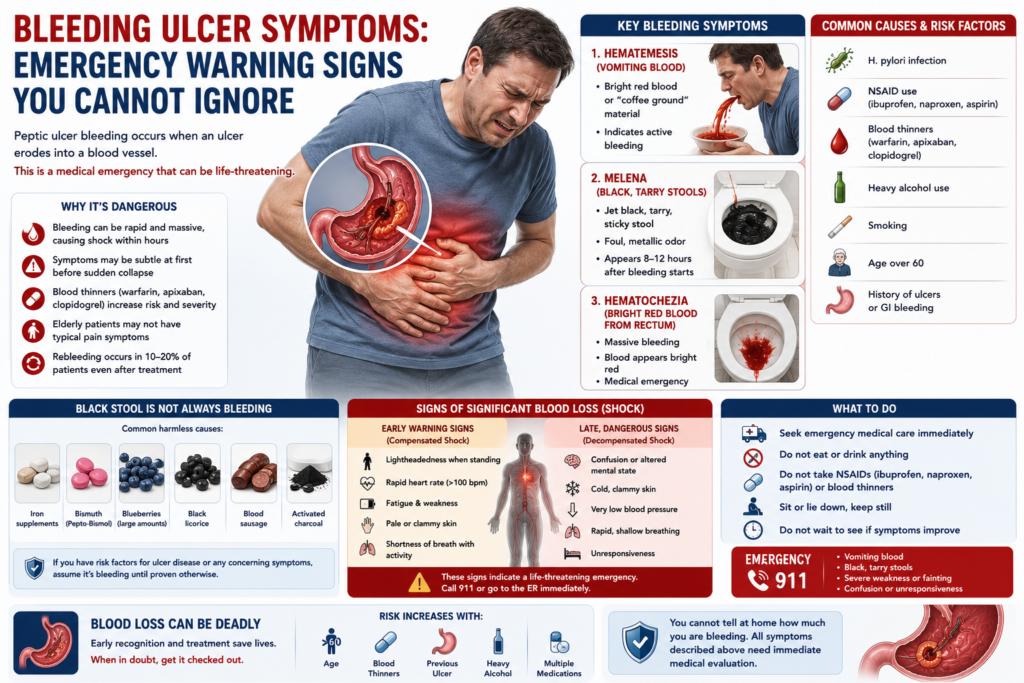
The critical distinction: Not all black stools mean bleeding, and not all bleeding looks the same. This article helps you distinguish between harmless dietary changes and potentially fatal internal bleeding.
Why Bleeding Ulcers Demand Immediate Attention
Peptic ulcer bleeding occurs when the ulcer penetrates through the protective lining and erodes into underlying blood vessels. This complication affects approximately 15-20% of all peptic ulcer disease patients and remains one of the most common causes of upper gastrointestinal hemorrhage, accounting for over 50% of all upper GI bleeding cases requiring hospitalization.
Unlike gradual ulcer symptoms that develop over weeks, bleeding can happen suddenly and without warning. The mortality rate for bleeding peptic ulcers ranges from 5-10%, with higher risks in elderly patients, those on blood thinners, and individuals with significant comorbidities.
What makes bleeding ulcers particularly dangerous:
- Bleeding can be rapid and massive, leading to hemorrhagic shock within hours
- Symptoms may be subtle initially (fatigue, mild dizziness) before sudden collapse
- Anticoagulant medications (warfarin, apixaban, clopidogrel) dramatically increase bleeding risk and severity
- Elderly patients may not experience typical pain symptoms, delaying recognition
- Rebleeding occurs in 10-20% of patients even after initial successful treatment
Critical Bleeding Symptoms: What They Look Like
1. Hematemesis (Vomiting Blood)
What it looks like:
- Bright red blood: Indicates active, ongoing bleeding that has not been exposed to stomach acid
- “Coffee ground” material: Dark, grainy vomitus that looks like coffee grounds—this is blood that has been partially digested by stomach acid
- Amount varies: Can range from streaks of blood to large volumes (more than a few teaspoons requires immediate evaluation)
What it means:
Bright red blood suggests the bleeding is current and potentially rapid. Coffee ground material indicates bleeding that occurred at least 30-60 minutes prior (enough time for acid exposure). Both require emergency evaluation, but bright red blood is more urgent.
Important distinction: Small streaks of blood after forceful vomiting may indicate a Mallory-Weiss tear (esophageal tear from retching) rather than an ulcer. However, you cannot reliably distinguish between these causes at home—both require medical evaluation.
2. Melena (Black, Tarry Stools)
What it looks like:
- Jet black color: Uniformly dark throughout, not just on the surface
- Tarry, sticky consistency: Adheres to the toilet bowl, difficult to flush
- Distinctive odor: Particularly foul, metallic smell different from normal stool
- Timing: Typically appears 8-12 hours after bleeding begins
Why it happens:
Blood traveling through the digestive tract gets broken down by digestive enzymes and bacteria. The iron in hemoglobin converts to hematin, which produces the characteristic black color. This process requires time, which is why melena indicates bleeding that started hours earlier.
Critical distinction—when black stool is NOT bleeding:
Several harmless substances can turn stool black without indicating bleeding:
| Substance | Appearance | Distinguishing Features |
|---|---|---|
| Iron supplements | Dark green to black | Normal consistency, no tarry texture, no foul odor |
| Bismuth (Pepto-Bismol) | Gray-black | Resolves within 2-3 days of stopping medication |
| Blueberries (large amounts) | Dark with visible seeds | Normal consistency, seeds visible |
| Black licorice | Dark brown-black | Temporary, resolves within 24-48 hours |
| Blood sausage | Very dark | History of consumption, temporary |
| Activated charcoal | Jet black | Known ingestion, no other symptoms |
When to assume the worst:
If you have any of these risk factors, assume black stool is bleeding until proven otherwise:
- Current or recent NSAID use (ibuprofen, naproxen, aspirin)
- History of peptic ulcers
- H. pylori infection (diagnosed or suspected)
- Age over 60
- Taking blood thinners (warfarin, apixaban, rivaroxaban, clopidogrel)
- Heavy alcohol use
- Previous GI bleeding
3. Hematochezia (Bright Red Blood from Rectum)
While less common with upper GI bleeding, massive ulcer hemorrhage can cause bright red blood to pass through the intestines so quickly that it appears as fresh blood from the rectum.
What it indicates:
- Massive, ongoing bleeding (typically >1 liter of blood loss)
- Medical emergency requiring immediate intervention
- Often accompanied by signs of shock (see below)
Signs of Significant Blood Loss (Hemorrhagic Shock)
When bleeding becomes severe, your body enters shock—a life-threatening condition where organs don’t receive enough oxygen. These symptoms indicate you’ve already lost a dangerous amount of blood.
Early Warning Signs (Compensated Shock)
Your body is still maintaining blood pressure, but you’re losing ground:
- Lightheadedness when standing (orthostatic hypotension): Feeling dizzy or faint when you stand up that improves when you sit or lie down
- Rapid heart rate (tachycardia): Heart beating faster than 100 beats per minute at rest
- Pale, cool skin: Especially noticeable in hands, feet, and face
- Mild anxiety or restlessness: Feeling “wired” or unable to relax
- Increased thirst: Your body signaling fluid loss
- Decreased urine output: Not urinating as frequently, urine appears darker
Late Warning Signs (Decompensated Shock)
Your body can no longer compensate—this is immediately life-threatening:
- Severe dizziness or fainting (syncope): Passing out, especially when standing
- Confusion or altered mental status: Difficulty thinking clearly, disorientation
- Very rapid, weak pulse: Heart racing but pulse feels thready or hard to find
- Rapid, shallow breathing: Breathing faster than 20 breaths per minute
- Cold, clammy skin: Skin feels cold and sweaty to touch
- Bluish lips or fingertips (cyanosis): Lack of oxygen reaching extremities
- Extreme weakness: Inability to stand or walk without assistance
- Loss of consciousness: Passing out and difficult to wake
If you or someone else shows signs of decompensated shock:
- Call 911 or emergency services immediately
- Lie down with legs elevated (unless vomiting—then lie on your side)
- Do not eat or drink anything
- Do not drive yourself to the hospital
When to Seek Emergency Care: Decision Guide
Call 911 Immediately If:
- Vomiting more than a few teaspoons of blood (bright red or coffee ground)
- Black, tarry stools plus dizziness, fainting, or rapid heartbeat
- Black stools with confusion, extreme weakness, or difficulty staying awake
- Bright red blood from rectum with any signs of shock
- Severe, sudden abdominal pain that is constant and worsening
- Fainting or loss of consciousness
- Unable to keep down fluids due to vomiting
Go to Emergency Room Within 1-2 Hours If:
- First episode of black, tarry stool (even without other symptoms)
- Small amounts of blood in vomit without other warning signs
- Known ulcer patient with any sign of bleeding
- Taking blood thinners and notice black stools or blood in vomit
- History of previous bleeding ulcer with recurrence of symptoms
Contact Doctor Within 24 Hours If:
- Black stool that may be from iron supplements or Pepto-Bismol (but uncertain)
- Mild symptoms in someone with known ulcer history but no active bleeding signs
- Questions about ulcer medication side effects
When in doubt, err on the side of caution. Emergency departments would rather evaluate a false alarm than miss a life-threatening bleed. The difference between seeking care early versus late can mean the difference between endoscopic treatment and emergency surgery.
Risk Factors: Who Is Most Likely to Bleed?
Certain factors dramatically increase your risk of developing a bleeding ulcer. Knowing your risk profile helps you recognize warning signs earlier.
Medication-Related Risk Factors
| Medication | Risk Increase | Mechanism |
|---|---|---|
| NSAIDs (ibuprofen, naproxen) | 4-5x higher risk | Reduces protective prostaglandins, impairs clotting |
| Aspirin (any dose) | 2-3x higher risk | Irreversibly inhibits platelet function |
| Anticoagulants (warfarin, DOACs) | 3-6x higher risk | Prevents blood from clotting normally |
| Antiplatelets (clopidogrel, ticagrelor) | 2-4x higher risk | Inhibits platelet aggregation |
| Corticosteroids | 2x higher risk (4x with NSAIDs) | Reduces mucosal protection |
| SSRIs (antidepressants) | 1.5-2x higher risk | Affects platelet serotonin, impairs clotting |
Highest risk combinations:
- NSAID + anticoagulant (10-15x higher risk than either alone)
- NSAID + steroid (4x higher risk)
- Aspirin + anticoagulant (6-8x higher risk)
- Dual antiplatelet therapy (aspirin + clopidogrel)
Medical Condition Risk Factors
High-risk conditions:
- Previous peptic ulcer or GI bleeding (strongest predictor—6x higher risk)
- H. pylori infection (present in 60-90% of bleeding ulcers)
- Age over 60 (risk doubles every decade after 60)
- Cardiovascular disease (often on multiple blood-thinning medications)
- Chronic kidney disease (impaired platelet function, altered drug metabolism)
- Liver cirrhosis (impaired clotting factor production, varices)
- Cancer (especially GI malignancies)
- Critical illness (ICU patients—stress-related mucosal damage)
Lifestyle Risk Factors
- Heavy alcohol use (3+ drinks daily): Irritates mucosa, impairs clotting, often associated with liver disease
- Smoking: Doubles ulcer recurrence risk, impairs healing, increases bleeding severity
- Recent major surgery or trauma: Stress response increases acid production
What Happens During Emergency Evaluation
Understanding the diagnostic and treatment process can reduce anxiety and help you make informed decisions.
Initial Emergency Department Assessment
Step 1: Vital Signs and Stabilization (First 15 minutes)
- Blood pressure (lying and standing to check for orthostasis)
- Heart rate and rhythm
- Respiratory rate and oxygen saturation
- Temperature (fever may suggest perforation or infection)
- IV access established (two large-bore IVs if unstable)
Step 2: Risk Stratification
Medical teams use the Glasgow-Blatchford Score to assess bleeding severity:
| Factor | Points |
|---|---|
| Blood urea nitrogen (BUN) level | 0-6 points based on elevation |
| Hemoglobin level | 0-6 points based on severity of anemia |
| Systolic blood pressure | 0-3 points (lower = more points) |
| Heart rate | 0-2 points (higher = more points) |
| Melena present | 1 point |
| Syncope (fainting) | 2 points |
| Hepatic disease | 2 points |
| Cardiac failure | 2 points |
Score interpretation:
- 0-1: Low risk (may be suitable for outpatient management)
- 2-5: Moderate risk (requires hospitalization)
- 6+: High risk (may need ICU care, higher mortality)
Step 3: Laboratory Tests
- Complete blood count (CBC): Hemoglobin, hematocrit, platelet count (note: initial hemoglobin may be normal—takes 24-72 hours to reflect true blood loss)
- Coagulation studies: PT/INR, PTT (especially important if on blood thinners)
- Comprehensive metabolic panel: Electrolytes, kidney function (BUN often elevated in upper GI bleeding), liver function
- Type and crossmatch: Preparing for possible blood transfusion (2-4 units typically prepared)
- Lactate level: Elevated levels suggest poor tissue perfusion (shock)
Definitive Diagnosis: Upper Endoscopy (EGD)
What it is:
Esophagogastroduodenoscopy (EGD) is both diagnostic and therapeutic. A flexible tube with a camera is passed through the mouth to visualize the esophagus, stomach, and duodenum.
Timing:
- Emergent (within 1 hour): Unstable patients with ongoing bleeding
- Urgent (within 12-24 hours): Stable patients with high-risk features
- Early (within 24 hours): All other patients with suspected bleeding ulcer
What happens during the procedure:
- Sedation administered (you will be relaxed and drowsy)
- Throat numbed with local anesthetic spray
- Endoscope gently passed through mouth into stomach
- Stomach lining examined systematically
- If bleeding ulcer found, treatment applied immediately
Endoscopic Treatment Options:
| Treatment Method | How It Works | Success Rate |
|---|---|---|
| Injection therapy | Epinephrine injected around ulcer to constrict vessels | 80-90% |
| Thermal coagulation | Heat applied to seal bleeding vessel (bipolar, heater probe) | 85-95% |
| Mechanical clips | Metal clips clamp the bleeding vessel closed | 90-95% |
| Combination therapy | Two or more methods used together | 95-98% |
Rockall Score (calculated after endoscopy) predicts rebleeding risk and mortality:
- Age, shock, comorbidities, diagnosis, and stigmata of recent hemorrhage
- Low risk (score 0-2): <5% rebleeding, <1% mortality
- High risk (score 8+): >40% rebleeding, >25% mortality
Hospital Treatment and Management
Intravenous Medications
Proton Pump Inhibitors (PPIs):
- Initial dose: 80 mg IV bolus (pantoprazole or esomeprazole)
- Continuous infusion: 8 mg/hour for 72 hours
- Purpose: Maintains gastric pH >6, which stabilizes blood clots (clots dissolve in acidic environment)
- Evidence: Reduces rebleeding by 50%, reduces need for surgery
If H. pylori positive:
- Antibiotic therapy initiated once oral intake tolerated
- Standard quadruple therapy (PPI + bismuth + tetracycline + metronidazole) for 14 days
Reversal of anticoagulation (if applicable):
- Warfarin: Vitamin K, prothrombin complex concentrate (PCC), or fresh frozen plasma (FFP)
- DOACs (apixaban, rivaroxaban): Andexanet alfa (if available) or PCC
- Antiplatelets: Platelet transfusion (controversial, case-by-case)
Blood Transfusion
When transfusion is needed:
- Hemoglobin <7 g/dL (general threshold)
- Hemoglobin <9 g/dL if cardiovascular disease
- Ongoing active bleeding with hemodynamic instability
- Signs of tissue hypoxia (elevated lactate, chest pain, shortness of breath)
Transfusion goals:
- Restore oxygen-carrying capacity
- Maintain hemodynamic stability
- Avoid over-transfusion (can increase rebleeding risk by increasing blood pressure)
Surgical Intervention
When surgery is required:
- Failed endoscopic hemostasis (bleeding continues despite endoscopic treatment)
- Recurrent bleeding after initially successful endoscopy
- Perforation (ulcer has created a hole through stomach/duodenum wall)
- Gastric outlet obstruction (scar tissue blocking food passage)
- Massive bleeding not controllable endoscopically (>6 units transfused in 24 hours)
Surgical options:
- Oversewing of ulcer: Direct suturing of bleeding vessel
- Vagotomy: Cutting vagus nerve to reduce acid production (less common now with PPIs)
- Antrectomy: Removal of lower stomach portion (for refractory duodenal ulcers)
- Gastrectomy: Partial or total stomach removal (rare, last resort)
After the Bleed: Recovery and Prevention
Hospital Recovery (Days 1-7)
What to expect:
- IV PPI continuation for 72 hours minimum
- Gradual diet advancement (clear liquids → soft foods → regular diet)
- Monitoring for rebleeding (vital signs, stool color, hemoglobin checks)
- H. pylori testing if not already done
- Medication reconciliation (stopping or adjusting NSAIDs, blood thinners)
Discharge criteria:
- Hemodynamically stable for 24 hours
- Tolerating oral diet without vomiting
- Hemoglobin stable without transfusion
- Bowel movements returning to normal color
- Follow-up arranged
Long-Term Management
Medication plan:
- Oral PPI: Continue for 4-8 weeks (gastric ulcers) or 4-6 weeks (duodenal ulcers)
- H. pylori eradication: Complete full 14-day antibiotic course if positive
- Confirm eradication: Urea breath test or stool antigen test 4+ weeks after treatment
- NSAID cessation: Stop completely if possible, or use with PPI protection indefinitely
- Blood thinner management: Work with cardiologist to balance bleeding vs. clotting risk
Follow-up endoscopy:
- Gastric ulcers: Repeat EGD at 6-8 weeks to confirm healing and rule out cancer (3-5% of gastric ulcers are malignant)
- Duodenal ulcers: Repeat EGD only if symptoms persist or recur (cancer extremely rare)
Preventing Rebleeding
Recurrence rates without prevention:
- H. pylori untreated: 60-90% recurrence within 1-2 years
- NSAID continuation without protection: 30-50% recurrence within 6 months
- Both risk factors addressed: <10% recurrence
Your prevention checklist:
- [ ] Complete H. pylori treatment if prescribed
- [ ] Confirm eradication with follow-up testing
- [ ] Stop NSAIDs or use with daily PPI
- [ ] Limit alcohol to ≤1 drink/day (women) or ≤2 drinks/day (men)
- [ ] Stop smoking (doubles recurrence risk)
- [ ] Review all medications with doctor (including supplements)
- [ ] Attend all follow-up appointments
- [ ] Know warning signs of rebleeding
Special Populations
Elderly Patients (Age 65+)
Unique considerations:
- May not experience typical pain symptoms—bleeding may present as confusion, falls, or fatigue alone
- Higher mortality rate (up to 2x higher than younger patients)
- More likely to be on multiple medications that increase bleeding risk
- Slower healing and recovery
- Higher risk of complications from both bleeding and treatment
Recommendations:
- Lower threshold for emergency evaluation
- PPI prophylaxis if taking NSAIDs or anticoagulants
- Regular medication reviews to minimize polypharmacy
- Fall prevention (bleeding increases fall risk, falls can worsen bleeding)
Patients on Blood Thinners
Balancing act:
Blood thinners prevent strokes and heart attacks but increase bleeding risk. Management requires careful coordination:
| Medication | Bleeding Risk | Management Approach |
|---|---|---|
| Warfarin | High | Hold during acute bleeding, restart based on thrombotic risk (usually 3-7 days) |
| DOACs (apixaban, rivaroxaban) | Moderate-high | Hold 24-48 hours, restart when hemostasis confirmed |
| Aspirin (cardiovascular protection) | Moderate | Often continued if high cardiovascular risk, discuss with cardiologist |
| Clopidogrel (post-stent) | High | Critical decision—requires cardiology consultation |
Key point: Never stop blood thinners without discussing with the prescribing physician. The risk of stroke or stent thrombosis may outweigh bleeding risk.
Pregnant Women
Rare but serious:
Peptic ulcers are uncommon in pregnancy, but bleeding requires special consideration:
- Endoscopy can be performed safely during pregnancy (preferably second trimester)
- PPIs generally considered safe (pantoprazole preferred)
- Avoid bismuth-containing regimens for H. pylori (contraindicated in pregnancy)
- Antibiotic selection limited (avoid tetracyclines, clarify with OB)
Myths and Misconceptions
“Black Stool Always Means Bleeding”
FALSE. As discussed earlier, iron supplements, bismuth (Pepto-Bismol), certain foods, and activated charcoal can all cause black stools without bleeding. However, if you have risk factors or uncertainty, get evaluated.
“If I Feel Fine, It’s Not Serious”
FALSE. The body compensates remarkably well for blood loss initially. You can lose 15-20% of your blood volume (750-1000 mL) before showing obvious symptoms. By the time you “feel bad,” you may already be in dangerous territory.
“Home Remedies Can Stop Ulcer Bleeding”
FALSE and DANGEROUS. No home remedy, supplement, or dietary change can stop an actively bleeding ulcer. This requires medical intervention. Delaying care to try natural remedies increases mortality risk significantly.
“Once It Stops, I’m Fine”
FALSE. Even if bleeding stops spontaneously (which happens in about 20% of cases), the underlying ulcer remains and will likely bleed again without proper treatment. Rebleeding carries higher mortality than initial bleeding.
“Only Elderly People Get Bleeding Ulcers”
FALSE. While risk increases with age, bleeding ulcers can occur at any age. Young adults taking NSAIDs chronically (athletes, manual laborers, those with chronic pain conditions) are at significant risk.
Frequently Asked Questions
How much blood loss is dangerous?
Losing more than 500-1000 mL (about 2-4 cups) of blood typically causes symptoms. However, rapid loss of even 500 mL can be dangerous. The rate of bleeding matters more than total volume—slow bleeding allows your body to adapt, while rapid bleeding causes shock.
Can a bleeding ulcer heal on its own?
Small bleeds may stop spontaneously, but this is unpredictable and dangerous to rely on. Without treatment, the ulcer will likely rebleed, often more severely. Medical treatment (PPIs, endoscopic therapy) dramatically improves outcomes and prevents recurrence.
How long does it take to recover from a bleeding ulcer?
Hospital stay typically lasts 3-7 days depending on severity. Full healing of the ulcer takes 4-8 weeks with proper medication treatment. Returning to normal activities usually possible within 1-2 weeks after discharge, but heavy lifting and strenuous exercise should be avoided for 4-6 weeks.
Will I need a blood transfusion?
Not always. Approximately 30-40% of patients with bleeding ulcers require transfusion. The decision depends on hemoglobin level, ongoing bleeding, symptoms, and cardiovascular health. Current guidelines favor “restrictive” transfusion strategy (hemoglobin <7 g/dL) unless there’s active cardiovascular disease.
Can I take iron supplements if my stool is black from bleeding?
No. Wait until your doctor confirms bleeding has stopped and determines whether iron supplementation is needed based on blood tests. Taking iron during active bleeding can confuse monitoring (makes it harder to tell if stool color is from iron or ongoing bleeding).
What’s the difference between a bleeding ulcer and gastric cancer?
Both can cause bleeding, but they require different treatment. Endoscopy with biopsy distinguishes between them. All gastric ulcers should be biopsied to rule out cancer. Duodenal ulcers are almost never cancerous and typically don’t require biopsy.
If I’m on a blood thinner, should I stop it if I notice bleeding?
Contact your doctor immediately for specific instructions. Generally, blood thinners are held during active bleeding, but the timing of restart depends on your individual clotting risk. For patients with recent stents or high stroke risk, this decision requires specialist input.
The Bottom Line: Act Fast, Save Lives
A bleeding ulcer is not something to monitor at home or “wait out.” The difference between seeking care immediately versus waiting hours can determine whether you need simple endoscopic treatment or emergency surgery—or whether you survive at all.
Remember these three critical symptoms:
- Vomiting blood (bright red or coffee ground material)
- Black, tarry stools (especially with dizziness or weakness)
- Fainting or severe lightheadedness (particularly with known ulcer risk factors)
Your action plan:
- If you have any of these symptoms: Call 911 or go to the nearest emergency department immediately
- Do not drive yourself if you feel dizzy or weak
- Do not eat or drink anything (you may need urgent procedures)
- Bring a list of all medications (especially blood thinners and NSAIDs)
- Tell medical providers about any ulcer history or H. pylori infection
Early recognition and treatment save lives. When it comes to bleeding ulcers, being overly cautious is always the right choice.
Medically Reviewed By: Dr. Sarah Mitchell, MD, FACG (Fellow of the American College of Gastroenterology)
Last Updated: March 10, 2026
Medical Disclaimer: This article is for educational purposes only and does not constitute medical advice. Bleeding ulcers are medical emergencies requiring immediate professional care. If you suspect you have a bleeding ulcer, call 911 or go to the nearest emergency department immediately.