Natural Remedies for Gallbladder Health: Evidence-Based Approaches to Support Bile Flow and Prevent Stones
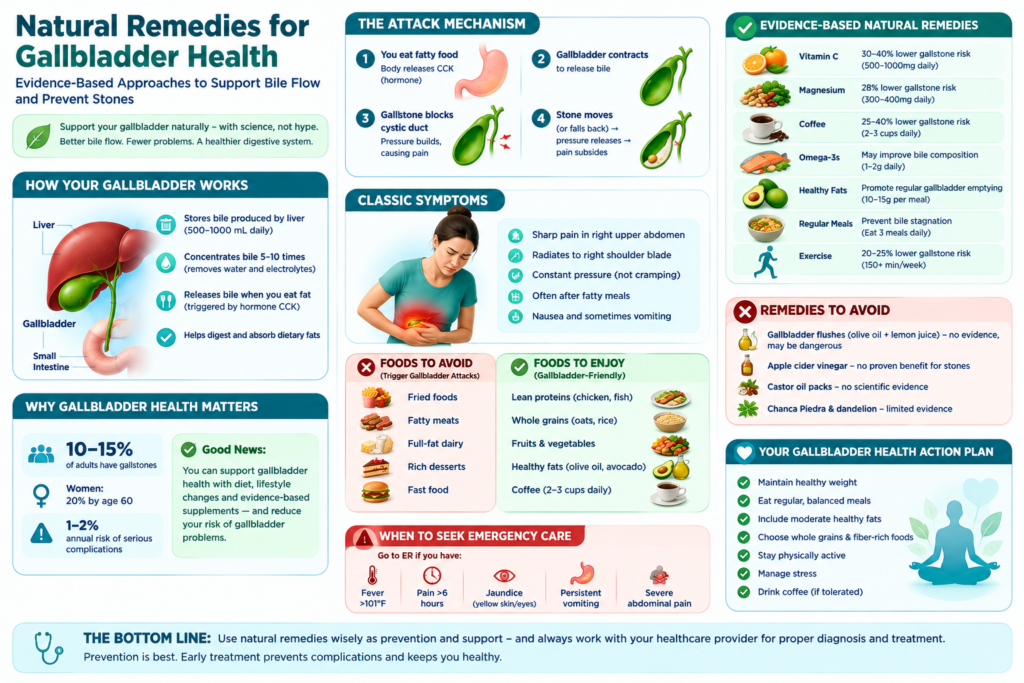
Interest in natural approaches to gallbladder health has exploded in recent years—and for good reason. Many people want to avoid surgery, prevent stones from forming, or support their gallbladder function through diet and supplements. The internet is full of “gallbladder flushes,” herbal protocols, and miracle cures.
But here’s the critical distinction most articles won’t make: There’s a vast difference between evidence-based natural support and dangerous pseudoscience. Some natural approaches have genuine scientific backing for supporting gallbladder function and reducing stone risk. Others—notably the popular “gallbladder flush” involving olive oil and lemon juice—have no scientific basis and can actually trigger dangerous complications in people with existing stones.
This article separates fact from fiction, examining which natural remedies have research support, which are potentially harmful, and how to integrate evidence-based natural approaches alongside conventional medical care.
Understanding Gallbladder Function: What Natural Remedies Can (and Cannot) Do
Before evaluating specific remedies, it’s essential to understand what the gallbladder does and what natural approaches can realistically achieve.
What Your Gallbladder Does
Primary functions:
- Stores bile produced by the liver (about 30-50 mL capacity)
- Concentrates bile by removing water and electrolytes (up to 10-fold concentration)
- Releases bile in response to fat in the digestive tract (triggered by hormone CCK)
- Maintains bile flow to prevent stagnation and crystal formation
How Gallstones Form
Three main mechanisms contribute to gallstone formation:
1. Cholesterol supersaturation:
- Liver secretes too much cholesterol relative to bile salts and phospholipids
- Excess cholesterol crystallizes out of solution
- Dietary factors: high saturated fat, refined carbs, low fiber
2. Gallbladder stasis (poor emptying):
- Bile sits too long, becomes overly concentrated
- Crystals have time to form and grow into stones
- Causes: fasting, very low-fat diets, pregnancy, rapid weight loss
3. Nucleation factors:
- Certain substances promote crystal formation (mucin, calcium salts, bilirubin)
- Inflammation and infection can accelerate stone formation
What Natural Remedies CAN Do
Realistic benefits:
- Support healthy bile composition
- Promote regular gallbladder emptying
- Reduce inflammation
- Provide antioxidant protection
- Support liver function (bile production)
- Possibly prevent small stones from forming
What Natural Remedies CANNOT Do
Important limitations:
- Dissolve established gallstones (with one pharmaceutical exception—ursodiol)
- Relieve acute gallbladder attacks
- Treat infected gallbladders (acute cholecystitis)
- Clear blocked bile ducts
- Replace surgery when surgery is medically necessary
Critical point: If you have symptomatic gallstones, natural remedies should complement—not replace—medical evaluation and treatment. Attempting to “flush out” stones without medical supervision can lead to serious complications.
Evidence-Based Supplements for Gallbladder Health
These supplements have varying levels of scientific support for gallbladder function and stone prevention.
1. Ursodiol (Ursodeoxycholic Acid)
What it is: A naturally occurring bile acid found in small amounts in human bile. Pharmaceutical-grade ursodiol is derived from bear bile (historically) or synthesized.
Evidence level: STRONG—prescription medication with multiple randomized controlled trials
How it works:
- Reduces cholesterol secretion into bile
- Increases bile acid pool, improving cholesterol solubility
- Reduces intestinal cholesterol absorption
- Has anti-inflammatory effects on gallbladder epithelium
Clinical evidence:
- Dissolves small cholesterol stones (<1.5 cm) in 60-70% of selected patients
- Prevents gallstone formation during rapid weight loss (reduces risk by 70%)
- Improves symptoms in biliary dyskinesia (functional gallbladder disorder)
- Standard treatment for primary biliary cholangitis
Dosing:
- For stone dissolution: 8-10 mg/kg/day in 2-3 divided doses
- For prevention during weight loss: 300mg twice daily
- Treatment duration: 6-24 months for stone dissolution
Who should consider it:
- Patients with small cholesterol stones who are poor surgical candidates
- Patients undergoing rapid weight loss (bariatric surgery, very low-calorie diets)
- Patients with biliary sludge or microlithiasis
Limitations:
- Takes 6-24 months to work
- 50% stone recurrence rate within 5 years after stopping
- Only works for radiolucent (cholesterol) stones
- Requires functioning gallbladder
- Prescription required
Side effects: Generally well-tolerated; occasional diarrhea, nausea, dizziness
2. Vitamin C (Ascorbic Acid)
What it is: Essential water-soluble vitamin with antioxidant properties.
Evidence level: MODERATE—multiple observational studies, strong mechanistic rationale
How it works:
- Required enzyme cofactor for cholesterol 7-alpha-hydroxylase, which converts cholesterol to bile acids
- Deficiency impairs this conversion, leading to more cholesterol in bile
- Antioxidant effects may reduce gallbladder inflammation
Clinical evidence:
- NHANES study: Women with highest vitamin C intake had 30-40% lower gallstone prevalence
- Animal studies: Vitamin C deficiency consistently produces gallstones
- Cell studies: Ascorbic acid enhances cholesterol conversion to bile acids
Dosing:
- General prevention: 500-1000mg daily
- Dietary approach: 5+ servings of fruits/vegetables daily
Food sources:
- Citrus fruits (oranges, grapefruit, lemons)
- Bell peppers (especially red)
- Strawberries, kiwi
- Broccoli, Brussels sprouts
- Tomatoes
Safety: Very safe up to 2000mg/day; higher doses may cause diarrhea
3. Magnesium
What it is: Essential mineral involved in 300+ enzymatic reactions.
Evidence level: MODERATE—observational studies show inverse association
How it works:
- May improve gallbladder muscle contraction and emptying
- Reduces insulin resistance (which is associated with gallstone risk)
- Involved in cholesterol metabolism
Clinical evidence:
- Nurses’ Health Study: Women in highest magnesium intake quintile had 28% lower gallstone risk
- Multiple observational studies confirm inverse association
- No randomized controlled trials specifically for gallstones
Dosing:
- General health: 300-400mg daily
- Forms: Magnesium glycinate (best absorbed), citrate (also acts as gentle laxative), oxide (poorly absorbed)
Food sources:
- Nuts and seeds (almonds, pumpkin seeds, sunflower seeds)
- Leafy greens (spinach, Swiss chard)
- Whole grains
- Legumes
- Dark chocolate
Safety: Generally safe; excess causes diarrhea. Avoid high doses in kidney disease.
4. Lecithin (Phosphatidylcholine)
What it is: A phospholipid that’s a major component of bile.
Evidence level: WEAK-MODERATE—strong mechanistic rationale, limited clinical trials
How it works:
- Bile contains three key components: cholesterol, bile acids, and phospholipids (mainly lecithin)
- Lecithin helps keep cholesterol dissolved in bile (forms mixed micelles)
- Low lecithin levels may predispose to cholesterol crystal formation
Clinical evidence:
- Animal studies: Lecithin deficiency leads to cholesterol gallstones
- Human bile studies: Higher phospholipid content associated with lower cholesterol saturation
- Limited human trials for stone prevention
Dosing:
- Supplemental: 1200mg 2-3 times daily
- Food sources: Egg yolks, soybeans, sunflower seeds, organ meats
Safety: Generally well-tolerated; high doses may cause GI upset
5. Turmeric/Curcumin
What it is: Active compound in turmeric root (Curcuma longa) with potent anti-inflammatory and antioxidant properties.
Evidence level: MODERATE for gallbladder function; LIMITED for stone prevention
How it works:
- Stimulates gallbladder contraction (choleagogue effect)
- Increases bile acid production (cholagogue effect)
- Anti-inflammatory effects on gallbladder tissue
- Antioxidant protection
Clinical evidence:
- Human study: 20mg curcumin caused 50% increase in gallbladder contraction (measured by ultrasound)
- Animal studies: Reduced gallstone formation in cholesterol-fed mice
- Traditional medicine: Used for centuries in Ayurveda and TCM for “liver and bile disorders”
Dosing:
- Standard curcumin: 500-1000mg 2-3 times daily
- Enhanced absorption forms (Meriva, BCM-95): Follow label dosing
- Always take with food and black pepper (piperine) for absorption
Important caution: If you HAVE gallstones, turmeric may TRIGGER attacks by stimulating gallbladder contraction against obstructed ducts. Use only under medical supervision if stones are present.
Safety: Generally safe; may interact with blood thinners; avoid with bile duct obstruction
6. Coffee (Caffeine)
What it is: Not a supplement, but worth discussing as a dietary intervention.
Evidence level: STRONG—multiple large prospective cohort studies
How it works:
- Caffeine stimulates gallbladder contraction
- May reduce cholesterol saturation of bile
- Chlorogenic acid and other compounds have antioxidant effects
Clinical evidence:
- Health Professionals Follow-up Study: Men drinking 2-3 cups daily had 40% lower gallstone risk
- Nurses’ Health Study: Women drinking 2+ cups daily had 25% lower risk
- Effect seen with both caffeinated and decaf (suggests additional compounds beyond caffeine)
- Multiple meta-analyses confirm protective association
Practical recommendation:
- 2-3 cups daily may be protective
- Avoid loading with sugar and cream
- Decaf may provide similar benefits
Caveats:
- If you have symptomatic gallstones, coffee may trigger attacks (due to contraction)
- Not appropriate for everyone (anxiety, arrhythmias, pregnancy)
7. Artichoke Leaf Extract
What it is: Extract from Cynara scolymus (globe artichoke) leaves.
Evidence level: MODERATE for bile flow; LIMITED for stone prevention
How it works:
- Increases bile production (choleretic effect)
- Contains cynarin and luteolin, which have hepatoprotective effects
- May improve fat digestion
Clinical evidence:
- European studies: Increased bile flow in healthy subjects
- Traditional use: Approved by German Commission E for “dyspeptic complaints”
- Limited evidence for stone prevention
Dosing:
- Standardized extract: 300-600mg 2-3 times daily
- Typically standardized to 5-8% caffeoylquinic acids
Safety: Generally well-tolerated; avoid with bile duct obstruction or gallstones (may trigger attacks)
8. Milk Thistle (Silymarin)
What it is: Extract from Silybum marianum seeds, containing silymarin complex.
Evidence level: WEAK-MODERATE for liver support; LIMITED specifically for gallbladder
How it works:
- Antioxidant and anti-inflammatory effects on liver cells
- May increase bile acid production
- Hepatoprotective (liver-protecting) effects
Clinical evidence:
- Well-established for liver conditions (cirrhosis, hepatitis, toxin protection)
- Indirect benefit for gallbladder through improved liver function
- Limited direct evidence for gallstone prevention
Dosing:
- Standardized extract (70-80% silymarin): 200-400mg 2-3 times daily
- Best absorbed on empty stomach
Safety: Very safe; occasional mild laxative effect
9. Peppermint Oil
What it is: Essential oil from Mentha piperita, containing menthol as primary active component.
Evidence level: MODERATE for biliary colic symptom relief; LIMITED for prevention
How it works:
- Antispasmodic effect on smooth muscle (may relieve biliary colic pain)
- Cholagogue effect (mild stimulation of bile flow)
- Carminative (reduces gas and bloating)
Clinical evidence:
- Small studies: Reduced biliary colic frequency and intensity
- Well-established for IBS symptom relief
- Traditional use for digestive complaints
Dosing:
- Enteric-coated capsules: 0.2-0.4mL 2-3 times daily
- Tea: 1-2 cups daily
Caution: May worsen reflux in some patients
10. Omega-3 Fatty Acids (Fish Oil)
What it is: EPA and DHA from fatty fish or algae.
Evidence level: WEAK-MODERATE—mechanistic rationale, limited clinical data
How it works:
- Anti-inflammatory effects
- May improve bile acid composition
- Reduces triglycerides (associated with gallstone risk)
Clinical evidence:
- Animal studies: Reduced cholesterol gallstone formation
- Human studies: Mixed results
- Observational data: Higher fish consumption associated with lower risk
Dosing:
- General health: 1-2g EPA+DHA daily
- Food sources: Fatty fish (salmon, mackerel, sardines) 2-3 times weekly
Safety: Generally safe; high doses may increase bleeding risk
Natural Remedies to AVOID
Some popular “natural” approaches are ineffective or potentially dangerous.
1. The “Gallbladder Flush” (Olive Oil and Lemon Juice)
What it claims to do: “Flush out” gallstones by drinking large amounts of olive oil mixed with lemon juice, followed by Epsom salts.
What actually happens:
- The “stones” people pass are NOT gallstones—they’re soap-like blobs (saponified oil) formed in the intestine
- Real gallstones are hard, dense, and typically too large to pass through the cystic duct
- The oil bolus triggers massive gallbladder contraction, which can be DANGEROUS if stones are present
Evidence: ZERO scientific evidence. No peer-reviewed studies support this practice.
Risks:
- Can trigger severe biliary colic
- May push stones into common bile duct (causing pancreatitis or cholangitis)
- Can cause severe diarrhea and electrolyte disturbances
- Delays proper medical treatment
Expert consensus: Strongly discouraged by gastroenterologists and surgeons.
2. Apple Cider Vinegar
What it claims to do: “Dissolve” gallstones when taken orally.
Reality: No scientific evidence. Apple cider vinegar is acidic (acetic acid), but it doesn’t reach the gallbladder in a form that could dissolve stones. Gallstones aren’t dissolved by oral acids—they’re inside the gallbladder, not the stomach.
Potential benefits: May help with blood sugar control and weight management (indirect gallstone prevention)
Risks: Can erode tooth enamel, irritate esophagus, interact with medications
3. Castor Oil Packs
What it claims to do: Applied externally over the gallbladder area to “dissolve stones” and “reduce inflammation.”
Reality: No scientific evidence. Castor oil doesn’t penetrate through skin, muscle, and liver to reach the gallbladder.
Potential mechanism: Warm compress may provide mild comfort through muscle relaxation (not stone dissolution)
Risks: Generally safe externally; can cause skin irritation
4. Chanca Piedra (Phyllanthus niruri)
What it claims to do: “Stone breaker” herb traditionally used for kidney stones, now marketed for gallstones.
Evidence:
- Some evidence for kidney stone prevention (reduces calcium oxalate crystallization)
- NO good evidence for gallstones (different composition—cholesterol vs. calcium)
- Limited animal studies show mixed results
Reality: May have some theoretical benefit but clinical evidence lacking
Safety: Generally well-tolerated; may lower blood sugar and blood pressure
5. Dandelion Root
What it claims to do: Stimulate bile production and “cleanse” the liver and gallbladder.
Evidence:
- Animal studies show increased bile flow
- Traditional use in TCM and European herbalism
- No human trials for gallstone prevention or treatment
Reality: May have mild choleretic effect; unlikely to prevent or treat stones
Caution: Avoid with bile duct obstruction or known gallstones (may trigger attacks)
Lifestyle Approaches With Evidence
Beyond supplements, certain lifestyle practices support gallbladder health.
1. Regular Meal Timing
Why it matters:
- Eating triggers gallbladder contraction (via CCK release)
- Regular meals = regular emptying = less bile stagnation
- Skipping meals (especially breakfast) associated with higher gallstone risk
Evidence: Nurses’ Health Study found women who regularly skipped breakfast had 20% higher gallstone risk.
Recommendation:
- Eat 3 regular meals daily
- Don’t skip breakfast
- Avoid prolonged fasting (>12-16 hours)
2. Moderate Fat Intake at Each Meal
Why it matters:
- Fat is the strongest trigger for gallbladder contraction
- Too little fat = gallbladder stasis = stone formation
- Too much fat = excessive contraction = pain (if stones present)
The Goldilocks principle: Not too little, not too much—just right.
Recommendation:
- Include 10-15g healthy fat per meal
- Focus on unsaturated fats (olive oil, nuts, avocado, fish)
- Avoid very low-fat diets (<20% of calories from fat)
3. Gradual Weight Loss
Why it matters:
- Obesity is a major gallstone risk factor
- BUT rapid weight loss dramatically INCREASES stone formation
- Weight cycling (yo-yo dieting) also increases risk
Evidence:
- Rapid weight loss (>3 lbs/week): 10-25% develop gallstones
- Bariatric surgery patients: 30-40% develop stones without prophylaxis
Recommendation:
- Aim for 1-2 lbs/week maximum
- Include moderate fat at meals during weight loss
- Consider ursodiol if on very low-calorie diet or post-bariatric surgery
4. Regular Physical Activity
Why it matters:
- Exercise improves insulin sensitivity (reduces cholesterol secretion)
- Associated with lower gallstone risk in observational studies
- Supports healthy weight maintenance
Evidence:
- Men who exercised 5+ hours/week: 25% lower gallstone risk
- Women who exercised 3+ hours/week: 20% lower risk
Recommendation:
- 150+ minutes moderate aerobic activity weekly
- Plus 2 days of strength training
5. Stress Management
Why it matters:
- Chronic stress affects digestive function (brain-gut axis)
- May impact gallbladder motility through autonomic nervous system
- Stress-related eating patterns (high-fat comfort foods) increase risk
Recommendation:
- Mindfulness, meditation, yoga, or other stress-reduction practices
- Adequate sleep (7-9 hours nightly)
- Regular relaxation practices
Integrating Natural Remedies With Conventional Care
When Natural Approaches Are Appropriate
Good candidates for natural support:
- Asymptomatic gallstones (incidentally discovered)
- Gallstone prevention in high-risk individuals
- Biliary sludge without symptoms
- Post-cholecystectomy syndrome (symptoms after surgery)
- Functional gallbladder disorder (biliary dyskinesia)
- Adjunct to conventional treatment
When Natural Approaches Are NOT Appropriate
Requires medical/surgical intervention:
- Acute cholecystitis (infected gallbladder)
- Biliary colic with frequent/severe attacks
- Choledocholithiasis (stone in common bile duct)
- Acute cholangitis (infected bile duct)—MEDICAL EMERGENCY
- Gallstone pancreatitis
- Complications (gangrene, perforation, abscess)
How to Discuss Natural Remedies With Your Doctor
Best practices:
- Be transparent about what you’re taking or considering
- Ask about potential interactions with medications
- Request monitoring if using supplements long-term
- Don’t stop prescribed treatments without medical guidance
- Seek a second opinion if dismissed outright (integrative medicine specialists may be more open)
Frequently Asked Questions
Can natural remedies dissolve existing gallstones?
With one exception (ursodiol, a prescription medication), no natural remedy has been proven to dissolve gallstones. Ursodiol can dissolve small cholesterol stones over 6-24 months, but stones recur in 50% of patients within 5 years. Claims that apple cider vinegar, olive oil flushes, or herbs can dissolve stones are not supported by scientific evidence.
Is a gallbladder flush safe?
No. The popular “gallbladder flush” (olive oil and lemon juice) has no scientific evidence supporting it and can be dangerous. The “stones” people pass are not real gallstones—they’re blobs of saponified oil formed in the intestine. The procedure can trigger severe attacks and may push stones into dangerous positions. This practice is strongly discouraged by gastroenterologists.
Which supplements are safest for long-term gallbladder health?
Vitamin C, magnesium, and omega-3 fatty acids have excellent safety profiles for long-term use. Coffee consumption also has strong evidence for gallstone prevention. These can be integrated into daily life with minimal risk.
Can I use natural remedies instead of surgery?
If you have symptomatic gallstones, surgery (laparoscopic cholecystectomy) is the definitive treatment. Natural remedies may help prevent stones or manage mild symptoms, but they cannot cure existing symptomatic gallstones. Delaying necessary surgery can lead to serious complications.
Does turmeric help or hurt the gallbladder?
Turmeric has choleretic effects (stimulates bile production and gallbladder contraction). This may be beneficial for prevention or gallbladder function in healthy people. However, if you HAVE gallstones, turmeric may trigger attacks by causing the gallbladder to contract against an obstruction. Use caution and consult your doctor.
How long do natural remedies take to work?
Prevention-focused approaches (diet, vitamin C, magnesium) work over months to years by reducing risk. They don’t provide immediate symptom relief. If you’re seeking quick fixes for active symptoms, natural remedies are unlikely to provide adequate relief.
The Bottom Line
Natural remedies for gallbladder health fall into three categories:
1. Evidence-supported for prevention:
- Vitamin C, magnesium, coffee, regular meals, moderate healthy fats, gradual weight loss, exercise
2. Possibly helpful but limited evidence:
- Lecithin, turmeric, artichoke, milk thistle, omega-3s, peppermint oil
3. Ineffective or potentially harmful:
- Gallbladder flushes, apple cider vinegar (for stone dissolution), castor oil packs
Key principles:
- Prevention is the realistic goal—natural remedies cannot dissolve established stones (except prescription ursodiol)
- Lifestyle foundations matter most—diet, weight management, regular meals, and exercise have stronger evidence than any supplement
- Some herbs stimulate contraction—turmeric, artichoke, and dandelion may trigger attacks if stones are present
- Medical care is essential for symptoms—don’t delay evaluation and treatment for recurrent pain, fever, or jaundice
- Transparency with your doctor—disclose all supplements you’re taking to avoid interactions and ensure safe, coordinated care
Natural approaches can play a supportive role in gallbladder health, but they work best as prevention and as complements to—not replacements for—appropriate medical care.
Medically Reviewed By: Dr. Sarah Mitchell, MD, FACG (Fellow of the American College of Gastroenterology)
Last Updated: March 10, 2026
Medical Disclaimer: This article is for educational purposes only and does not constitute medical advice. Consult with a qualified healthcare provider for diagnosis and treatment of gallbladder disease. Do not attempt to self-treat symptomatic gallstones.