
Peptic Ulcer Diet: Complete Food Guide for Healing and Symptom Relief
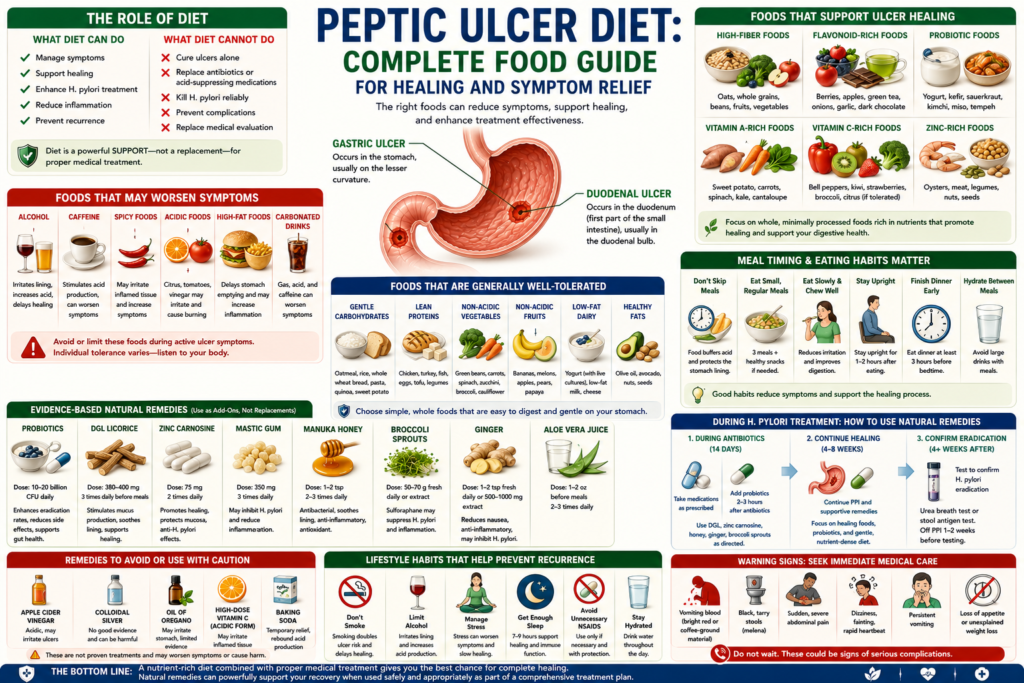
The Role of Diet in Peptic Ulcer Disease
Understanding what diet can and cannot do helps set realistic expectations.
What Diet CAN Do
Manage Symptoms:
- Reduce pain and burning
- Decrease bloating and nausea
- Prevent symptom flares
- Improve quality of life during healing
Support Healing:
- Provide nutrients for tissue repair
- Reduce inflammation
- Support beneficial gut bacteria
- Enhance H. pylori treatment effectiveness
Prevent Recurrence:
- Maintain gut barrier function
- Support immune system
- Avoid known irritants
What Diet CANNOT Do
Cannot Cure Ulcers Alone:
- Diet alone won’t heal ulcers caused by H. pylori
- Diet alone won’t heal ulcers if NSAIDs continue
- Medications are essential (PPIs, antibiotics)
Cannot Replace Medical Treatment:
- No food kills H. pylori reliably
- No diet reverses NSAID damage quickly
- Ulcers need proper medical diagnosis and treatment
Foods That Support Ulcer Healing
While no single food cures ulcers, certain foods provide nutrients and compounds that support the healing process.
High-Fiber Foods
Why They Help:
- Associated with lower ulcer risk
- May inhibit H. pylori growth
- Support beneficial gut bacteria
- Reduce inflammation
Best Sources:
| Food Category | Examples | Serving | Fiber (g) |
|---|---|---|---|
| Whole grains | Oats, brown rice, quinoa, whole wheat bread | 1 cup cooked | 3-6 |
| Legumes | Lentils, black beans, chickpeas | 1/2 cup | 6-8 |
| Vegetables | Broccoli, carrots, Brussels sprouts | 1 cup | 3-5 |
| Fruits | Apples, pears, berries (with skin) | 1 medium | 3-5 |
| Nuts/Seeds | Almonds, chia seeds, flax seeds | 1 oz | 3-5 |
Daily Goal: 25-35 grams of fiber
Important: Increase fiber gradually to avoid gas and bloating.
Flavonoid-Rich Foods
Why They Help:
- Flavonoids inhibit H. pylori growth
- Antioxidant and anti-inflammatory effects
- May enhance ulcer healing
- Protect gastric mucosa
Best Sources:
| Food | Flavonoid Type | Serving |
|---|---|---|
| Berries | Anthocyanins | 1/2 – 1 cup daily |
| Apples | Quercetin | 1 medium daily |
| Citrus fruits | Hesperidin, naringenin | 1 fruit daily (if tolerated) |
| Onions | Quercetin | 1/4 – 1/2 cup daily |
| Garlic | Various flavonoids | 1-2 cloves daily |
| Green tea | Catechins | 1-3 cups daily |
| Dark chocolate | Flavanols | 1 oz (70%+ cocoa) |
| Red grapes | Resveratrol | 1/2 – 1 cup |
Research Finding: Population studies show people who consume flavonoid-rich foods have lower rates of H. pylori infection and ulcers.
Probiotic-Rich Foods
Why They Help:
- Support beneficial gut bacteria
- May reduce H. pylori colonization
- Improve H. pylori treatment success rates
- Reduce antibiotic side effects
- Support immune function
Best Sources:
| Food | Probiotic Strains | Serving |
|---|---|---|
| Yogurt (with live cultures) | Lactobacillus, Bifidobacterium | 6-8 oz daily |
| Kefir | Multiple strains | 1/2 – 1 cup daily |
| Sauerkraut (refrigerated, unpasteurized) | Lactobacillus species | 2-4 tbsp daily |
| Kimchi | Lactobacillus species | 2-4 tbsp daily |
| Miso | Various strains | 1-2 tbsp in soup |
| Tempeh | Various strains | 3-4 oz serving |
| Kombucha | Various strains | 4-8 oz daily |
Research Finding: Studies show adding probiotics (especially yogurt or supplements) to H. pylori treatment increases eradication rates by 5-15% and reduces side effects.
Important: Pasteurized versions (canned sauerkraut, shelf-stable pickles) don’t contain live probiotics.
Vitamin A-Rich Foods
Why They Help:
- Stimulates mucus production
- Supports epithelial cell repair
- Antioxidant protection
- May inhibit ulcer formation
Best Sources:
| Food | Form | Serving |
|---|---|---|
| Sweet potato | Beta-carotene | 1 medium baked |
| Carrots | Beta-carotene | 1 cup raw or cooked |
| Spinach | Beta-carotene | 1 cup cooked |
| Kale | Beta-carotene | 1 cup cooked |
| Butternut squash | Beta-carotene | 1 cup cooked |
| Cantaloupe | Beta-carotene | 1 cup |
| Red bell pepper | Beta-carotene | 1 cup |
| Liver | Retinol (pre-formed) | 3 oz (limit to once weekly) |
Vitamin C-Rich Foods
Why They Help:
- Inhibits H. pylori growth
- Enhances immune function
- Antioxidant protection
- Supports tissue healing
Best Sources:
| Food | Vitamin C (mg) | Serving |
|---|---|---|
| Red bell pepper | 190 mg | 1 cup |
| Citrus fruits | 70 mg | 1 medium |
| Kiwi | 65 mg | 1 medium |
| Strawberries | 85 mg | 1 cup |
| Broccoli | 80 mg | 1 cup cooked |
| Brussels sprouts | 75 mg | 1 cup cooked |
| Papaya | 90 mg | 1 medium |
Daily Goal: 75-90 mg (RDA), but 200-500 mg may provide additional benefit during healing
Important: If citrus irritates your ulcer, get vitamin C from non-citrus sources (bell peppers, broccoli, kiwi, strawberries).
Zinc-Rich Foods
Why They Help:
- Essential for tissue repair
- Supports immune function
- May inhibit H. pylori
- Deficiency associated with slower healing
Best Sources:
| Food | Zinc (mg) | Serving |
|---|---|---|
| Oysters | 32 mg | 3 oz |
| Beef | 7 mg | 3 oz |
| Crab | 6 mg | 3 oz |
| Chicken (dark meat) | 2.5 mg | 3 oz |
| Chickpeas | 2.5 mg | 1 cup |
| Pumpkin seeds | 2 mg | 1 oz |
| Cashews | 1.6 mg | 1 oz |
Daily Goal: 8-11 mg for adults
Foods That May Worsen Ulcer Symptoms
While individual triggers vary, certain foods commonly worsen ulcer symptoms.
Alcohol
Why It’s Problematic:
- Irritates and erodes stomach lining
- Increases acid production
- Delays ulcer healing
- Increases bleeding risk
Research: Heavy alcohol use is associated with increased ulcer risk and slower healing.
Recommendation:
- During active ulcer: Avoid completely
- After healing: Limit to moderate amounts (1 drink/day for women, 2 for men)
- With H. pylori treatment: Avoid completely (especially with metronidazole—causes severe reaction)
Caffeine
Why It’s Problematic:
- Stimulates acid production
- May irritate existing ulcers
- Can worsen reflux symptoms
Sources:
- Coffee (regular and decaf both stimulate acid)
- Tea (black, green)
- Energy drinks
- Some sodas
- Chocolate
Recommendation:
- During active ulcer: Limit or avoid
- If you tolerate it well: Moderate amounts (1-2 cups coffee/day) usually acceptable
- If it triggers symptoms: Avoid until healed
- After healing: Resume based on individual tolerance
Spicy Foods
The Truth:
- Spicy food does NOT cause ulcers
- May irritate EXISTING ulcers
- Individual tolerance varies widely
- Capsaicin (in chili peppers) may actually have protective effects
Recommendation:
- During active ulcer: Limit if it triggers YOUR symptoms
- After healing: Resume based on individual tolerance
- Don’t eliminate unnecessarily: Many people with ulcers tolerate spicy foods well
Acidic Foods
Why They’re Problematic:
- Can irritate inflamed tissue
- May worsen burning sensation
- Trigger symptoms in some people
Common Acidic Foods:
- Citrus fruits (oranges, lemons, limes, grapefruit)
- Tomatoes and tomato products
- Vinegar and pickled foods
- Some berries (cranberries)
Recommendation:
- During active ulcer: Limit if they trigger symptoms
- After healing: Resume based on tolerance
- Get nutrients elsewhere: If avoiding citrus, get vitamin C from other sources
High-Fat Foods
Why They’re Problematic:
- Delay stomach emptying
- May worsen reflux
- Can increase inflammation
- Often associated with less healthy overall diet
Foods to Limit:
- Fried foods
- Fatty cuts of meat
- Full-fat dairy
- Processed foods
- Fast food
Recommendation: Choose lean proteins, low-fat dairy, and prepare foods by baking, grilling, or steaming instead of frying.
Chocolate
Why It’s Problematic:
- Contains caffeine (stimulates acid)
- High fat content (delays emptying)
- May relax lower esophageal sphincter (worsens reflux)
Recommendation:
- During active ulcer: Limit or avoid if it triggers symptoms
- After healing: Moderate amounts usually acceptable
- Choose dark chocolate: Higher flavonoid content, less sugar
Carbonated Beverages
Why They’re Problematic:
- Gas/bloating can worsen discomfort
- Many contain caffeine
- Many are acidic (citric acid, phosphoric acid)
- May increase reflux
Recommendation: Limit during active ulcer phase. Choose water, herbal tea, or non-carbonated beverages.
Foods That Are Generally Well-Tolerated
During active ulcer symptoms, these foods are typically gentle on the stomach:
Gentle Carbohydrates
| Food | Why It’s Gentle |
|---|---|
| Oatmeal | Soluble fiber, soothing, nutrient-dense |
| White rice | Easy to digest, low acid |
| Whole grain bread | Fiber without irritation (if tolerated) |
| Pasta | Easy to digest, especially whole wheat |
| Quinoa | Complete protein, fiber, easy to digest |
| Sweet potatoes | Nutrient-dense, fiber, vitamin A |
Lean Proteins
| Food | Why It’s Gentle |
|---|---|
| Skinless chicken | Low fat, easy to digest |
| Turkey | Low fat, lean protein |
| Fish | Omega-3s (anti-inflammatory), low fat |
| Eggs | Complete protein, easy to digest |
| Tofu | Plant protein, low fat |
| Legumes | Fiber and protein (if tolerated) |
Non-Acidic Vegetables
| Food | Why It’s Gentle |
|---|---|
| Green beans | Low acid, fiber |
| Carrots | Vitamin A, low acid |
| Spinach | Nutrient-dense, low acid |
| Zucchini | Easy to digest |
| Cucumber | Low acid, hydrating |
| Broccoli | Fiber, vitamin C (cook to reduce gas) |
| Cauliflower | Fiber, nutrients (cook to reduce gas) |
Non-Acidic Fruits
| Food | Why It’s Gentle |
|---|---|
| Bananas | Low acid, soothing, potassium |
| Melons (cantaloupe, honeydew) | Low acid, hydrating |
| Apples (sweet varieties) | Fiber, flavonoids (peel if gas is an issue) |
| Pears | Fiber, low acid |
| Papaya | Contains digestive enzymes, low acid |
Low-Fat Dairy (if tolerated)
| Food | Why It’s Gentle |
|---|---|
| Yogurt (with live cultures) | Probiotics, protein, calcium |
| Milk (low-fat) | Soothes temporarily (but stimulates acid later) |
| Cheese (low-fat) | Protein, calcium |
Important: Milk provides temporary relief but actually stimulates more acid production 1-2 hours later. Don’t rely on milk for symptom control.
Healthy Fats (in Moderation)
| Food | Why It’s Gentle |
|---|---|
| Olive oil | Anti-inflammatory, monounsaturated fat |
| Avocado | Nutrient-dense, fiber, healthy fats |
| Nuts (almonds, walnuts) | Healthy fats, protein, fiber |
| Seeds (chia, flax, pumpkin) | Omega-3s, fiber, minerals |
Meal Timing and Eating Habits
How and when you eat matters as much as what you eat.
Meal Frequency
Don’t Skip Meals:
- Food buffers stomach acid
- Empty stomach = more acid contact with ulcer
- Especially important for duodenal ulcers (pain when stomach is empty)
Recommendations:
- 3 regular meals per day
- Small snacks between meals if needed
- Don’t go more than 3-4 hours without food during active ulcer phase
Portion Sizes
Eat Moderate Portions:
- Large meals stretch the stomach
- Increases acid production
- Can worsen pain and reflux
Recommendations:
- Eat until comfortably satisfied (not stuffed)
- Consider smaller, more frequent meals if large meals trigger symptoms
- Eat slowly and chew thoroughly
Timing Considerations
Breakfast:
- Don’t skip (especially important for duodenal ulcers)
- Start with something gentle (oatmeal, yogurt, eggs)
- Take PPI 30-60 minutes before breakfast
Dinner:
- Finish at least 3 hours before bedtime
- Reduces nighttime acid production
- Prevents reflux
Late-Night Snacking:
- Avoid if possible
- If necessary due to nighttime pain, choose something small and bland (crackers, banana, small bowl of cereal)
Eating Behaviors
Helpful Habits:
- Eat slowly, without rushing
- Chew food thoroughly
- Sit upright while eating
- Stay upright for 1-2 hours after meals
- Drink fluids between meals (not with meals—dilutes digestive enzymes)
Unhelpful Habits:
- Eating quickly
- Large meals late at night
- Lying down immediately after eating
- Drinking alcohol with meals
- Eating while stressed or anxious
Sample Meal Plans
Here are sample meal plans designed to be gentle on ulcers while providing optimal nutrition for healing.
Day 1: Gentle Healing Menu
Breakfast (7 AM):
- Oatmeal made with low-fat milk, topped with sliced banana and honey
- Herbal tea (chamomile or ginger)
Morning Snack (10 AM):
- Low-fat yogurt with live cultures
- Handful of blueberries
Lunch (12:30 PM):
- Grilled chicken breast
- Brown rice
- Steamed carrots and green beans
- Whole wheat roll
Afternoon Snack (3:30 PM):
- Apple slices with almond butter
- Water
Dinner (6 PM):
- Baked salmon
- Quinoa
- Roasted sweet potato
- Steamed broccoli
Evening Snack (if needed, 8:30 PM):
- Small bowl of whole grain cereal with low-fat milk
Day 2: Fiber-Rich Menu
Breakfast:
- Whole grain toast with avocado
- Scrambled eggs
- Cantaloupe slices
Morning Snack:
- Smoothie with banana, berries, low-fat yogurt, and honey
Lunch:
- Turkey and hummus wrap with whole wheat tortilla
- Mixed green salad with olive oil dressing
- Whole grain crackers
Afternoon Snack:
- Handful of almonds
- Pear
Dinner:
- Lentil soup
- Grilled chicken
- Roasted Brussels sprouts
- Brown rice
Day 3: Probiotic-Focused Menu
Breakfast:
- Yogurt parfait with layers of yogurt, granola, and strawberries
- Green tea
Morning Snack:
- Kefir smoothie with banana and honey
Lunch:
- Miso soup with tofu and vegetables
- Grilled fish
- Steamed vegetables
- Small serving of sauerkraut (refrigerated, unpasteurized)
Afternoon Snack:
- Cottage cheese with pineapple
Dinner:
- Tempeh stir-fry with vegetables
- Quinoa
- Kimchi (small portion, if tolerated)
Foods to Emphasize During H. pylori Treatment
If you’re undergoing H. pylori eradication therapy, certain foods may improve treatment success and reduce side effects.
Foods That Enhance Treatment
Probiotics:
- Yogurt with live cultures
- Kefir
- Probiotic supplements (taken 2-3 hours apart from antibiotics)
Evidence: Studies show probiotics increase eradication rates by 5-15% and reduce antibiotic-related diarrhea.
Broccoli Sprouts:
- Contain sulforaphane (inhibits H. pylori)
- May reduce H. pylori colonization
- Anti-inflammatory effects
Green Tea:
- Contains catechins (antibacterial effects)
- May inhibit H. pylori growth
- Antioxidant benefits
Honey (especially Manuka honey):
- Natural antibacterial properties
- May inhibit H. pylori
- Soothes irritated tissue
Garlic:
- Contains allicin (antibacterial)
- May have anti-H. pylori effects
- Use fresh, crushed garlic for maximum benefit
Cranberry Juice:
- May prevent H. pylori from adhering to stomach lining
- Choose unsweetened or lightly sweetened
Foods to Avoid During Treatment
Alcohol:
- Dangerous interaction with metronidazole (severe nausea, vomiting, flushing)
- Avoid completely during treatment and for 72 hours after finishing metronidazole
High-Fat Foods:
- May worsen antibiotic side effects (nausea, diarrhea)
- Choose lean, easy-to-digest options
Very Spicy Foods:
- May worsen treatment-related nausea
- Can irritate already inflamed stomach
Managing Treatment Side Effects Through Diet
H. pylori treatment can cause uncomfortable side effects. These dietary strategies can help:
Nausea
Helpful Strategies:
- Take antibiotics with food (reduces stomach upset)
- Eat small, frequent meals
- Choose bland, easy-to-digest foods (crackers, toast, rice, bananas)
- Sip ginger tea or ginger ale (real ginger)
- Avoid greasy, fatty foods
- Don’t lie down immediately after eating
Diarrhea
Helpful Strategies:
- Stay hydrated (water, oral rehydration solutions)
- Eat binding foods (BRAT diet: bananas, rice, applesauce, toast)
- Include probiotic-rich foods (yogurt, kefir)
- Avoid high-fat foods
- Limit caffeine
- Avoid artificial sweeteners (sorbitol, mannitol can worsen diarrhea)
Metallic Taste
Helpful Strategies:
- Suck on sugar-free hard candies or mints
- Use plastic utensils (metal can worsen metallic taste)
- Marinate meats in sweet fruit juices before cooking
- Add herbs and spices to improve flavor
- Rinse mouth with baking soda solution (1 tsp baking soda in 1 cup water)
Loss of Appetite
Helpful Strategies:
- Eat small, frequent meals
- Choose nutrient-dense foods (smoothies, soups, yogurt)
- Don’t skip meals entirely
- Eat your favorite foods (even if not “perfect” ulcer diet)
- Liquid calories may be easier (smoothies, protein shakes)
Special Considerations
Lactose Intolerance
If you’re lactose intolerant, dairy may worsen digestive symptoms:
Alternatives:
- Lactose-free yogurt and kefir (still contain probiotics)
- Plant-based yogurts (almond, coconut, soy—check for live cultures)
- Lactase enzyme supplements before dairy
IBS or Sensitive Stomach
If you have IBS or a sensitive stomach:
Modifications:
- Introduce high-fiber foods gradually
- Choose soluble fiber (oats, bananas) over insoluble fiber (wheat bran)
- Avoid high-FODMAP foods if they trigger symptoms
- Cook vegetables thoroughly (easier to digest than raw)
Diabetes
If you have diabetes:
Considerations:
- Monitor blood sugar when taking antibiotics (may affect glucose control)
- Choose low-sugar options (avoid sweetened yogurt, limit fruit juice)
- Spread carbohydrate intake throughout the day
Frequently Asked Questions
Is milk good for ulcers?
Milk provides temporary symptom relief by buffering stomach acid, but it actually stimulates MORE acid production 1-2 hours later. While milk isn’t harmful for ulcers, don’t rely on it for symptom control. Low-fat yogurt with probiotics is a better choice.
Can I drink coffee with an ulcer?
During the active ulcer phase, limit or avoid coffee. Both regular and decaf coffee stimulate acid production. If you tolerate coffee well, moderate amounts (1-2 cups/day) may be acceptable after healing. If coffee triggers your symptoms, avoid it until the ulcer heals.
Is spicy food bad for ulcers?
Spicy food doesn’t cause ulcers. During the active phase, spicy foods may irritate the ulcer and worsen symptoms in some people. However, many people with ulcers tolerate spicy foods well. After healing, resume spicy foods based on your individual tolerance.
What’s the best breakfast for an ulcer?
Good breakfast options include:
- Oatmeal with banana and honey
- Scrambled eggs with whole wheat toast
- Low-fat yogurt with granola and berries
- Whole grain cereal with low-fat milk and fruit
The key is eating something (don’t skip breakfast) and choosing foods that don’t trigger YOUR symptoms.
Can I eat citrus fruits with an ulcer?
Citrus fruits are acidic and may irritate an active ulcer in some people. If citrus triggers your symptoms, avoid it during the active phase. Get vitamin C from other sources (bell peppers, broccoli, strawberries, kiwi). After healing, many people tolerate citrus well.
How long do I need to follow a special diet?
Most people can return to a normal diet once the ulcer heals (4-8 weeks). Continue to avoid foods that trigger YOUR symptoms. There’s no need for long-term dietary restrictions unless you have ongoing sensitivities.
Are there any foods that kill H. pylori?
No food reliably kills H. pylori on its own. Some foods (garlic, green tea, broccoli sprouts, honey) have anti-H. pylori properties in lab studies, but they can’t replace antibiotic treatment. These foods may support medical treatment but shouldn’t be relied on as the sole therapy.
Can I drink alcohol with an ulcer?
During active ulcer treatment, avoid alcohol completely. Alcohol irritates the stomach lining, increases acid production, and delays healing. If you’re taking metronidazole for H. pylori, alcohol can cause a severe reaction. After healing, moderate alcohol consumption (1-2 drinks/day) is generally acceptable.
Is yogurt good for ulcers?
Yes, yogurt with live cultures is beneficial. It provides probiotics that may enhance H. pylori treatment, reduce antibiotic side effects, and support gut health. Choose low-fat, unsweetened or lightly sweetened varieties.
Conclusion
Diet plays a supportive role in peptic ulcer management. While no diet cures ulcers, eating the right foods can reduce symptoms, support healing, and enhance treatment success. Focus on high-fiber foods, flavonoid-rich fruits and vegetables, probiotic-containing foods, and adequate protein. Limit alcohol, caffeine, and foods that trigger YOUR symptoms.
Key Principles:
- Don’t skip meals (especially breakfast)
- Eat regular, balanced meals with moderate portions
- Include probiotics (yogurt, kefir) daily
- Choose high-fiber, nutrient-dense foods
- Limit alcohol and caffeine during healing
- Identify and avoid YOUR personal triggers
- Complete medical treatment (diet supports, but doesn’t replace, medications)
Work with your healthcare provider for proper diagnosis and treatment. With the right combination of medications and dietary modifications, most ulcers heal completely within 4-8 weeks.
Medical Disclaimer: This article is for educational purposes only and does not constitute medical advice or dietary recommendations. Peptic ulcers require proper medical diagnosis and treatment. Consult with a healthcare provider and registered dietitian for personalized advice based on your specific condition, medications, and nutritional needs.
Sources:
- NIDDK – Peptic Ulcers (Stomach Ulcers) – Eating, Diet, & Nutrition – 2020 – https://www.niddk.nih.gov/health-information/digestive-diseases/peptic-ulcers-stomach-ulcers/eating-diet-nutrition
- Mayo Clinic – Peptic Ulcer – Symptoms & Causes – 2025 – https://www.mayoclinic.org/diseases-conditions/peptic-ulcer/symptoms-causes/syc-20354223
- NHS – Stomach ulcer – 2023 – https://www.nhs.uk/conditions/stomach-ulcer/
- American College of Gastroenterology – ACG Clinical Guideline: Treatment of Helicobacter pylori Infection – 2024 – https://gi.org/journals-publications/ebgi/schoenfeld_sep2024/
- Gorbach SL – Style file for Health Benefits of Yogurt – Clinical Infectious Diseases – 2023 – https://academic.oup.com/cid/article/1754816/Style
- Wang YK, et al. – Diagnosis and Treatment of Helicobacter pylori Infection – Kaohsiung Journal of Medical Sciences – 2023 – https://onlinelibrary.wiley.com/doi/10.1002/kjm2.12715
- Systematic Review – Dietary factors and risk of peptic ulcer disease – American Journal of Gastroenterology – 2023 – https://journals.lww.com/ajg/Fulltext/2023/04000/Dietary_Factors_and_Risk_of_Peptic_Ulcer_Disease.12.aspx
- Research on flavonoids and H. pylori – World Journal of Gastroenterology – 2024 – https://www.wjgnet.com/1007-9327/full/v30/i1/1.htm
- Meta-analysis – Probiotics for Helicobacter pylori eradication – Gastroenterology – 2023 – https://www.gastrojournal.org/article/S0016-5085(23)00445-6/fulltext
- UpToDate – Peptic ulcer disease: Management – 2025 – https://www.uptodate.com/contents/peptic-ulcer-disease-management