
Living With Lactose Intolerance: Practical Daily Management Guide
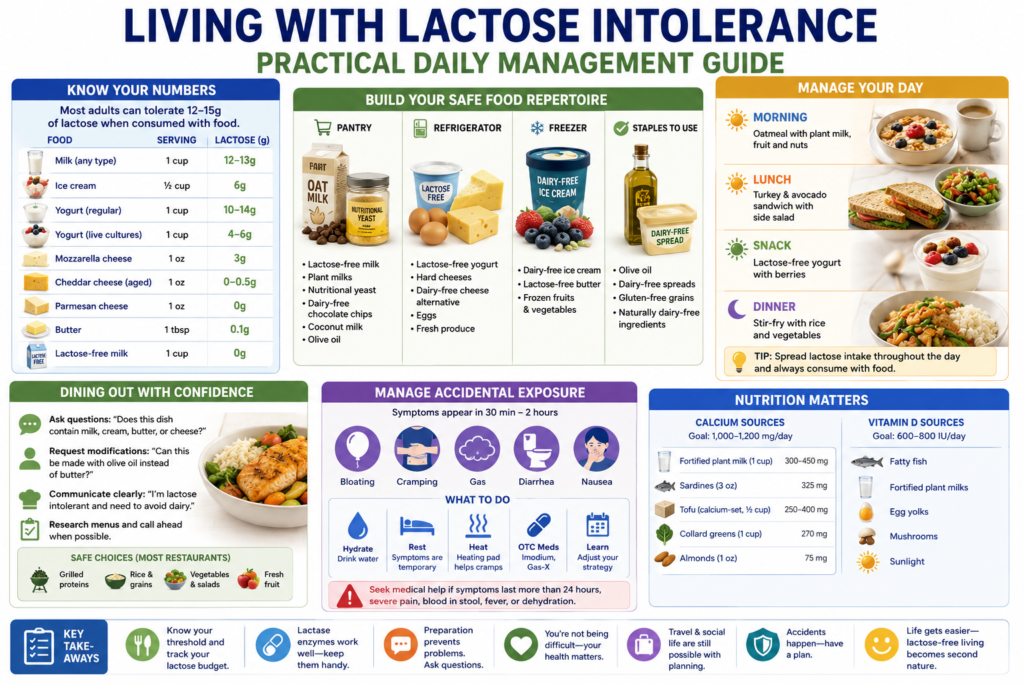
Daily Management Strategies
Know Your Numbers
Most lactose-intolerant adults can tolerate 12-15 grams of lactose (about 1 cup of milk) when consumed with food. Some tolerate more; some less.
Your action plan:
- Determine your threshold through careful testing (see our diagnosis guide)
- Track your lactose “budget” daily
- Spread intake throughout the day rather than consuming all at once
- Always consume with food to slow digestion
Lactose Content Quick Reference
Keep this handy for daily decisions:
| Food | Serving | Lactose (grams) |
|---|---|---|
| Milk (any type from cows) | 1 cup | 12-13g |
| Ice cream | ½ cup | 6g |
| Yogurt (regular) | 1 cup | 10-14g |
| Yogurt with live cultures | 1 cup | 4-6g |
| Cottage cheese | ½ cup | 5g |
| Mozzarella cheese | 1 oz | 3g |
| Cheddar cheese (aged) | 1 oz | 0-0.5g |
| Parmesan cheese | 1 oz | 0g |
| Butter | 1 tbsp | 0.1g |
| Heavy cream | 1 tbsp | 0.5g |
| Lactose-free milk | 1 cup | 0g |
Build Your Safe Food repertoire
Staples to Keep On Hand:
Pantry:
- Lactose-free milk (shelf-stable versions available)
- Plant milks (oat, soy, almond)
- Nutritional yeast (cheesy flavor without dairy)
- Dairy-free chocolate chips
- Coconut milk (canned, for cooking)
- Olive oil and dairy-free spreads
Refrigerator:
- Lactose-free yogurt
- Hard cheeses (cheddar, Swiss, parmesan)
- Dairy-free cheese alternatives
- Eggs
- Fresh produce
Freezer:
- Dairy-free ice cream
- Lactose-free butter
- Frozen fruits and vegetables
Morning Routine
Breakfast Options That Work:
| Option | Description | Lactose |
|---|---|---|
| Oatmeal with plant milk | Oats + oat milk + fruit + nuts | 0g |
| Smoothie | Banana + spinach + pea protein + almond milk | 0g |
| Eggs and toast | Scrambled eggs (no butter) + GF toast | 0g |
| Lactose-free yogurt parfait | Lactose-free yogurt + granola + berries | 0g |
| Coffee with oat milk | Most baristas can substitute | 0g |
Avoid:
- Regular milk in coffee/tea
- Cream-based breakfast items
- Pastries made with milk/butter (unless confirmed dairy-free)
Lunch Strategies
Quick Lactose-Free Lunches:
- Turkey and avocado sandwich (no cheese) with side salad
- Leftover dinner protein over greens
- Tuna salad (made with olive oil, not mayo with milk) on crackers
- Vegetable soup (broth-based) with bread
- Grain bowl with roasted vegetables and tahini dressing
Work Cafeteria Navigation:
| Station | Usually Safe | Ask/Verify |
|---|---|---|
| Salad bar | Greens, vegetables, olive oil | Check dressings for dairy |
| Deli | Plain meats | Cheese cross-contact |
| Hot entrees | Plain proteins, rice | Sauces and gravies |
| Sandwich station | Bread, meat, vegetables | Cheese, butter, creamy spreads |
| Soup | Broth-based | Cream-based soups |
Dinner Planning
Family Meal Strategies:
- Cook once, adapt for all: Make the base meal lactose-free; add cheese/dairy on the side for others
- Use lactose-free milk in recipes (tastes identical in cooked dishes)
- Build meals around naturally dairy-free cuisines: Asian, Mediterranean, Mexican (without cheese)
Sample Week of Dinners:
| Day | Meal | Lactose-Free Adaptation |
|---|---|---|
| Monday | Spaghetti with meat sauce | Use olive oil instead of butter; skip parmesan or use dairy-free |
| Tuesday | Stir-fry with rice | Use tamari (not soy sauce with wheat); no butter |
| Wednesday | Tacos | Corn tortillas; skip cheese/sour cream; add guacamole |
| Thursday | Roast chicken with vegetables | Naturally dairy-free; use olive oil |
| Friday | Homemade pizza | Use dairy-free cheese or skip cheese; load vegetables |
| Saturday | Takeout | See dining out section |
| Sunday | Slow cooker meal | Most slow cooker recipes are naturally dairy-free |
Dining Out With Confidence
Before You Go
Research:
- Check menus online for dairy-free options
- Use Find Me Gluten Free app (many lactose-free users review)
- Call during off-peak hours (2-4 PM) to discuss options
Timing:
- Take lactase enzyme before leaving home if planning to indulge
- Don’t arrive starving (makes decision-making harder)
At the Restaurant
Questions to Ask:
- “Does this dish contain milk, cream, butter, or cheese?”
- “Can this be prepared without butter?”
- “What dressings are dairy-free?”
- “Is the bread made with milk?”
- “Are fries cooked in a dedicated fryer?” (shared fryers may have dairy residue from breaded items)
Scripts That Work:
Casual approach:
“I’m lactose intolerant—can you help me find some safe options?”
More specific:
“I can’t have milk, cream, butter, or cheese. Can my dish be made with olive oil instead of butter?”
For special occasions:
“I have a dairy allergy. I need to make sure there’s no cross-contact with cheese or butter. Can the kitchen accommodate this?”
Restaurant Type Guide
| Restaurant Type | Risk Level | Safe Orders |
|---|---|---|
| Steakhouse | Low | Steak (no butter), fish, potatoes, vegetables |
| Mexican | Low-Moderate | Tacos (corn tortillas), rice, beans, fajitas (no cheese/sour cream) |
| Asian (Thai, Chinese, Japanese) | Low-Moderate | Stir-fries (no cream), sushi, sashimi, rice dishes |
| Mediterranean | Low | Grilled meats, rice, hummus, vegetables |
| American/Diner | Moderate | Burgers (no cheese), eggs (no butter), hash browns |
| Italian | High | Marinara pasta (no cheese), risotto (verify no butter/parmesan) |
| French | High | Limited options; many butter/cream-based dishes |
| Breakfast | Moderate | Eggs (cooked in oil), fruit, oatmeal (made with water) |
Handling Social Pressure
When someone says “Just a little won’t hurt”:
“My doctor has been very clear—even small amounts cause problems. But I’m happy with what I can have!”
When offered homemade food:
“This looks amazing! I brought a dairy-free version I’d love to share.”
When you need to decline:
“Thank you so much for offering! I can’t have dairy, but I’d love a cup of coffee with oat milk if you have it.”
Travel and Special Occasions
Air Travel
Before You Fly:
- Pack lactase supplements in carry-on
- Bring dairy-free snacks (protein bars, nuts, dried fruit)
- Pre-order special meal (lactose-free or vegan)
- Research airport food options
At the Airport:
- Most airports have dairy-free options (salads, Asian restaurants)
- Bring empty water bottle; fill after security
- Don’t rely on airport food being available
On the Plane:
- Special meals must be requested 24+ hours in advance
- Standard snacks may contain dairy (verify)
- Bring your own food to be safe
International Travel
Research Before You Go:
- Learn key phrases in local language:
- “I cannot eat milk, butter, cheese, or cream”
- “Is there dairy in this dish?”
- “Can this be made without butter?”
- Research dairy-free friendly restaurants
- Download translation apps with food allergy cards
Cuisine-Specific Tips:
| Cuisine | Generally Safe | Watch Out For |
|---|---|---|
| Italian | Marinara pasta, risotto (verify), grilled fish | Cheese, butter, cream sauces |
| French | Steak frites (no butter), some fish | Butter everywhere, cream sauces |
| Indian | Many naturally dairy-free curries | Ghee, cream, yogurt-based dishes |
| Thai | Many coconut-based curries | Some dishes use milk |
| Mexican | Tacos, rice, beans | Cheese, sour cream, crema |
| Japanese | Sushi, sashimi, ramen (verify broth) | Some sauces contain dairy |
| Chinese | Stir-fries (verify sauce), rice | Some dishes use dairy |
| Mediterranean | Grilled meats, hummus, rice | Some dishes use yogurt, cheese |
Holidays and Celebrations
Thanksgiving:
- Turkey: Usually safe (verify no butter injection)
- Mashed potatoes: Request made without butter/milk
- Stuffing: Often contains butter; request dairy-free portion
- Gravy: Usually safe (flour + pan drippings)
- Rolls: Often contain butter; verify or skip
- Pie: Most fruit pies are dairy-free; pumpkin may contain cream
Christmas/Hanukkah:
- Cookies: Most contain butter; bring dairy-free alternatives
- Latkes: Usually dairy-free; verify frying oil
- Roast meats: Usually safe
- Side dishes: Verify ingredients
Birthday Parties:
- Cake: Typically contains dairy
- Ice cream: Contains dairy
- Strategy: Eat before arriving; bring dairy-free cupcake to share
- Script: “I brought some cupcakes I can have—happy to share with everyone!”
Weddings:
- RSVP with dietary restrictions
- Speak with catering manager before event
- Most venues can accommodate with advance notice
- Focus on what you CAN eat (usually protein, vegetables, salad)
Managing Accidental Exposure
Recognizing Symptoms
Timeline:
- 30-60 minutes: Bloating, gas begins
- 1-2 hours: Cramping, diarrhea, urgency peak
- 2-4 hours: Symptoms gradually resolve
Common symptoms:
- Abdominal cramping
- Bloating and distension
- Excessive gas
- Diarrhea (sometimes)
- Nausea (sometimes)
What to Do
Immediate Actions:
- Hydrate: Drink water to replace fluids lost through diarrhea
- Rest: Find a bathroom; symptoms are temporary
- Heat: Heating pad on abdomen can ease cramping
- OTC medications:
- Loperamide (Imodium) for diarrhea
- Simethicone (Gas-X) for gas
- Peppermint tea for cramping
What NOT to Do:
- Don’t eat more food until symptoms pass
- Don’t take anti-nausea medication unless severely nauseated (let body process)
- Don’t panic (symptoms ARE temporary and will pass)
Recovery Timeline
| Time After Exposure | What to Expect |
|---|---|
| 0-2 hours | Symptoms develop and peak |
| 2-6 hours | Gradual improvement |
| 6-12 hours | Most symptoms resolved |
| 12-24 hours | Back to normal |
When to See a Doctor:
- Symptoms lasting more than 24 hours
- Signs of dehydration (dark urine, dizziness, extreme thirst)
- Blood in stool
- Severe pain
- Fever
Prevention Strategies
Learn from each exposure:
- What did I eat?
- How much lactose was likely in it?
- Was it expected (I knew the risk) or unexpected (hidden lactose)?
- What could I have done differently?
Adjust your strategy:
- Take lactase enzyme before uncertain situations
- Ask more questions at restaurants
- Read labels more carefully
- Bring safe food to events
Nutrition and Long-Term Health
Ensuring Adequate Calcium
Daily Goal: 1,000-1,200 mg (varies by age/sex)
Non-Dairy Calcium Sources:
| Food | Serving | Calcium |
|---|---|---|
| Fortified plant milk | 1 cup | 300-450 mg |
| Fortified orange juice | 1 cup | 350 mg |
| Canned sardines (with bones) | 3 oz | 325 mg |
| Canned salmon (with bones) | 3 oz | 180 mg |
| Tofu (calcium-set) | ½ cup | 250-400 mg |
| Collard greens (cooked) | 1 cup | 270 mg |
| Spinach (cooked) | 1 cup | 245 mg |
| White beans | 1 cup | 160 mg |
| Almonds | 1 oz | 75 mg |
| Sesame seeds | 1 tbsp | 88 mg |
Vitamin D Considerations
Daily Goal: 600-800 IU
Sources:
- Fatty fish (salmon, mackerel, sardines)
- Fortified plant milks
- Egg yolks
- Mushrooms (especially UV-exposed)
- Sunlight (10-15 minutes, several times weekly)
- Supplements (often necessary, especially in winter)
When to Consider Supplements
Calcium supplements may help if:
- You consume no dairy at all
- You don’t eat fortified foods
- You’re at risk for osteoporosis
Vitamin D supplements recommended for:
- Most adults (especially in northern latitudes)
- People with limited sun exposure
- Those with darker skin tones
Discuss with your doctor before starting supplements, especially if you take medications or have health conditions.
Emotional and Social Aspects
Common Feelings
It’s normal to experience:
| Feeling | Why It Happens | Coping Strategy |
|---|---|---|
| Frustration | Food is central to social life; restrictions feel limiting | Focus on what you CAN eat; find creative alternatives |
| Embarrassment | Don’t want to be “difficult” or “high maintenance” | Remember: your health matters; most people are understanding |
| Grief | Missing favorite foods or traditions | Allow yourself to feel it; find new favorites |
| Anxiety | Worry about accidental exposure | Preparation reduces anxiety; have a plan |
| Isolation | Feeling different at social events | Connect with others who have food restrictions |
When to Seek Support
Consider talking to a counselor or joining a support group if:
- Food restrictions are causing significant distress
- You’re avoiding social situations due to food concerns
- You’re experiencing symptoms of depression or anxiety
- Your quality of life is significantly impacted
Resources:
- Food Allergy Research & Education (FARE) support groups
- Online communities (Reddit r/LactoseIntolerant, Facebook groups)
- Registered dietitian specializing in food intolerances
Frequently Asked Questions
Can I build tolerance to lactose over time?
Some evidence suggests regular small amounts of lactose may help gut bacteria adapt, potentially reducing symptoms. However, your lactase enzyme production doesn’t increase. Try consuming small amounts regularly and see if your tolerance improves.
Is it worth taking lactase enzymes daily?
If you consume dairy regularly, yes. Lactase supplements are safe for daily use. However, if you’re eating dairy-free most days, save them for occasions when you want to enjoy dairy.
What if I accidentally eat something with dairy?
Stay calm. Symptoms are temporary and will pass. Hydrate, rest, use OTC medications if needed, and learn from the experience. One exposure won’t cause long-term harm.
Can lactose intolerance cause weight gain?
Not directly. However, some people gain weight when eliminating dairy if replacement foods are higher in calories. Focus on whole foods rather than processed dairy-free products.
Do I need to avoid all dairy forever?
Most people don’t need complete avoidance. Finding your personal threshold and staying within it usually works well. Complete avoidance is a personal choice.
What about medications that contain lactose?
Most medications contain such small amounts of lactose that they’re tolerated even by severely intolerant people. Don’t stop prescribed medications without consulting your doctor. Ask your pharmacist about lactose-free alternatives if concerned.
Can children outgrow lactose intolerance?
Primary (genetic) lactose intolerance is permanent. Secondary lactose intolerance (after illness) often resolves when the intestine heals. Lactose intolerance typically develops after age 5 in genetically predisposed individuals.
Is goat dairy easier to digest?
Goat milk contains slightly less lactose than cow milk, but the difference is small. Some people find it easier to digest, possibly due to different protein structure. Worth trying if you’re mildly intolerant.
Can I drink alcohol with lactose intolerance?
Most alcohol is naturally lactose-free: wine, spirits, and most beer. However, cream liqueurs (Baileys) and some cocktails contain dairy. Check ingredients or ask the bartender.
What about probiotics? Do they help?
Some evidence suggests certain probiotic strains may help with lactose digestion over time. Look for strains like Lactobacillus acidophilus and Bifidobacterium. Effects are modest and vary by individual.
Key Takeaways
- Most people can tolerate SOME lactose—find and respect your threshold
- Lactase enzymes work well—keep them handy for uncertain situations
- Preparation prevents problems—research restaurants, pack snacks, ask questions
- You’re not being difficult—advocating for your health is reasonable
- Nutrition matters—ensure adequate calcium and vitamin D
- Accidents happen—have a plan for managing exposure
- Social life is still possible—with strategy and communication
- Travel is manageable—research and preparation are key
- Emotions are valid—seek support if restrictions feel overwhelming
- Life gets easier—within weeks, lactose-free living becomes second nature
Medical Disclaimer: This article provides educational information only and does not replace professional medical advice or dietary guidance. Work with a qualified healthcare provider and registered dietitian for personalized recommendations.
Sources:
- NIDDK – Lactose Intolerance: Living With – 2025
- Academy of Nutrition and Dietetics – Lactose Intolerance Lifestyle Guide – 2025
- Mayo Clinic – Lactose Intolerance: Lifestyle and Home Remedies – 2025
- International Foundation for Gastrointestinal Disorders – Lactose Intolerance Management – 2025
- Journal of Clinical Gastroenterology – Quality of Life in Lactose Intolerance – 2024
Last Updated: March 9, 2026