
Living Gluten-Free: Essential Tips for Thriving with Celiac Disease
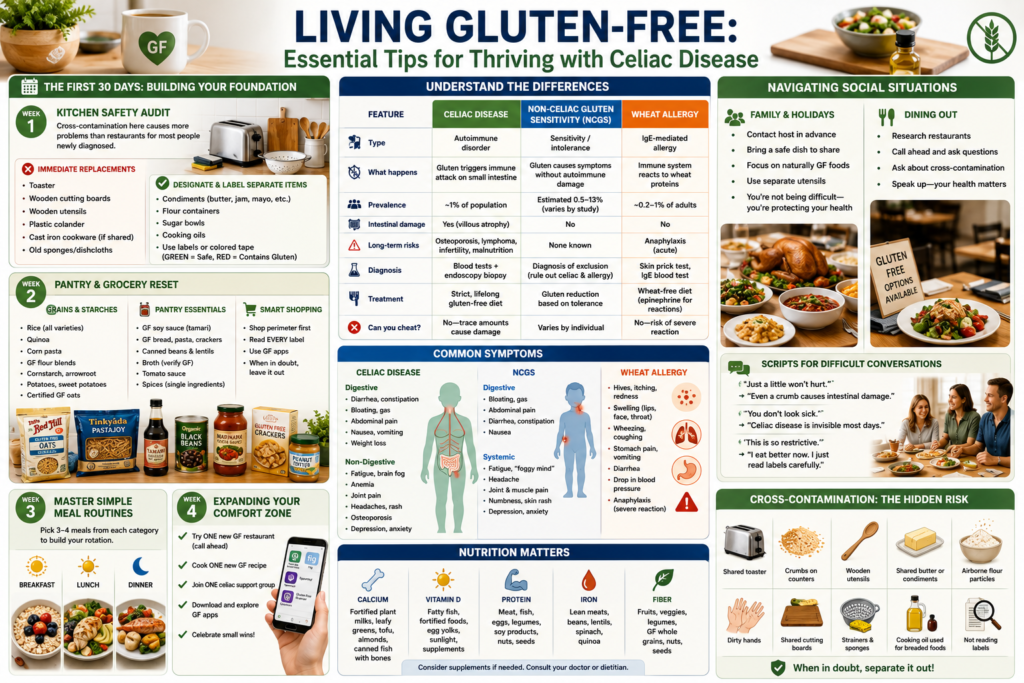
The First 30 Days: Building Your Foundation
Week 1: Kitchen Safety Audit
Your kitchen is ground zero for gluten-free living. Cross-contamination here causes more problems than restaurants for most people newly diagnosed.
Immediate Replacements (Do This First):
| Item | Why Replace? | Estimated Cost |
|---|---|---|
| Toaster | Crumbs trap in heating elements | $25-50 |
| Wooden cutting boards | Porous surface holds gluten particles | $15-30 each |
| Wooden spoons/utensils | Absorb gluten over time | $10-20 |
| Plastic colander | Nearly impossible to fully clean | $8-15 |
| Cast iron cookware (if shared) | Seasoning traps gluten | Varies |
| Old sponges/dishcloths | Harbor crumbs and residue | $5-10 |
Designate Separate Items (Label Clearly):
- Condiments (butter, jam, peanut butter, mayo)
- Flour containers (if household uses regular flour)
- Sugar bowls (if shared scoops)
- Cooking oils (if used for breaded foods)
Pro Tip: Use colored tape or labels to mark your gluten-free items. Many families use green for “GO” (safe) and red for “STOP” (contains gluten).
Week 2: Pantry and Grocery Reset
Gluten-Free Staples to Stock:
Grains & Starches:
- Rice (all varieties)
- Quinoa
- Corn pasta
- GF flour blends (Bob’s Red Mill 1-to-1, King Arthur Measure for Measure)
- Cornstarch and arrowroot (for thickening)
- Potatoes and sweet potatoes
- Certified GF oats (Bob’s Red Mill GF, Bobo’s)
Pantry Essentials:
- GF soy sauce alternative (tamari, coconut aminos)
- GF pasta (Barilla GF, Banza, Jovial, Tinkyada)
- GF bread (learn local brands—freeze extras)
- GF crackers and snacks
- Canned beans and lentils
- Broth and stocks (verify GF status—many contain hidden gluten)
- Tomato sauce and canned tomatoes
- Spices (single ingredients are safest)
Smart Shopping Strategy:
- Shop perimeter first (produce, meat, dairy are naturally GF)
- Read EVERY label—formulas change without notice
- Use apps like Fig, Spoonful, or Gluten-Free Scanner
- When in doubt, leave it out
Week 3: Master Simple Meal Routines
Breakfast Rotation (Pick 3-4):
| Meal | Ingredients | Prep Time |
|---|---|---|
| Scrambled eggs with veggies | Eggs, spinach, peppers, cheese | 10 min |
| GF oatmeal | Certified GF oats, berries, nuts, honey | 5 min |
| Smoothie bowl | GF protein powder, frozen fruit, GF granola | 5 min |
| GF toast | GF bread, avocado, eggs or nut butter | 5 min |
| Yogurt parfait | GF yogurt, fruit, GF granola, nuts | 5 min |
Lunch Rotation (Pick 3-4):
| Meal | Ingredients | Prep Time |
|---|---|---|
| Large salad | Greens, protein, vegetables, GF dressing | 10 min |
| Leftovers | Dinner protein + vegetables + rice | 2 min |
| GF wrap | GF tortilla, turkey, cheese, vegetables | 5 min |
| Rice bowl | Rice, beans, protein, salsa, guacamole | 10 min |
| GF sandwich | GF bread, fillings, side salad | 5 min |
Dinner Rotation (Pick 5-6):
| Meal | Ingredients | Prep Time |
|---|---|---|
| Sheet pan dinner | Protein + vegetables roasted together | 30 min |
| Stir-fry | Protein, vegetables, tamari, rice | 20 min |
| Tacos | Corn tortillas, protein, toppings | 15 min |
| GF pasta | GF pasta, sauce, protein, vegetables | 20 min |
| Grilled protein | Meat/fish, roasted potatoes, salad | 25 min |
| Slow cooker meal | Protein, vegetables, broth, seasonings | 15 min active |
Week 4: Expanding Your Comfort Zone
- Try ONE new GF restaurant (call ahead to discuss protocols)
- Cook ONE new GF recipe from a trusted source
- Join ONE celiac support group (online or local)
- Download and explore GF apps (Find Me Gluten Free, Fig)
Navigating Social Situations
Family Gatherings and Holidays
Before the Event:
- Contact the host in advance: “I have celiac disease, which means even tiny amounts of gluten make me sick. I’d love to bring a few dishes to share so there’s something safe for me.”
- Offer to bring your favorite GF dish to share
- Ask about the menu to identify naturally safe options
At the Event:
- Position your plate away from shared serving dishes
- Use separate serving utensils
- Be first in line (less cross-contamination after others serve)
- Focus on naturally GF foods: plain turkey, roasted vegetables, fruit, salad (dressing on side)
Scripts for Difficult Conversations:
| Situation | What to Say |
|---|---|
| “Just a little won’t hurt” | “My doctor has been very clear—even a crumb causes intestinal damage. I appreciate you understanding.” |
| “I made this special for you!” (contains gluten) | “That’s so thoughtful. I actually brought a GF version I’d love for everyone to try!” |
| “You don’t look sick” | “Celiac disease is invisible most days. Eating gluten-free keeps me healthy.” |
| “This is so restrictive” | “Actually, I eat better now than before. I just read labels more carefully.” |
Dining at Restaurants
Before You Go:
- Research restaurants with GF menus or protocols
- Read reviews on Find Me Gluten Free app
- Call during off-peak hours (2-4 PM)
- Ask specific questions about preparation
Questions to Ask Your Server:
- “Do you have a dedicated gluten-free menu?”
- “Can my meal be prepared on a clean surface with clean utensils and gloves?”
- “Is there a dedicated fryer for gluten-free items?” (for fries, chips)
- “Are sauces and soups made in-house? Do they contain flour or barley?”
- “Can you check with the chef about [specific ingredient]?”
Red Flags (Leave or Order Very Carefully):
- Server seems confused about gluten-free
- “We can just pick the croutons off the salad”
- No allergen menu available
- Fried foods cooked in shared oil
- Pizza place without dedicated GF prep area
Celiac-Safe Restaurant Chains (2026):
Always verify protocols at your specific location:
| Restaurant | GF Options | Notes |
|---|---|---|
| Native Foods | Extensive | Plant-based, mostly GF |
| True Food Kitchen | Extensive | GF menu with protocols |
| P.F. Chang’s | Dedicated menu | Separate prep area |
| Yard House | Dedicated menu | Allergen training |
| Chipotle | Many options | Avoid flour tortillas, watch for shared surfaces |
| Outback Steakhouse | GF menu | Well-trained staff |
Travel and Vacations
Air Travel:
- Pack GF snacks (TSA allows solid food)
- Pre-order GF meals (but bring backups—airlines make mistakes)
- Sanitize tray tables before use
- Bring hand wipes for surfaces
- Arrive early to allow time for food questions
International Travel:
- Learn key phrases in the local language:
- “I have a serious medical condition”
- “I cannot eat wheat, barley, or rye”
- “This food must not touch other foods”
- Download translation cards (Celiac Travel Cards available online)
- Research GF-friendly restaurants at destination
- Book accommodations with kitchenette
- Pack emergency GF snacks in checked AND carry-on luggage
Road Trips:
- Pack a cooler with GF meals and snacks
- Research grocery stores along your route
- Download offline maps of GF restaurants
- Bring disposable plates/utensils for picnics
Work and School
Office Situations:
- Label your food clearly in shared refrigerators
- Keep GF snacks at your desk
- For office parties, bring your own GF option
- Educate colleagues about cross-contamination
School (for Children):
- Meet with school nurse and cafeteria staff
- Provide written celiac disease action plan
- Ensure safe lunch table protocols (no food sharing, clean surfaces)
- Educate teachers about classroom snack policies
Emotional Adjustment and Mental Health
Common Emotional Responses
It’s normal to experience a range of emotions after diagnosis:
| Emotion | Why It Happens | Coping Strategy |
|---|---|---|
| Grief | Loss of food freedom, traditions | Allow yourself to feel it; join support group |
| Anger | “Why me?” frustration | Focus on what you CAN eat; celebrate small wins |
| Anxiety | Fear of accidental exposure | Develop systems; carry safe snacks |
| Isolation | Feeling different at social events | Connect with celiac community; educate loved ones |
| Overwhelm | Too many changes at once | Take it week by week; master one skill at a time |
When to Seek Professional Support
Consider therapy or counseling if you experience:
- Persistent anxiety about food
- Social isolation or depression
- Disordered eating patterns
- Inability to enjoy meals or social events
Resources:
- Celiac Disease Foundation support groups
- Beyond Celiac community forums
- Therapists specializing in chronic illness (Psychology Today directory)
Managing Accidental Gluten Exposure
Recognizing Exposure Symptoms
| Symptom Type | Examples | Timeline |
|---|---|---|
| Digestive | Diarrhea, bloating, abdominal pain | 30 min – several hours |
| Systemic | Fatigue, brain fog, joint pain | Hours to days |
| Neurological | Headache, difficulty concentrating | Hours to days |
| Mood | Irritability, depression, anxiety | Hours to days |
| Skin | Dermatitis herpetiformis flare | Days to weeks |
What to Do After Exposure
- Hydrate aggressively (water, electrolytes)
- Rest (fatigue is common)
- Eat simple, bland foods until symptoms subside
- Consider over-the-counter remedies:
- Loperamide (Imodium) for diarrhea
- Peppermint tea for bloating
- Ginger for nausea
- Document the exposure (what, where, how) to prevent recurrence
- Be kind to yourself (mistakes happen; learn and move on)
When to Seek Medical Help
Contact your doctor if you experience:
- Severe dehydration
- Persistent vomiting
- Blood in stool
- Symptoms lasting more than a week
- Frequent exposures (may need dietitian consultation)
Building a Support System
Types of Support
| Support Type | Examples | Benefits |
|---|---|---|
| Medical | Gastroenterologist, dietitian, primary care | Professional guidance, monitoring |
| Peer | Support groups, online forums, celiac friends | Shared experiences, practical tips |
| Family/Friends | Loved ones who understand and accommodate | Emotional support, safer social situations |
| Online | Instagram, Facebook groups, Reddit r/Celiac | 24/7 access, product recommendations |
Recommended Resources
Organizations:
- Celiac Disease Foundation (celiac.org)
- Beyond Celiac (beyondceliac.org)
- Gluten Intolerance Group (gluten.org)
Apps:
- Find Me Gluten Free (restaurant reviews)
- Fig (product scanning)
- Spoonful (ingredient scanning)
- Gluten-Free Scanner (barcode scanner)
Books:
- “Gluten-Free, Here I Come!” by Rosie J. Pova
- “The First Year: Celiac Disease and Living Gluten-Free” by Jules Shepard
- “Celiac Disease: A Hidden Epidemic” by Peter H.R. Green
Maintaining Long-Term Health
Follow-Up Testing Schedule
| Timeframe | Testing | Purpose |
|---|---|---|
| 3-6 months | tTG-IgA antibody | Confirm levels decreasing |
| 12 months | tTG-IgA + nutrient panel | Verify healing, address deficiencies |
| Annually | tTG-IgA + comprehensive metabolic panel | Monitor compliance and health |
| 2-3 years | Consider repeat endoscopy | Confirm intestinal healing if needed |
Common Nutrient Deficiencies
Work with your doctor to monitor and address:
| Nutrient | Why Affected | Food Sources | Supplementation |
|---|---|---|---|
| Iron | Malabsorption from villous damage | Red meat, spinach, lentils, GF fortified cereals | Often needed initially |
| Vitamin D | Fat-soluble vitamin malabsorption | Fatty fish, fortified foods, sunlight | Commonly prescribed |
| Calcium | Malabsorption + possible lactose intolerance | Dairy (if tolerated), fortified plant milks, leafy greens | Usually recommended |
| B12 | Malabsorption | Meat, fish, eggs, fortified foods | May be needed |
| Zinc | Malabsorption | Meat, shellfish, legumes, seeds | Sometimes needed |
Frequently Asked Questions
How long until I feel better after going gluten-free?
Most people notice symptom improvement within 2-4 weeks. Complete intestinal healing takes 6 months to 2 years (faster in children, slower in adults with long-standing damage).
Can I ever eat gluten again?
No. Celiac disease is a lifelong autoimmune condition. Even after healing, gluten will trigger the autoimmune response and cause damage again.
What about gluten-removal enzymes or supplements?
Supplements claiming to “digest gluten” are NOT proven to protect people with celiac disease. They may help with symptoms from accidental exposure but do NOT prevent intestinal damage. Do not rely on them.
Will my children get celiac disease?
First-degree relatives have approximately a 1 in 10 risk. Genetic testing can identify who carries the genes, and regular screening is recommended even without symptoms.
Is dating different with celiac disease?
Be upfront early in relationships. Most people are understanding when you explain it’s a medical condition, not a preference. Plan first dates at GF-friendly restaurants.
What if I can’t afford gluten-free products?
GF products are often more expensive. Focus on naturally GF whole foods (rice, potatoes, eggs, vegetables, meat) rather than processed GF alternatives. Buy in bulk, use coupons, and check for store brands.
How do I handle coworkers who don’t understand?
Education helps. Share a brief explanation: “Celiac disease is an autoimmune condition—even tiny amounts of gluten cause internal damage. I appreciate your understanding.” Most people want to help once they understand.
Key Takeaways
- The first 30 days are the hardest—focus on kitchen safety and simple meals
- Cross-contamination is the #1 challenge—dedicate separate tools and learn protocols
- You’re not alone—millions live successfully gluten-free with proper support
- Emotional adjustment is normal—seek support when needed
- Accidents happen—learn from them and move forward
- Long-term health requires monitoring—stay on top of follow-up testing
- Life gets easier—within months, gluten-free living becomes second nature
Medical Disclaimer: This article provides educational information only and does not replace professional medical advice. Work with a qualified healthcare provider and registered dietitian for personalized celiac disease management.
Medical Review: This content has been reviewed for accuracy against current celiac disease management guidelines from the Celiac Disease Foundation, American College of Gastroenterology, and Academy of Nutrition and Dietetics.
Sources:
- Celiac Disease Foundation – Living Gluten-Free – 2026
- American College of Gastroenterology – Celiac Disease Treatment Guidelines – 2025
- Beyond Celiac – Life with Celiac Disease – 2026
- Academy of Nutrition and Dietetics – Celiac Disease Nutrition Guide – 2025
- Mayo Clinic – Celiac Disease: Management and Lifestyle – 2025
Last Updated: March 9, 2026